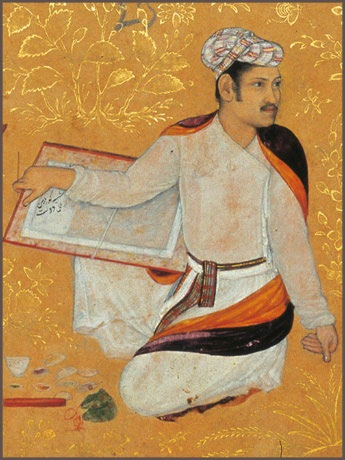
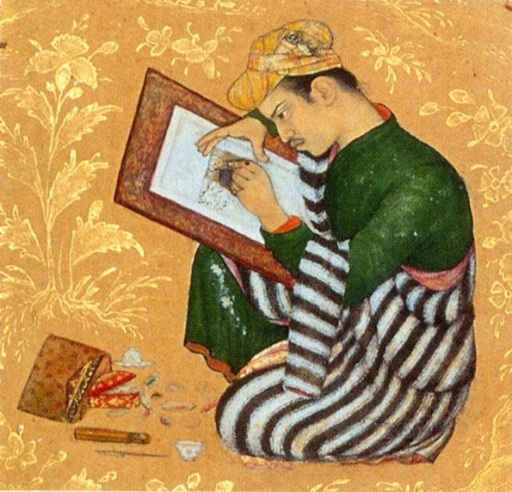
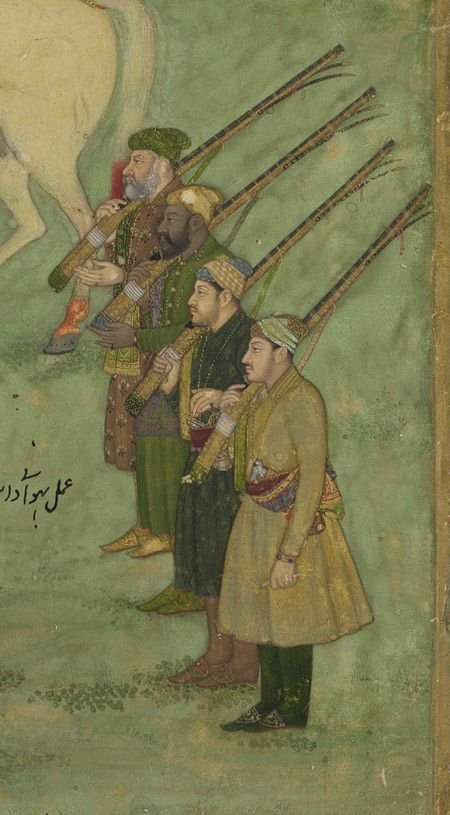
Mughal artist Daulat created a unique folio depicting himself and his art colleagues (c. 1610)
This gave us a face behind the paintings.
It includes a portrait of Abu'l-Hasan (3rd image). One of the best artists in the entire Mughal era, who gained the title 'Wonder of the Age'
I write in @FT that Iran’s leaders suspected that the MoU was a temporary retreat by the US, intended to relieve pressure on the global economy and prepare for another round of war.
Iran’s current rulers believe that any display of restraint will only invite further American pressure. To deter the US, and to compel it to negotiate in earnest for an end to the war and a broader nuclear deal that would give Tehran the security and economic relief it craves, they believe Iran has to be aggressive and escalate the conflict beyond what the US is prepared to countenance. The one point of leverage Iran is not prepared to part with is its claim to the Strait of Hormuz and its ability to control access to it. Losing dominance in the strait would leave Iran without any leverage in future negotiations. Iran’s leaders have decided that retaining control of the strait is essential to securing future wins at the negotiating table and ensuring that the US implements the deal rather than walking away from it.
https://t.co/M8etSzdBTM
It's not just that the Strait was open before the war. it was also open before this latest escalation. Yes, the Iranians did not want ships using the Southern corridor WITHOUT coordinating with Iranian authorities.
To the best of my knowledge, there are no examples of ships being prevented from going through the southern corridor when they did coordinate with Tehran.
Objecting to that Iranian control is understandable, but it is incorrect to say that the Strait was closed.
It is now, however. And US efforts to compel ships to transit the Strait under US escort have largely failed.
One ship responded "F--- off" when told by the US Navy that the US would guarantee their security...
https://t.co/uwivExxetX
Professor John Esposito of @Georgetown University,
one of the foremost scholars of Islam and the Muslim world, and one of the most outspoken voices against Islamophobia, has passed away.
I read his books as an undergraduate. I first met him in person at an Islamophobia conference in Qatar in 2023, where he was chairing the session; we didn’t speak much then. We met again later at a lecture, and he told me, “I knew you were brilliant from the first instance, I can spot one when I see one.” What made him special was his attention to detail and his remarkable memory, kind and humble persona beyond his extensive knowledge.
Rest in peace, Professor Esposito.
Is the United States Preparing for a Ground Invasion of #Iran?
🔹The escalating pattern of U.S. strikes against southern Iran in recent days – particularly over the past several hours – may point to a gradual strategy aimed at preparing the ground for a potential deployment of ground forces. Such an operation, if it were to materialize, could be intended to seize control of Iran’s southern coastal belt in order to remove Iranian control over the Strait of Hormuz.
🔹Reports indicate that recent U.S. strikes have targeted several bridges and railway links in southern Iran. At the same time, there have been reports of attacks on airports. These actions may have been intended to disrupt the logistics and mobility of Iranian military forces in the south. Additional reports also suggest strikes against fuel tankers in Bandar Abbas.
🔹Meanwhile, attacks in Sistan and Baluchestan in southeastern Iran targeted the Iranian Army’s 88th Armored Division, alongside similar strikes against positions of the 92nd Armored Division in Khuzestan in the southwest. Some analysts interpret these operations as an effort to degrade Iran’s military capabilities along its principal southern axes, aimed at reducing the risks associated with any future ground deployment.
🔹At the same time, in what appears to be a recurring pattern, U.S. strikes have continued to target Iranian military, missile, drone, and radar installations, as well as IRGC Navy facilities along Iran’s southern coastline on the Persian Gulf.
🔹Taken together, these developments increasingly suggest a gradual but persistent U.S. movement toward a possible ground operation in southern Iran. In other words, the campaign may extend beyond simply degrading Iran’s ability to threaten shipping in the Strait of Hormuz. It could instead indicate that Washington views control of Iran’s southern coastal strip as the only definitive solution to the Strait of Hormuz challenge.
🔹If such an approach exists, it would go well beyond earlier ideas centered on seizing Kharg Island to cut off Iran’s oil exports or occupying islands overlooking the Strait to secure maritime traffic. However, given the length of Iran’s southern coastline – roughly 1,800 kilometers – and the country’s considerable strategic depth, establishing comprehensive control would likely require hundreds of thousands of troops. Moreover, even capturing these areas would not necessarily translate into the ability to sustain long-term control.
🔹In any event, current indicators suggest that we may be approaching the most significant escalation in the U.S.-Iran confrontation since February, driven by Washington’s failure to achieve its strategic objectives. On the other hand, as noted previously, Iran’s actions thus far have also failed to present a meaningful obstacle to this gradual trajectory. One alternative for Tehran could be to shift toward targeting regional economic infrastructure – a move that would significantly broaden the scope of the conflict and lead to a region-wide catastrophe.
"This is our land. Israel has no right to lease it to the United States."
The U.S. is planning a new embassy in Jerusalem, at a site that was appropriated from Palestinian families, including Columbia University scholar Rashid Khalidi's, during the Nakba.
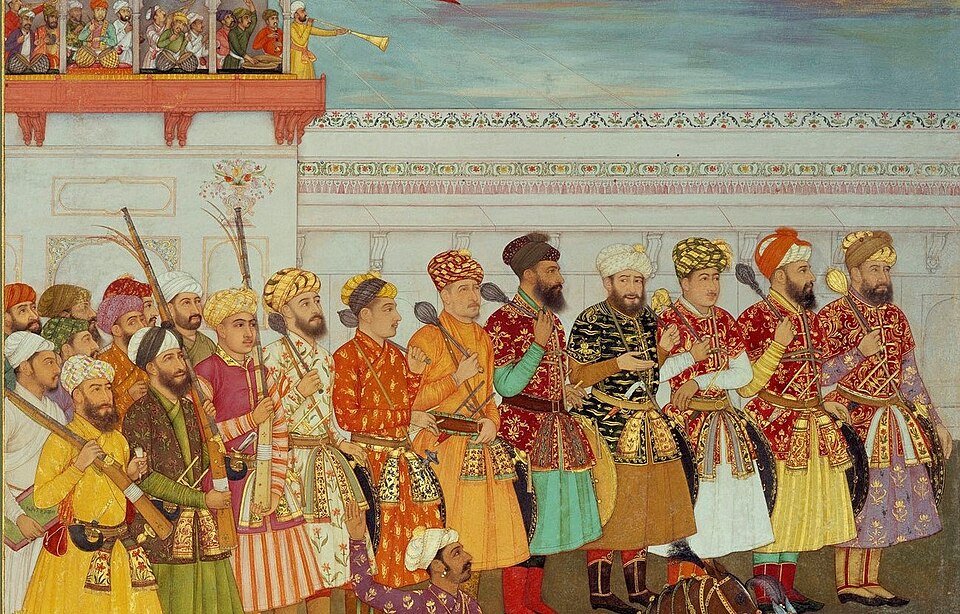
As the Mughal Empire adopted muskets in the 16th–17th centuries, it continued to paint in the same miniature style perfected centuries earlier.
This blend created some striking pieces.
You have emperors with halos hunting with muskets, nobles in silk robes carrying firearms.
Most Mughal Emperors were typically depicted as majestic, powerful rulers in their miniature art.
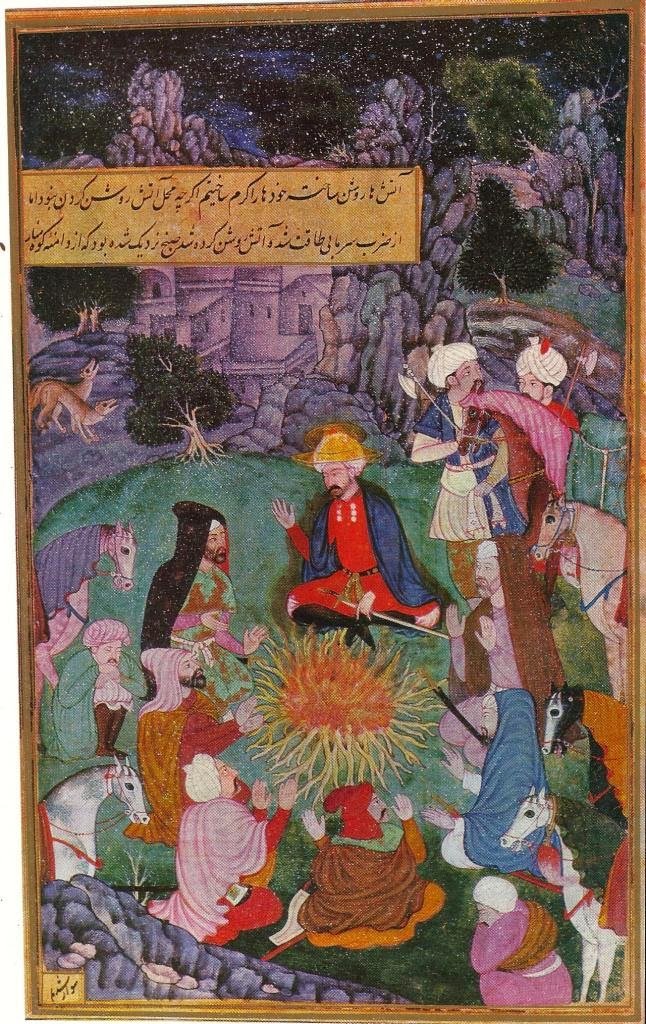
Babur (1483–1530), the first Mughal Emperor, is a notable exception.
He is frequently shown among companions in campfires, hunts, feasts, and everyday moments.
New U.S. Strikes on #Iran and the Risk of Return to the Full-Scale War
🔹CENTCOM says it has begun conducting additional strikes against Iran to further degrade its ability to threaten freedom of navigation in the Strait of Hormuz.
🔹Reports from Iran indicate that the strikes are both intense and geographically widespread, covering much of Iran’s southern coastal regions along the Persian Gulf as well as the islands overlooking the Strait of Hormuz. The attacks have reportedly included areas around Chabahar and Bushehr, which had not been targeted since the ceasefire was reached in April.
🔹Apart from their scale, another notable aspect of this wave of strikes is that, unlike the previous day, they occurred without any new Iranian provocation in the form of attacks on shipping in the Strait. They should therefore be seen as a continuation of the campaign that CENTCOM began the previous day. From this perspective, the objective is not simply to retaliate or deter further Iranian attacks, but to systematically degrade Iran’s capability to continue targeting shipping in the Strait of Hormuz.
🔹For this reason, the strikes may continue over the coming days, although the trajectory will also depend on Iran’s response. At the moment, one factor that has probably contributed to Iran’s relative restraint is that the ceremonies related to Khamenei’s funeral are still ongoing. Once they conclude, Iran may opt for a larger-scale retaliatory campaign.
🔹Even so, the limitations of Iran’s current strategy of targeting U.S. bases in the region have become increasingly apparent, as these strikes have not deterred further U.S. attacks. As a result, Iran may instead consider once again fully closing the Strait of Hormuz, although such a move would likely trigger even more intensive U.S. strikes.
🔹Another possibility is that Iran could encourage the Houthis to close the Bab el-Mandab Strait simultaneously, thereby increasing pressure on the global economy and seeking to strengthen deterrence against the United States.
🔹Depending on how far the United States goes in targeting Iran, strikes against regional energy infrastructure have also been discussed within Iran’s strategic community as a possible option.
🔹The risk now is no longer limited to the possible collapse of the memorandum of understanding, but extends to the possibility of a return to full-scale war between the two sides.
🔹In any case, it is difficult to imagine that Trump could achieve through another round of aerial operations what was not achieved during the 40 days of intensive warfare against Iran in the spring.
🔹The concern in Tehran is that the current campaign may in fact be a prelude to a new phase of the war involving the deployment of ground forces to occupy Iranian islands around the Strait of Hormuz or parts of Iran’s southern coastline. This is another factor that could contribute to a disproportionate and larger-scale Iranian response aimed at preventing such a scenario from materializing.
🔹That, in turn, could lead to a further escalation of the conflict.
India in the Persianate Age: 1000-1765
Richard M. Eaton, Penguin, 2019
https://t.co/HdPXu1ZWEm
PDF 🎯
https://t.co/WfXlmUezDZ
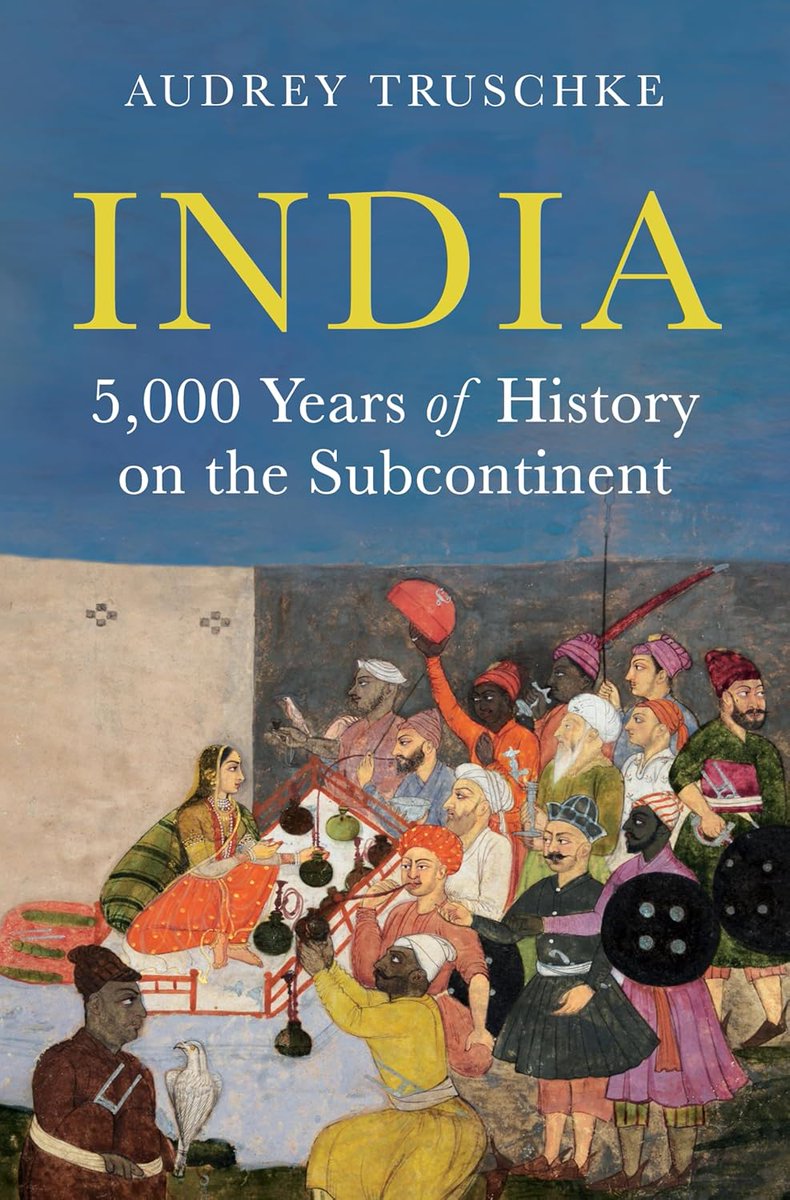
India: 5,000 Years of History on the Subcontinent
Audrey Truschke, Princeton Univ Pr, 2025
https://t.co/EyaRoh5Izb
PDF 🎯
https://t.co/yEWCyxYfoO
Khamenei's funeral begins.
Much will be said of his life and (especially) his death.
His record of governance is likely to take a back seat. https://t.co/OPB1C1Vbvv
In my latest on Iran Analytica, I explain how diplomacy has become part of the #Iran-US conflict.
Tehran believes Washington is using the 60-day MoU window to dismantle its leverage (Hormuz, Lebanon, the nuclear file, Gulf investment) piece by piece, before serious negotiations even begin.
The question in Tehran is whether enough leverage will remain to make a settlement worth accepting.
https://t.co/QdHHBetRxa
During Ali Khamenei funeral, the Iranian regime recited not-so-subtle verses from the Quran before each foreign delegation, carefully curated to signal how the regime feels about them exactly. Here is a sample:
Hamas: “Among the believers are men who have proven true to what they pledged to God. Some of them have fulfilled their pledge, others are waiting their turn. They have never changed their commitment in the least.”
Hezbollah: “Do not falter or grieve, for you will have the upper hand, if you are true believers. If you have suffered injuries, they suffered similarly. We alternate these days of victory and defeat among people so that God may reveal the true believers, choose martyrs from among you, and God does not like the wrongdoers.”
Palestinian Islamic Jihad: "So that God may forgive you for your past and future shortcomings, perfect His favor upon you, and guide you along the Straight Path, and so that God will help you with a mighty victory."
China: “God ordained this only as good news for you and reassurance for your hearts. And victory comes only from God.”
Iraq’s Hashd al-Shaabi PMUs: "Never say that those martyred in the cause of God are dead; in fact, they are alive! But you do not perceive it."
Saudi Arabia: “There was certainly a sign for you in the two armies that met in battle: one fighting in the cause of God and the other disbelieving. The believers saw their enemy twice their number. But God supports with His victory whoever He wills. Surely in this is a lesson for people of insight.”
Qatar: "So that God may forgive you for your past and future shortcomings, perfect His favor upon you, and guide you along the Straight Path, and so that God will help you with a mighty victory."
Turkey: “God has elevated in rank those who strive with their wealth and their lives above those who stay behind. God has promised each a fine reward, but those who strive will receive a far better reward than the others.”
Pakistan: "And say, 'My Lord! Grant me an honorable entrance and an honorable exit, and give me a supporting authority from Yourself.'"
Egypt: “Their reward with their Lord will be Gardens of Eternity, under which rivers flow, to stay there for ever and ever. God is pleased with them and they are pleased with Him. This is only for those in awe of their Lord.”
Datuk Seri Haji Mohamad Sabu, Malaysia's Minister of Agriculture and Food Security, attended the funeral ceremony of the martyred Supreme Leader of the Islamic Republic of Iran and paid his respects.
Throughout its history, Islam has been a motor of change and transformation, a protean force defined as much by its variety and adaptability to lived experience as by struggles over competing interpretations of scripture.
The worlds that Islam made | @ShirazMaher
https://t.co/KgzgnCWmSL
An absolute gem of a piece by @soutikBBC. Read it if you want to know about akhbar and open the link to find out. That Persian influence again. https://t.co/cKzrzvrgp1
The US-Iran MOU and the Israeli-Lebanese agreements are incompatible as I see them.
If both are pursued, neither will be achieved.
It appears the administration is working against itself, and Trump appears too disinterested in the details to recognize this.