Today, in celebration of America 250, we’re launching Power for the Free. We’re entering a moment where energy matters more than ever. Demand is rising. AI is accelerating it.
Countries that can build abundant, affordable power create opportunities for current and future generations. But this is bigger than energy. This campaign is about the people who build, and the freedom that makes building possible.
Because energy abundance creates opportunity.
We Build Energy.
We’re closer to a Type I civilization than most people realize. Carl Sagan created a scale for measuring how much energy a civilization can harness. Humanity is around 0.73.
We’ve come a long way. But there’s still a massive gap to Type I. And that gap is the opportunity.
More solar. More batteries. More manufacturing. More energy.
Because energy abundance unlocks everything that comes next: AI, robotics, desalination, space exploration, and a better human existence.
Even oil is just ancient solar energy. The next chapter is capturing solar energy directly, at a scale that is scalable and enduring on a planetary timeline.
Type I isn’t science fiction. It all starts with building more energy.
100%. America can build its own energy future. It starts with factories, technology, supply chains and people willing to build them.
We’re doing it in Texas.
TX doesn't have to choose between growth and reliability. Just build more energy. That's how you support AI, manufacturing, population growth and the next generation of American industry.
Jessica Tarlov’s piece with Prof G frames data centers as the surprise 2026 election issue. Here’s how the state approaches actually compare 🧵
https://t.co/928mArVbY0
I sell data center capacity for a living. The conversation with customers has changed completely in the last eighteen months.
It used to start with price per kW. Now the first question out of everyone’s mouth is when can you actually give me power, and the honest answer in most major metros is later than you want to hear.
Everyone wants to argue about GPU supply. That is not where the wall is. The wall is a transformer you order today that arrives in three years, a permitting process that answers to a county board, and an interconnection queue with roughly 2,000 gigawatts stacked up in it. PJM ran the numbers on projects that came online last year and the average was over seven years from request to live power. Three years to get an agreement, four more years to actually energize after the agreement was signed.
And this is the easy part. We are nowhere near the peak of this demand curve. There is at least another order of magnitude coming, and the grid that is supposed to absorb it operates on utility capital planning cycles that were designed in a world where load growth was flat for twenty years.
Which is why the orbital compute argument stopped sounding exotic to me sometime around last fall. Up there you get uninterrupted sunlight, you dump heat straight into vacuum instead of running chillers, and there is no zoning hearing, no queue position, no substation to wait on.
Plenty of companies have interesting orbital compute concepts. Only one of them owns the rocket, has the scale, and deeply embedded partnership with Nvidia.
SpaceX filed with the FCC in January to launch and operate up to a million compute satellites, and there is exactly one launch provider on Earth with the cadence and the cost structure to make that number anything other than a press release. Starship is the reason this is an infrastructure plan and not a science project.
The constraint on the ground is the grid. The constraint in orbit is mass to LEO. SpaceX is the only company that has solved the second one.
$SPCX
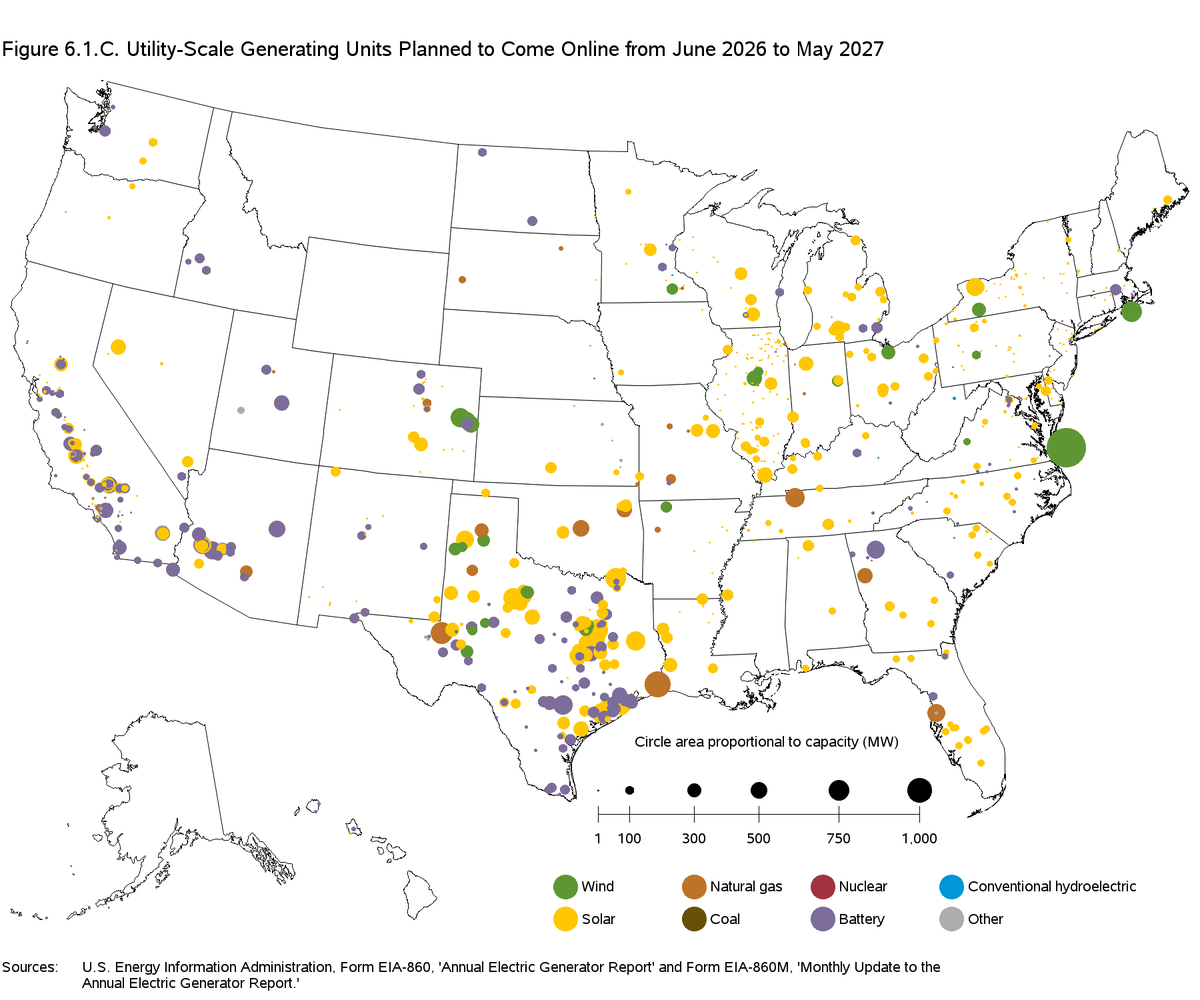
ERCOT is setting records and that's what growth looks like. Texas isn't asking people to conserve power. Solar, batteries and natural gas have scaled to meet demand. Let's keep building.
At @T1Energy We Build Energy.
This week's eclipse briefly blocked roughly 50 quintillion joules of sunlight from reaching Earth. That’s about half a year of the world's electrical energy.
The scale of energy coming from the Sun is almost impossible to comprehend.
We should capture more of it.
This is the direction energy is heading. Build power where you need it and build it fast. Don’t wait 5–7 years for a gas turbine or grid connection.
Solar + storage changes the equation.
☀️ I brainstormed a tagline for our latest investment,
Ambrosia Energy: "Sweet, sweet nectar of the sun gods!"
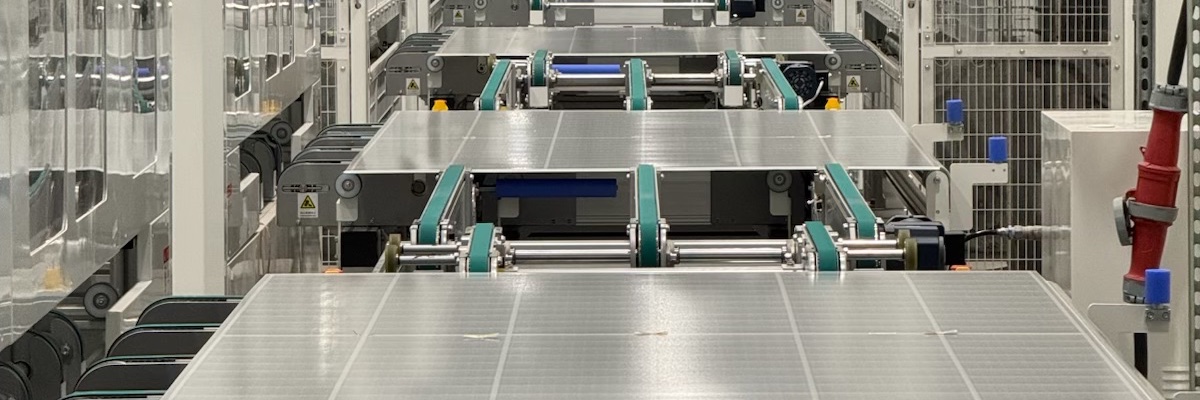
The endgame for datacenter power is solar, but it’s held back by storage and installation costs. Ambrosia is optimizing solar + storage as a service: $100/MWh at 99.9% uptime, 100% renewable, installed within a year. The goal is to be the cheapest source of 24/7 off-grid power in the U.S., and built faster than a gas-powered plant, to gigawatt scale.
One key insight: solar panel and LFP battery cell costs have fallen so dramatically that raw hardware is now only 10% of total system cost. Ambrosia is redesigning everything else, until the 10% flips to 90% of the total... affording a 9x cost advantage.
Another: with Starlink, data centers can be anywhere there’s energy. With off-grid solar, that energy can be anywhere, relaxing the constraints of geography.
TC: “A power plant should be able to be built at any scale in 12 months from contract signing to power on,” Sara Spangelo, co-founder and president of Ambrosia Energy, exclusively told TechCrunch.
If Ambrosia can deliver at scale, the startup could upend the energy world.
Today, a new combined cycle gas turbine — the most efficient type — costs around $107 per megawatt-hour to build and operate. That’s if you can get one — gas turbines currently have a five- to seven-year backlog [and grid connections can take 4-7 years]. “We’re also way more reliable than gas,” Spangelo said.” — https://t.co/tXrIwJEhsN
• Company: @AmbrosiaEnergy --> https://t.co/JrvFwYoYFW
• Now hiring in Austin & Redwood City: https://t.co/HdNBFSYY9h
The interesting part isn't just what they're building. It's how much power it takes to run it. America is entering an era of massive industrial and compute growth. Energy infrastructure has to scale with it.
Systemwide temperatures are forecast to gradually build throughout the week with highs in the upper 90s and 100s. A relatively dry weather pattern will continue, aside from a rain chance along the coast early in the week followed by rain chances in West Texas and the Panhandle around mid- to late-week. ERCOT expects high demand with peaks in the upper 80,000-megawatt range. Monitor current and extended grid conditions: https://t.co/dLLTbEejrn
This week, the U.S. took a long overdue step. The Trump Administration chose to reward solar companies that chose to build in America. Strong domestic supply chains don't happen by accident. They require investment, manufacturing, and long-term commitment.
This is a meaningful step for American industry.
Section 232 is about encouraging America's ability to build. The proclamation strengthens domestic solar manufacturing, and supports investment across the U.S. supply chain.
That's good for American manufacturing. That's good for American energy.
It's 2026. Why is Austin Energy still delivering energy with its brand new upgraded distribution system through these oozing, creosote smeared, cancer poles?
The future: solar, storage, abundant energy.
Choose wisely.
Texas has led the U.S. energy industry for decades. That hasn't changed. What's happening in Texas is good for America, and we're starting to see it happen across the country.
More new power plants, factories, and jobs.
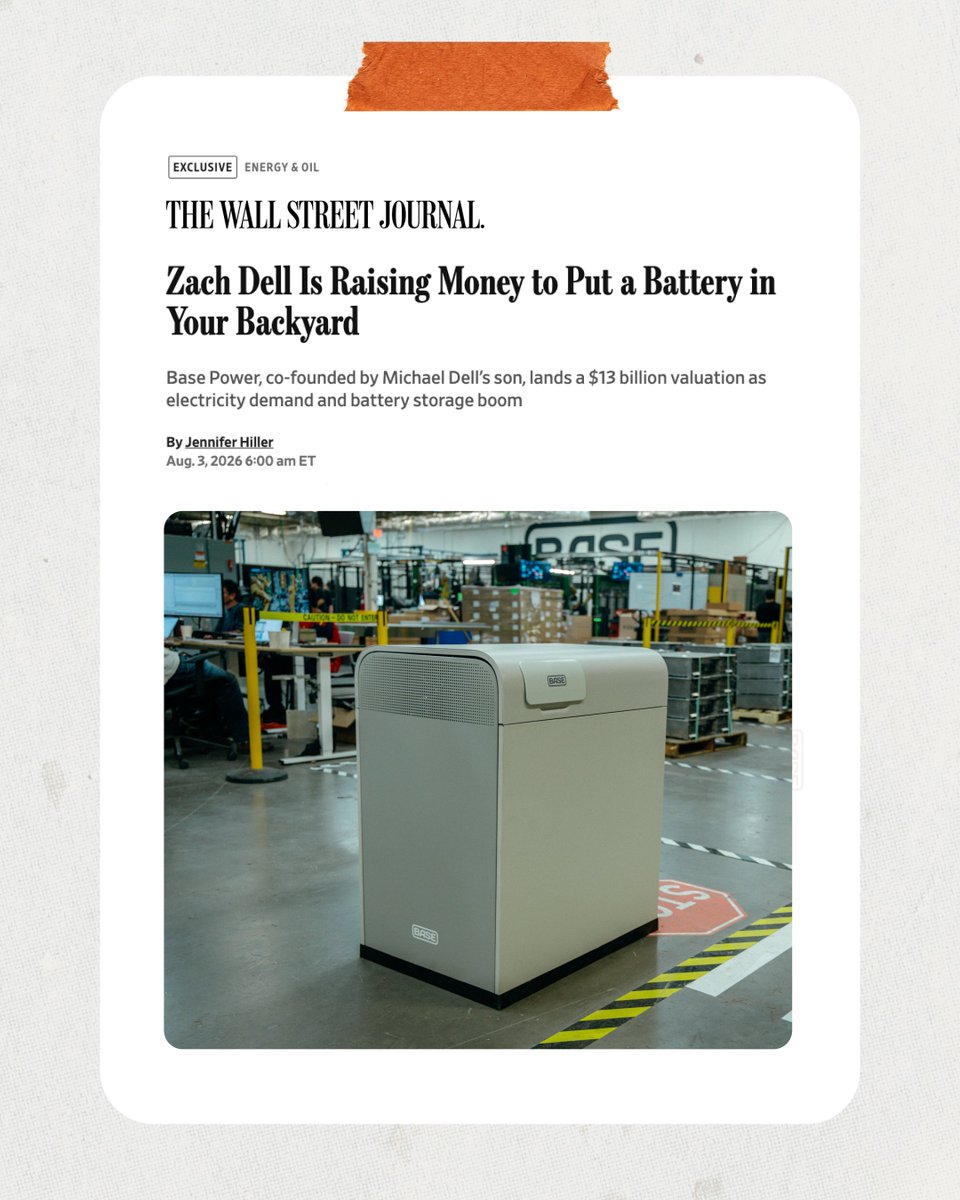
Thank you to @WSJ for covering the launch of Base Core and our $1B Series D.
The U.S. is undergoing a foundational shift in energy demand, and traditional power generation can't scale fast enough to meet it. Meeting demand this fast calls for new technology that works alongside the grid and adds capacity where it's needed most.
Base Core does just that: one of the largest home batteries on the market at 39.2 kWh, designed and built by Base in Austin, and engineered for rapid deployment at scale.
This new capital will go toward bringing Core to more homes, expanding nationally, and hiring exceptional talent.
The Series D is led by @RibbitCap, Addition, Valor Equity Partners, and @jpmorgan’s Strategic Investment Group, with participation from @AltimeterCap, D1 Capital Partners, Sands Capital, @coatuemgmt, Layer Global, and @EnergyImpact_ . Base’s major existing investors are re-investing, including @ThriveCapital, @a16z, @lightspeedvp, Trust Ventures, @CapitalG, and more.
https://t.co/SSzoQkcXOr
ERCOT is setting an all-time demand record today at 91 GW, which is +17 GW vs the summer peak in 2021. But over the same period, maximum solar output is +27 GW. Add in the massive battery buildout, and wholesale power prices are actually lower now than they were 5 years ago.
Solar generated 15% of Texas's electricity in the past year.
Solar grew more in 5 years than gas did in 20 — *in absolute terms*, and more in the past 2 than gas did in 10.
Texas hit a July demand record and prices *peaked* at just $0.06/kWh.
Gas was flat because solar and batteries carried the entire peak. Tons of spare capacity.
New York needs to copy Texas.




![FutureJurvetson's tweet photo. ☀️ I brainstormed a tagline for our latest investment,
Ambrosia Energy: "Sweet, sweet nectar of the sun gods!"
The endgame for datacenter power is solar, but it’s held back by storage and installation costs. Ambrosia is optimizing solar + storage as a service: $100/MWh at 99.9% uptime, 100% renewable, installed within a year. The goal is to be the cheapest source of 24/7 off-grid power in the U.S., and built faster than a gas-powered plant, to gigawatt scale.
One key insight: solar panel and LFP battery cell costs have fallen so dramatically that raw hardware is now only 10% of total system cost. Ambrosia is redesigning everything else, until the 10% flips to 90% of the total... affording a 9x cost advantage.
Another: with Starlink, data centers can be anywhere there’s energy. With off-grid solar, that energy can be anywhere, relaxing the constraints of geography.
TC: “A power plant should be able to be built at any scale in 12 months from contract signing to power on,” Sara Spangelo, co-founder and president of Ambrosia Energy, exclusively told TechCrunch.
If Ambrosia can deliver at scale, the startup could upend the energy world.
Today, a new combined cycle gas turbine — the most efficient type — costs around $107 per megawatt-hour to build and operate. That’s if you can get one — gas turbines currently have a five- to seven-year backlog [and grid connections can take 4-7 years]. “We’re also way more reliable than gas,” Spangelo said.” — https://t.co/tXrIwJEhsN
• Company: @AmbrosiaEnergy --> https://t.co/JrvFwYoYFW
• Now hiring in Austin & Redwood City: https://t.co/HdNBFSYY9h](https://pbs.twimg.com/media/HPjn6YJboAALyni.jpg)