Our paper just out on how emergent group behaviour can solve a complex task, and make people feel more connected in the process, in Collective Intelligence: https://t.co/LUNs5nxVyU
(1st author Madalina Sas, with @PedroMediano@_fernando_rosas Hillary Leone and and others)
New preprint out, where we show that neural complexity (CSER) tracks fine-grained perceptual clarity within wakefulness: https://t.co/Pu9oUelmf6
Congrats to primary author Alberto Liardi & co-authors @PedroMediano@_fernando_rosas
Integrated information theory - the good, the bad, and the misunderstood. New preprint, a long time in the making, led by Adam Barrett alongside a terrific crew: @MilinkovBorjan@PedroMediano@_fernando_rosas@DanielBor Lionel Barnett, & me. https://t.co/p2HuhDOqQ8
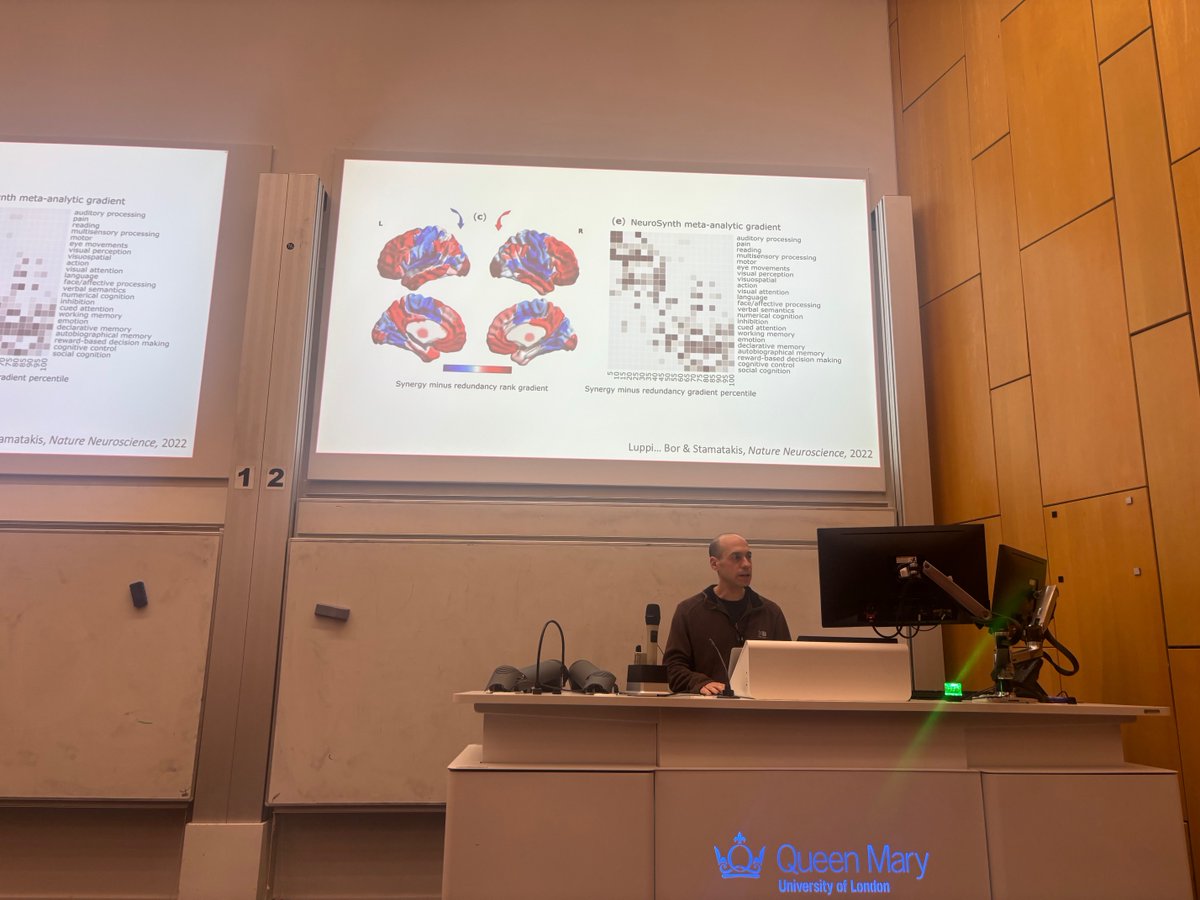
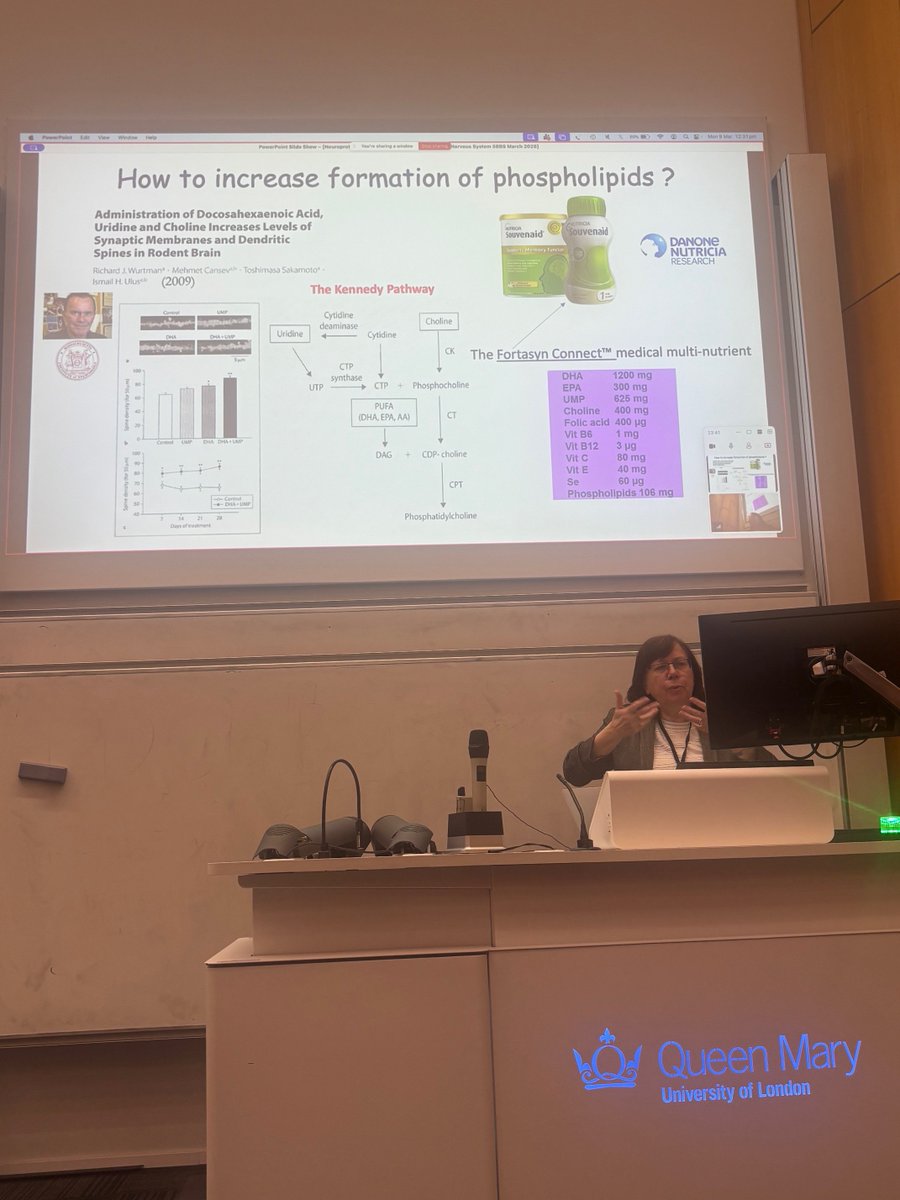
Some photos from ‘Mind the brain: A Dialogue Between Neuroscience and Mental Health’, a collaborative event we had today for bringing together QMUL researchers in Psychology, Neuroscience, and Psychiatry. @blizard_inst Photos: @DanielBor Dr. Apergis-Schoute, Prof Michael-Titus
We have a new preprint! Alzheimer's patients have a radically different neural informational signature compared to healthy controls, suggesting diminished consciousness, and a skewed cognitive profile. Mammoth, and important, work, spearheaded by @KeenanDown
Happy to announce this new preprint!
In it, we use info decomp (ΦID) on fMRI in Alzheimer's and MCI to explore how info-dynamic representations change.
AD saw big decreases in synergy ('deductive' information) and increases in redundancy.
Find it here👇
https://t.co/CS5NB0EVKg
How do some people keep their minds sharp when they get older, while others experience cognitive decline? In our new paper, we examined cognitive reserve, which is the brain’s resilience in the face of challenges: https://t.co/CLmVJHA1cj #neuroscience#cognition#aging 1/7
My friend 林居正 (Chu-Cheng) has created an amazing Lego Science Lab! And if it gets over 10,000 supporters, it actually gets sold! Please add your support to this brilliant project: https://t.co/1jaPWoo69D
Most important video to watch in 2025? ((And, for my fellow consciousness scientists, Q: is consciousness nececessary for AGI?)) https://t.co/mANdsMY0Cf
Exciting news! Our preprint, "Informational Complexity as a Neural Marker of Cognitive Reserve", is now available! Here, we explore how neural complexity relates to cognitive reserve. Check it out here: https://t.co/LlOa1BrMT0 #CognitiveReserve#Preprint#Neuroscience
(🧵) ELECTION THREAD: I’ve been waiting all night to say anything substantive about what’s happened, as I felt—I still do—that I might say something I’d regret.
I hope you’ll consider following along as I try to process this with you all, and try to do it responsibly. Please RT.
How do you compare different types of (PID) information across complex systems (e.g. brains)? We have a new robust method to do this! See preprint, with @_fernando_rosas@RCarhartHarris@rhizoqualia and @PedroMediano https://t.co/4l5qw3nfe6
1/ New preprint!
Neuroscience uses advanced methods to study brain regions/neurons/genes (order 1), couples of them (order 2), triplets (order 3), etc. But haven't we lacked a clear conceptual map to organize these diverse methods and integrate findings?
https://t.co/7yGw3lyMIg
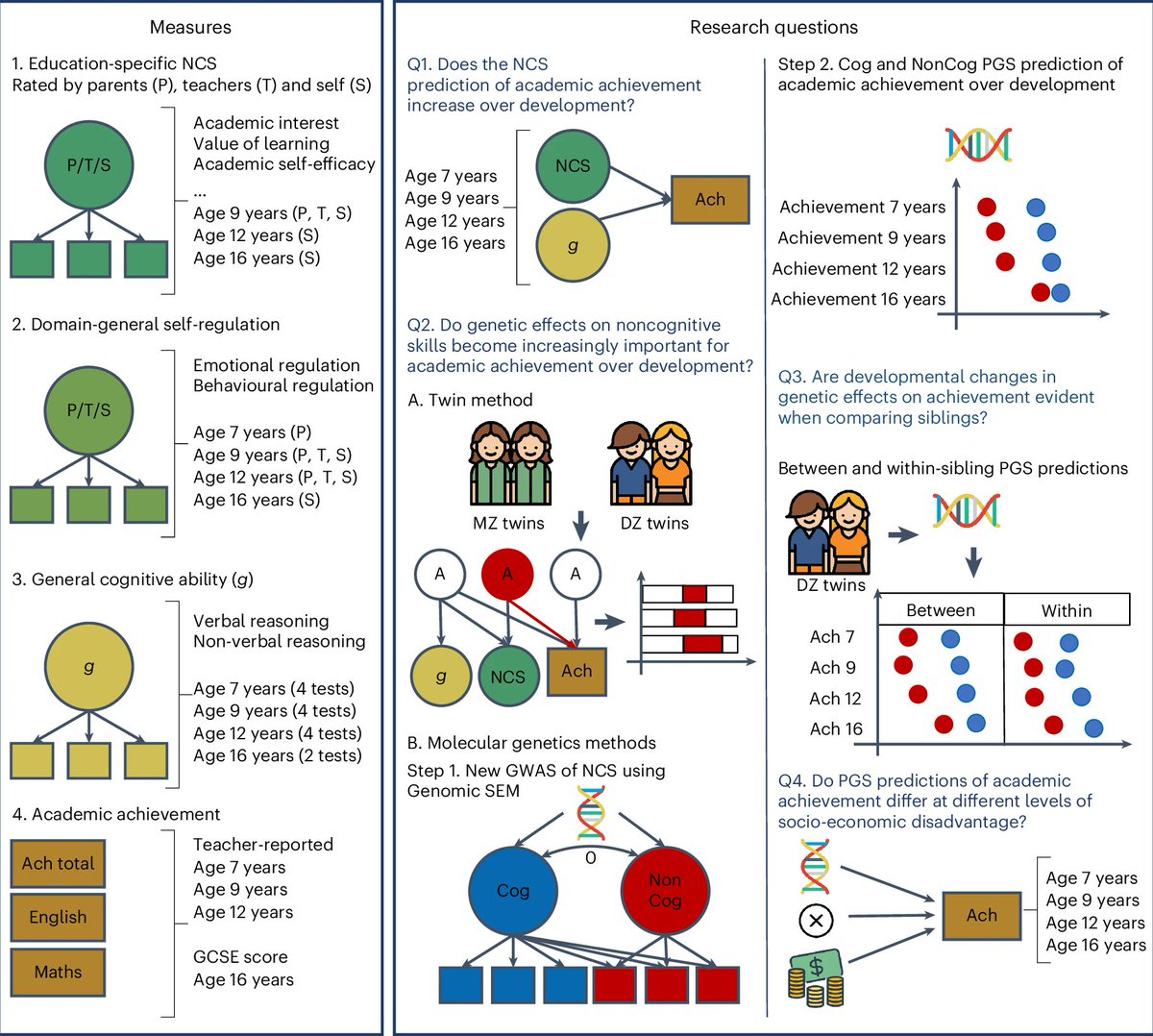
Out today in @NatureHumBehav: Genetic associations between non-cognitive skills and academic achievement over development https://t.co/ZKjPk31DjR
@QMUL@QM_SBBS@uclnews A detailed thread👇
'Unravelling consciousness and brain function through the lens of time, space, and information'
by Andrea Luppi @loopyluppi, @_Fernando_Rosas, @PedroMediano, Athena Demertzi @ADemertzi, David Menon @Menon_Cambridge & Emmanuel Stamatakis @estamatakis
https://t.co/fZddQ1bAjd
1/3 "Lumpability is now a technical term". Take-home from @skdh's wonderful video recap of our preprint on identifying and quantifying emergence (FYI .@seanmcarroll). Thanks Sabine 🙏🏽 - and great stuff project leads @_fernando_rosas & @PedroMediano https://t.co/Q4VdoASf38