@omarsar0 Hi @omarsar0 , founder of Zep here. The technology labeled "Zep" here isn't actually the Zep service. It's Graphiti, an open source framework for building knowledge graphs. Unfortunately, the paper is fundamentally flawed.
When an agent answers from a context graph, it's hard to see which facts it used.
Our graph assistant in the Zep dashboard shows each search it runs and the evidence behind the answer.
We launched Zep v4 this week with a lot of new features. See them all below.
Agents can make poor decisions with simple facts as context.
"Who sells part P-7 to Globex?"
A context graph with pairwise edges can't reliably answer that.
Our v4 API adds hyperedges to Zep Context Graphs, which give agents full facts.
Full write-up below.
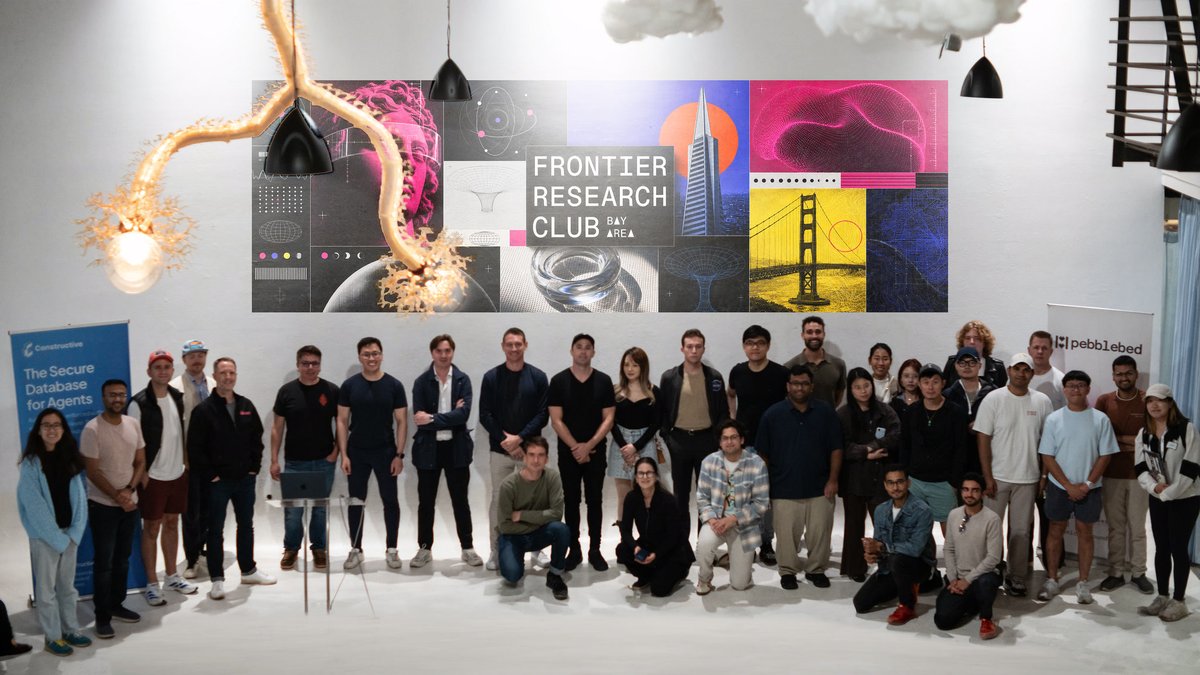
Thank you to everyone who came out to FRC #26 at @pebble_bed for a16z Tech Week. Agents as database users turned into a packed room and a great debate. 🙏
Talks from @danielchalef (Zep), @shulynnliu and @shagarw21 (UC Berkeley Sky). Huge thanks to @Kristopherfloyd and @frontiersynd for organizing.
Next one soon 👀
We're excited to announce the launch of the Zep v4 API!
Agents can now navigate a graph by connection. They see how each episode was built using Ingestion Traces and use hyperedges to retrieve facts that connect more than two entities.
Launch post below.
Memory layer or a whole new database? We spent FRC #26 arguing about it 🧠🗄️
@danielchalef (@zep_ai) made the case that context is production infrastructure: if your agent can't trust what it remembers, nothing else matters.
@shulynnliu and @shagarw21 brought their CIDR '26 paper from Berkeley Sky. Agents don't really query, they speculate: tons of redundant, exploratory probes. So build the database for the agent first.
Then the room fought over whether those are the same problem. No consensus. Exactly how we like it.
Huge thanks to @constructive_io and @danlynch for sponsoring and @pebble_bed + @nicilevv for hosting 🙏
Great to have @tjskhot@yumi_aw@ryanorban@ezrwolf@damnventures and many other regulars in the room!
Tonight: Frontier Research Club #26 at @pebble_bed, an official @Techweek_ by @a16z SF session.
Agents in Production: The Data Layer
@danielchalef of @zep_ai on context as production infrastructure: how facts go stale, how provenance and access control actually work, and how you keep an agent off stale or cross-tenant context.
@shulynnliu and @shagarw21 of @UCBerkeley's Sky Lab on "Supporting Our AI Overlords," their paper with Ion Stoica and Matei Zaharia arguing agents don't query like humans, they speculate, so data systems need a rebuild.
A production memory system, then the case for a new kind of database. The room decides if they're describing the same thing.
Hosted by Kristopher Floyd and Dan Lynch, supported by @constructive_io. We're at capacity, waitlist below. Doors 5:30.
@VSangaraju33860@mem0ai@zep_ai Hi there - your article has some factual errors: Zep retains lineage of derived graphs artifacts — it’s a core capability. Additionally, metadata added to episodes is projected onto graph artifacts, enabling policy-based Attribute Based Access Control: https://t.co/MxbUEXRjzS
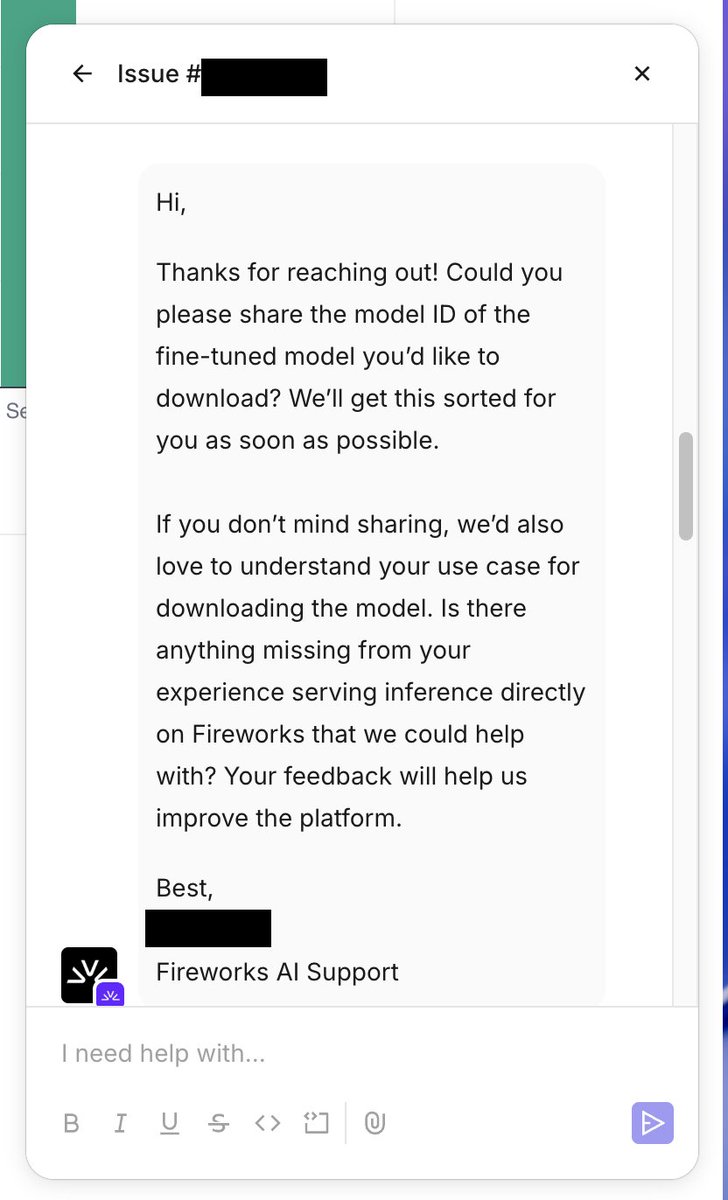
Terrible developer experience. @FireworksAI_HQ doesn't allow you to download models and LoRA adapters trained on their platform, despite documenting this capability. You have to ask for permission and wait several days! This despite spending $$$
@theo@joshu How do curate at scale? Thousands of users driving general purpose agents?
That said, if you’re referring to “chat memory”, I agree it’s a feature, not a product, and definitely not a company.
@JoshARosen@zep_ai Yes - we do have a tiered cache, with shard-local NVMe being warm and S3 cold storage. However, caching granularity is at the graph-level, not sub-graph.
Our graph database at @zep_ai kept failing under load, and adding hardware stopped helping. We replaced it with one we built ourselves. The first version was my holiday project. 🧵
@zep_ai Cutting the scope made it buildable: no query language, and none of the surface area a general-purpose database accumulates. A small team built it and maintains it.
Full write-up: https://t.co/KKMN4vnT1P
@zep_ai Coding agents built much of Konig, used adversarially: one agent proposes a design, another attacks it. The instrumentation came first, and agents could deploy a change, run the tests, read the traces, and fix what they found.