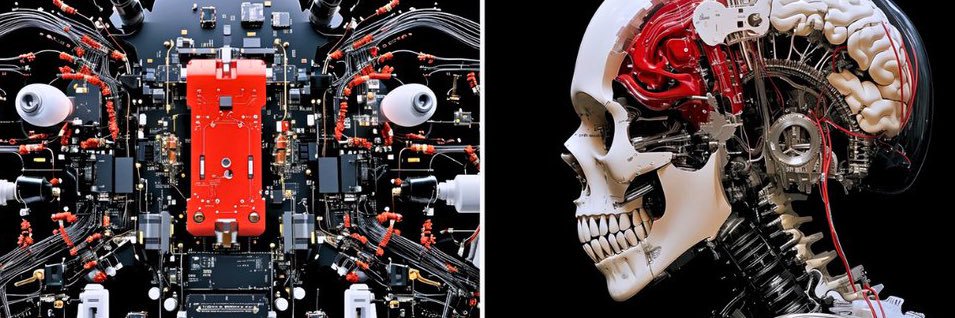
World Labs CEO Dr. Fei-Fei Li: "The world is not made of words."
"Language models have given machines an extraordinary command of concepts, vocabulary, and reasoning, but the physical world, virtual or real, runs on a different substrate."
"Where language models learn the statistical structure of text, world models learn the statistical structure of space and time: how light falls on a surface, how a garden looks from an angle no camera has captured, how objects respond to force and follow the laws of physics."
"Language gave machines a way to talk about that world. World models are how machines will finally come to understand, imagine, reason and interact with it."
Full piece: https://t.co/C9qOJg5wuc
I was one of the early hires at Hexo, most have no clude what their team is capable of. Textbook 'perseverance'. With less than 4 researches they just beat CC/Codex by a mile
* LawBench ~305% over Claude Code
* Denoising MSE score ~32.6% over Codex
* TriMul CUDA ~835% over Claude Code
SOTA at three diff task benchmarks. GPU kernel optimisation in one hand, single-cell RNA denoising on the other. Not many can claim that.
someone hit me up about the new "claude dynamic workflows" feature, claiming "see, multi-agent works"
But really, the launch of this feature proves the exact point that I made back in June of 2025, along with @walden_yan, @tobi, @karpathy, and many others:
Deterministic workflows orchestrating small agent loops beats non-deterministic multi-agent or "agent soup" systems every dang time
everything is context engineering
I met with the founders of https://t.co/VDKFa8U1Su today.
Building an AI scientist.
About to launch something new that is beating all the evaluations.
Their AI is next level. Evolves faster than competition that got a lot more money. Has a better memory. And it is turning the humans who have it into superhumans in their corporations.
It is helping scientists around the world discover new materials and come up with new drugs.
I kept up because the one I am using to build https://t.co/8L5xphk0qQ is the same. Superior. And evolving the same. Built by a 21-year-old genius. Building with AI has made me a better interviewer.
There are tiny startups out there that are beating the big labs.
I am so hopeful for the future because of them.
Karpathy is the bottleneck
We benchmarked SIA against @karpathy's hand-crafted Autoresearch agent on a task that predicts final validation R² from early ML run signals, hyperparameters, configs, and agent strategies.
SIA - a general purpose agent, self improved itself to outperform a specialised agent built by an elite researcher in his field.
The human is the final bottleneck to superintelligence.
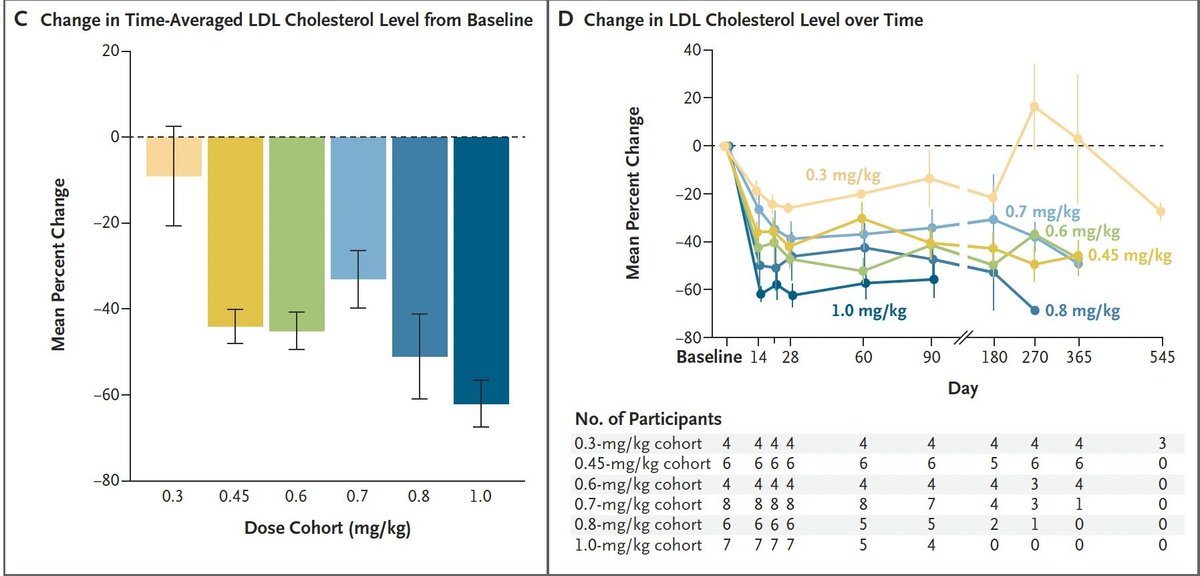
Eli Lilly has done it.
They've gone and made what seems to be a powerful, permanent gene therapy for LDL cholesterol.
That means they'll be able to effectively prevent most heart disease with a single infusion!
Today I was part of the 22% reduced by a San Diego startup.
The business is the strongest it’s ever been. So I think it’s important to be direct about what I’m seeing and why.
First, they made this decision and they own it. I was let go because the way to operate at the highest level of productivity is changing, and to win the future, I needed to change with it.
Second, this wasn’t about cutting costs. I was told most savings from this change will flow directly back into the people who stay. Apparently they’ll be introducing million-dollar salary bands. If you create outsized impact using AI, you’ll be paid outside of traditional bands.
Unfortunately, I only had 90x impact.
And in the new world, 90x doesn’t cut it.
THE 100X ORGANIZATION
The primary change is that we’re restructuring around what they call the 100x org. The goal is 100x output. The roles required to build at the highest level are fundamentally different than they were a year ago.
Incremental improvements to my existing workflows weren’t enough. I was still looking at the PRs I merged, instead of having an army of agents reviewing them.
I was still talking to other engineers, instead of my agents talking to their agents.
Sometimes I even deleted code and features, which means my output was technically negative.
The common narrative is that AI makes everyone more productive. It doesn’t. Many of the workflows of today, if left unchanged, create bottlenecks in AI systems.
I was one of those workflows.
THE BUILDERS, AGENT MANAGERS, AND FRONT-LINERS
— THE BUILDERS: 90X ENGINEERS
I don’t think most employees have internalized what’s actually happening with AI in engineering.
The common narrative is that AI makes all engineers more productive. That may be true in isolation, but at an organization level, that is the farthest thing from reality.
Here’s what we validated recently at this San Diego startup: the great engineers, the ones who can orchestrate, architect, and review, are becoming 100x engineers.
They’re not writing code. They’re directing agents that write code.
The skill is judgment.
Unfortunately, I was still occasionally using mine manually.
AI makes the best engineers wildly more productive, and everyone else using AI slows these engineers down.
Think about it. The bottlenecks are orchestration and reviewing. Everything else is leapfrogged and no longer needed.
So who do you want orchestrating and reviewing code?
Apparently not me.
The new world is about enabling your 10x engineers to become 100x.
I was only at 90x, which is basically a performance issue now.
The wrong strategy is to push every engineer to use infinite tokens. Companies doing this are celebrating 500% more pull requests. But customer outcomes don’t match the volume of code being generated.
I actually made this worse by sometimes deleting code.
Less code is technically less output.
In hindsight, this was not aligned with the 100x org.
— THE SYSTEM MANAGERS
Ironically, the people who automate their jobs with AI will always have a job.
They become owners of the AI systems. Agent managers.
I, regrettably, was still a person.
I had agents, but not enough agents. My agents had tasks, but not managers. My managers did not have agents. And my agents were not yet talking to other agents’ agents.
The underlying systems in which we operate are absolutely critical to get right. I now understand most companies are delusional to think they can iterate on existing humans and compete in this new world.
You must create enough disruption so old systems are deprecated entirely.
In this case, I was the old system.
— THE FRONT-LINERS
In a world that will become saturated with AI communication, the human touch will matter more than anything to customers.
This is a bottleneck that you shouldn’t replace.
I was not customer-facing, so unfortunately I was replaceable.
REWARDING 100X IMPACT
In a world where companies are able to do so much more with less, where does that excess money go?
In their case, much of the savings in this new operating model will flow directly back to those who enabled it.
Not me, because again, 90x.
We must reward people that create productivity accordingly. This aligns incentives on both sides. Plus, in a world where your best people create 100x impact, you can’t afford to lose them.
You can, however, afford to lose the 90x people.
Compensation bands of today should be thrown out the door. They’re introducing $1 million cash/year salary bands with a path available to nearly everyone in the company if they produce 100x impact by creating or managing AI systems.
I was apparently ten x short.
THE FUTURE
Nearly every company will make changes like these. The ones that do it proactively will define what comes next.
The future is not fewer people. It’s different work, new roles, and better rewards for those who embrace it.
We’re already seeing entirely new roles emerge, like Agent Managers, that didn’t exist a year ago.
And we���re seeing old roles disappear.
Like “engineer who personally reads his own PRs.”
I’ve never been more certain about where we’re headed.