SOAS Centre for Pan-African Studies, led by @danielmulugeta, is delighted to host Prof. Anthony Butler from @UCT this Wed (8 July) 12pm.
Prof Butler will present, "Four Dimensions of Presidential Leadership in South Africa: From Mandela to Ramaphosa".
https://t.co/7KcEYzoy7P
Grateful to @T4PAfrica for publishing my paper titled “Charting Africa’s Agency in a Changing Global Order”, with a particular focus on peace & security: https://t.co/fElFf5SHUG
The fact that the paper was released on #AfricaDay gives it special meaning. Africa Day, marking this year the 63rd anniversary of the #OAU, is always a moment not only to take stock of how far the continent has come, but also to reflect on what lies ahead.
In today’s troubled global environment, the need for #Africa to exercise renewed agency in addressing its peace and security challenges has never been more urgent. @_AfricanUnion already has the necessary normative, policy and institutional tools. The real challenge is their effective implementation — through renewed commitment, strategic clarity, and creativity.
That is the central argument of the paper
Happy Africa Day!
@ACCORD_online@africa_amani@AUC_PAPS@issafrica@nupinytt@NorwayAU@NorwayMFA
According to Fanon, the peasant masses are capable of extraordinary acts of revolt and resistance, but they lack a coherent political vision. Their uprisings are spontaneous and insurgent, not strategic or programmatic. What they require is a unifying project, an organised, long-term vision of transformation. He introduces the figure of the radical intellectual. Often cast out from the cities by the national bourgeoisie, they find themselves in the rural hinterlands. It is there, in exile, that they undergo a kind of political reconstitution. Living among the peasantry, they cease to be mere transmitters of elite ideology and begin to operate, in Gramscian terms, as organic intellectuals.
Analysis: https://t.co/WfK0jkoJfr
@ROAPEjournal@CiruMuriuki@KatieSandwell@alexdpking@gndmediauk@wmnjoya@Udadisi@samar42@ReginaldOduor@samar42@Farida_N@jacobin@jkobuthi@realoyungapala@johngithongo
A bilateral state visit between two sovereign nations is categorically different from a former colonial power summoning the heads of an entire continent to a single meeting to conduct what amounts to a collective audience. Trump visiting China is two states conducting diplomacy as equals. Macron convening his rebranded France-Africa summit is one European nation gathering 30+ African countries into a room as though the continent were a single client to be managed.
You never see France convening all Arab heads of state to announce what France has decided is good for the Arab world. You never see a France-Latin America summit where Macron summons every South American president simultaneously to receive his 20 billion euros investment pledges and his vision for their continent.
China does not convene all of Europe. The United States does not gather every Asian head of state into one room for a US-Asia summit. These formats, France-Africa, US-Africa, Russia-Africa, Israel-Africa, exist exclusively in relation to Africa. Only Africa gets summoned. Only Africa gets managed collectively.
So no, it is not that Pan-Africanists cannot say anything about Trump in China. It is that we are not sufficiently intellectually impaired to fail to distinguish between a bilateral state visit and a colonial power staging a continental audience.
Pleasure receiving my dear brother Dr @danielmulugeta, Senior Lecturer and Director of the Centre of Pan-African Studies at @SOAS , University of London, this morning at the AU Headquarters. We were joined by AU colleague & fellow SOAS alumni Dr Akok Manyuat Madut
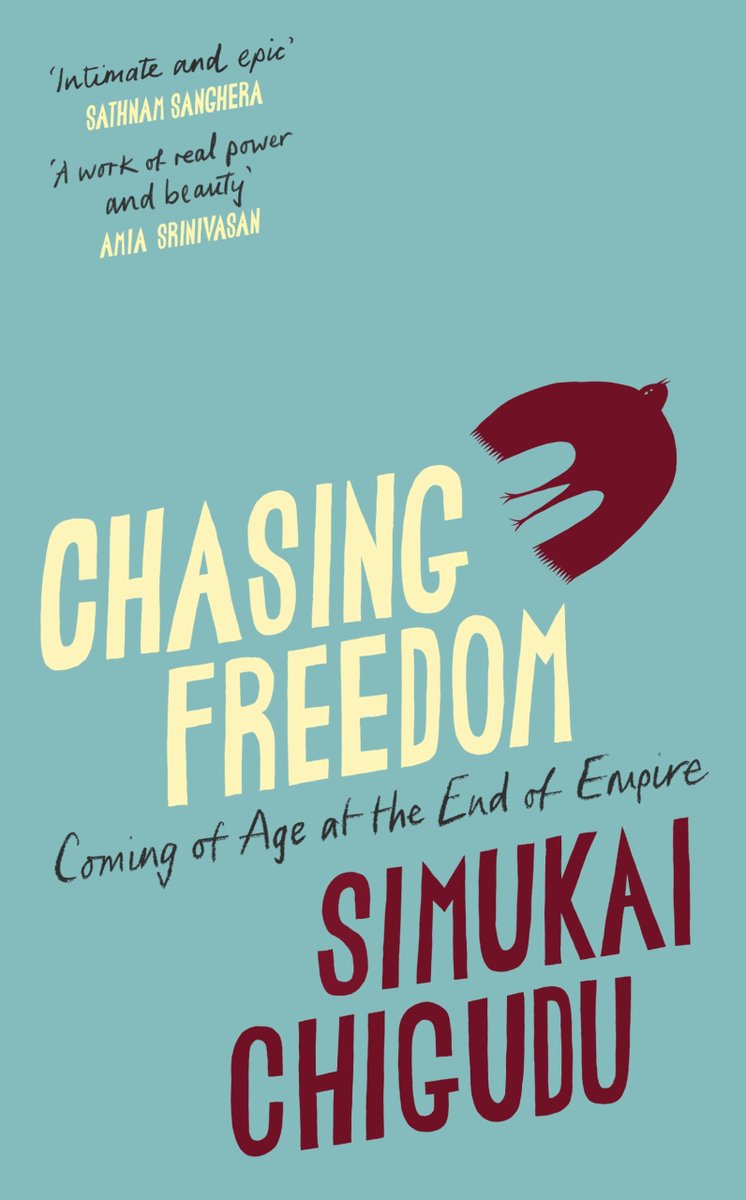
Join Simukai Chigudu for a book talk on 'Chasing Freedom: Coming of Age at the End of Empire'
🗓️ 28 April 2026 | 5:15 PM
📍 Wolfson Lecture Theatre, SOAS
Register 👇
https://t.co/sZCa98AUFH
Fully funded MPhil/PhD studentship at SOAS exploring Pan-Africanism, reparative futures & global order.
Join the UKRI Future Leaders Fellowship project led by Dr Daniel Mulugeta. Includes tuition + stipend. Deadline: 15 May 2026.
https://t.co/wtr8WblFYj
From the 9th Pan-African Congress to the All-African People's Conference: Reclaiming the Ubuntu Philosophy
🗓️ 10 March 2026 | 🕔 5:15 PM
📍 Wolfson Lecture Theatre, SOAS
https://t.co/U4utRX65IB
Reframing Security in the Lake Chad Basin
@AbdulWando new brief makes the case for a regional treaty to regulate vigilante groups through a 3-pillar framework: governance, operational standards & sustainable transition.
Read the full brief
https://t.co/GX3cn5ShOu
📢 New CPAS policy report by Prof. Tim Murithi examines UK-Africa relations—geopolitical shifts, development agendas & African agency in shaping engagement. Key insights for rethinking the partnership.
🔗 Read here: https://t.co/ifUD7DAQsO
'Grassroots Pan-Africanism: Border Lives and Transnational Belonging in the Lake Chad Basin' by @danielmulugeta & @AbdulWando
Read full article
https://t.co/J9V1TQgOP5
Flooding the Zone with Shit: it was time for SA
After two weeks of intense discussions in the U.S. on South Africa’s relations with Washington, I thought I’d have one last quiet evening to reflect. Instead, as I prepared to head back to Joburg/Pretoria from NY, the news broke—Marco Rubio had declared South African Ambassador Ebrahim Rasool persona non grata, calling him a "race-baiting politician who hates America."
After days of conversations filled with concern, confusion, and even quiet apologies—“Sorry we/they’re putting you through this”—seeing it unfold in real time was surreal. Not because it was unexpected, but because it confirmed what I had heard repeatedly: this isn’t just about race or South Africa’s ICJ case against Israel. It’s about punishing any dissent and rejecting international mechanisms that challenge U.S. interests. The U.S. no longer seeks global legitimacy—it believes it can battle the world on all fronts. Expelling Rasool isn’t just erratic—it’s part of an order-transforming process.
For decades, the U.S. was both architect and enforcer of the international system, balancing its role as guarantor, enforcer, and disruptor. But when it abandons the very institutions it once led, this isn’t just a shift. The mask hasn’t slipped—it’s been ripped off by the US itself.
It would be easy to dismiss Rasool’s expulsion as another tense moment in U.S.-South Africa relations. But the real issue is precedent. No Global South country can be allowed to successfully use international law against a U.S. ally, especially being one of the few left. This isn’t about Pretoria. It’s about who might be next.
The irony is glaring. Washington’s accusations of “race-baiting” against South Africa feel like projection. This isn’t about racial division—it’s about burying the ICJ case in controversy. The strategy is clear: distract, discredit, and divert. But the bluntness exposes its weakness.
Over the past two weeks, I’ve spoken to diplomats, policymakers, and academics. Many are disillusioned. Some joke about quitting international affairs altogether, retreating to the private sector. Others are anxious, wondering if they’ll be next. The frustration is real, but exhaustion runs deeper—watching institutions they believed in be hollowed out by power politics.
The real question isn’t about multipolarity or U.S. decline. It’s about power. The U.S. still dominates financially, militarily, culturally. But now, it is throwing away the ressemblance of legitimacy that once made its dominance tolerable. Abandoning the structures that gave you influence doesn’t just erode control—it creates a void.
And voids don’t stay empty for long.
This isn’t just a policy shift. It’s a strategy—one built on disruption, making global governance impossible. Steve Bannon called it “flooding the zone with shit”—overwhelming the system with chaos so no one can process what’s happening. That’s no longer just a domestic tactic. It’s defining international relations.
So where does that leave us? At a crossroads. The U.S. is walking away from the system it built. The message is clear: “Deal with your own mess.” Maybe it’s time we do just that. Not through bureaucratic tweaks, but by redefining global governance itself. The longer we wait, the harder the hit will be.
Rasool’s expulsion might seem minor in global politics. But small moments add up. And sometimes, they trigger something bigger. This feels like one of those moments. The rules we thought governed international relations? They were never absolute, we knew it. Now, we have to decide what comes next.
The African Union Commission (AUC) is pleased to announce the appointment of Mr. Nuur Mohamud Sheekh as the new Spokesperson to the AU Commission Chairperson, H.E. Mahmoud Ali Youssouf. He succeeds Ms. Ebba Kalondo, who has successfully completed her tenure in this role.
The Institute of Foreign Affairs (#IFA) and School of Oriental and African Studies (#SOAS), University of London explored areas of collaboration related to diplomatic training, curriculum revision, research, and organization of joint dialogues focused on foreign policy
For those trying to make sense of the #M23 situation in eastern #Congo, ignore the simplistic stuff coming out of the US, UK & SA press & check out this excellent podcast by @richmoncrieff@CrisisGroup. https://t.co/YCkRQH0JR3
1. The tragedy playing out in the Eastern DRC including the death of South African soldiers has brought into sharp focus our military and diplomatic capabilities. The subsequent debate led by our ruling and opposition politicians reveals an immaturity that should concern us all.