Interesting study from Mexico: central sensitization in #EDS/HSD is associated with 3 factors: fatigue, pain and #dysautonomia. What to make of this?
🧠 As I wrote in my prior papers, #POTS/#dysautonomia/#MECFS/#LongCOVID involve the brain and "may be" neuroimmune disorders.
🧠 Many "terms" have been used to described this sensitized/altered state of brain: central sensitization, anxiety, somatization, FND and others.
🧠 It's much less important what the term is and much more important what we do about it.
🧠 If we, neurologists-psychiatrists, continue to offer different kinds of psychotherapies to patients, we'll be stuck forever in the ineffective, unhelpful therapeutic framework that we currently operate in.
🧠 Instead, we need to target abnormal neuroimmune pathways, autonomic dysfunction, probable neuroinflammation, possible altered glymphatic system, possible venous congestion, possible endothelial alterations of small penetrating arteries perfusing the brainstem and many other possible factors, IF we want to have effective therapies for patients.
https://t.co/UUj9voDNXq
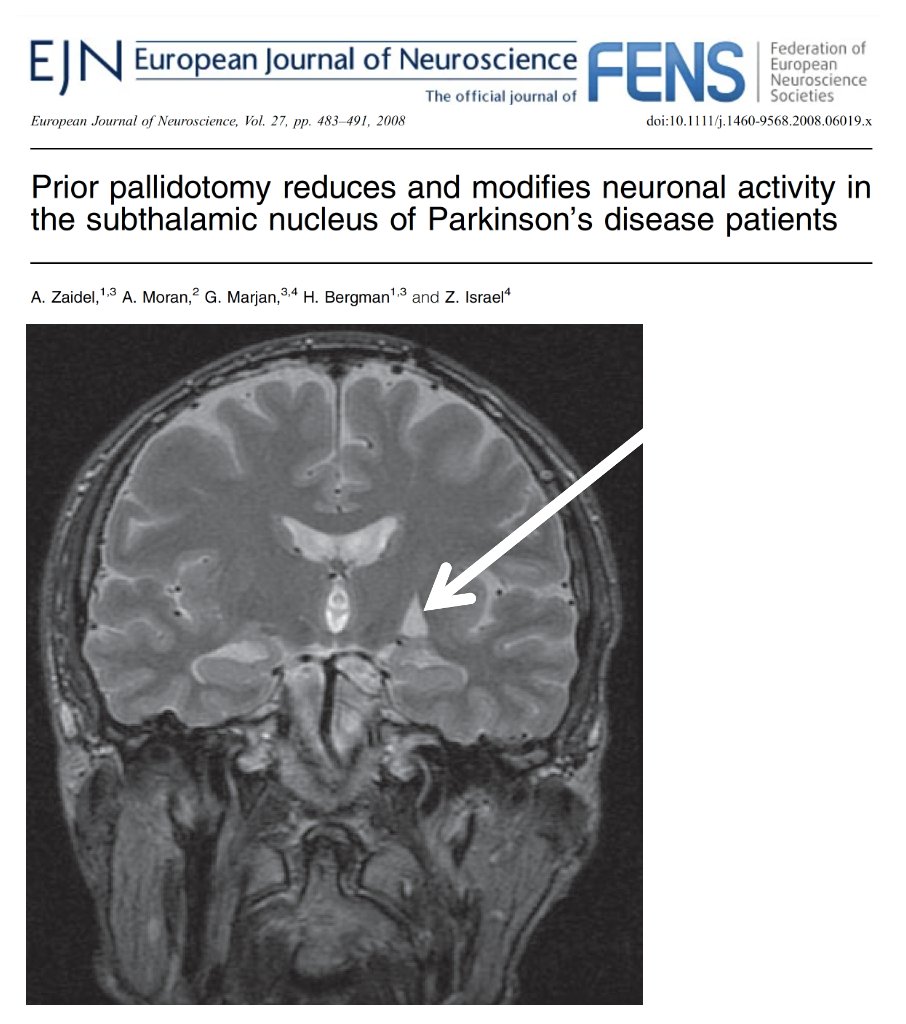
Focused ultrasound and pallidotomy: what can lesions teach us that DBS cannot? A lesion means creating a permanent interruption in a brain circuit. Deep brain stimulation (DBS) uses electricity to modulate and reshape abnormal circuits without destroying tissue and importantly it can be adjusted, optimized and reversed if needed. Adam Zaidel and colleagues described in a fascinating paper (2008) in the European Journal of Neuroscience how prior pallidotomy lesions altered the physiology of the subthalamic nucleus (STN) years later in folks living w/ Parkinson's disease. As focused ultrasound lesioning rapidly expands across the globe, this older work may provide important clues into how lesion therapies and DBS differ in their effects on brain circuits. Thanks to my friend Hagai for reminding me about this one.
Key points:
- Prior pallidotomy reduced abnormal activity and oscillations in the STN, suggesting that lesioning one node in a network can reshape activity in distant connected regions.
- The effects were durable and measurable years later, supporting the idea that lesion therapies may permanently reset portions of dysfunctional brain circuitry.
- Despite these changes, STN DBS remained effective in many individuals, highlighting that lesioning and stimulation may improve symptoms through overlapping but distinct mechanisms.
My take: The recent enthusiasm surrounding focused ultrasound is exciting and appropriate. For carefully selected folks, lesion therapies can be transformative. However, focused ultrasound and DBS are fundamentally different interventions and should not be viewed as interchangeable. DBS is more like installing a dimmer switch in a room. You can turn it up, turn it down, move the settings around and adapt as the disease evolves. Focused ultrasound is more like removing a wire from the circuit entirely. Sometimes that may be exactly the right strategy, however, once the wire is cut there is no putting it back.
Here are 5 points that resonated w/ me:
1- Lesions teach us important aspects of neuroscience because they reveal what happens when a node in a brain network is permanently removed.
2- DBS teaches us something different because it allows us to observe and manipulate brain networks in real time.
3- Parkinson's disease and tremor are network disorders and not simply diseases of one structure or one target.
4- The reversibility and programmability of DBS remain major advantages, especially for younger folks and for diseases that evolve over decades.
5- Focused ultrasound and DBS should not compete against one another. The future is matching the right therapy to the right person at the right time in their disease journey. The next decade will likely teach us that lesioning and stimulation are complementary tools. Understanding when to use each may be every bit as important as understanding how they work.
https://t.co/hNd0fLQNYg #parkinson #tremor
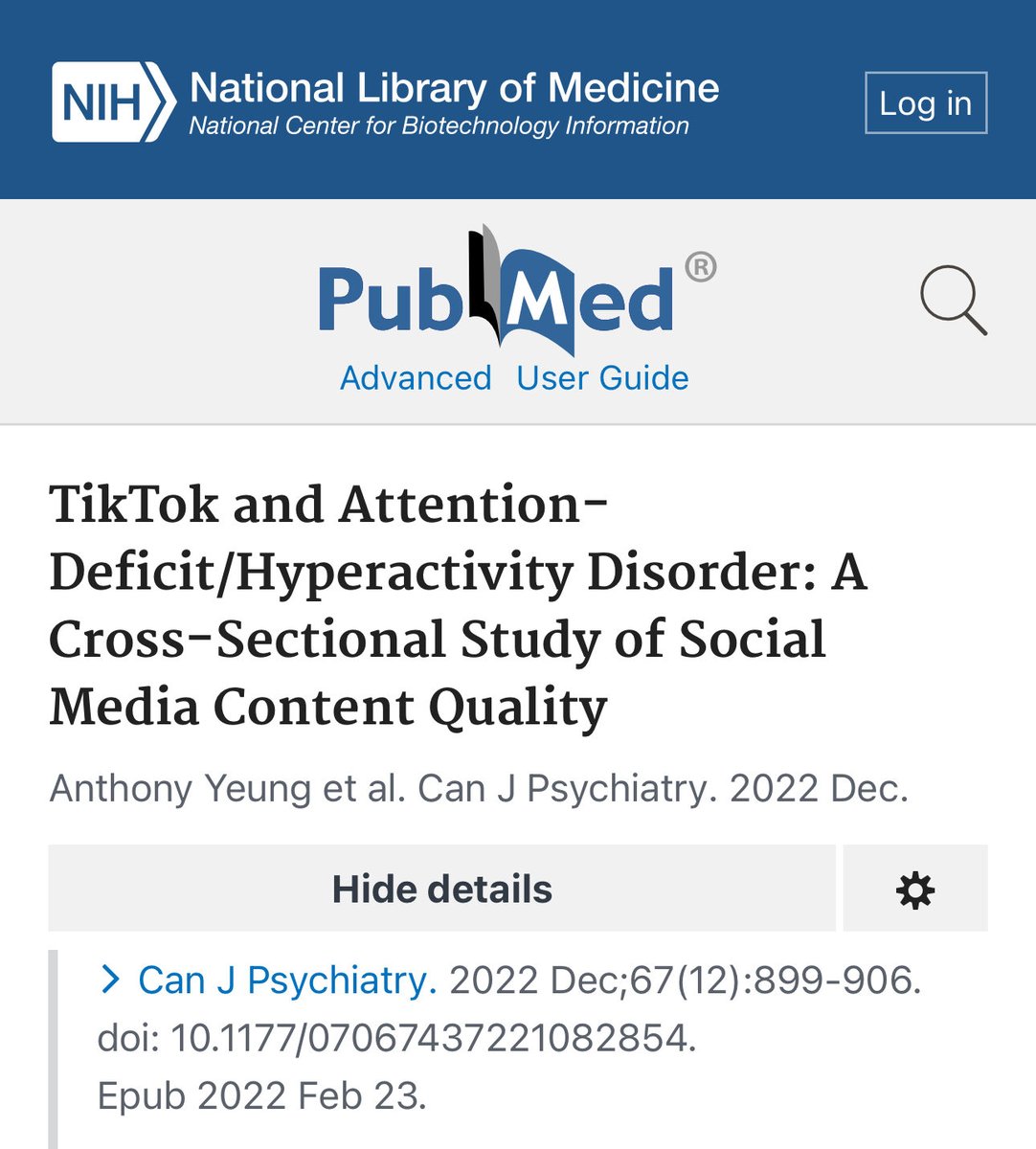
Dos estudios, uno sobre Youtube y otro sobre TikTok donde el objetivo principal fue analizar la calidad de la información compartida sobre TDAH.
👉🏻 En Youtube, el 57% de los vídeos tenían una duración inferior a 5 minutos; solo el 5% fueron calificados como muy útiles, mientras que el 38% eran engañosos. Curiosamente, hubo un número significativamente mayor de “me gusta” en el grupo de videos engañosos, en comparación con los vídeos muy útiles.
👉🏻 En TikTok se analizaron los 100 videos más populares sobre TDAH.
El 52% de los vídeos se clasificaron como engañosos; el 27% como de experiencia personal y el 21% como útiles.
Los usuarios con experiencia clínica subieron videos de mayor calidad y más útiles, mientras que los que no tenían dicha experiencia subieron la mayoría de los videos engañosos.
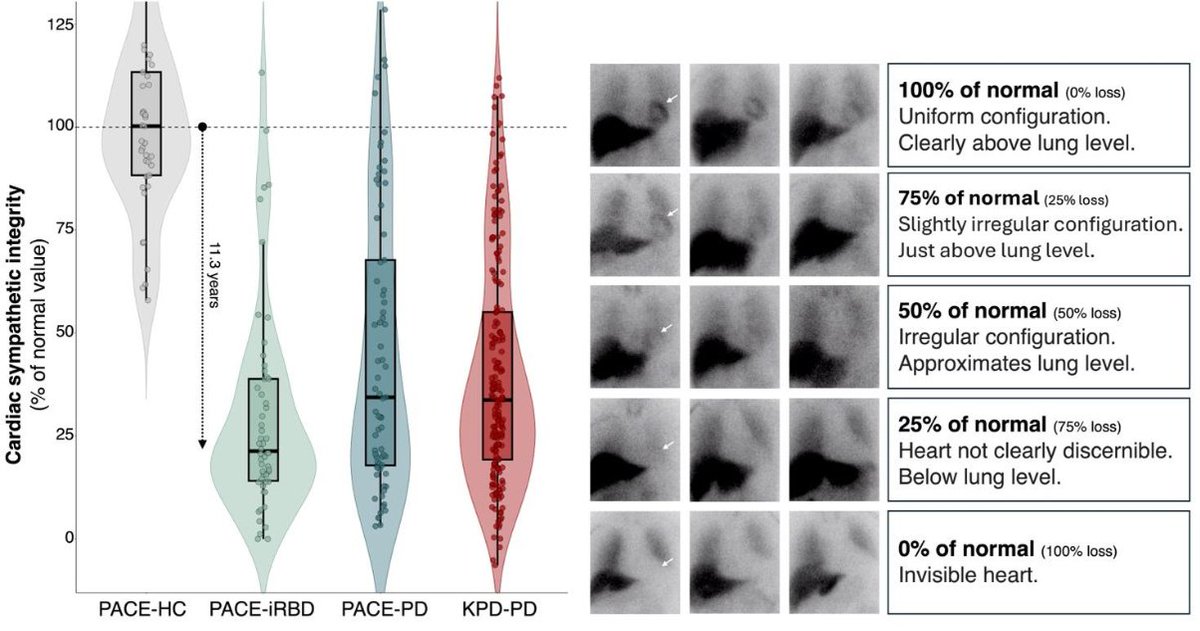
Using longitudinal imaging data to model the progression of cardiac sympathetic & nigrostriatal dopaminergic degeneration, @perborghammer & colleagues use the resulting curves to estimate the prodromal period of Body-first Lewy body disease
https://t.co/fI12M29V7m
La #Olanzapina es 700 veces más anticolinérgico que el #Haloperidol
Es por ello que no es recomendable como tratamiento de 1era línea en paciente en #DeliriumHiperactivo precisamente por incrementar el riesgo de prolongar el efecto anticolinérgico
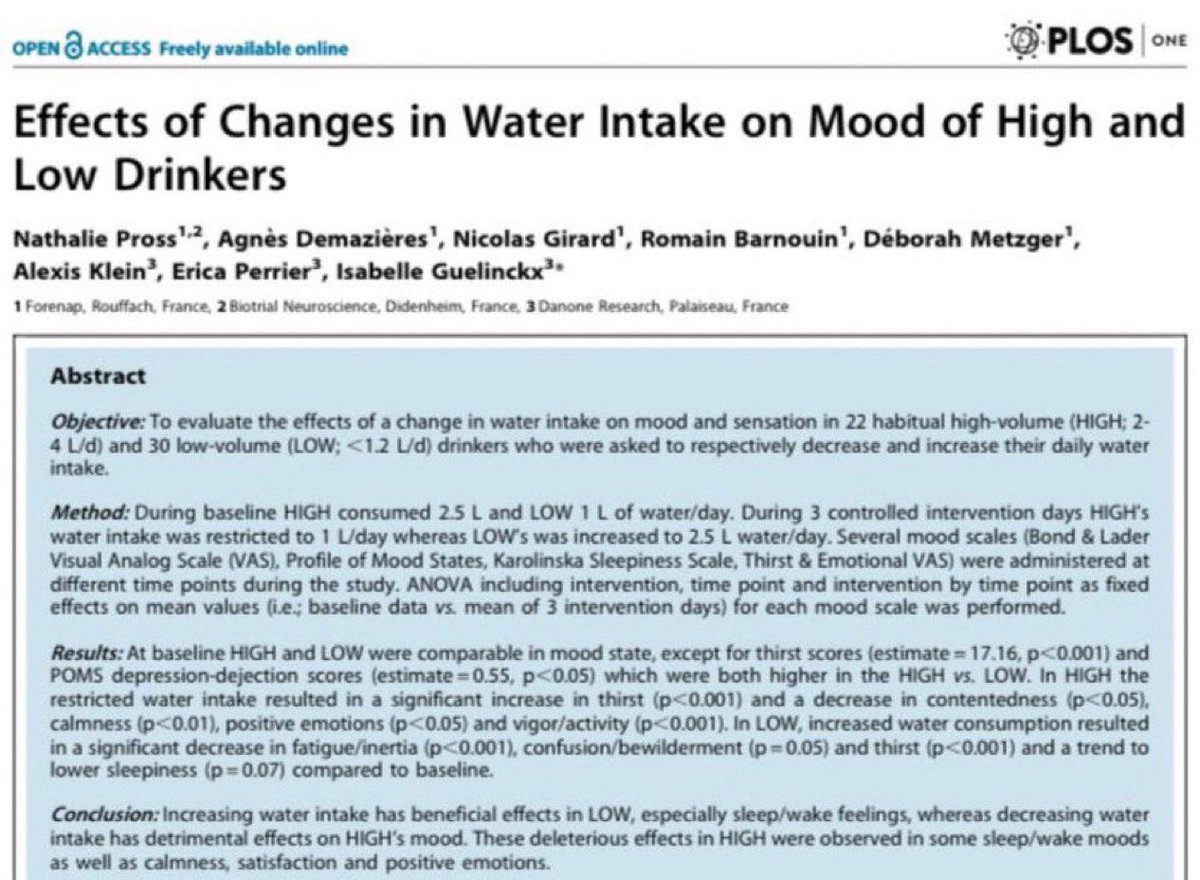
💦 ¿EL AGUA QUE BEBES PUEDE AFECTAR TU ESTADO DE ÁNIMO Y TU DESCANSO?
‼️En persona que beben menos de 1,2 litros de agua al día, aumentar su ingesta de agua a 2,5L al día, produce:
✅Mejor estado de ánimo.
✅Mejor descanso nocturno.
Defecar antes de hacer ejercicio mejora el rendimiento un 17%.
El cerebro, especialmente la corteza prefrontal, controla el reclutamiento de músculos durante el ejercicio intenso. Este proceso consume mucho oxígeno, por lo que necesita un buen flujo sanguíneo.
La distensión rectal (por tener heces en el recto) activa el sistema nervioso autónomo (el que controla funciones involuntarias como presión arterial, digestión, etc.). Esto genera una competición por la sangre entre el intestino y el cerebro. Como resultado, llega menos sangre a la corteza prefrontal.
Al evacuar antes del ejercicio, reduces esa competencia. Se libera más sangre hacia el cerebro, lo que mejora la oxigenación cerebral, retrasa la fatiga central y aumenta el rendimiento.
A patient with isolated peripheral nerve vasculitis developed reversible bilateral hypoglossal palsy and tongue atrophy, with resolution of bulbar symptoms following immunosuppressive therapy and reinnervation, a rare neurological outcome.
https://t.co/AbidOqwqyX
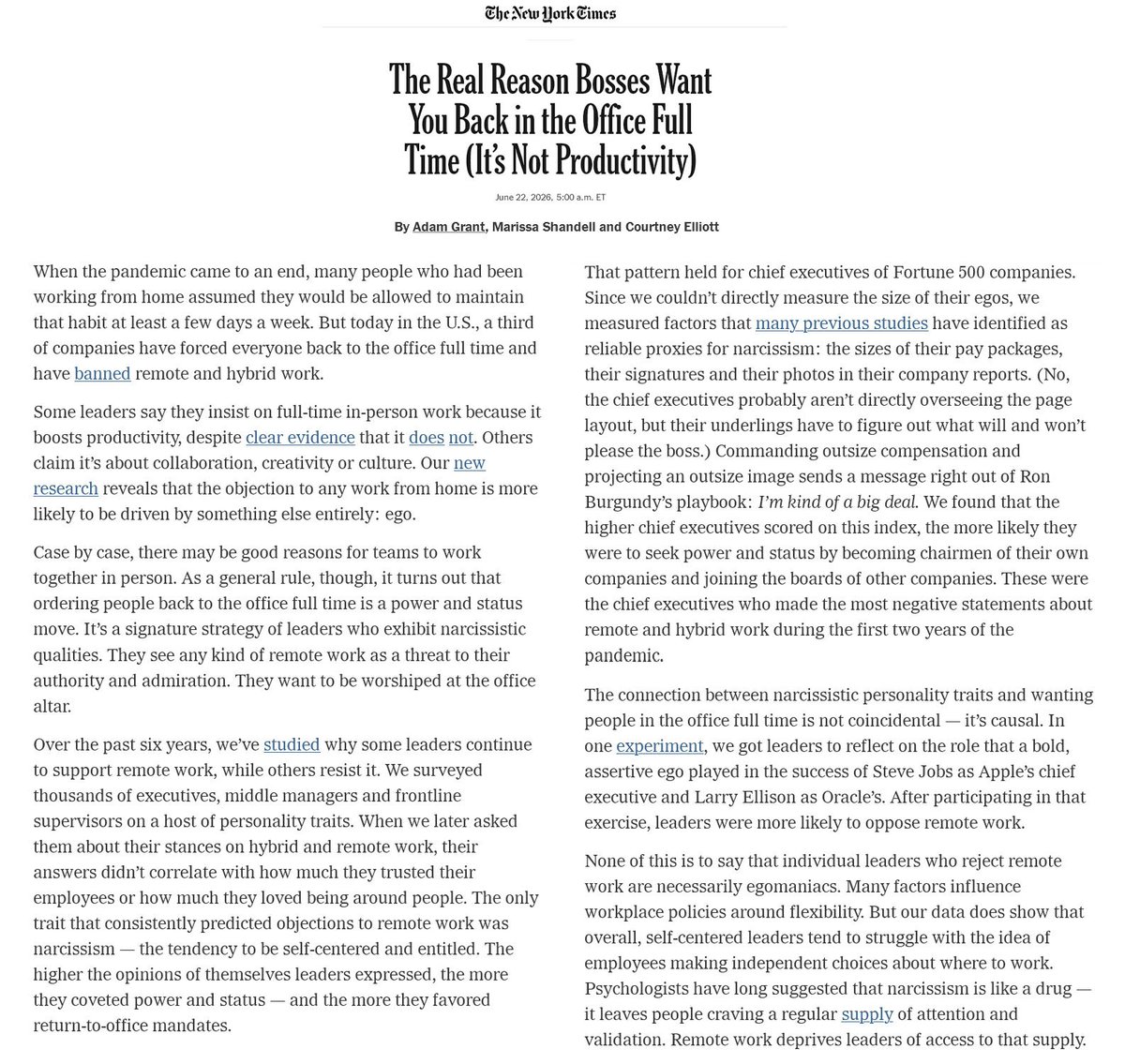
Narcissism is pervasive in medicine and science and is a huge detriment to progress, innovation and advancement.
Thanks @AdamMGrant for a great article!
#ScholarlySunday
Congratulations to Dr. Keshet Pardo (Headache Fellow) for receiving the “Frontiers in Headache Research Award” at American Headache Society annual meeting, 2026!
Way to go! 🎉🎉
#mayoneurofellowships
Article: Arif Dalvi and colleagues investigate the benefits and harms of staged, bilateral magnetic resonance-guided focused ultrasound pallidothalamic tractotomy for motor complications of Parkinson's disease: https://t.co/0vMtgvzMTJ