There has been a discussion on X lately about biomarkers for #LongCOVID, so I thought I would share some blood markers available that might point to immune, clotting and endothelial dysfunction. Encouragingly, all of them are available at specialised pathology labs worldwide.
These are also the molecules we keep finding trapped in fibrinaloid microclot complexes across our various (proteomics) analyses: fibrinogen, von Willebrand factor, Factor VIII, serum amyloid A, complement proteins (C3, C4, C5, C1q, factor B), platelet factor 4, P-selectin, myeloperoxidase, neutrophil elastase, transforming growth factor beta-1, endothelin-1, vascular endothelial growth factor, Serum Amyloid A, and many more. We also know that many of our collaborators have also find these molecules in the soluble fraction of plasma, when when they have done proteomics and ELISA tests.
We have known for a while that these proteins are present in both the soluble and the insoluble fraction of plasma, mostly, we have just been searching inside the insoluble fraction of blood plasma for possible dysregulated inflammatory molecules that might in future, be targeted by treatment regimens. What is new in our approach, is that we have only recently started looking at post-translational modifications (PTMs), on proteins and we have found that some are extensively modified: glycated, oxidised, deamidated, citrullinated.
What is PTMs? A post-translational modification (PTM) is a small chemical change made to a protein after it has been built, that slightly alters the protein without changing its underlying identity.
A simple way to picture it: the protein is the basic product, and PTMs are the stickers, tags and add-ons attached to it afterwards. The item is still the same item, but the additions can change how it looks and behaves, whether other things can grab onto it, and how long it lasts.
In the body, these tags get added in response to conditions like inflammation, high blood sugar or oxidative stress. Common examples are sugar molecules stuck on (glycation), oxygen damage (oxidation), or other small chemical groups. The protein's amount in the blood can look completely normal, while these tags quietly change how it works, which is exactly why a routine test can read "normal" and still miss the problem.
Also note that much earlier work by well-known researchers in the fibrinogen field has found post-translational modifications on fibrinogen in various inflammatory diseases.
More to come from our research group! Please, in the mean time see a the table below. These might be some valuable biomarkers that might to used in clinical investigations and might assist clinicians to target some symptoms.
@dbkell and I have also discussed possible devices like capillaroscopy for detecting vascular damage. @ImmunoFever has recently discussed the applications in numerous posts.
Lastly, this is in no way suggesting that these are the only biomarkers, it is just a small snapshot molecules our lab is finding and studying. There are numerous more biomarkers that can be looked at for neuro-immunology, muscle and many more systems.
The most socially acceptable way to destroy your life:
Overthink everything.
Act on nothing.
Your mind calls it “figuring things out.”
Here are Eckhart Tolle’s 7 steps to break the loop: 👇
1. Recognize that there’s a voice in your head that never shuts up.
👁️ ¿Y si una lágrima y un examen del ojo pudieran ayudar a diagnosticar la COVID persistente?
Un nuevo estudio de la Universidad de Linköping (Suecia), encontró alteraciones inmunológicas y nerviosas en personas con síntomas oculares persistentes tras una COVID-19 leve.
🧵
Ante el incremento en la positividad de COVID-19 en México:
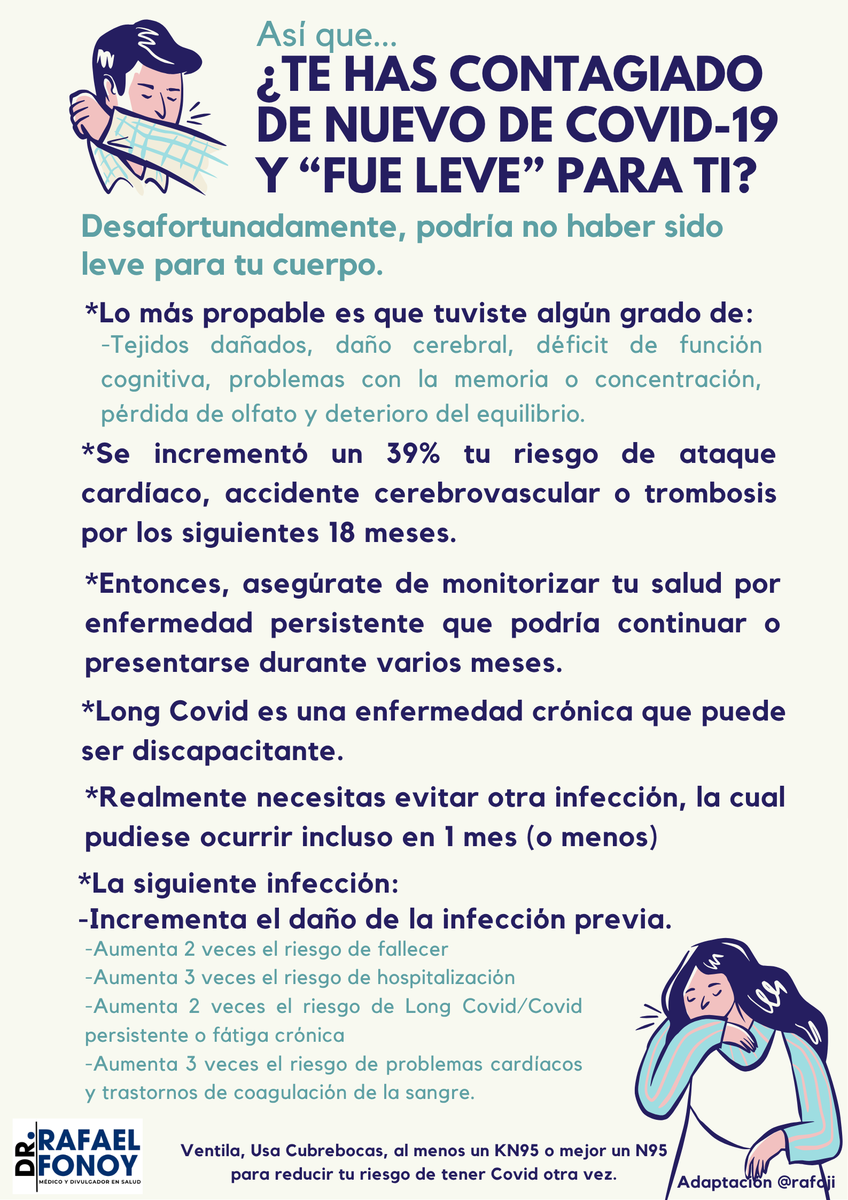
Recordemos que el COVID-19 es una enfermedad sistémica que afecta sobre todo al sistema cardiovascular y que puede llegar a presentar síntomas respiratorios, así como que el daño al organismo (aún en cuadros leves) puede ser acumulativo y exacerbado con cada reinfección. Eso sin contar que se incrementa el riesgo de desarrollar COVID persistente.
Sigue sin ser buena idea infectarse de COVID-19, incluso en 2026.
6) Summary + protocol
(Not medical advice)
- Breakdown biofilms
- Use antimicrobials depending on what specific microbes are involved (Berberine/ Allicin/ Monolaurin/ BSO/ Pomegranate husk)
- Inhibit Quorum sensing with Quercetin, Allicin, cinnamon, herbs, teas like skullcap etc
- Support detoxification with NAC (glutathione), Black seed oil, Big 6 lymphatic by @stopchasingpain , Glycine, Taurine, B vitamins, Hydration and electrolytes
- Optimise bile, stomach acid, motility, MMC, Mucus layer, Goblet cells, paneth cells, Oral biome etc
Thanks for reading!
Breaking your hip from a fall is one of the most common fears as we get older.
For some, that one fall is the start of a walker they can't go anywhere without, a loss of independence, and a mountain of care bills.
How to build hip bones strong enough to survive a fall:🧵
Health is like oxygen. You don't notice it until it's gone.
That's why healthy people can't fully understand chronic illness — Not necessarily from a lack of empathy, but from a lack of a reference point.
They lack context.
Microsismo (a ver si lo reportan también en el SSN)
13/07/2026 21:45:05 M1.0
Col. Sears Roebuck, Álvaro Obregón, CDMX. 01120
19.4008°, -99.1951°, ~ 1 km
Por la densidad de estaciones en la zona, fue posible localizar el epicentro con un radio de incertidumbre de 250 metros. No se reportó percepción, únicamente registro instrumental.
También ha sido de los microsismos más cercanos que he tenido a mi ubicación (~650 metros).
Japanese researchers linked Long COVID to a dormant herpes virus reactivated by SARS-CoV-2 infection, triggering the SITH-1 protein. Identified in roughly 70% of patients, this protein may contribute directly to brain dysfunction, fatigue, and depression.
https://t.co/9ftXPYcW6Y
Muscle biopsy studies in ME/CFS and Long COVID have found oxidative muscle stress, altered glucose use, mitochondrial changes, capillary injury, nerve-muscle damage and worse muscle pathology after PEM. Let's break down what the findings mean.