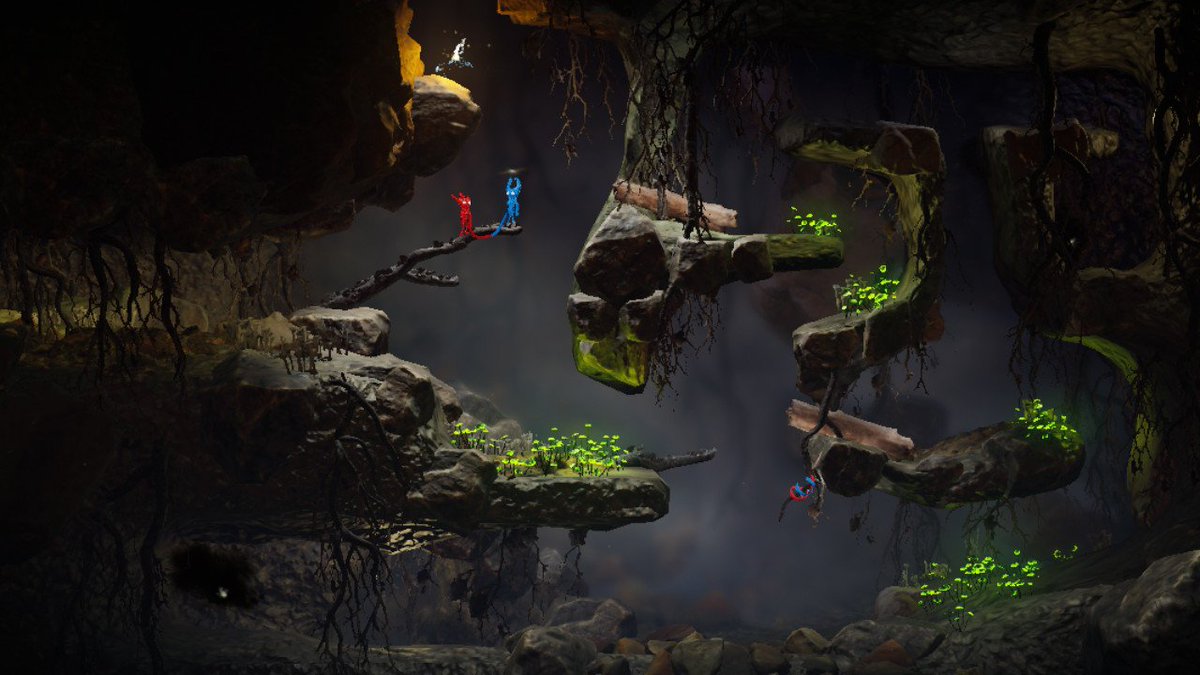
@JavaCoolDude That's what we do. Accumulate to low res SH lightmap atlas and do normal mapping in PS. It works pretty well, except we don't currently have a clean way of allocating in atlas based on screen space size.
@reduzio@webcrumblick@Raven67854 For a naive path tracer, 1024 rays per texel is nothing when your light source is something else than the sky. Even at just 3 bounces.
@TitusWinters@Cor3ntin@TartanLlama @thephantomderp I use optional<T&> all the time as well. For me it isn't so much that T* isn't semantically clear, but rather that: 1) optional is more expressive, and 2) It's annoying to have to care in a generic context.
@Bobby_Anguelov@RyanJuckett@ikrimae Well, we don't have an idiomatic way of doing things like that, so I guess it depends. The weapon would typically be a separate GameObject, and the sync between the weapon and character would be depend on what we were trying to achieve.
@okonomiyonda@miniciv@ocornut@nothings@paniq All industries are exactly the same in this context. There are two parties with completely clashing interests. Unions exist to make the weaker party stronger. This is neither complex nor unique.
@JJcoolkl We shipped with 5.1. Unravel 1 used Lua extensively, but we mostly moved away from it to an in-house visual language called Fabric. Mostly to make it usable by non-programmers, but also to get away from dynamic typing and GC. Performance was also a reason.
@SebAaltonen This is a really silly blanket statement. Yes, you should keep your mem access patterns sane. No, not all programs reduce to a linear iteration of data.