We are terminating Chris Degnan for unethical conduct involving Cognition.
The last few months have seen incredible progress in AI capabilities. San Francisco has flourished as new companies that solve new, more ambitious problems are finding great success. Generally, it is a wonderful time to be building.
We at @FactoryAI have seen overwhelming interest in our model-agnostic coding agents and our software factory product. Our team has 10x’d in size, while our revenue has 100x’d year over year. This momentum has been unprecedented.
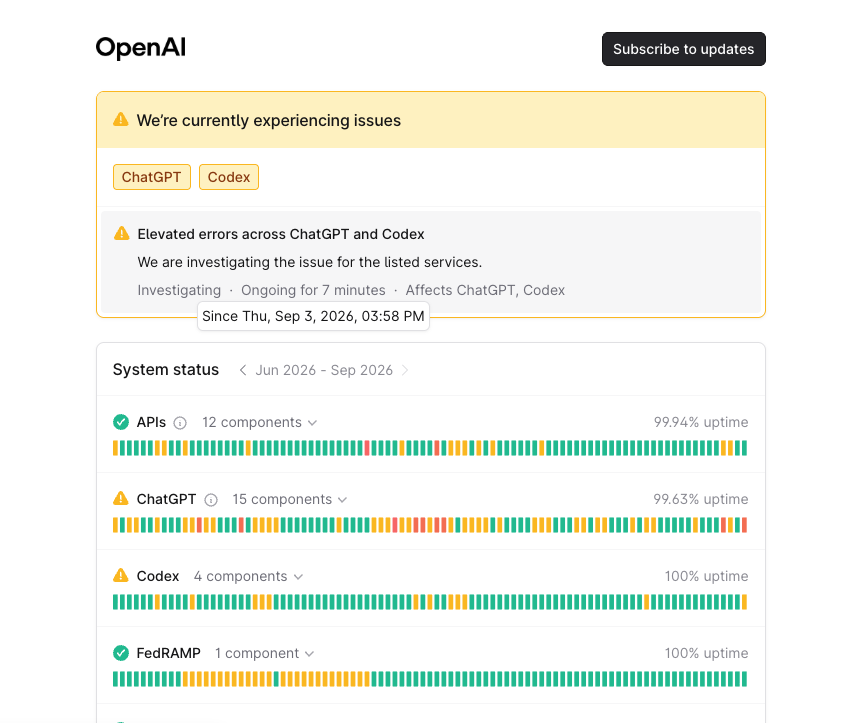
A much larger competitor, Cognition (makers of Devin) has fallen behind us on the capabilities that matter most to customers: cost, quality, and security. Instead of competing in the market, Cognition engineers feigned interviews with us to pry information about our product. Not finding what they were looking for, Cognition has decided to throw their weight and money at people with direct knowledge of our most confidential plans.
It feels as though ethics is being thrown out of the window in the AI era. People are willing to do anything, including exploiting privileged information and violating ethical boundaries. I think this is unique to our time, and I don’t think it’s right. Integrity still matters.
Yesterday, I made the decision to immediately terminate Christopher Degnan’s roles as a Board Observer and Advisor to Factory, after over a year of service.
Prior to this decision, Chris told me he had a casual conversation with an executive at Cognition AI. When I questioned his intentions, he reassured me that ethics aside, he had “made too much money” and was “too lazy to go work for Cognition,” which I trusted and believed.
On Monday, Chris spent time advising the Factory team on a handful of confidential board-level matters. That evening, he called me to say that the conversation that was initially described as casual and one-off was actually formal and recurring. For weeks, while he sat in our board meetings and advised our leadership team, he was also confiding with executives of our largest competitor. Chris was subject to confidentiality obligations in connection with his work with Factory. We do not know the extent of the information he shared, but it puts his timely questions about our product roadmap and what the parity gap involves into a new light.
It is sad to sever a relationship with someone who has been a trusted advisor - and even a close friend - for over a year. But Chris’s conduct is unacceptable to me. Trust in Board Membership is one of the sacred bonds in the Silicon Valley, one that helps the startup ecosystem thrive. With it comes an enormous responsibility. That trust was violated.
Competition is good. I respect and in many cases admire our competitors. San Francisco is a beautiful, singular place where the bold and ambitious go to defy the norms and precedents of the past. But certain principles that must remain. Violating ethics to seek advantage turns what should be positive-sum into zero-sum.
We all love technology. And we all love to compete. But we must hold ourselves to a higher standard. The future of software engineering comes with abundance that will impact every person on Earth. Building that future comes with immense responsibility. We must build and compete with integrity.
Out of the box, long-horizon agents struggle to accurately perform end to end work in the real economy (outside of coding) because those tasks are not easily verifiable, the data is hard to scale, and going from inputs to real outcomes can actually take many days.
Even if you had a reliable way to verify outcomes at scale (and weren’t bothered by the multi-hour iteration loops), the sheer volume of decisions by the agent that occur in a multi-hour job makes it hard to know whether performing well will generalize to production.
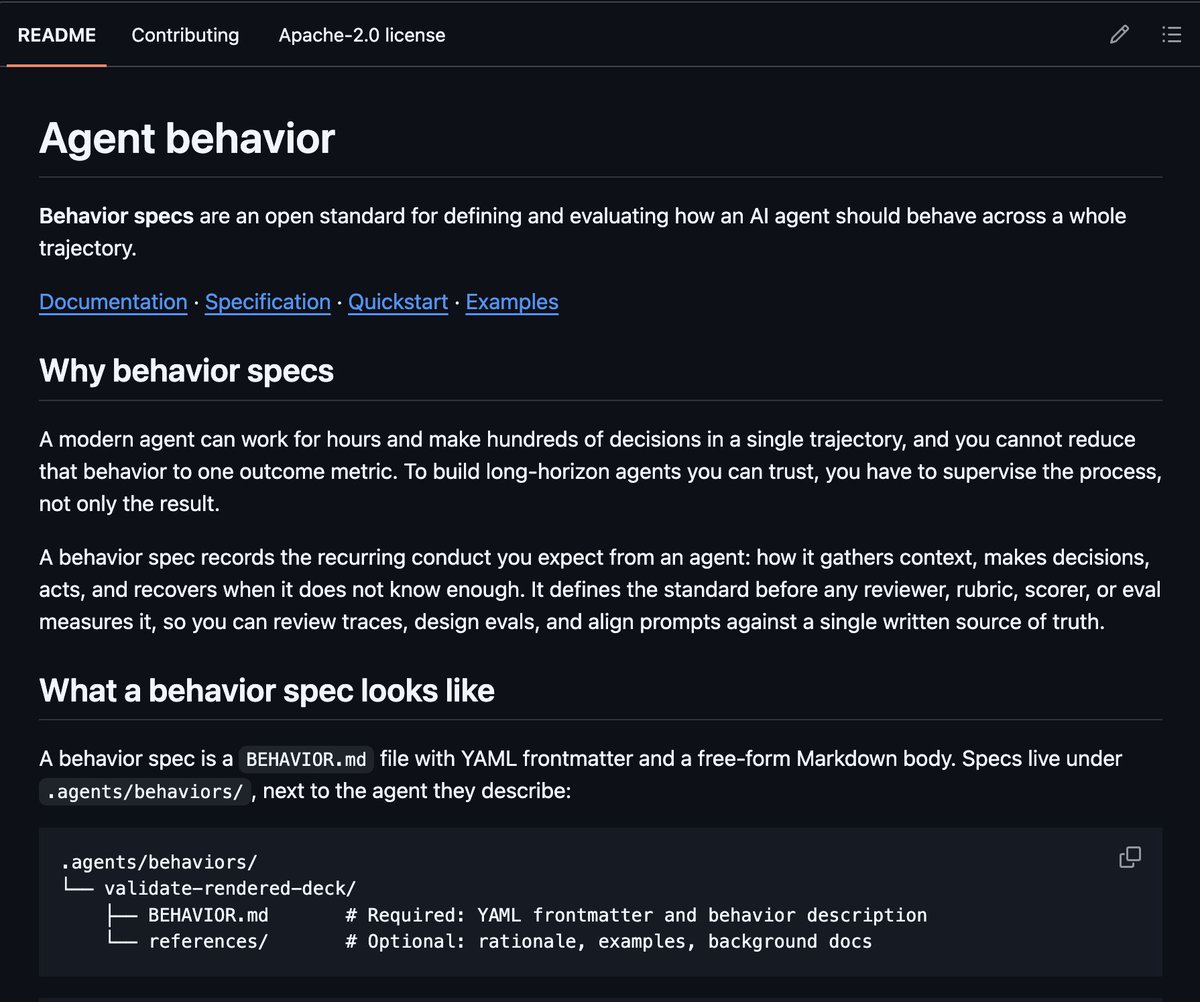
Over the last two years at @trybasis, we've been solving this problem by supervising the process our agents take to get to outcomes, rather than just looking at whether the outcome itself is correct.
We think this is the key to building production agents at scale.
It's what has allowed us to run agents in production that operate for hours, sometimes days, and reliably perform tasks like entire complex tax returns end to end.
Today, alongside @braintrust, we're open sourcing a standard for defining, evaluating, and eventually rewarding agent behaviors.
Thread below with all the details on how we’re scaling behaviors to close the loop for long-horizon agents.
I have great respect for YC, but need to say what many are surely thinking:
Startup School in a stadium feels antithetical to the YC brand and to what makes startups work.
The YC brand felt like it was designed to filter out status chasers.
The bare Mountain View office. The utilitarian design of Hacker News. Everything about YC said: if you’re a curious hacker, we’re your people. If you’re looking for other kinds of prestige or excitement, we’re not for you.
Great early stage startups are designed the same way: they’re for the people that get a thrill from the work itself, not surrounding fanfare.
If it were just the arena I wouldn’t comment, but you can feel the gravity of a status vortex slowly tearing down what made YC special.
You can feel the herd rushing into an overflowing barn. A stadium sized barn.
You see how YC is now more prestigious than most college degrees. How prestige seekers name drop YC partners. How many YC founders now quit in the early innings—because they didn’t really love the work.
Maybe it’s inevitable. It happens to startups too. Eventually the underestimated, curious, hard working teams become the winning teams. And then the status chasers flock to them.
If YC is not strong enough to fend it off, maybe no one is.