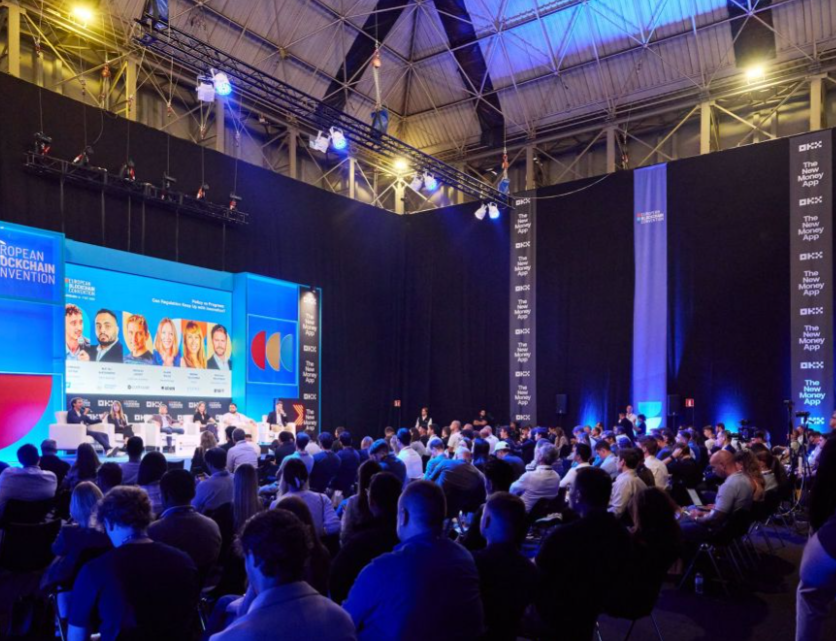
Back from EBC12 in Barcelona. I gave the meetings app one morning, then stood by the coffee for the rest of it, and spent most of the two days talking about jobs rather than rounds.
Four compliance leads told me the same thing: a year on the CASP licence, and now they want to build again. Two bankers in the queue asked what a Series A pays and laughed before I could answer.
One founder skipped the deck and told me his co-founder left in July. We talked about that for forty minutes.
Half the hiring briefs I brought home describe the same person: understands MiCA, can also ship product. I can name about a dozen of those in Europe, and most of them are happy where they are.
Good conference. I'm tired, and I have thirty pages of notes about people to type up before Monday.
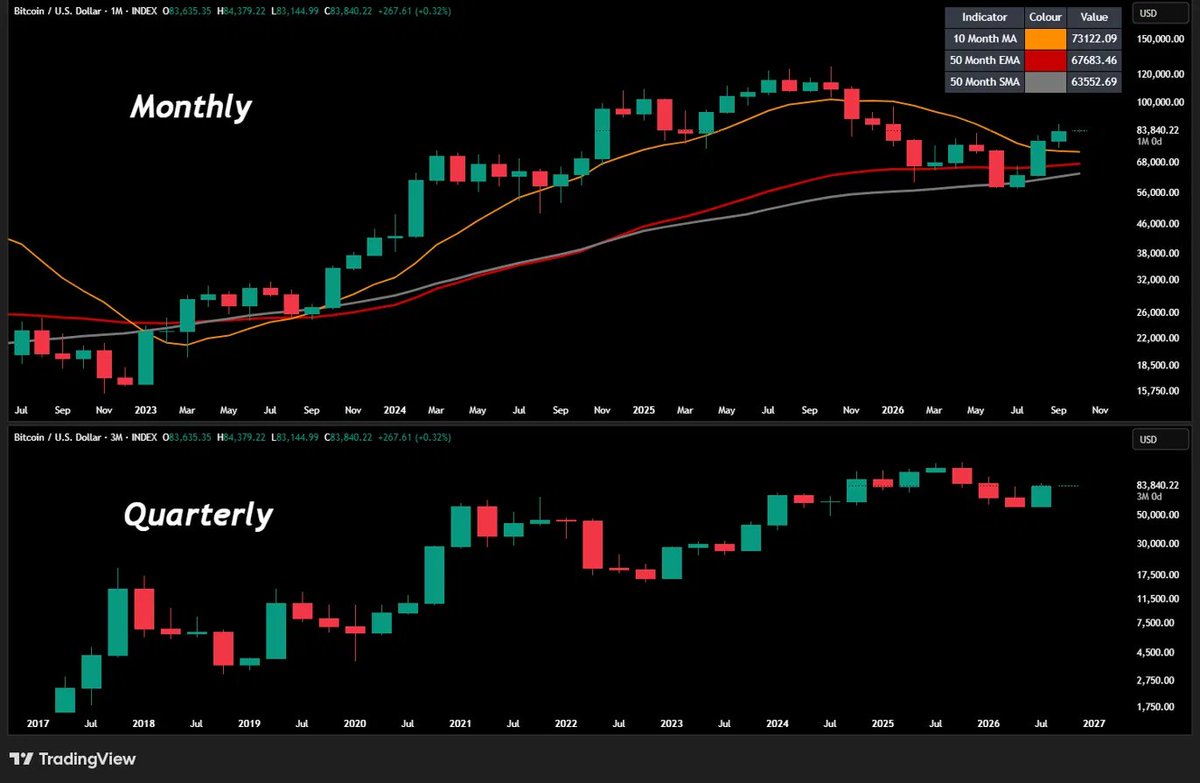
BTC closed September at ~$83.6K, its highest monthly close of 2026 and 2nd straight close above the 10-month MA.
It also cleared the May high and the ~$81.7K average ETF cost basis. ETF buyers sit in profit after August and September inflows, so fewer need to sell at breakeven.
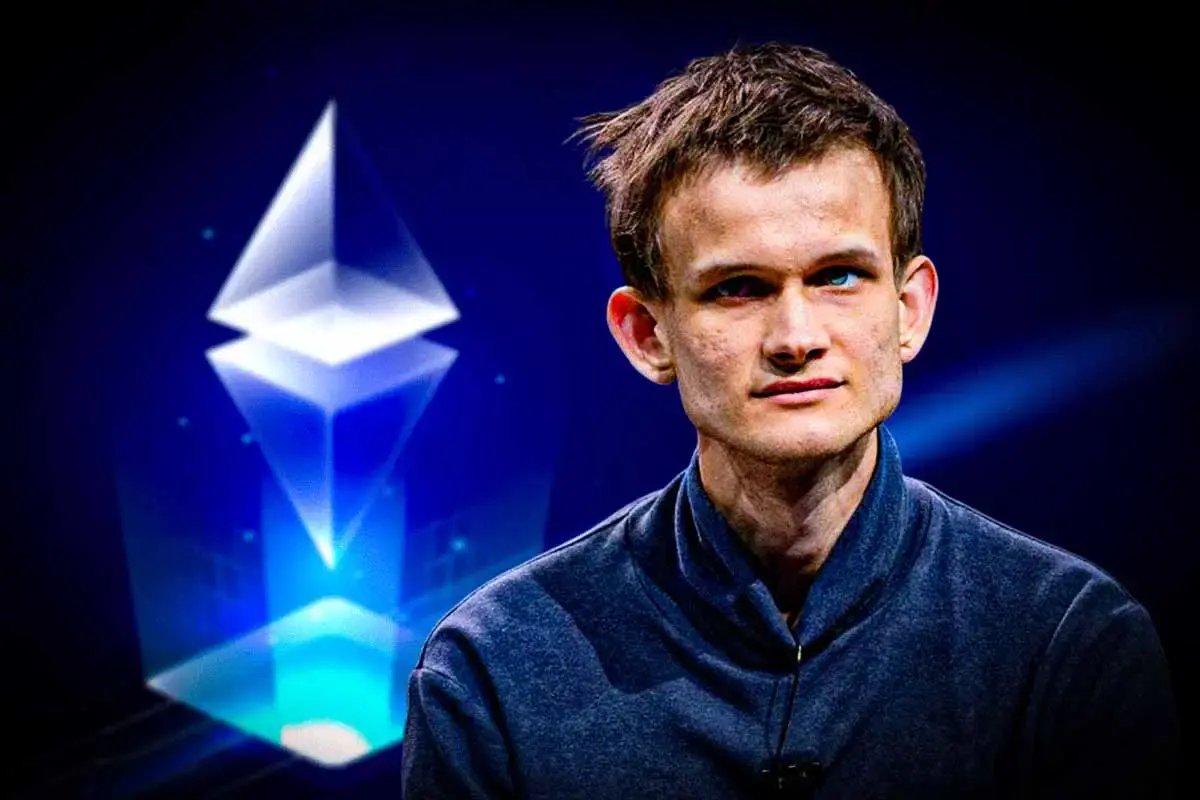
Vitalik: Ethereum is Becoming More Than a Blockchain
Speaking at the 2026 Shanghai Blockchain International Week, Ethereum co-founder Vitalik Buterin shared a broader vision for where Ethereum is heading.
His main point: Ethereum is evolving from a blockchain that executes everything into a global system focused on computation, privacy and verification.
Here are the key ideas:
1/ ZK is becoming the foundation → Instead of every node doing the same computation, users or other systems can do the work and generate a proof. Ethereum only needs to verify that proof.
2/ Privacy becomes programmable → Vitalik said blockchain is moving beyond simply answering “Who can send what?” The next question is “Who can see what?” This means applications could control which information is visible without exposing everything publicly.
3/ Scaling through proofs → Complex computations can be split, processed in parallel and compressed into proofs before being verified on Ethereum. This could allow much more computation without putting all of it directly on-chain.
4/ Ethereum becomes a full pipeline → Vitalik described a future involving user devices, private transaction pools, multiple participants, block construction, L2s and finally Ethereum for verification. Ethereum does not need to perform every step itself.
5/ AI changes development → AI can help developers write, test and formally verify increasingly complex cryptographic systems. Vitalik believes this can make advanced Ethereum infrastructure both faster to build and more secure.
6/ Quantum resistance matters → Ethereum is also moving toward quantum-safe cryptography, with STARK-based systems playing an important role in the longer-term roadmap.
Ethereum's future may not simply be about making the L1 faster.
It is about building a trust layer where computation can happen anywhere, privacy can be programmed, and complex results can be mathematically proven and verified on-chain.
When people think about tokenisation they tend to think about trading Apple on a Sunday, instant settlement, 24/7 markets... That's one tiny piece of it.
The bigger story is that everything becomes a token, and the whole economy gets rebuilt around it. https://t.co/TE4LmgrkYs
Glad to see that Ethereum L1 will have a new strong prediction market contender that is dedicated to decentralization, and being ethical and not corposlop, and to actually trying to do interesting and meaningful things with this class of economic primitive.
https://t.co/Rj86ZJl3G4
Tokenized equities today are exactly where stablecoins were in 2019.
the first pmf is here. bringing equities onchain is just as obvious, simple, yet genius as bringing dollars onchain was back then. we've already seen the first growth spurt push us to the first few billion in onchain supply.
but zoom out and it's painfully obvious we're still incredibly early. an easy 100x in growth still ahead over the next few years.
here's where it gets interesting though:
stablecoin growth was slower, because we spent years operating in a completely different environment. one that mocked crypto, treated it with deep skepticism, and forced us to fight regulatory headwinds the whole way. one of the biggest catalysts, the GENIUS Act, only came last year, many years after the first pmf, and accelerated stablecoin significantly.
tokenized equities are positioned completely differently.
there's already massive institutional interest and adoption, and tokenized equities are an obvious, compelling fit for exactly that crowd. and just days ago the SEC issued its Innovation Exemption, explicitly allowing tokenized stocks to trade onchain, actively pushing this development forward instead of fighting it.
so I think tokenized equities are equally obvious with equally asymmetric upside as stablecoins in 2019. except this time it's going to move much, much faster.
one of the biggest opportunities forming in this space right now.
Deutsche Bank is adding ethereum:native to its new institutional custody service, alongside Bitcoin and selected stablecoins.
Launching in Germany later this year, pending regulatory approvals.
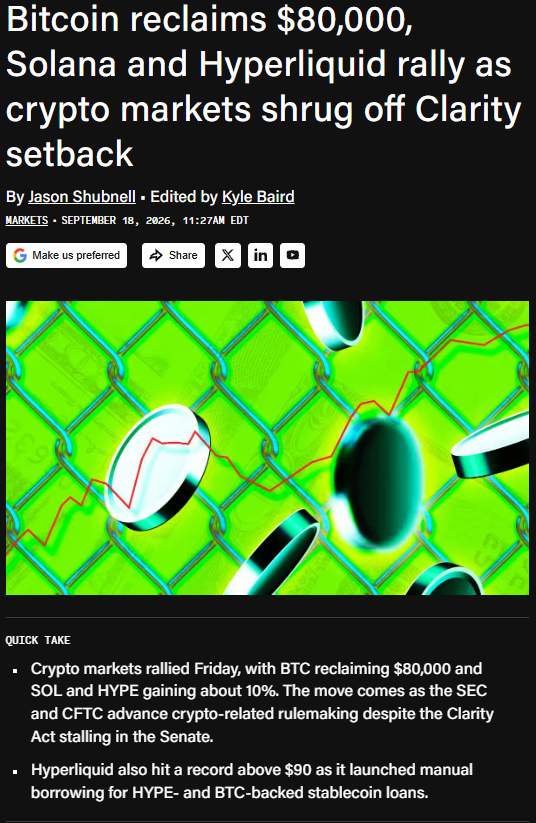
Bitcoin took 80 back on the week while sol added 9 and hype added 15, and hype got there on its own lending launch. the senate stalled and the agencies kept writing anyway. the cftc has already sent its crypto rules to the white house.
https://t.co/LIM4MG0oH6
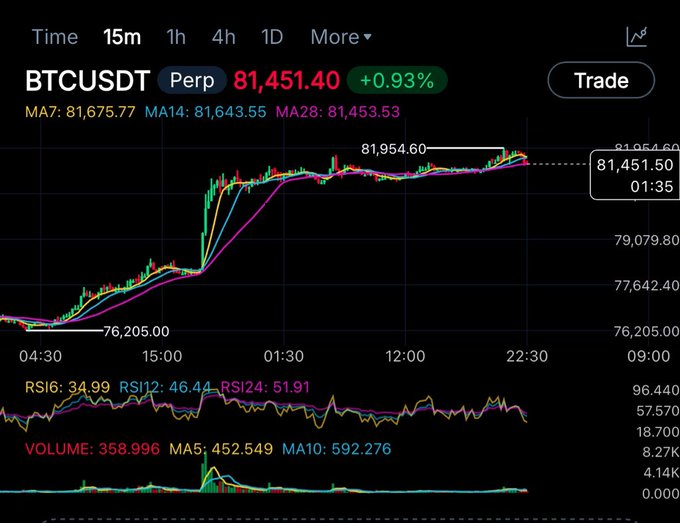
Bitcoin fell into the mid 70s after the hike and took most of it back in a single candle, so i'm reading this as relief and leaving it there. the weekend tells me what 80 is worth, with nasdaq closed and nothing else to trade against.
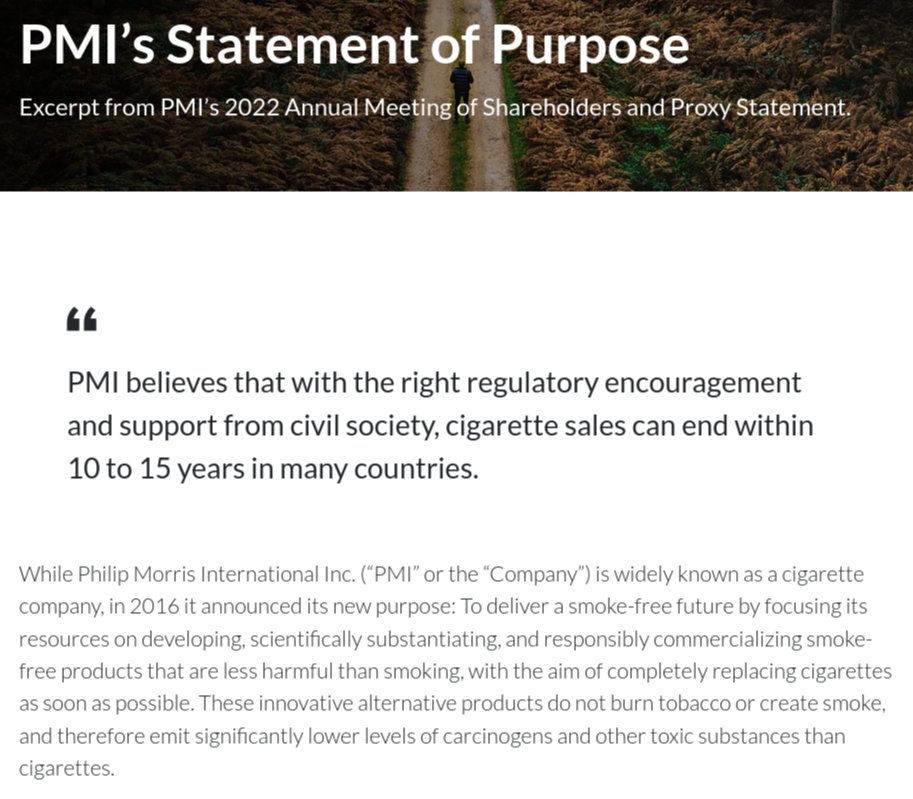
Screenshots of the Philip Morris website.
(reminder: they're a leading cigarette company)
It's a good calibration point for how good modern marketing is at dressing up pretty much any corporate (or, for that matter, government) behavior and making it sound responsible and safe.
S&P Global has entered into an agreement to acquire @OpenZeppelin, the security standard for onchain finance. The transaction complements S&P Global’s risk assessment and ecosystem development capabilities in digital asset markets, enhancing its ability to create the next generation of onchain security assessments, benchmarks, and deliver essential intelligence as capital markets transition onchain.
Read the full announcement: https://t.co/eZmZH1LWUh
BREAKING: The SEC just approved onchain trading of tokenized stocks, under a temporary, limited exemption.
This lets crypto platforms offer tokenized versions of stocks like Apple and Tesla with lighter rules while the SEC builds permanent regulation.
Wednesday recap: unanimous hike, warsh opened on inflation, bitcoin spiked to 76.5 in five minutes and gave it all back in thirty. ether did the same trip with more slippage.
https://t.co/EnmqwbGRSr
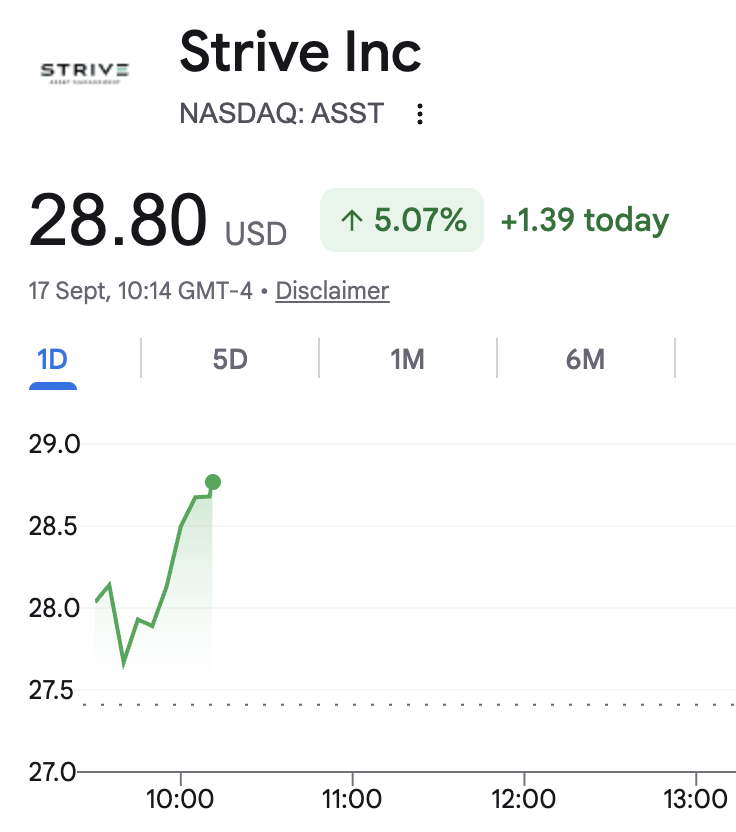
Strive up 5% the morning after a hike and a dead bill, strategy down 2.6% on fed day while coinbase and circle got hit harder. bitcoin at 76 and the treasury names still trade like the balance sheet can raise whatever it needs. the market is pricing the cash pile, not web3.
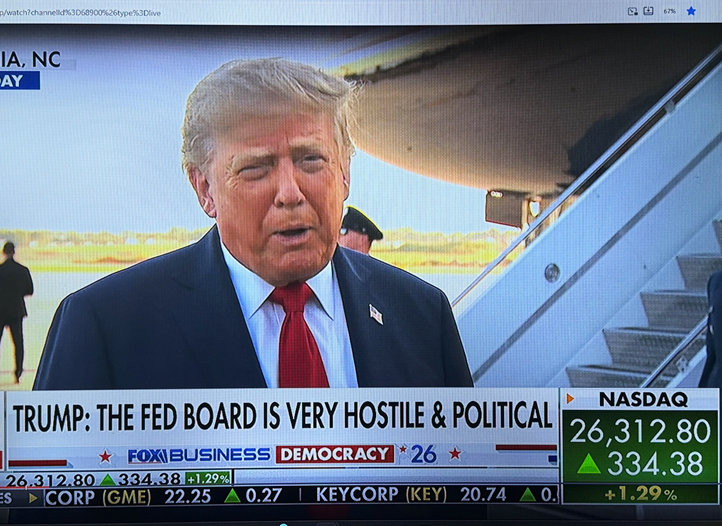
Fed tightens, trump posts that rates should be 1%, nasdaq opens up 1.7% anyway. bitcoin follows it up to 77 the same way it followed it down all week. right now it trades like a tech ticker with extra hours.
clarity failed, the fed hiked, warsh said he'd have gone 50, and bitcoin is still sitting at 75k. a year of treating washington as the catalyst and the week it all landed the chart barely moved.
Big news: S&P Global has entered an agreement to acquire OpenZeppelin.
We started in 2015 with the vision of a secure, open financial system powered by blockchains and smart contracts. Ten years and $37 trillion in value transferred later, the standards and rails our team and community built carry major DeFi protocols and blockchain networks as well as the largest stablecoins and tokenized funds.
With @spglobal, those standards and rails can now reach the benchmarks, risk frameworks, and institutional reach global markets already run on.
Proud of the @OpenZeppelin team, everything we’ve accomplished, and everything we’ll continue to build together!
https://t.co/pZdZnnUAjm
🚨HUGE: Vitalik Buterin is betting -90% of his net worth on crypto security surviving the AI era.
"Anyone who continues to hold cryptocurrency, including me, 90% of my net worth, is implicitly making that bet."
He says AI will make crypto MORE secure by mathematically proving code is safe, not less.
"There is no future for blockchains without doing this. We need to make software actually secure."