God First
Shopify Developer & Designer @Shopify | CRO, Email Systems & Creative Strategy | Building stores with better UX and more conversions.
YNWA @LFC
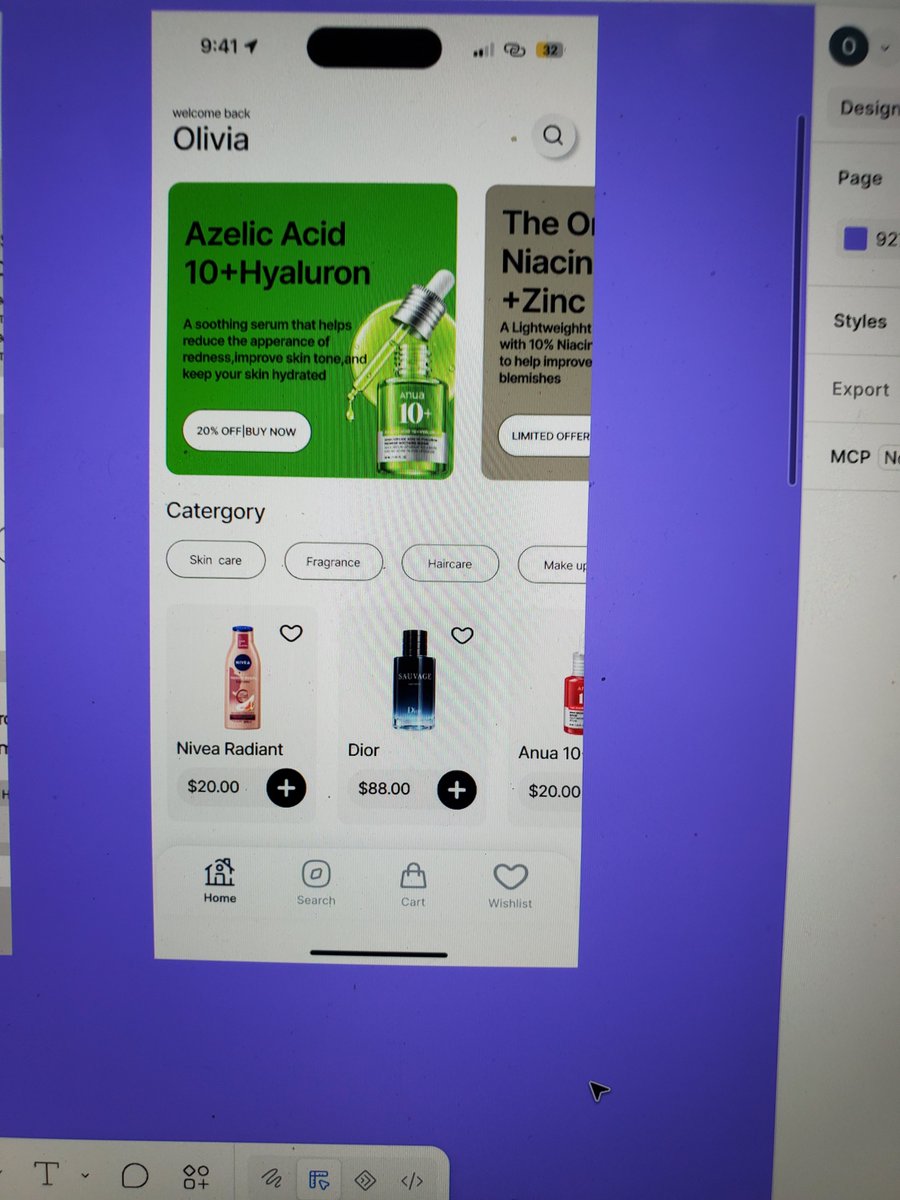
Built a premium skincare website on Shopify.
✓ Dawn as the foundation
✓ Custom Liquid, CSS & JavaScript
✓ Custom sections and responsive layouts
✓ Clean editorial design with strong typography + spacing
✓ Fully editable through Shopify’s theme editor
Shopify built.
On Gorilla Mind's pre-workout page, the reasons to buy are 2 scrolls down.
On a phone, the first screen is the tub, the name and the stars.
The 4 benefits sit lower, in a black band:
- Potent energy,
- Razor sharp focus,
- Massive pumps,
- Relentless strength + endurance.
What I'd test:
Their own line, "Our top-rated pre-workout, formulated & dosed to max out performance in the gym", and those 4 benefits as a checklist right under the title.
Why it could work:
People decide if a page is for them before they decide to scroll. Show the reason first, and the price reads as the cost of something they already want.
@juliustraffic@Shopify That's a solid add, honestly. I was only looking inside the store, but you're right, sometimes nothing's broken at all, you're just suddenly competing with more people for the same customers. Good catch, appreciate it.
Something weird happens in your store. Sales drop out of nowhere. You panic, and your brain does the thing brains do, it grabs the first scary thing it can see and blames that.
Saw a spike in bot traffic the same day revenue crashed? Must be the bots. Added a new app the week bounce rate went up? Must be the app. Switched ad platforms and conversions dropped? Must be the new platform.
Feels obvious in the moment. Usually it's wrong.
Here's why. Two things happening on the same day doesn't mean one caused the other. It just means they happened on the same day. Your brain hates that answer because it's boring and doesn't give you anything to blame. So it skips the boring explanation and jumps straight to the dramatic one.
And the dramatic one almost always falls apart the second you actually check the size of it. A hundred extra bot visits isn't enough to crash a store built to handle thousands of real customers. A new app isn't automatically the reason traffic behaved differently that week. These things get blamed because they're the most visible, not because they're the most likely.
The real answer is usually sitting somewhere quiet and unglamorous. A payment gateway that hiccuped for twenty minutes. A discount code clashing with a shipping rule. Stock that went out of sync and showed products as available when they weren't. Boring stuff. Stuff nobody wants to be the answer, because it's not a dramatic story, it's just a small mistake sitting in the setup.
So next time your numbers do something strange, don't ask "what's the scariest thing that happened today." Ask "is this actually big enough to cause what I'm seeing." That one question alone kills most wrong theories before you waste a week chasing them.
This is honestly most of what fixing a store comes down to. Not finding some dramatic hidden enemy. Just actually checking the boring things properly before blaming the obvious thing.
Bold claim, and I'm standing on it. Stores still ignoring AI search right now are already becoming invisible to a chunk of their buyers. Not next year. Right now, today, while you're reading this.
A lot of people still think this is some future thing to worry about eventually. It's not. ChatGPT already lets people shop and pay for things in the middle of a conversation, no website visit needed. Gemini just connected with Shopify the exact same way, letting people find and buy products without ever touching your actual store. This isn't coming soon. It's already happening.
Here's the part most store owners genuinely have not caught onto yet. People are starting to ask AI tools what to buy instead of typing it into Google first. If your product descriptions are messy, your website is confusing, or your content does not clearly explain what you sell, the AI simply skips right past you. Not because your product is bad. Because the AI literally cannot understand what it is looking at.
The stores paying attention to this right now are quietly moving ahead, while everyone else is still arguing about whether this even matters yet.
Agree or disagree, I genuinely want to know where people actually stand on this.
Social media has made people feel unsuccessful because they're comparing their everyday struggles with someone else's carefully selected highlights.
But here's the controversial part:
How much of the pressure we feel comes from what we consume versus what we actually want?
Here's something I think a lot of people get backwards when testing products.
You find something that sells for $35. Cost and shipping take out $20, so you're left with $15. Feels like profit, right? It's not. Not yet, anyway.
You still haven't paid the card fees. You still haven't accounted for the refunds that are coming, because they always come. And you haven't paid for the ads that got you that sale in the first place. Once all of that comes out, that $15 could easily be $5, or nothing, or you could actually be losing money without realizing it.
That's problem number one. People see a sale and think it means something. It doesn't, not on its own.
Problem number two is spending without a limit set before you start. If you don't decide how much you're okay losing on a test before you launch it, you'll find yourself saying "just one more day" over and over until you've burned way more than you planned, chasing a feeling instead of a result.
Problem number three, and this is the one people skip the most, judging a product off one or two sales. One sale could be luck. Could be a friend. Could be anything. What actually tells you something is seeing a pattern, enough clicks, enough people adding to cart, enough people buying, so you're looking at behavior, not a one off moment.
So here's how I'd actually do it.
Set your loss limit before you spend a dollar. Not what you hope to spend, the number where you shut it down no matter what your gut is telling you.
Decide what success looks like before launch too. A certain number of add to carts, a certain number of sales, whatever it is for you, decide it before you're emotionally attached to the ad that's already live.
And judge the product by the pattern, not the moment. A string of people moving through your funnel tells you something real. One random sale tells you nothing.
The stores that actually make it aren't run by people who got lucky with a product. They're run by people who built a system, a number to test with, a number to judge by, and the discipline to actually walk away when the test says walk away.
This is honestly a big part of what I help Shopify store owners with, not just making things look good, but making sure the store is actually built to convert the traffic once you've found something worth scaling. If you're testing products right now and you're not sure your store is pulling its weight, that's worth a conversation.
#shopify
I am ready for an incredible new week.
Money, Success and Joy will flow effortlessly towards me this week.
I am ready to receive all of the miracles and magic coming my way this week.
I am always where I need to be and the timing of my life is perfect for me.
I Affirm ✅
Halloween and Christmas sales do not wait.
People are already buying costumes, gifts, and last-minute stuff.
If your product is not in front of them now, that money goes to another store.
I help put products in front of buyers before the season ends.