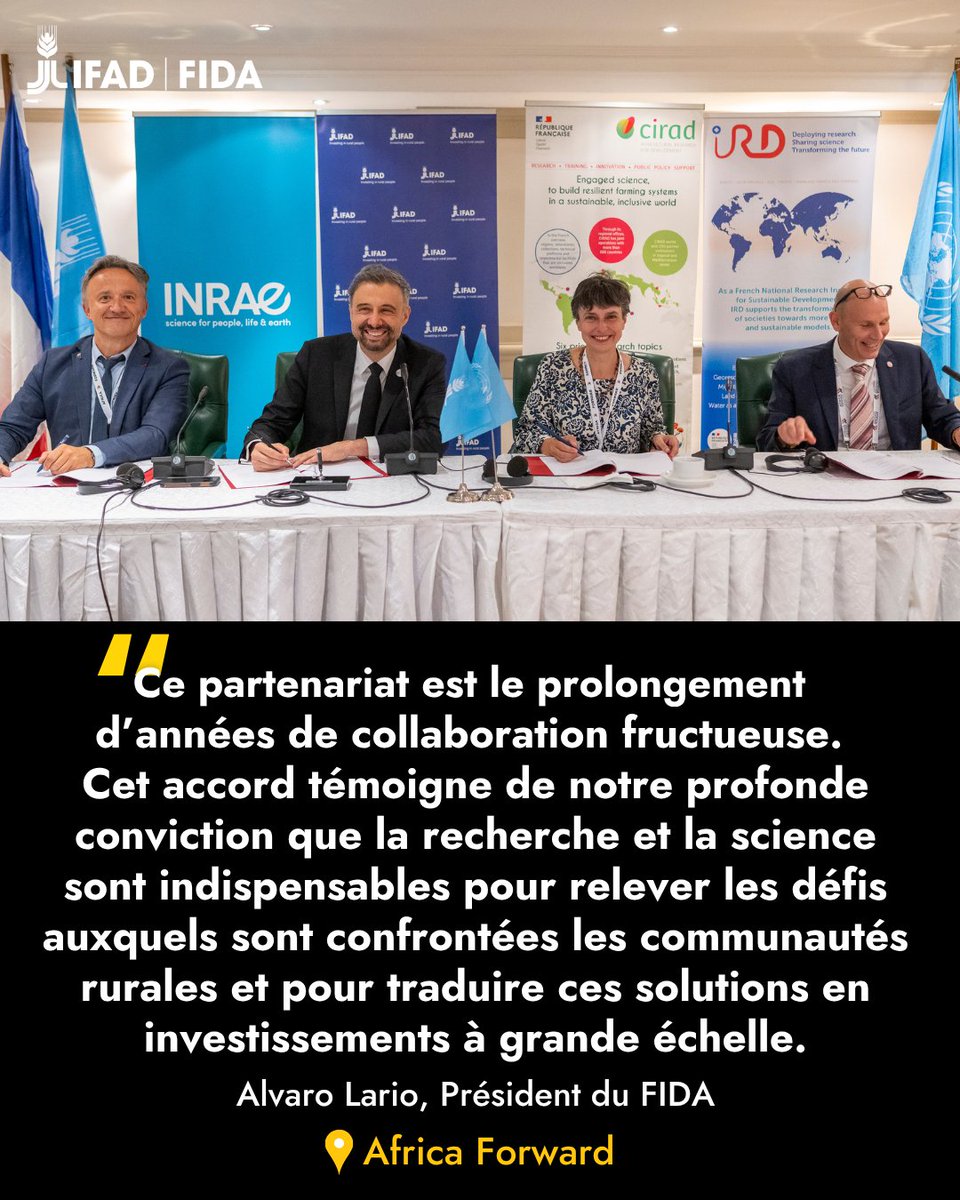
A #AfricaForward, le FIDA a signé avec @Cirad@INRAE_France et @ird_fr un accord créant une plateforme de collaboration mettant l’innovation et l’excellence scientifique au service de l’investissement dans la transformation des zones rurales dans tous les pays partenaires du FIDA
As the Africa Forward Summit concludes in Nairobi, one message stands out clearly. Africa’s economic transformation will increasingly depend on how successfully the continent invests in the first mile, rural economies and its growing young population.
Over the past days, I engaged with Heads of State, financial institutions, investors and private sector leaders on the scale of the opportunity ahead and the partnerships required to unlock it. Today, my bilateral discussions with President @PaulKagame of Rwanda, President @JDMahama of Ghana and President @FA_Touadera of the Central African Republic focused on investment, economic resilience, job creation and support for #IFAD14.
I also spoke at the Africa Forward Summit Agriculture Pillar roundtable, “Building Productive, Sustainable and Resilient Agri-Food Systems in Africa: Strengthening Partnerships”, alongside Heads of State, ministers, @AGRA_Africa CEO @aruhweza and other leaders. Discussions focused on mobilizing investment, strengthening food systems and expanding partnerships that can drive growth, resilience and economic opportunity across rural economies.
In my meeting with Dr. James Mwangi, CEO of @KeEquityBank Limited, we discussed how stronger financial ecosystems, blended finance and strategic partnerships can expand access to capital, crowd in greater private sector investment and accelerate financing at the first mile. Reaching the scale required for transformation will depend on mobilizing both public and private capital.
At @IFAD, we increasingly see recognition that rural economies and food systems are foundational to growth, stability and long-term economic resilience, particularly at a time of fiscal pressure, debt vulnerabilities and growing employment challenges across many economies.
The conversations in Kenya reinforced the importance of investment-led approaches that can mobilize capital at scale, strengthen local markets and support country-led transformation.
#FinancingTheFirstMile #AfricaForward
@RwandaGov@GhanaPresidency
At @IFAD’s global townhall today, I spoke with colleagues about why IFAD’s mandate is as relevant today as when the organization was created nearly 50 years ago.
Born out of a food and energy crisis, IFAD’s founding purpose remains urgent as geopolitical disruption, climate shocks and fiscal pressures converge.
The crisis in the Middle East is a reminder that disruption in energy, fertilizer, trade and finance rapidly reaches rural livelihoods. Small-scale producers often absorb the impact first.
IFAD is on a transformation journey - not as a departure from our mission but towards how we strengthen it, through sharper project design, better resource management, greater organizational agility, artificial intelligence and new financing instruments.
This is also the ambition behind #IFAD14 and our call to finance the first mile: rural communities, producers and small businesses are most exposed to global shocks, but central to food security, resilience and economic stability.
IFAD’s work is essential to building resilient food systems, stronger rural economies and greater stability.
My sincere thanks to all IFAD colleagues across the world for your commitment, professionalism and readiness to rise to this challenge every day.
#FinancingTheFirstMile #IFADImpact
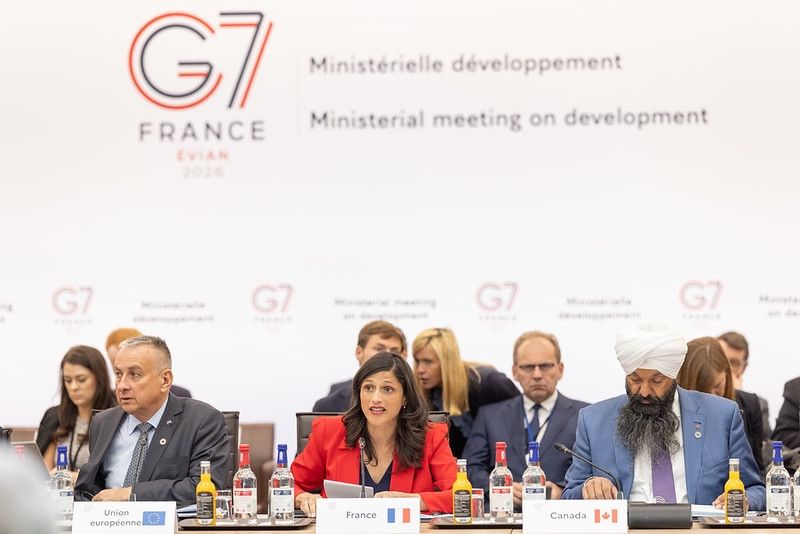
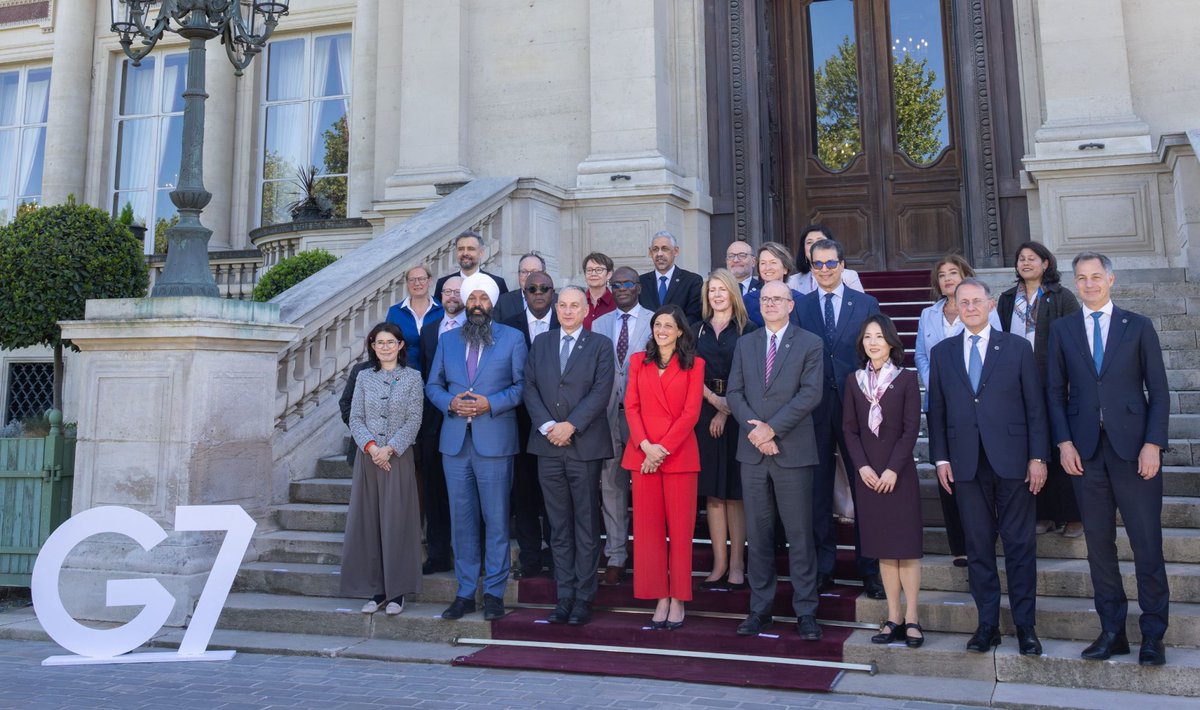
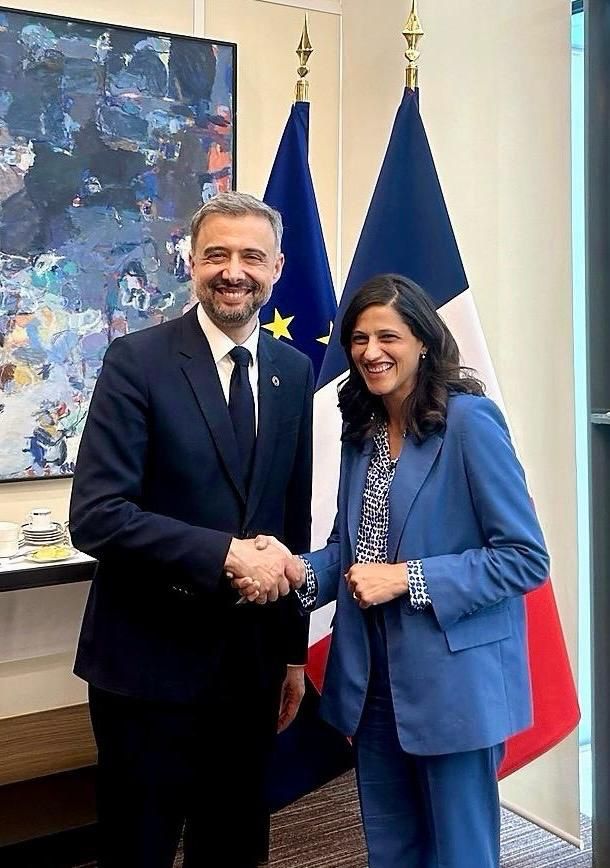
In Paris, I participated at the #G7 Development Ministerial Meeting where I engaged in discussions on strengthening cooperation and advancing a more efficient financial architecture, one that reduces fragmentation and delivers faster, more impactful results for partner countries.
In a special session, I spoke about strategies to build a more efficient financial architecture with practical steps to strengthen partner countries’ sovereignty and resilience.
Development finance must be more disciplined and catalytic, anchored in clearer guidance on domestic resource mobilization, stronger private capital mobilization and the scaling of remittances and diaspora investment as a reliable channel for rural development.
We also discussed how to reduce fragmentation and use concessional resources more strategically, through country-led platforms and stronger accountability.
Rising macroeconomic pressures are affecting the poorest countries hardest, especially economies reliant on agriculture and rural sectors. This is where @IFAD focuses its investments at the first mile, working to de-risk rural economies and unlock sustainable growth. This is precisely when partnership-driven investments with multiplier effects matter most.
#FinancingTheFirstMile #FiCSG7 #FamilyRemittances #G7Development
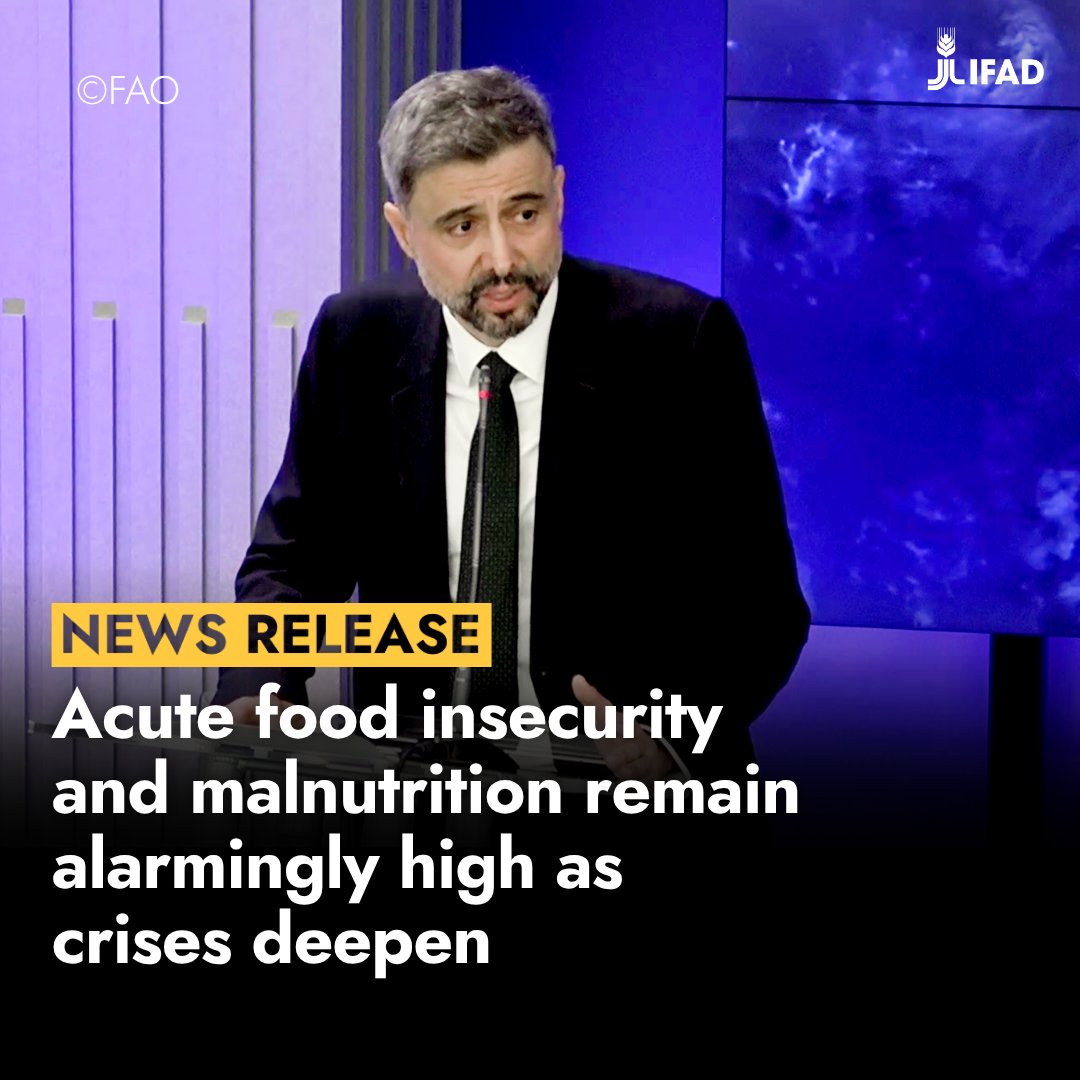
"Strengthening their resilience is not optional, but it is a necessary response that generates long-term stability. Investing in water, climate resilient agriculture, rural finance, and market access is often the most effective way to prevent emergency needs from escalating” said @IFADPresident Alvaro Lario at the launch of the 2026 Global Report on Food Crises (#GRFC) report.
In its 10th edition released this week, the report highlights that 266 million people are experiencing acute hunger, double the number in 2016, with malnutrition levels alarmingly high and increasingly entrenched.
The report warns that severe levels of acute food insecurity remain critical in multiple contexts in 2026. Ongoing conflicts, climate variability and global economic uncertainty, including risks to food markets, are likely to sustain or worsen conditions in many countries.
In particular, while a full assessment is premature, the escalation of the conflict in the Middle East exposes areas already facing food crises to both direct and indirect risks of global agrifood market disruptions.
As an IFI, IFAD advances long-term solutions to food crises by promoting coherent financing approaches and investments that address the root causes of acute food insecurity and strengthen resilience.
The report was released by the Global Network Against Food Crises (@fightfoodcrises), an international alliance of the @UN; the #EU; the German Federal Ministry for Economic Cooperation and Development (@BMZ_Bund); the UK Foreign, Commonwealth & Development Office (@FCDOGovUK); the Government of Ireland (@GovIE); the Group of Seven Plus (@g7plus); governmental and non-governmental agencies working together to address food crises with evidence-based actions proven to deliver impact.
Continue reading at https://t.co/L130Y91m0N
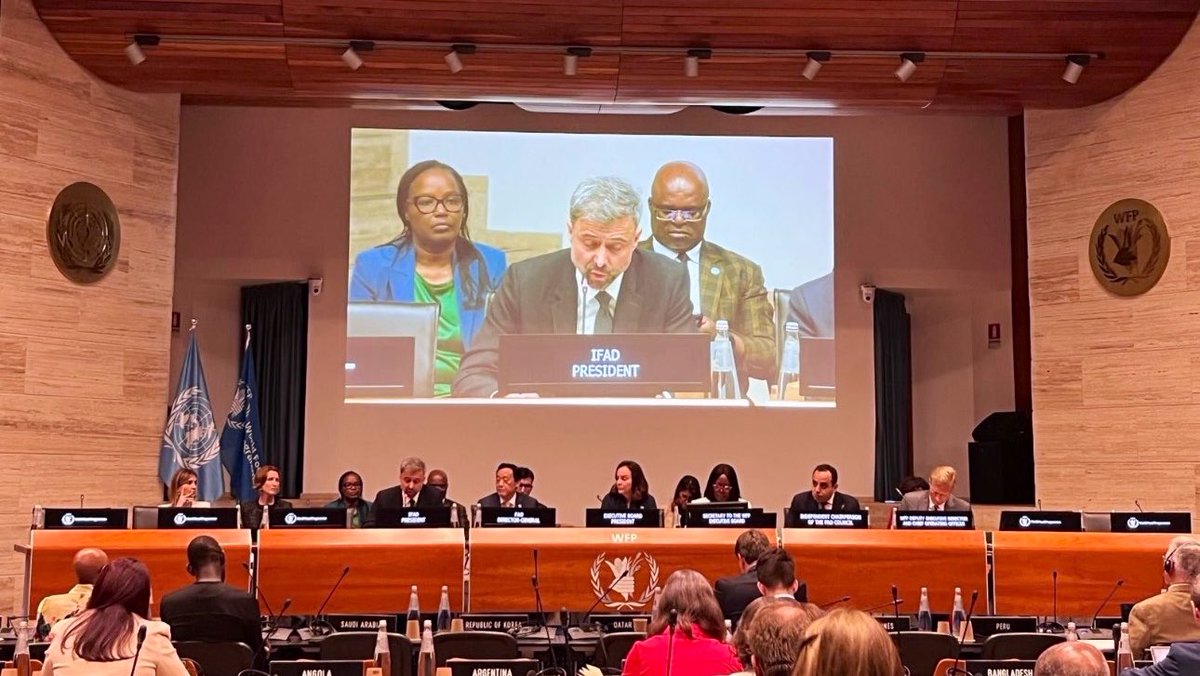
Today’s 9th Joint Informal Meeting of the Rome Based Agencies underscored the need for stronger collaboration and joint results at country level, reduced duplication and greater efficiency.
The RBAs, @FAO , @IFAD and @WFP , each bring distinct strengths. WFP focuses on emergency response. FAO provides data, standards and policy guidance. IFAD mobilizes long-term investment at the first mile, supporting rural transformation, market development and resilient economies.
Collaboration must remain country-driven, with governments defining priorities and partnerships. IFAD offers longstanding expertise in financing rural transformation, connecting local systems to broader economic opportunities, and more coherent policy engagement.
Our joint work on #SchoolMeals showcases how we are linking agriculture, nutrition and education through nationally owned systems to advance on #ZeroHunger.
In #Kenya, we are connecting small-scale producers to structured markets and school feeding programmes. FAO supports policy and technical standards. WFP delivers at scale. IFAD invests in smallholder agriculture and value chains so local producers can supply these programmes. The result is stronger supply chains, improved livelihoods and more sustainable systems.
We are delivering results.
In a more volatile and constrained environment, the direction is evident: act earlier, work more effectively, and deliver together within a more coherent system.
This is how we strengthen food security, stability and shared prosperity.
#FinancingTheFirstMile #IFADImpact #IFAD14 #SchoolMeals
What changes when small-scale farmers can rely on stable demand and fair prices?
In #Kenya, a recently concluded IFAD-EU programme is expanding market access for small-scale farmers in the New Mbeere Farmers’ Cooperative. One of their most reliable new outlets is the national school feeding programme - supported by a joint initiative from IFAD, FAO and WFP - which now supplies nutritious local grains to schools in the area.
The programme has established 400 collection centres and 40 storage facilities while organizing more than 114,000 small-scale farmers into groups linked to bulk buyers, exceeding initial targets by 20%. With higher and more predictable incomes, farmers are now investing in livestock, water systems and climate-smart practices that help sustain yields even when rainfall is inconsistent.
Continue reading at https://t.co/ybr2DpZi5a
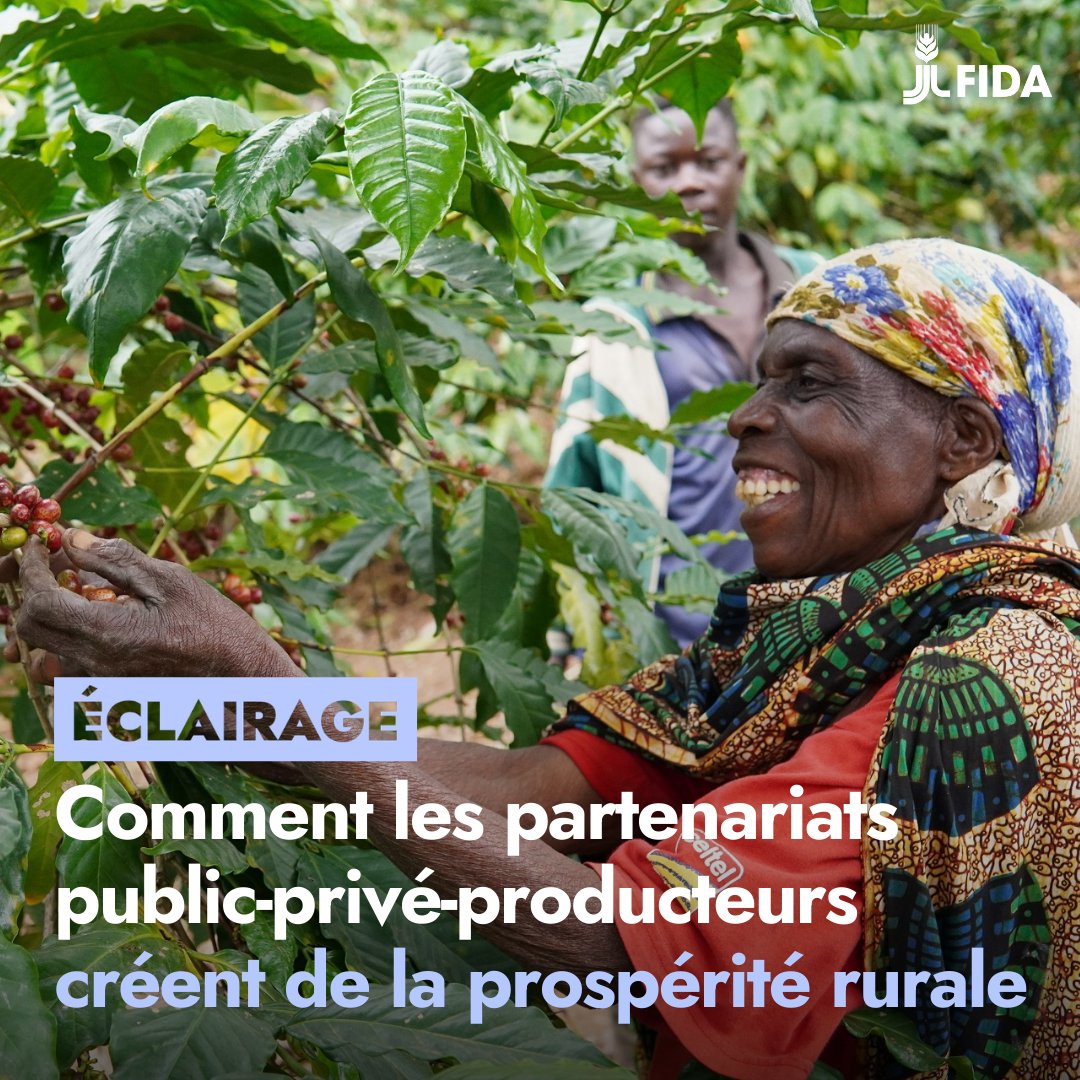
Quand les projets mobilisent fortement le secteur privé la hausse de revenus moyenne est 4️⃣✖️ +forte.
Grâce à l’appui de partenaires comme le #Japon le modèle 4P fait des petits producteurs des partenaires, pas de simples fournisseurs.
▶️https://t.co/4RHXRFeQBj
@ueshimacoffee
Au #Cambodge, les programmes financés par le FIDA permettent aux organisations paysannes d'accéder à des marchés d'exportation à forte valeur ajoutée.
Résultat : 143 000+ ménages ont bénéficié de ces programmes, les ventes ont 📈 de 41% et les revenus ont 🚀 de + de 50%.
Over the past two days, I have held intensive consultations with Member States on the next phase of @IFAD’s strategic vision under IFAD’s 14th Replenishment.
In a world marked by geopolitical fragmentation, climate volatility and fiscal constraint, there was clear alignment: investment in rural economies can strengthen global food value chains, as well as social cohesion and job creation in some of the most vulnerable communities globally, and specially in the least developed countries.
Member States reaffirmed IFAD’s role as a results-focused #IFI delivering measurable return on investment at the #FirstMile.
Today’s launch of #IFAD14 replenishment discussions marks another major milestone. The strong support expressed by Member States reflects their confidence in IFAD’s strategic direction and in the measurable impact of our work.
IFAD14 is more than a financing cycle. It is a strategic platform to mobilize capital, deepen partnerships and deliver stability and growth, starting by financing the first mile.
The 49th session of the #IFADGoverningCouncil opens at a pivotal moment – one that calls for transformation. IFAD has modernized how we work to deliver our mission with greater scale, speed, and impact.
Explore more about this year’s session at https://t.co/LkMK2Kim1H.
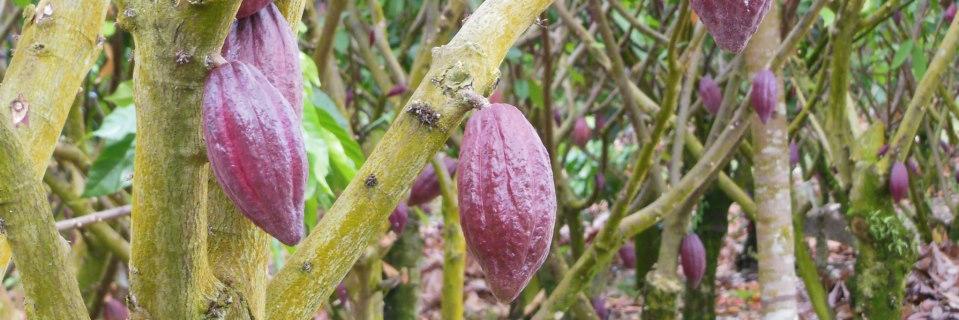
IFAD Recipes for Change chef Waldir Maqque travelled to #Peru to meet Ruth, an Awajún Indigenous farmer supported by the IFAD-financed Avanzar Rural project. Her community's cocoa cultivation is helping strengthen their livelihoods and protect the Bosque del Alto Mayo.
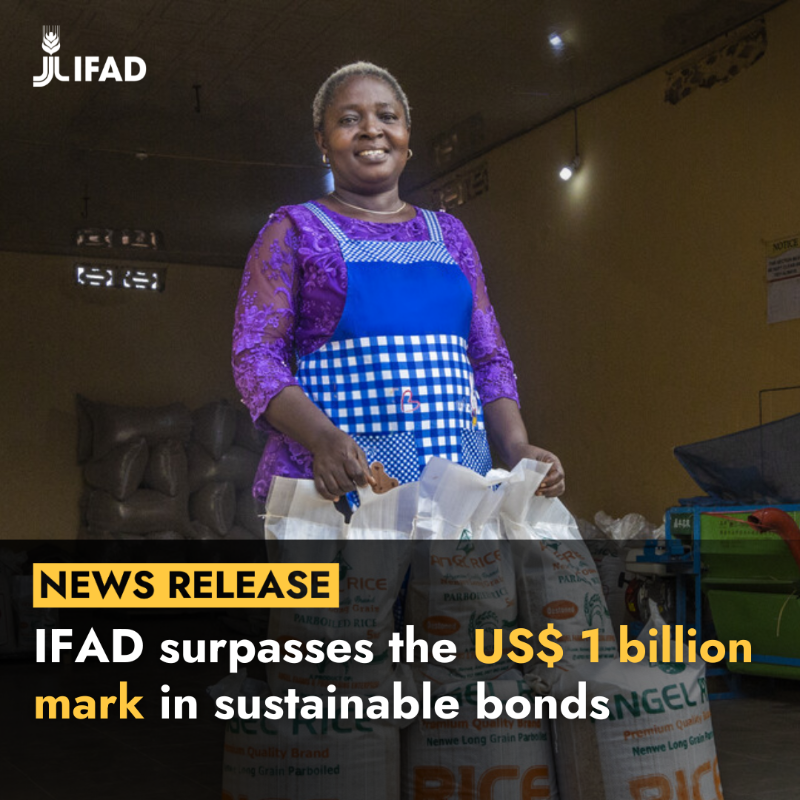
🚀 IFAD just surpassed the US$1 billion mark in sustainable bonds!
👉 These funds will reach more than 12 million rural people, supporting them to increase food production, access new markets and financial services and much more.
Read more ⤵️
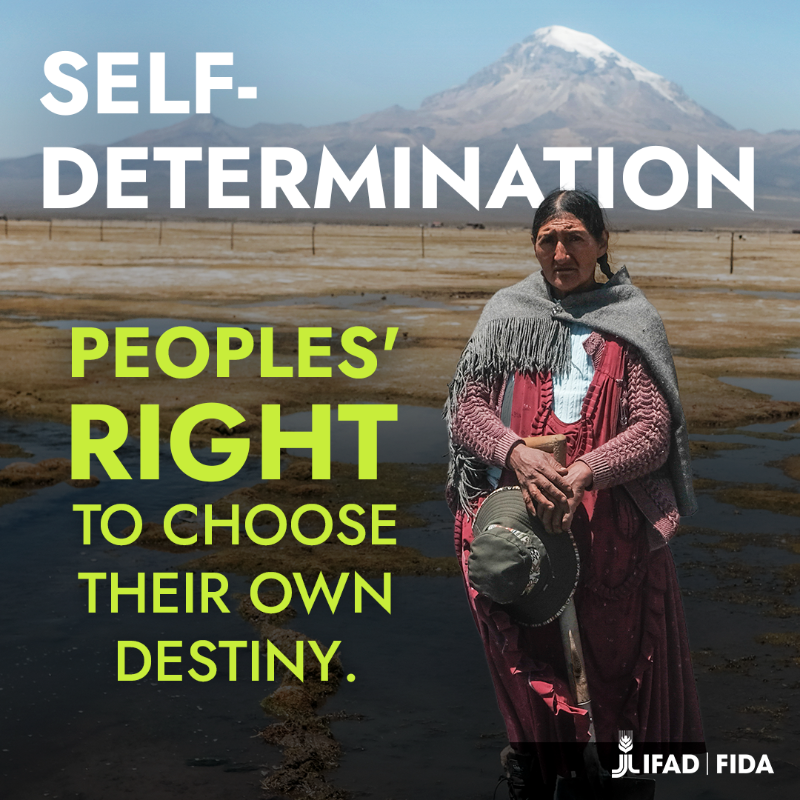
We all have the right to decide our own destinies.
For Indigenous Peoples, this right also means ensuring food security for all.
Discover how their leadership can guide us ⬇️