🚨 modelsummary 2.0.0 📦 for #RStats is out now!
Draw beautiful and customizable tables for your descriptive statistics, regression models, correlations, balance, etc.
Save your tables to HTML, Word, LaTeX, PNG, Typst, and more.
Short 🧵 for v2
https://t.co/El4oSnjw7R
How do scaling laws at the single-cell level give rise to macroecological patterns? We show that in plankton, power laws of nutrient uptake and grazing shape eco-evolutionary dynamics to produce scaling relationships at the ecosystem level. 🌊
https://t.co/MQsRszHXcX
I'm on team rebase. There are enough times when circumstances require a complicated merge (eg backporting a hotfix). Thus the goal for a regular merge should be a clean simple Git history
I'm super thrilled to share this new paper with David Vasseur out now in @Ecology_Letters!! 🙌
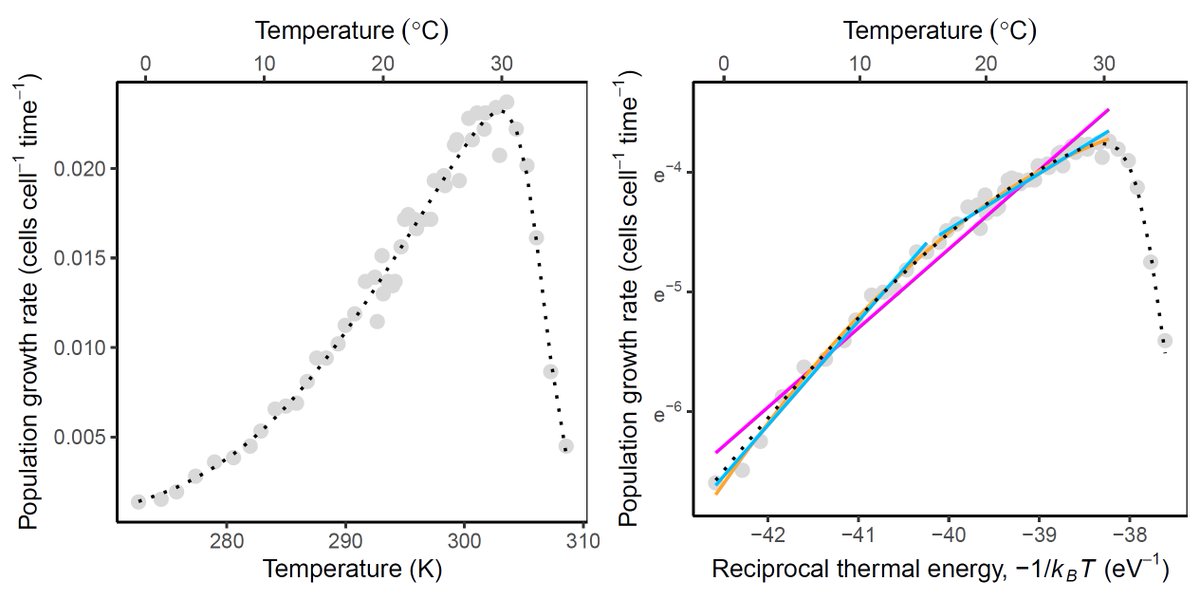
Interactions between temperature and nutrients determine the population dynamics of primary producers 🦠🌡️
https://t.co/0fbMjUZVsy
Huge undertaking by @FishSciSkeeles to raise fish for a year with or without supplemental oxygen to see whether it enhanced growth rates & supported the gill-oxygen limitation hypothesis. It didn’t! BUT, a cool finding RE oxygen extending the reproductive window!
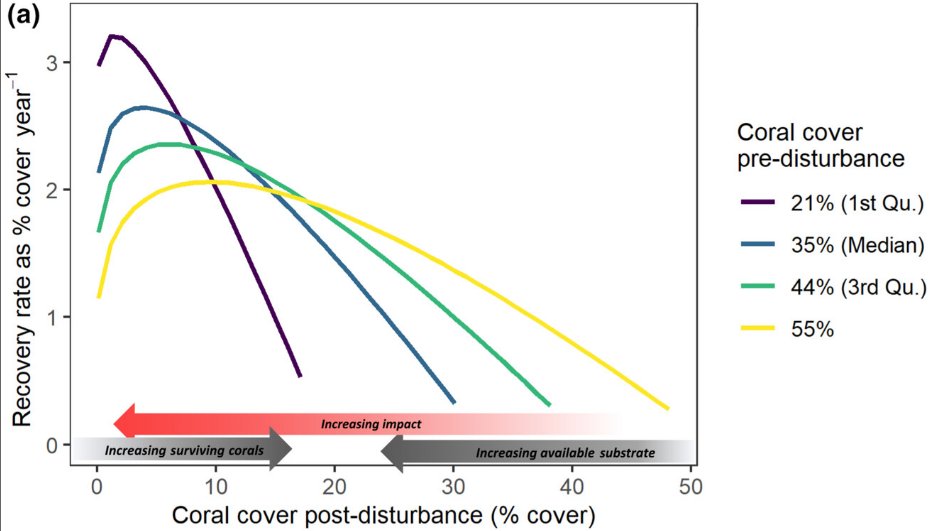
We analysed 50 years of coral reef data to identify patterns in coral resilience, finding links between resistance, recovery and coral cover pre- and post-disturbance 🪸
Pls read and share to help justify the unfathomable amount of hours I put into this😅
https://t.co/OAFNsPfcC6
When using OLS regression, from where do we get the assumption the residuals are normally distributed? You don't need that assumption to minimize the sum of the squared residuals, nor to use the CLT to compute the SE's for the beta coefficients. So what's its origins?
Forgive me, for I am about to Bayes. Lesson: Don't trust intuition, for even simple prior+likelihood scenarios defy it. Four examples below, each producing radically different posteriors. Can you guess what each does? Revealed in next tweet >>
More tremendous work on neuronal branching—combining novel empirical patterns and scaling theory to determine biological constraint principles—by former graduate student (now postdoc!) @pahelidc and postdoc (now faculty!) @alexbbrummer
https://t.co/zxQxkNSYd6
Come join us @aims_gov_au! Three (!!) new permanent research scientist opportunities are available to work in our Reef Recovery Adaptation & Restoration Program:
- Coral Early-life Ecology
- Applied Ecological Genetics
- Coral Phenomics and Symbiosis
https://t.co/rxrd18mpgo
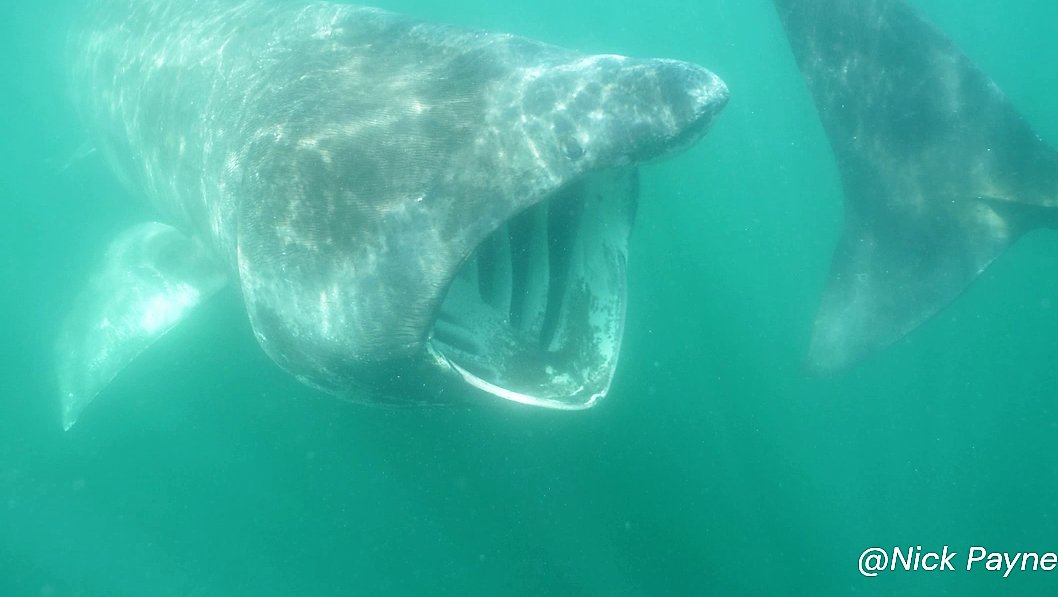
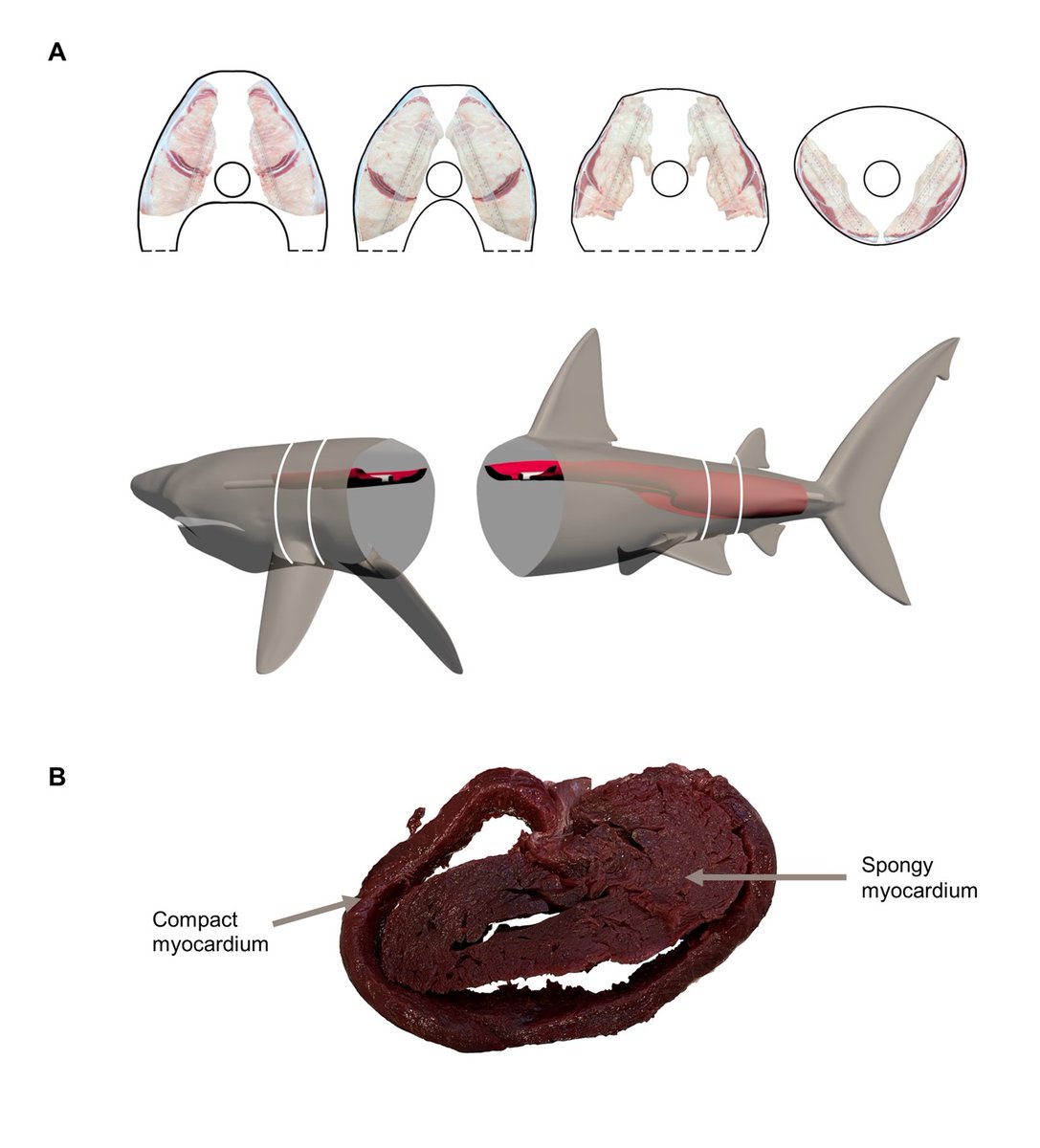
Basking sharks are what now?! New paper led by @haleydolton where we document regional endothermy in our favourite giant filter feeding sharky 🔥. Interesting implications for evolution and ecological advantages of regional endothermy; we thought it was only seen in apex 🦈&🐟1/3
1/6 For 30 years ecologists have been told that correlations between traits across species need to be corrected for phylogeny (usually via PGLS), because related species are not independent. Several half-truths in that ... https://t.co/d5tx5JDZma @Jecol@WestobyMark@brhollan
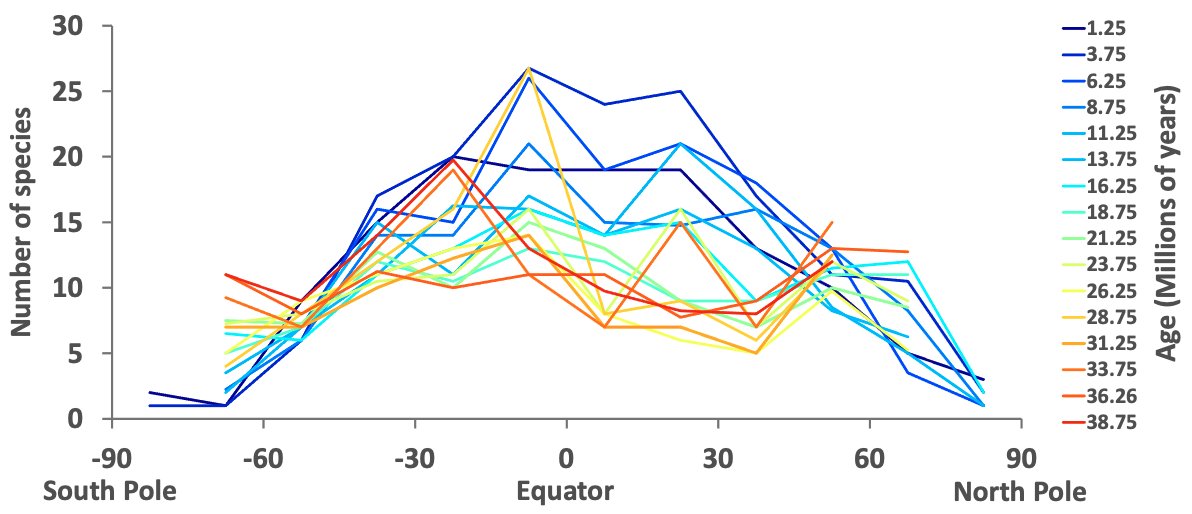
🚨🚨 New paper alert🚨 🚨 in @Nature on the emergence of the latitudinal diversity gradient in planktonic foraminifera, with @isabelfenton@Climate_AlexF Tracy Aze & Paul Valdes. We found the modern gradient emerged ~15 Ma, driven primarily by speciation!
https://t.co/F74mzHk3c2
Physiological Sighs (deep nasal inhale followed by 2nd brief nasal inhale, then a full exhale via the mouth) is not Yogic or “breathwork”. It is a naturally occurring breathing pattern that reverses hypoxia, occurs in sleep too & also happens to be the fastest way to de-stress.