Not many mini or temporary moons have been discovered around Earth—likely because they require a lot of physics to line up.
@UMDAstronomy Professor Derek Richardson spoke to @washingtonpost's @KashaPatel about the #MiniMoon event this fall. https://t.co/g8IEsjOlmJ
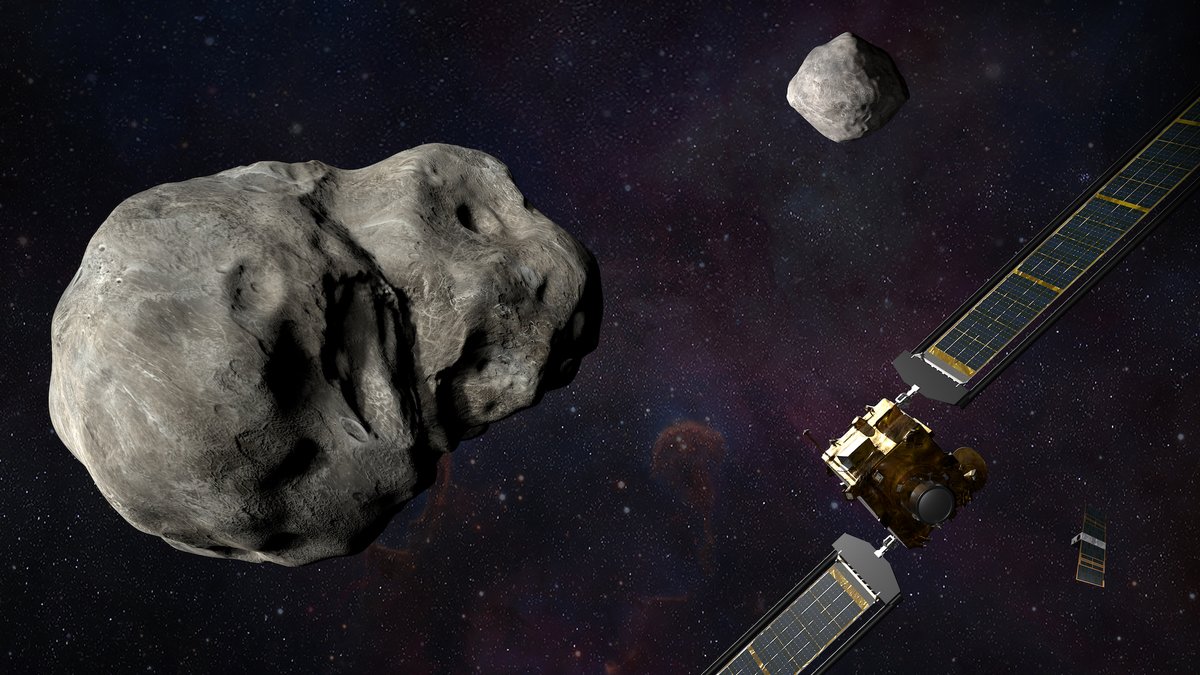
.@NASA's #DARTMission left more than a mark on asteroid Dimorphos.
"There are some unexpected findings that help provide a better picture of how asteroids and other small bodies form and evolve," @UMDAstronomy's Derek Richardson told @SPACEdotcom. https://t.co/7yvdRFSdmF
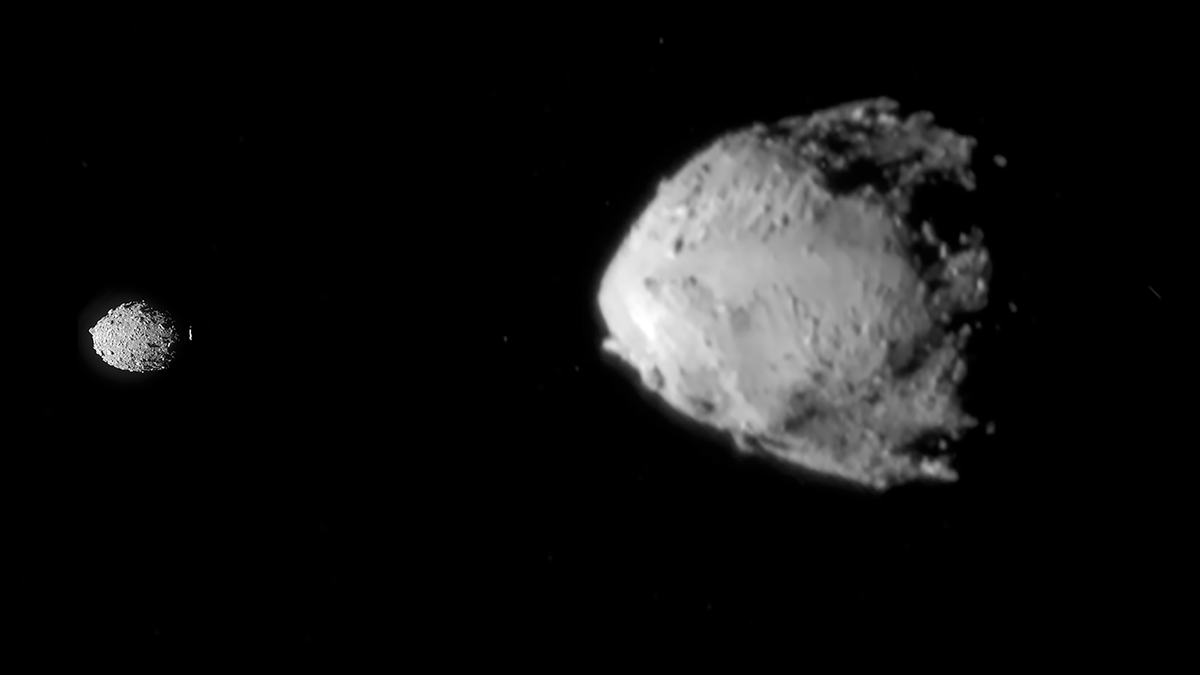
The asteroid moon Dimorphos was significantly deformed after @NASA's #DART spacecraft collided with it in 2022.
In an @AAS_PSJ paper, @UMDAstronomy's Derek Richardson and his team show that the collision also led to the moon being derailed from its orbit. https://t.co/rJJU4J6oD4
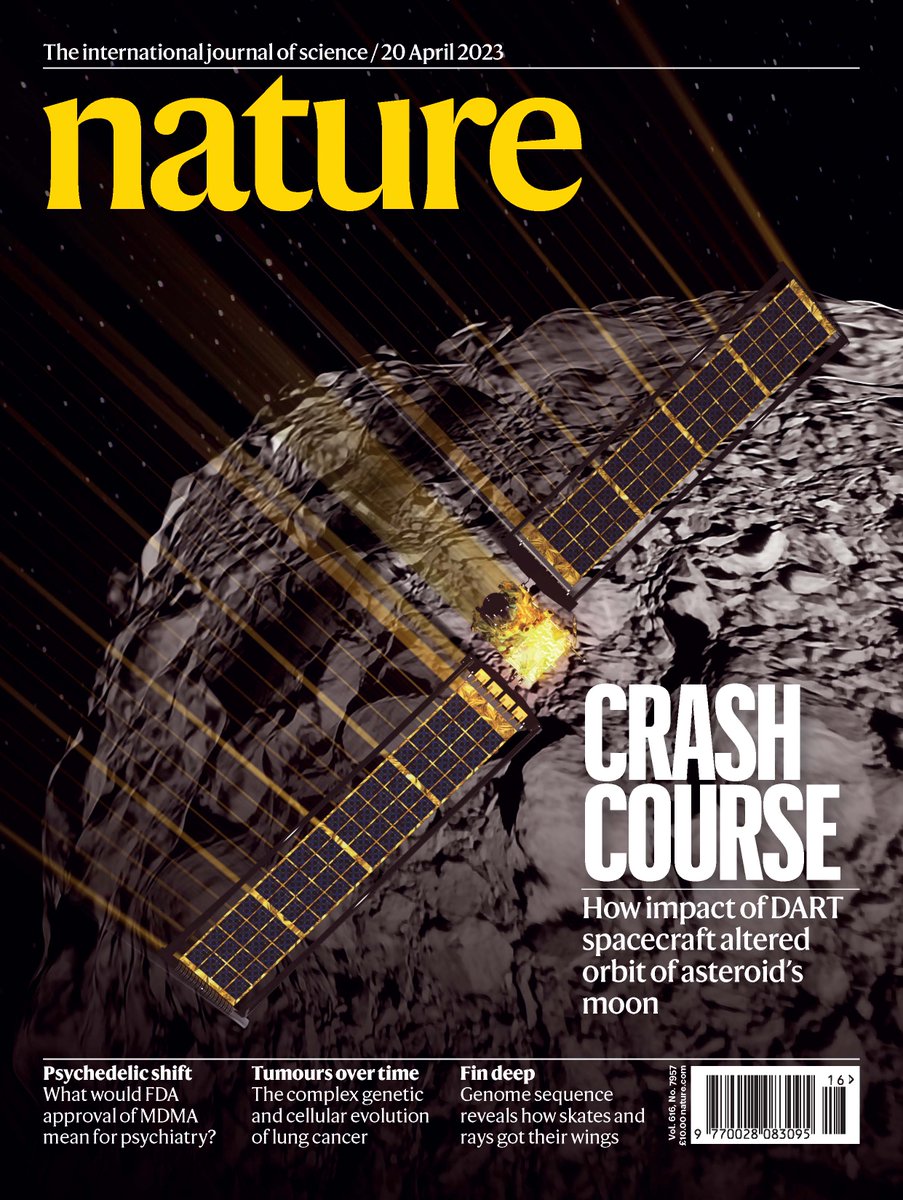
Last year, @NASA's #DARTMission made history and confirmed that deflection technology can be an effective way to change the orbit of an asteroid, should there ever be a threat. Today's issue of @nature has DART on the cover & includes 5 papers on the science: https://t.co/FkSlXbpsi6
The #DARTMission made history when it confirmed that deflection technology can be an effective way to change the orbit of an asteroid, should there ever be a threat. Today, five scientific papers have been published to detail what we learned: https://t.co/qY2n8n7JaV
Congrats to the #DARTMission team for their contributions to #PlanetaryDefense!
Today's issue of @nature features DART on the cover & includes scientific papers on what the team has learned since DART's impact with its target #asteroid last September: https://t.co/gNDlJMAYxr
Episode 10 is out now, featuring Professor Anna Ho! We begin with a quick introduction from Gokul before diving right into our amazing conversation.
https://t.co/Wb8oYoGTz8
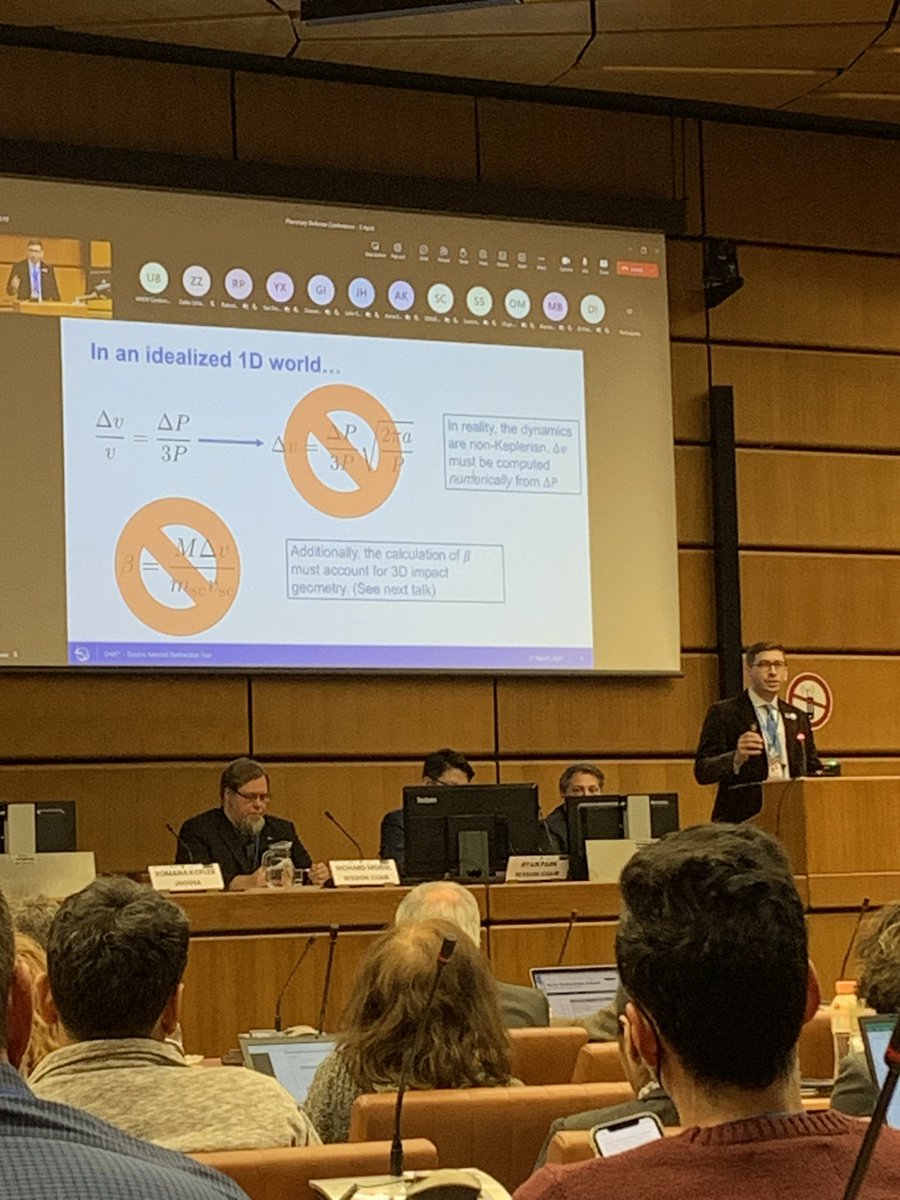
Harrison Agrusa (@harrisonagrusa) explains how the 33-minute period change delivered by DART to Dimorphos is converted into a delta-v: 2.7+/- 0.1 mm/s. #PDC23
In this week’s episode, Prof. Ho talks about the scientific ecosystem and how we need to challenge stereotypes about what a “good” scientist is. She describes the importance of creating diverse environments for science to reach its full potential and how we can work towards it.
The #DARTMission team flew a spacecraft into a small asteroid to see if they could divert it – and they succeeded.
@UMDAstronomy's Tony Farnham spoke with @fox5dc's @JoshRosenthalTV about the implications of their findings.
https://t.co/tQxzhewNh1
@VinnyChirayil There’s a lot of uncertainty on the mass of the ejecta. I’m expecting a bigger crater. It’s possible the entire body reshaped but we won’t likely know for sure until Hera gets there.
@VinnyChirayil @harrisonagrusa Minor differences after the review process and to conform to style requirements. Final version to appear in print by April.
@VinnyChirayil @harrisonagrusa Stickle et al 2022 (PSJ 3:248) predicted in their Fig 13 a range of 5 to 30 m for crater diameter depending on (largely unknown) surface properties. Actual diameter unknown since DART was destroyed. Need to wait for Hera mission imaging in 2026/27.
@VinnyChirayil@fabiolouf Analysis was started in October of last year and more or less converged by late November. Results were presented at the AGU meeting in mid-December.
Four @Nature studies by @UMDAstronomy's Derek Richardson, Jessica Sunshine and Tony Farnham explain how deflection missions can protect the planet from future Earth-bound asteroids and comets.
Read more about the #DARTmission findings: https://t.co/G2Fv2Kgrgs ☄️
New science results confirm the @NASA#DARTMission's asteroid deflection technology can be an effective way to change the orbit of an asteroid, should there ever be a threat. DART intentionally slammed into asteroid Dimorphos in Sept. 2022: https://t.co/bPfHuWy60H