Before James Clerk Maxwell, electricity, magnetism, and light seemed like entirely different phenomena. Electricity powered sparks, magnets attracted iron, and light illuminated the world. There was no obvious reason to think they were connected.
Maxwell's equations revealed that they were.
They showed that a changing electric field generates a magnetic field, while a changing magnetic field generates an electric field. Together, these fields can continuously regenerate one another, forming a self-sustaining wave that travels through empty space.
When Maxwell calculated the speed of this wave from the measured properties of electricity and magnetism, he found something extraordinary: it was exactly the speed of light.
The conclusion was unavoidable. Light is an electromagnetic wave.
It doesn't require air or any material medium to propagate. What moves through space is not a substance, but a coordinated pattern of oscillating electric and magnetic fields carrying energy and momentum.
More than a century later, Maxwell's insight remains one of the most beautiful unifications in all of physics.
How much do you know about the wonder drug penicillin that revolutionised medicine?
Alexander Fleming was a Scottish bacteriologist who early on in his career became interested in the natural bacterial action of blood and antiseptics. In the autumn of 1928, while working on the influenza virus, he cultured bacteria on plates and left them in his lab.
On his return, he found that mould had developed accidentally on a staphylococcus culture plate and that the mould had created a bacteria-free circle around itself. This inspired him to perform further experiments, and he found that a mould culture prevented growth of staphylococci, even when diluted 800 times. He named the active substance penicillin.
Read more: https://t.co/95l3aqbgJ3
Electrons are so identical that if you swap one electron with another anywhere in the universe, nothing changes—they are fundamentally indistinguishable.
This led physicist John Wheeler to propose the mind-bending idea that all electrons might actually be the same single electron, traveling back and forth through time to appear everywhere at once.
Maxwell's equations, formulated by James Clerk Maxwell in the 1860s, are four fundamental equations that describe how electric and magnetic fields interact and propagate. They unify previous discoveries in electromagnetism, including Coulomb's law, Ørsted's discovery of the magnetic field around a current, Ampère's law, and Faraday's law of induction. Maxwell's introduction of the displacement current completed the theoretical framework, predicting that electromagnetic waves travel at the speed of light and thus revealing the electromagnetic nature of light itself. Oliver Heaviside later simplified Maxwell's original 20 equations into the four vector equations used today, which underpin modern technologies such as radio, television, and telecommunications.
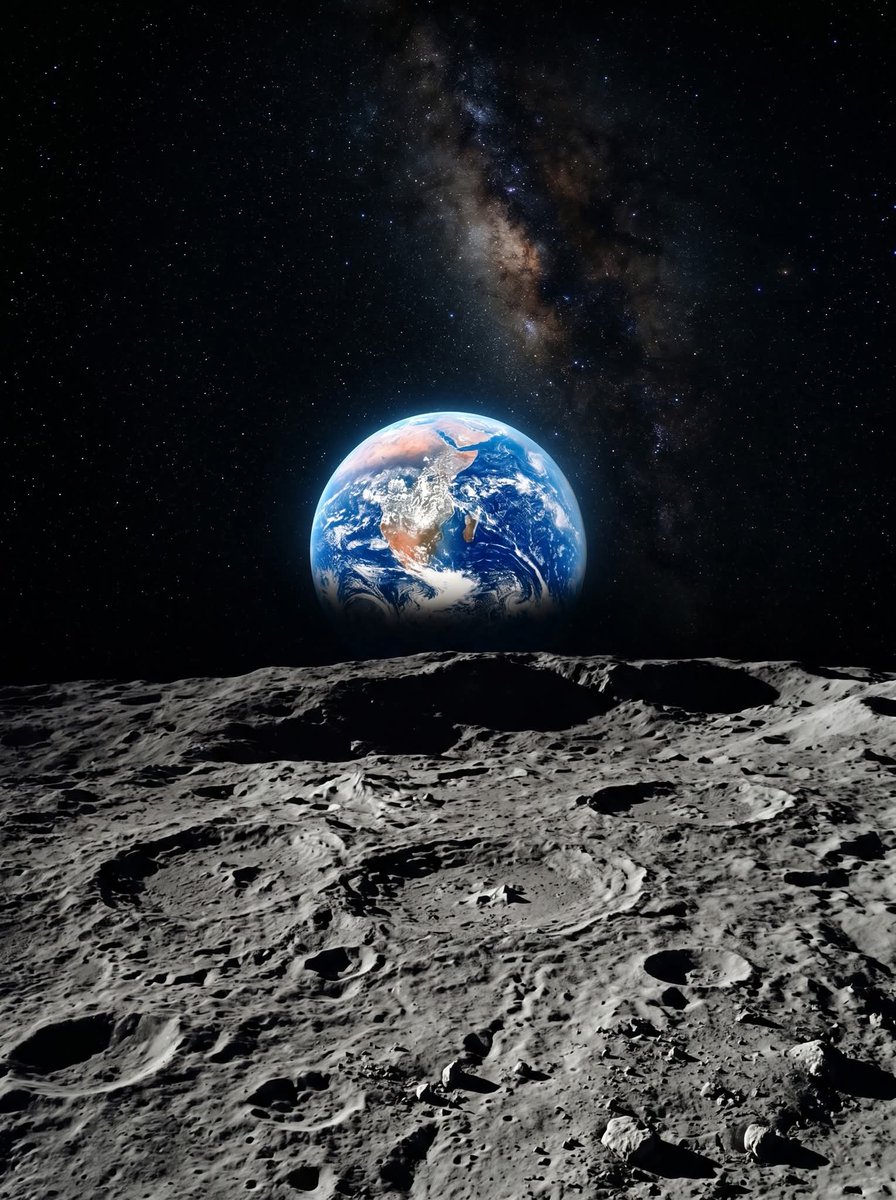
:Title: Earthrise Beyond Silence Caption:From the desolate, crater-scarred far side of the Moon, Earth slowly emerges — a brilliant blue-and-white marble rising gracefully above an ancient, lifeless horizon that has stood unchanged for over four billion years.Captured during humanity’s daring voyages to the Moon, this iconic view stops you in your tracks. Our entire planet — all its oceans, mountains, forests, and every living thing — hangs suspended in the velvet blackness like a fragile jewel. No borders. No noise. Just one tiny, breathtaking world floating in the infinite void.There is no sound here.
No wind. No voices.
Only the profound silence of space… and the sudden, humbling clarity of https://t.co/ijHGMEcttU that moment, Earth doesn’t feel like “home.”
It feels like a miracle.
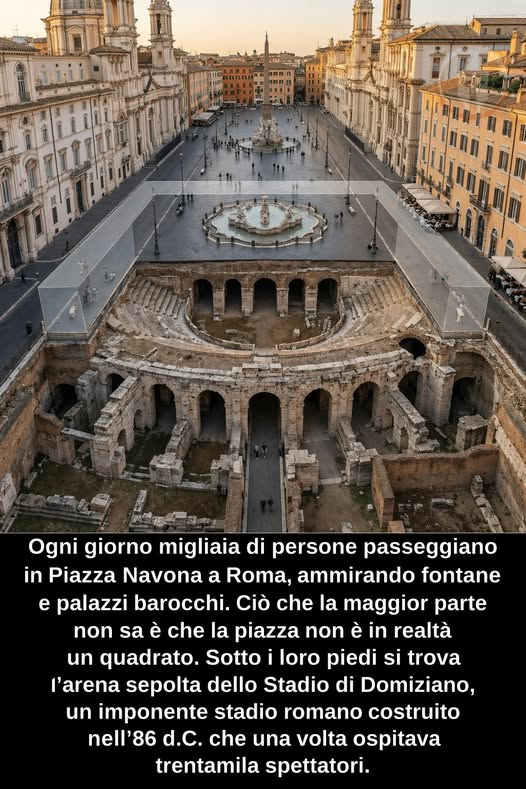
A prima vista, Piazza Navona appare come una splendida piazza barocca, modellata da architetti rinascimentali e decorata con fontane celebri come la Fontana dei Quattro Fiumi di Gian Lorenzo Bernini. Eppure, la sua insolita forma allungata ha un’origine molto più antica.
Nell’86 d.C., l’imperatore romano Domiziano ordinò la costruzione di uno stadio monumentale nel cuore di Roma. Ispirato alle competizioni atletiche greche, lo Stadio di Domiziano era progettato per gare di corsa e giochi atletici, non per le corse dei carri. La struttura si estendeva per circa 276 metri di lunghezza e 106 di larghezza, con gradinate in travertino alte oltre 30 metri e una capacità di quasi 30.000 spettatori.
Per secoli, lo stadio ospitò competizioni che riecheggiavano le tradizioni dell’antica Grecia. Ma con il declino dell’Impero Romano, la struttura cadde progressivamente in disuso. Le piene del vicino Tevere trasportarono fango e detriti nell’arena, seppellendola lentamente sotto strati di terra.
Poi accadde qualcosa di straordinario.
Invece di demolire i resti, gli abitanti medievali iniziarono a costruire direttamente sopra le antiche mura dello stadio. Case e torri sorsero lungo le arcate delle gradinate. Poiché questi edifici seguivano le fondamenta esistenti, conservarono esattamente la forma dello stadio.
Con il tempo, l’arena sepolta si trasformò in una piazza pubblica.
Il bordo curvo settentrionale di Piazza Navona non è affatto un progetto rinascimentale: è l’estremità semicircolare originale dello stadio di Domiziano, conservata quasi perfettamente dopo duemila anni.
Oggi, i visitatori possono ancora scendere a circa 4,5 metri sotto il livello stradale, nei pressi di Via di Tor Sanguigna, per vedere le arcate e i corridoi sopravvissuti della struttura antica.
Piazza Navona, quindi, è molto più di una piazza.
È l’ombra di uno stadio romano, che continua a plasmare la città secoli dopo la fine dei giochi.
“You can see the surface of the Moon…we just went sci-fi.”
On flight day seven, images from our @NASAArtemis II crew amazed, turning science fiction to reality. From the lunar far side to a solar eclipse from the Moon, the views are EVERYTHING. No pressure to pick a favorite.
LIVE: Watch with us as the Artemis II astronauts make their closest approach to the Moon, traveling farther from Earth than ever before. https://t.co/Zpy7GdTqA8
Make new friends, but keep the old.
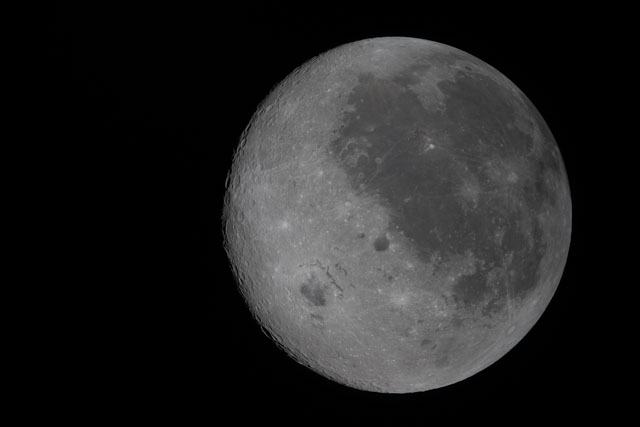
A new photo captures the Moon's near side on the right (the side we see from Earth, identifiable by its dark splotches) and its far side on the left. The Artemis II crew are the first to see the far side with human eyes.









![abakcus's tweet photo. The simplest way to visualize the set of numbers. Utterly useful diagram!❤️ [https://t.co/9YJvtfNzcB] https://t.co/sMOnBrbtTX](https://pbs.twimg.com/media/HEHH25MXYAAcp_p.jpg)


