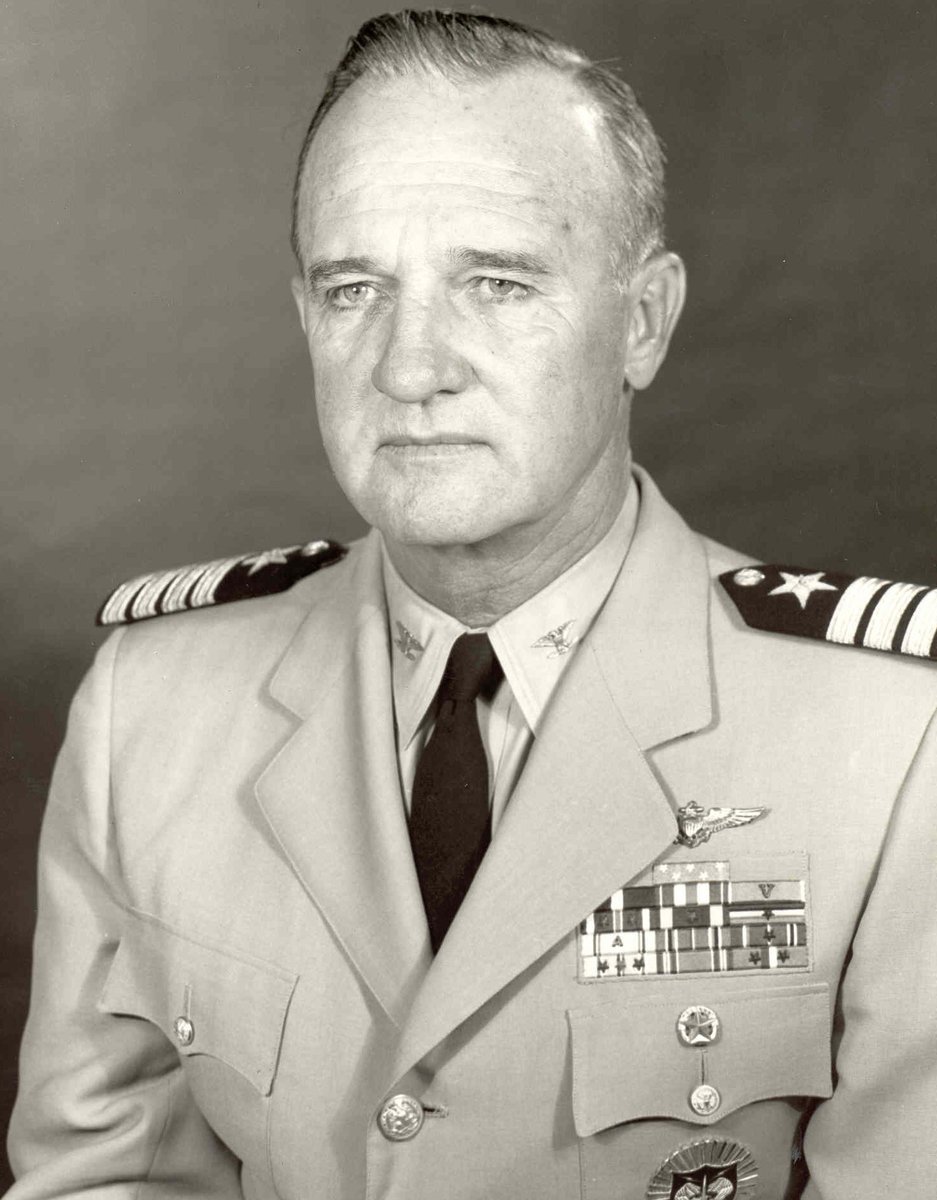
81 years ago today, June 18 1945, the highest ranking American officer to die by enemy fire in all of World War II was killed on Okinawa. His name was Simon Bolivar Buckner Jr., and his story goes all the way back to a Civil War surrender.
He had gone forward to watch his Marines push the Japanese off Ibaru Ridge, about 300 yards from the enemy. A flat trajectory shell, probably from a 47mm gun, slammed into a coral outcrop right next to him. The blast threw shards of rock and steel into his chest.
They carried him back on a stretcher to an aid station. He died on the operating table within minutes. The Battle of Okinawa was declared won just three days later. He never got to see it.
Now here is the part almost nobody knows. His father was also named Simon Bolivar Buckner, and he was a Confederate general. In 1862 the father surrendered Fort Donelson to an old West Point friend named Ulysses S. Grant. That surrender is where Grant earned his nickname Unconditional Surrender Grant.
The two men had history. Years before the war, Grant was broke and stranded in New York and could not pay his hotel bill. Buckner Sr. quietly covered it. So when Buckner surrendered to him at Donelson, Grant offered him the use of his own purse to get through prison. Friendship survived the war they fought on opposite sides of.
When Grant died in 1885, Simon Bolivar Buckner Sr. was one of his pallbearers. A former Confederate general helping carry the man who beat him, because the friendship mattered more than the flag.
And then 60 years after Donelson, the son of that Confederate general died wearing the uniform of the reunited country, leading an American army in the Pacific. Congress made him a full four star general in 1954, almost a decade after his death.
One Buckner gave Grant his first great victory. The other gave his life for the nation Grant fought to keep whole. Two generations, two wars, one family name. Worth remembering today.
La selección de Croacia es la única 100% europea.
Son católicos. Fueron a misa antes de viajar.
Modric tiene una imagen de la Sagrada Familia en sus canilleras.
El entrenador reza el rosario durante los partidos.
¿Qué tal si lo damos a conocer al mundo?
Necesitamos más de esto.
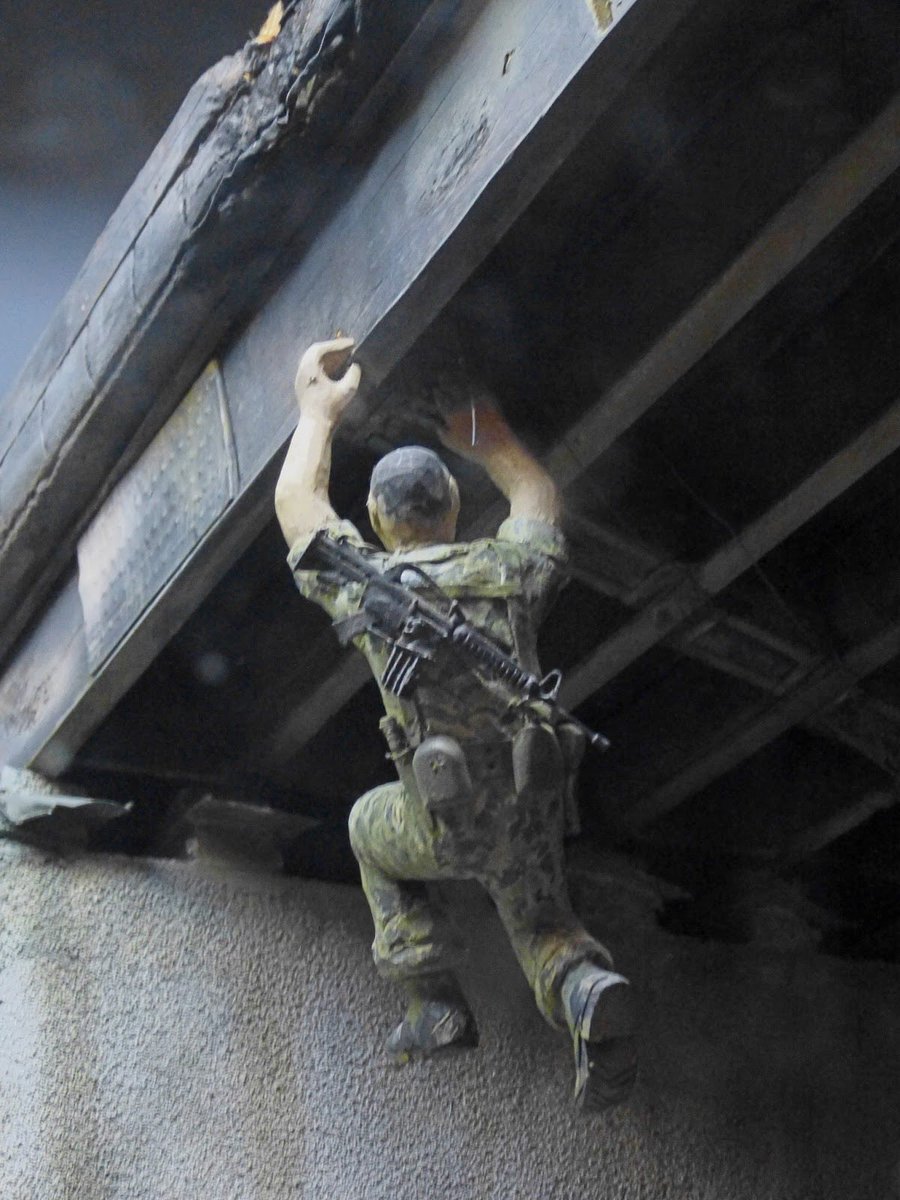
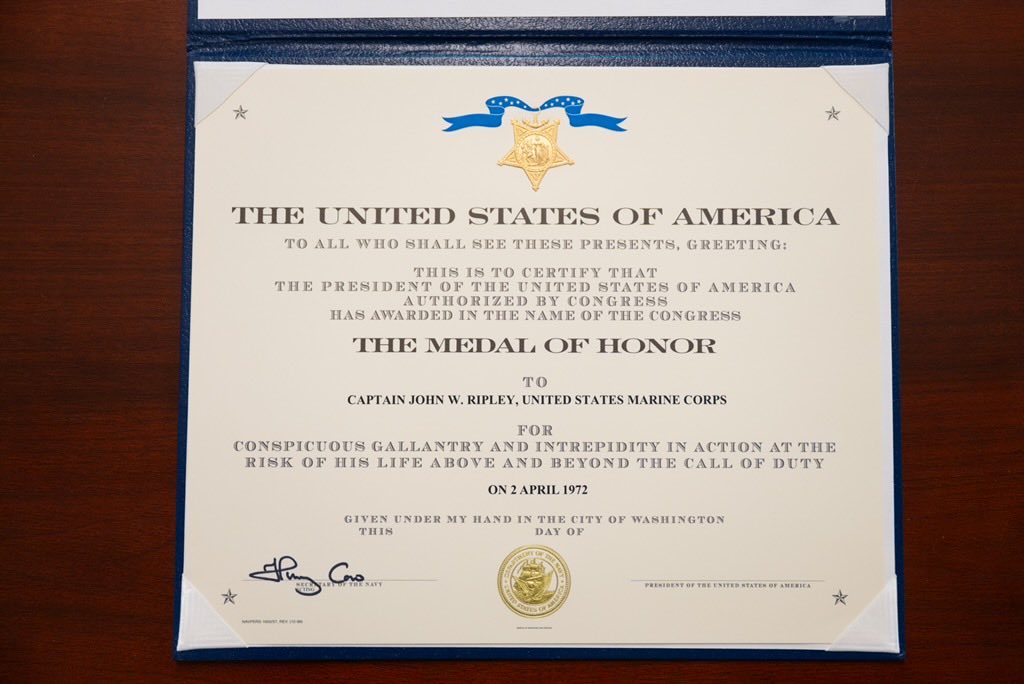
There’s a model in Memorial Hall at the Naval Academy of Col John Ripley climbing under a bridge to set explosives under heavy fire. I always wondered why he didn’t receive the Medal of Honor.
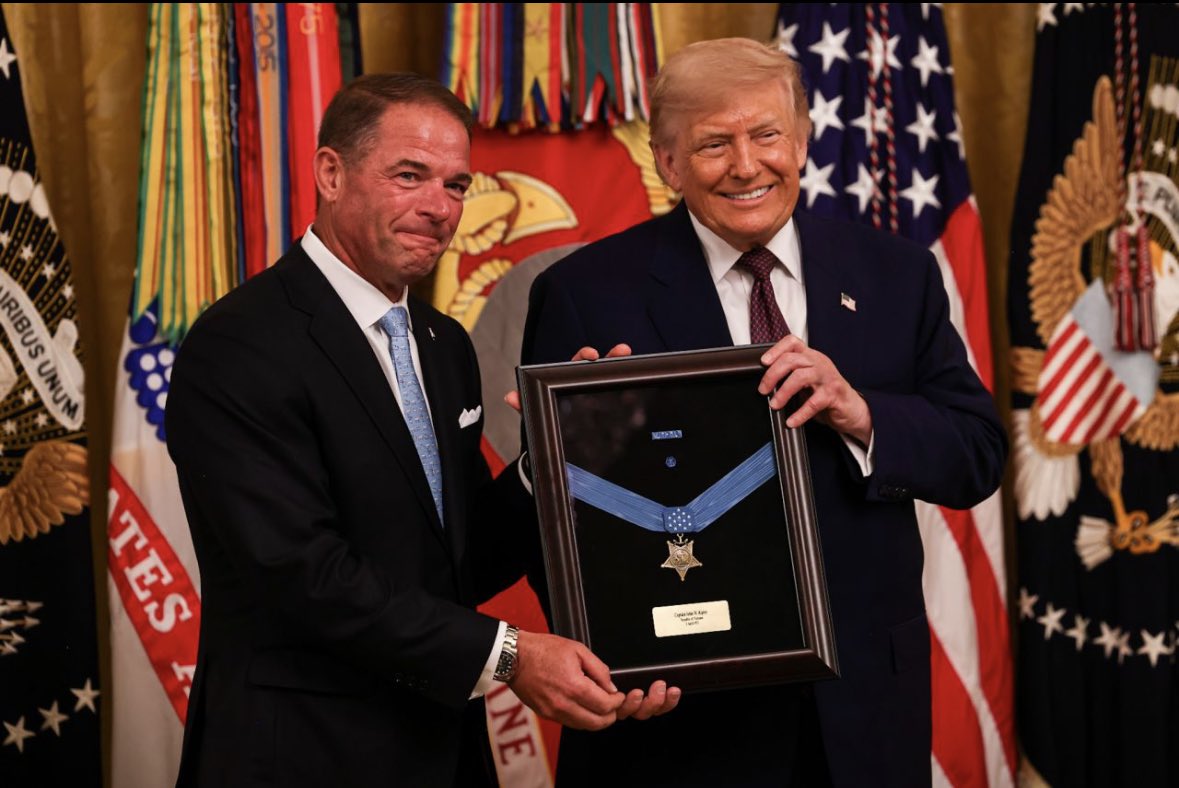
Decades later, I watched POTUS right this wrong. I’m proud to have a small part of this.
U.S. Navy Captain David McCampbell of Bessemer, Alabama, was awarded the Medal of Honor for his extraordinary actions on June 19, 1944, and October 24, 1944 during the Battle of the Philippine Sea & Battle of Leyte Gulf, Philippine Islands.
On June 19, 1944, during “Marianas Turkey Shoot,” Commander McCampbell shot down five Japanese Yokosuka D4Y ‘Judy’ dive-bombers to become an “ace in a day.” Later that afternoon, he downed two Mitsubishi A6M ‘Zekes’ over Guam.
On October 24, 1944, he became the only American airman to achieve “ace in a day” status twice. McCampbell and his wingman attacked a Japanese force of 60 aircraft. He shot down nine, setting a U.S. single-mission aerial combat record.
For his actions on these days, he was awarded the Medal of Honor, becoming the only Fast Carrier Task Force pilot to be so honored. He was promoted to captain in July 1952 and retired from the Navy in 1964. He died in Florida in 1996 and was interred at Arlington National Cemetery.
McCampbell is the Navy's all-time leading flying ace and top F6F Hellcat ace with 34 aerial victories. He was the third-highest American-scoring ace of World War II and the highest-scoring American ace to survive the war. He also set a world single-mission aerial combat record of shooting down nine enemy planes in one mission on October 24, 1944.
#WeRememberThem
FLYING THE LINE
3AM on the flight line, and the world’s waiting like a caffeine-fueled adventure that doesn’t give a damn about your beauty sleep.
There I am, coffee in one hand, flight bag in the other, eyes still half-glued shut, shuffling out to our big beautiful C-141 or C-17 beast under those harsh ramp lights. The “bag drag.”
The air’s crisp, the jet’s APU or power cart are already humming that low, throaty growl, as the jet wakes up for a global joyride.
Crew piles in — loadmasters cracking jokes, engineers double-checking the flyability of this metal marvel, and me sliding into the left seat thinking, “Alright, Lord, let’s do it.”
The crew, like a group of ants taking orders from the queen, automatically dives into their respective duties and checklists like clockwork. No direction needed here.
We crank the engines, taxi out into the dark, and blast off as the sun’s still thinking about showing up.
One hop to Ramstein for fuel and some bratwurst, next leg to Incirlik where the pita bread’s fresh and the tension’s thicker than the Turkish coffee.
Then it’s “wheels up” again — maybe Diego Garcia for a quick dip in that insane blue water, or over to Yokota where the ramen and beer hits different at 0200 local.
Skipping across continents like stones on a pond, chasing daylight, dodging weather, and hauling everything from the SEALS, to the 82nd Airborne, to nuclear weapons, to Thanksgiving turkeys. Hell, once I flew a single generator to Nouadhibou, Mauritania.
You land in one country for thirty minutes, grab a weird local snack that’ll haunt your stomach for days, chat with the ground crew in broken English and hand signals, then you’re back in the air chasing the next sunrise.
Jet lag? What jet lag. This is the life — stars above, stars on the flag on your sleeve, and the pure rush of knowing you’re part of the greatest airlift machine the world has ever seen.
No two days are ever the same. No two sunrises the same. Just pure, unfiltered freedom with a 🇺🇸 patch on your shoulder and a whole lot of “hold my coffee, I got this.”
God bless the Air Mobility Command. Best damn job I ever had. Who’s ready to chase the globe with me? ✈️🌍
Rest in peace, U.S. Air Force 1st Lt. Ariana A. Bouche, just 27 years old.
A KC-135 Stratotanker pilot who lost her life serving our country after a U.S. military aircraft crashed during a mission in Iraq.
Please don’t ignore let us support her family 💔
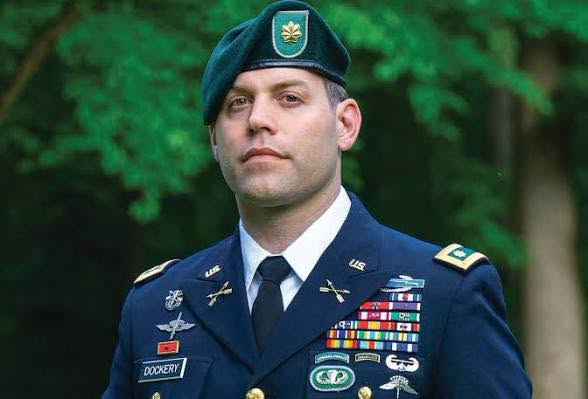
Major Nicholas Dockery, awarded the Medal of Honor at the White House yesterday for one of the most relentless displays of courage to come out of the Afghan war. On October 2, 2012, then a second lieutenant and platoon leader with the 2nd Battalion, 12th Infantry Regiment, Dockery’s platoon was ambushed by a large, well-armed Taliban force in Kapisa Province. What followed was a four-hour fight.
He crossed open ground again and again to rally his soldiers and reinforce his Afghan allies, used his own body to shield a fellow soldier from a grenade blast, killed two Taliban fighters who were dragging off an unconscious American, then performed CPR to bring that man back. During the exfil he stayed behind to lay down covering fire and directed an RPG attack that broke the enemy’s final assault.
He refused to leave the village until every wounded man was loaded. His actions were credited with saving the lives of the American and Afghan soldiers on the ground that day.
Dockery’s story runs deeper than that single fight.
An Indiana native raised by his grandmother, he enlisted in the National Guard after West Point first turned him down, later earned his commission through the Academy, became a Green Beret, was named Military Times Soldier of the Year in 2022, and earned a master’s from Yale. He founded a foundation supporting art and equine therapy for those carrying the hidden wounds of service.
The Silver Star he received for that day in 2012 was upgraded, fourteen years later, to the nation’s highest honor.
Gloria Patri, et Filio, et Spiritui Sancto.
Sicut erat in principio, et nunc, et semper, et in saecula saeculorum. Amen.
Glory be to the Father, and to the Son, and to the Holy Ghost.
As it was in the beginning, is now, and ever shall be, world without end. Amen.
Today’s “Buzz’s Bedtime Story” is a nightmare. It’s the tale of an ancient, smelly witch, with a blood curdling cackle, who invades a castle and takes over.
I’m going to recount the first time I ever met Hillary Clinton. It was on Marine One, helicoptering to Camp David for a weekend, with the First Family.
I was brand new to the Military Aide position and this was my first trip to Camp David. It was a Saturday morning and I was a little trepidatious, to say the least.
Of course, I’d heard all about Hillary from my predecessor. In my few weeks of “in briefings” before I assume this volatile position, her name came up frequently.
He’d warned me about her temperament and her propensity to go off on any and all staffers, including her husband. In fact, during my “in briefings” he told me that I could upset Bill Clinton, and he’d brush it off.
But if I were to piss Hillary off, she’d rip my heart out. Now, I’m a fairly intelligent guy so I registered it. Don’t piss her off.🤣
On this particular morning, and every other time on a presidential trip, I’d always boarded Marine One last, letting the First Family board first along with the doctor and Secret Service agents. I always used the rear steps, with “the football.”
My seat on the helicopter was always immediately adjacent to the president and “First Lady.” On this particular day, Chelsea was also coming.
I sat in my assigned seat, set the “football” down and approached Hillary. “Hi ma’am, I’m Major Buzz Patterson. I’m the new Air Force Aide. Wonderful to meet you.” I also introduced myself to Chelsea and sat back down.
Hillary was curt and quiet. She nodded without saying a word. Chelsea was rude and looked at me like I had 3 heads. The disdain for the military among these two was palpable. My predecessor was right,
“Well, that was awkward,” I thought to myself.
It never got “not awkward.” 🤣🤣🤣
A South Carolina native. A warrior. A legend.
Retired United States Marine Corps Major James Capers, Jr. received the Medal of Honor last night, the highest military decoration.
In 1967, severely wounded and under heavy fire in Vietnam, Major Capers led his entire team to safety and refused to board the helicopter until every single one of his men was on it first. He was the first African American to lead a Marine Reconnaissance company and receive a battlefield commission.
This is what courage looks like.
We fought alongside the SC delegation to help make this happen for Major Capers because he earned it, plain and simple.
Congratulations, Major Capers.
South Carolina STRONG.
They threw boots at him in the barracks.
They called him a coward.
His commanding officer tried to have him removed from the Army.
Everyone was waiting for him to break.
He never did.
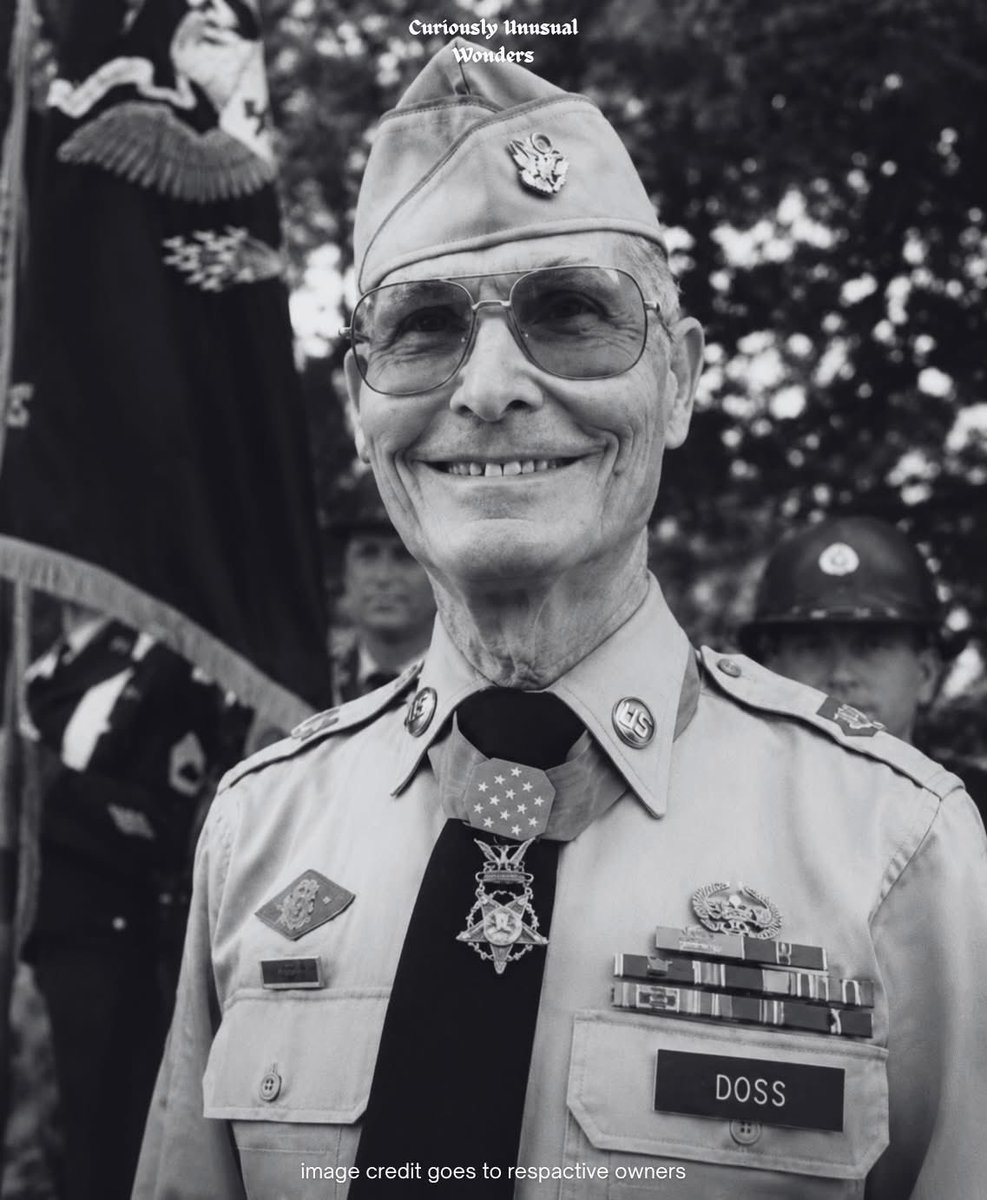
His name was Desmond Doss.
And he became one of the bravest soldiers in American history without ever carrying a weapon.
Doss was a devout Seventh-day Adventist who believed the commandment "Thou shalt not kill" was absolute.
When World War II began, he volunteered to serve.
But he refused to carry a rifle.
He refused to take a life.
His fellow soldiers couldn't understand it.
Many hated him for it.
They saw him as a burden.
A liability.
A man asking others to fight while he stood aside.
But Doss wasn't trying to avoid danger.
He volunteered as a combat medic.
He intended to run directly into it.
By 1944, he was serving in the Pacific.
Under fire in Guam and the Philippines, he repeatedly risked his life to rescue wounded soldiers.
The insults started fading.
The men who doubted him had seen what happened when bullets started flying.
Doss always ran toward the wounded.
Then came Okinawa.
The Maeda Escarpment.
A place soldiers called Hacksaw Ridge.
A 400-foot cliff defended by heavily fortified Japanese positions.
On May 5, 1945, a massive counterattack forced American troops to retreat.
Most made it down.
Roughly 75 wounded men did not.
They were stranded on top of the ridge.
Abandoned under enemy fire.
Desmond Doss stayed.
Alone.
Unarmed.
He found one wounded soldier and dragged him to the cliff edge.
Using a rope, he lowered him to safety.
Then he went back.
And found another.
And another.
And another.
Each time he prayed the same prayer:
"Lord, help me get one more."
For hours he moved through gunfire, artillery, and chaos.
One man at a time.
By the end of the night, he had rescued approximately 75 soldiers.
Single-handedly.
Without firing a shot.
Days later, a grenade exploded beside him.
Shrapnel tore through his body.
While waiting for evacuation, he saw another wounded soldier whose injuries were worse than his own.
So he gave up his stretcher.
Then a sniper's bullet shattered his arm.
Using the stock of a broken rifle as a splint, he crawled hundreds of yards to safety.
On October 12, 1945, President Harry S. Truman placed the Medal of Honor around his neck.
Doss became the first conscientious objector in American history to receive the nation's highest military award.
One of the men he saved on Hacksaw Ridge was Captain Jack Glover.
The same officer who had once tried to force him out of the Army.
Years later, Glover called Doss one of the bravest men he had ever known.
Desmond Doss died in 2006 at the age of 87.
He never carried a weapon.
He never fired a shot.
He never compromised what he believed.
And when everyone else was running down the ridge, he kept going back.
Just one more.
Then one more.
Then one more.
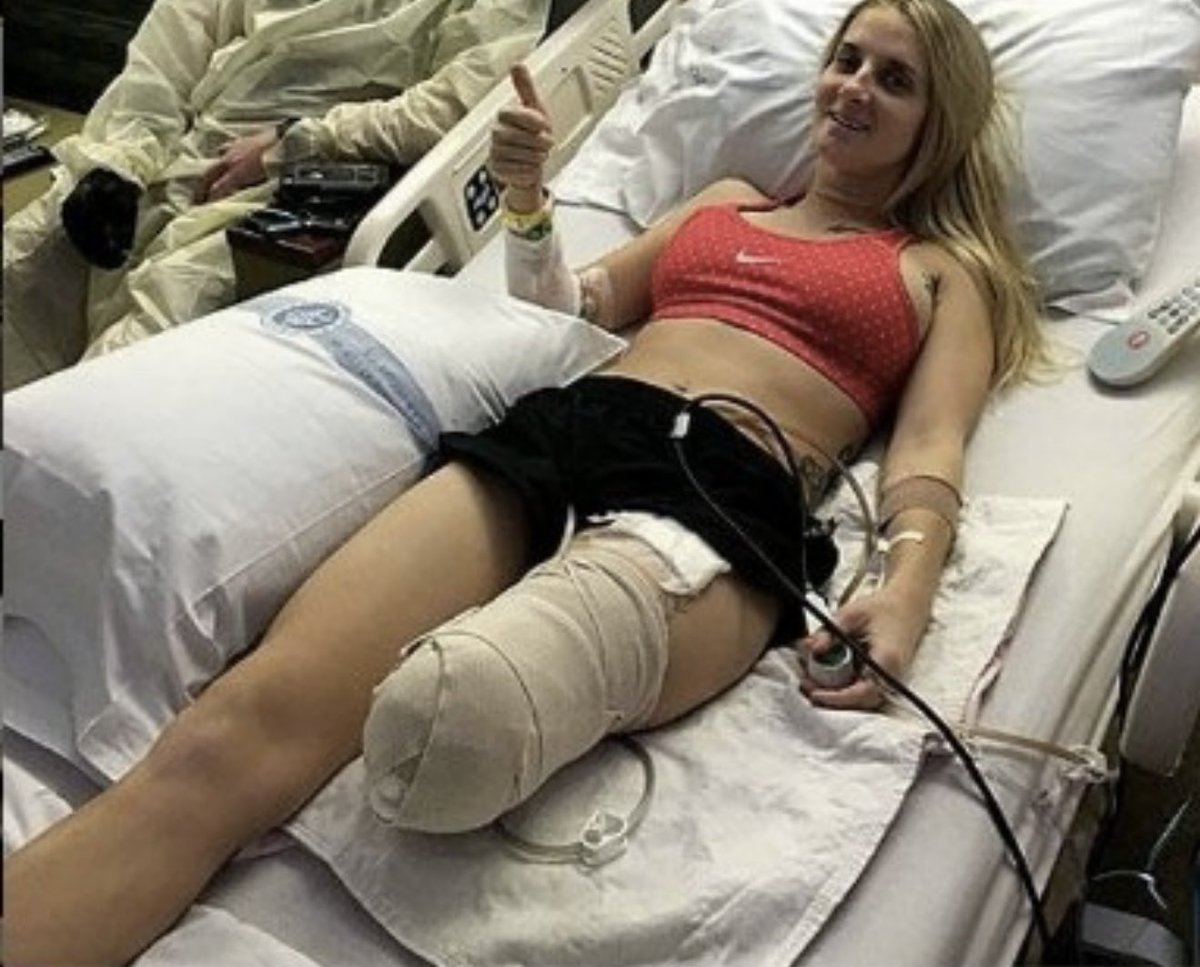
USMC Sergeant Kirstie Ennis nearly died when the CH-53D helicopter she was flying in as an aerial gunner crash-landed in the Helmand Province of Afghanistan in June of 2012. This crash resulted in an above the knee amputation on her left leg.
Please take a moment to thank Sgt. Kirstie Ennis for her service and sacrifices. Big Salute to this strong American woman and hero!