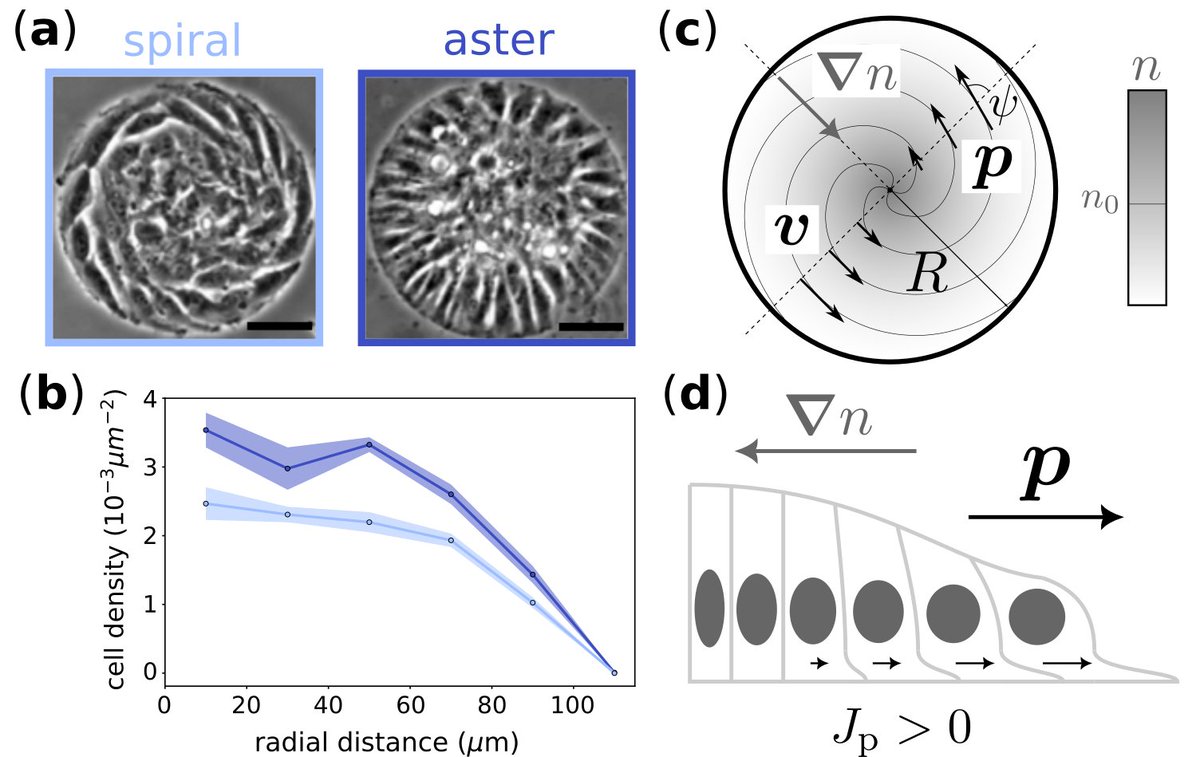
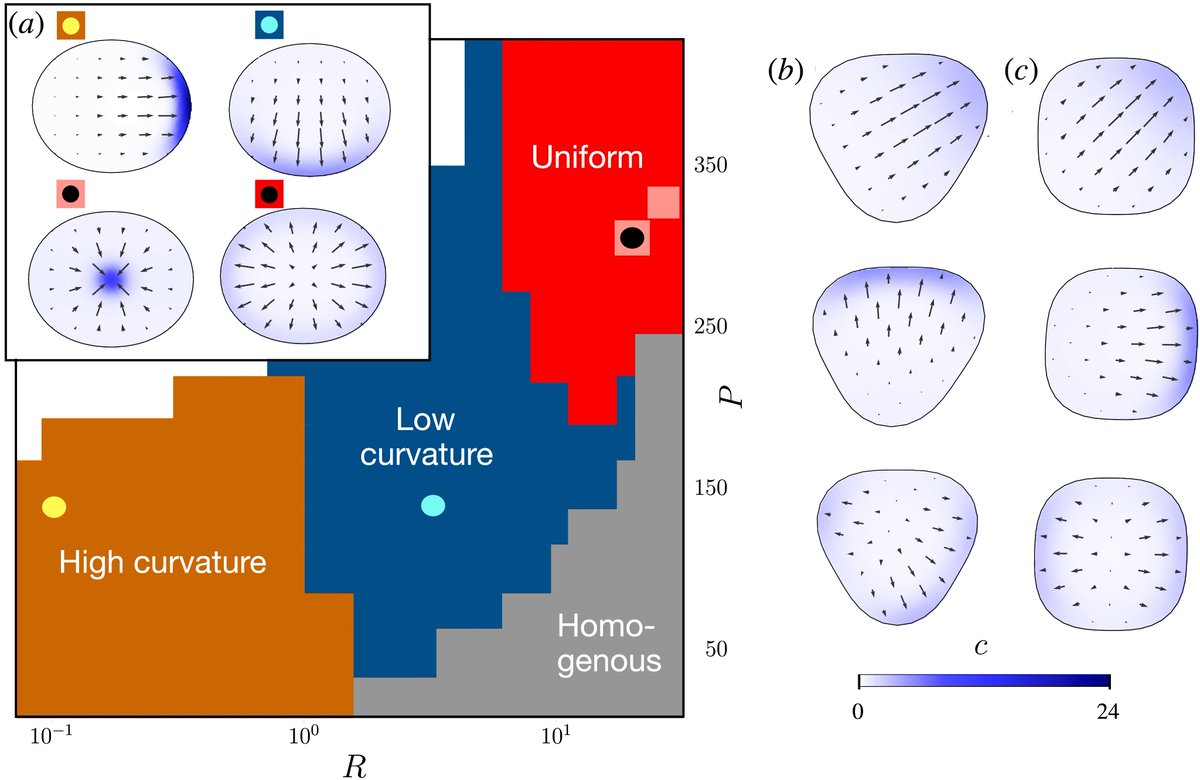
How do density gradients impact active flows in polar fluids?
We tackle this question by focusing on cell monolayers confined to a disc.
We show that density gradients trigger a spiral-aster transition and coexistence of polar orientations.
https://t.co/PD208DWRV1 (1/8)
Days in a work week: 5
Days in a month: 30
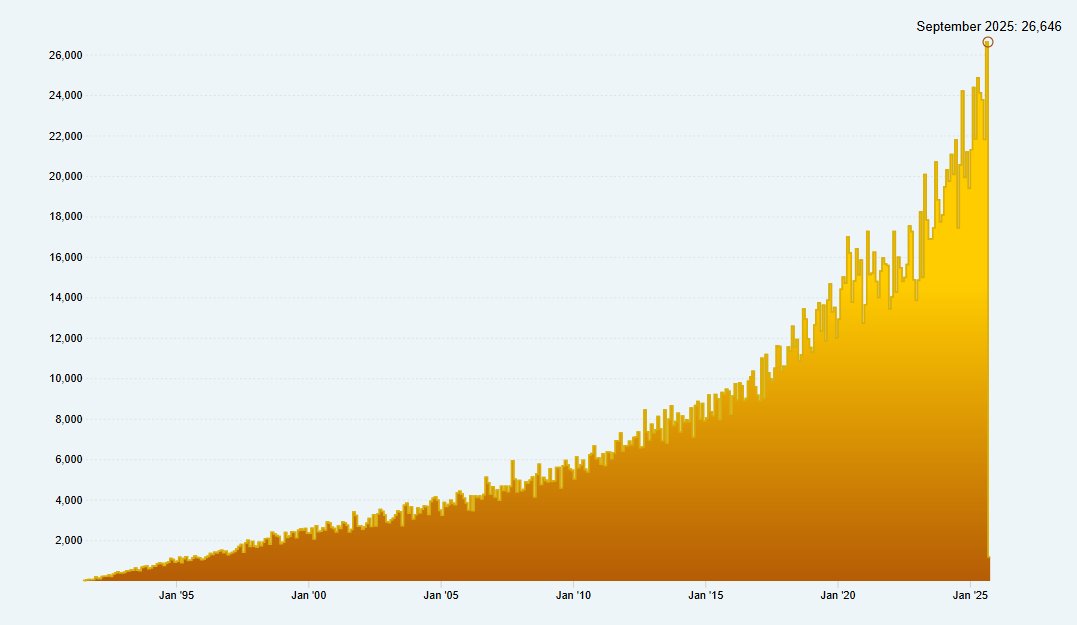
Total new submissions to arXiv in September: 26,646
arXiv editorial and user support staff: 7
someone who is good at science please help me with this. our team isn't sleeping.
#openaccess#preprints
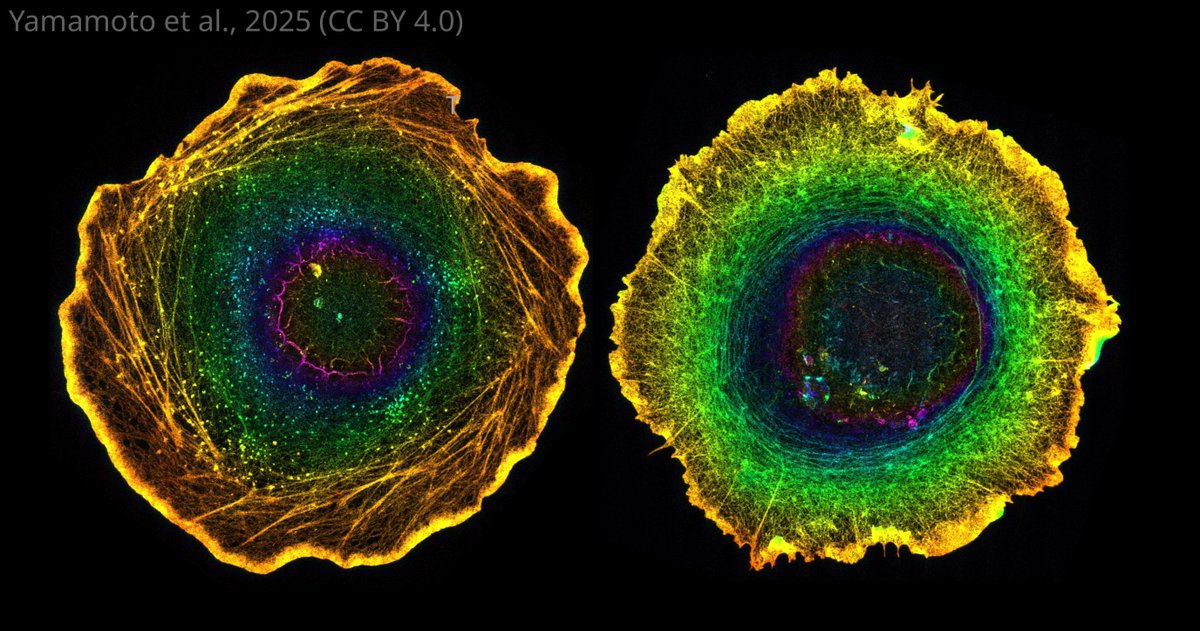
New preprint! 🚨 We uncover a slow adaptation to stretch that links star-bundling of keratin filaments with nuclear escape from its keratin cage. Led by @tom_golde 🙌 @IBECBarcelona https://t.co/HZVLYVkcde
Tiny molecular spirals in cells can scale up to control the twist and turn of entire tissues – an important step towards understanding left-right symmetry in tissues and organs.
https://t.co/QosfkWNawR
If you’ve been following this account closely, you might already know methods to probe mechanics in vitro, but what about in live embryos?
I’m Arthur Michaut , and I’m going to share a few great papers on this aspect of #EpithelialMechanics.
⚡ Our mini Higgs boson moment!
In 2021, our 3D digital twin predicted left-right polarity oscillations in confined active fluids.
2025 -> experiments confirmed it.
From theory to reality: simulation meets evidence.
📄 Theory: https://t.co/LcmOyCMsXD
📄 Experiment: https://t.co/KKUQgh68A8
Excited to share our new review with Emmanuel on tissue patterning in organ morphogenesis! We explore how repetitive patterns form, starting with the concept of L-systems and highlighting an ERK-mediated curvature feedback. Please check it out! https://t.co/ENcer2ISdB
🚨 Second preprint of the week!
We uncover the multiscale dynamics of active viscoelastic buckling in epithelia.
We harness these mechanical instabilities for synthetic morphogenesis.
Led by @onenimesa🙌. Theory by Marino Arroyo and team.
https://t.co/Gtmqggt4ou
Have you ever thought about inflating tissues?
Or maybe quickly deflating those inflated tissues?
New #EpithelialMechanics pre-print: https://t.co/b7PVuHZVCO
🧵with pressure control, multiscale buckling, patterned wrinkling
I worked on a group project that created a toy agent-based model simulating interactions between cells to form patterns. It was from a study on stripe formation in zebrafish, showing how simple cell interactions produce beautiful patterns in nature.
https://t.co/krSw8rBvwM
How to turn a layer of fibroblasts into a tulip 🌷?
Check out our new pre-print on shape-programmable living surfaces.
Led by @pauguillamat@IBECBarcelona
https://t.co/iwNhsfXC3H
Ever wondered how a tiny Hydra blob figures out where its head goes? Turns out, it's not just chemistry — it's feeling the stretch! Check out 👉 Mechanochemical patterning localizes the organizer of a luminal epithelium https://t.co/rEiG0EQz1m #Hydra#morphogenesis#biophysics
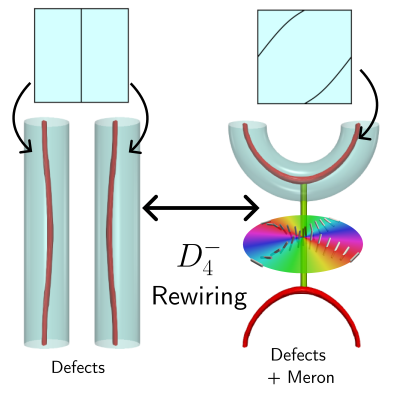
Researchers present a framework for the analysis of nematic materials and their defects, providing a full topological classification of the rewiring and crossing process that reveals the role of merons in mediating interactions between disclination lines.
https://t.co/Yio1IUPPOw
FINALLY out in @ScienceAdvances !
Proud to be first/co-corresponding author and part of a fantastic team!
It's about Plexin signaling driving collective #cellmigration & organ sculpting - check out the videos
https://t.co/BrUb1GiRuN
#CellBio#Science#DevBio#Microscopy
New paper! Fast matrix stress relaxation potentiates human monocyte 3D migration by generating protrusive forces and is dependent on the Cdc42-WASp axis. Thanks to our amazing collaborators! #viscoelasticity#mechanobiology@theChaudhurilab@Stanford_ChEMH
https://t.co/wR7HVrnITC
Using a hydrodynamic model for the #actomyosin cortex of #cells in a confined 2D region, scientists show how active mechanochemical patterns can sense boundary curvature and resemble those seen in cells confined to micropatterned substrates.
🔗 https://t.co/0I7ddIcMB3
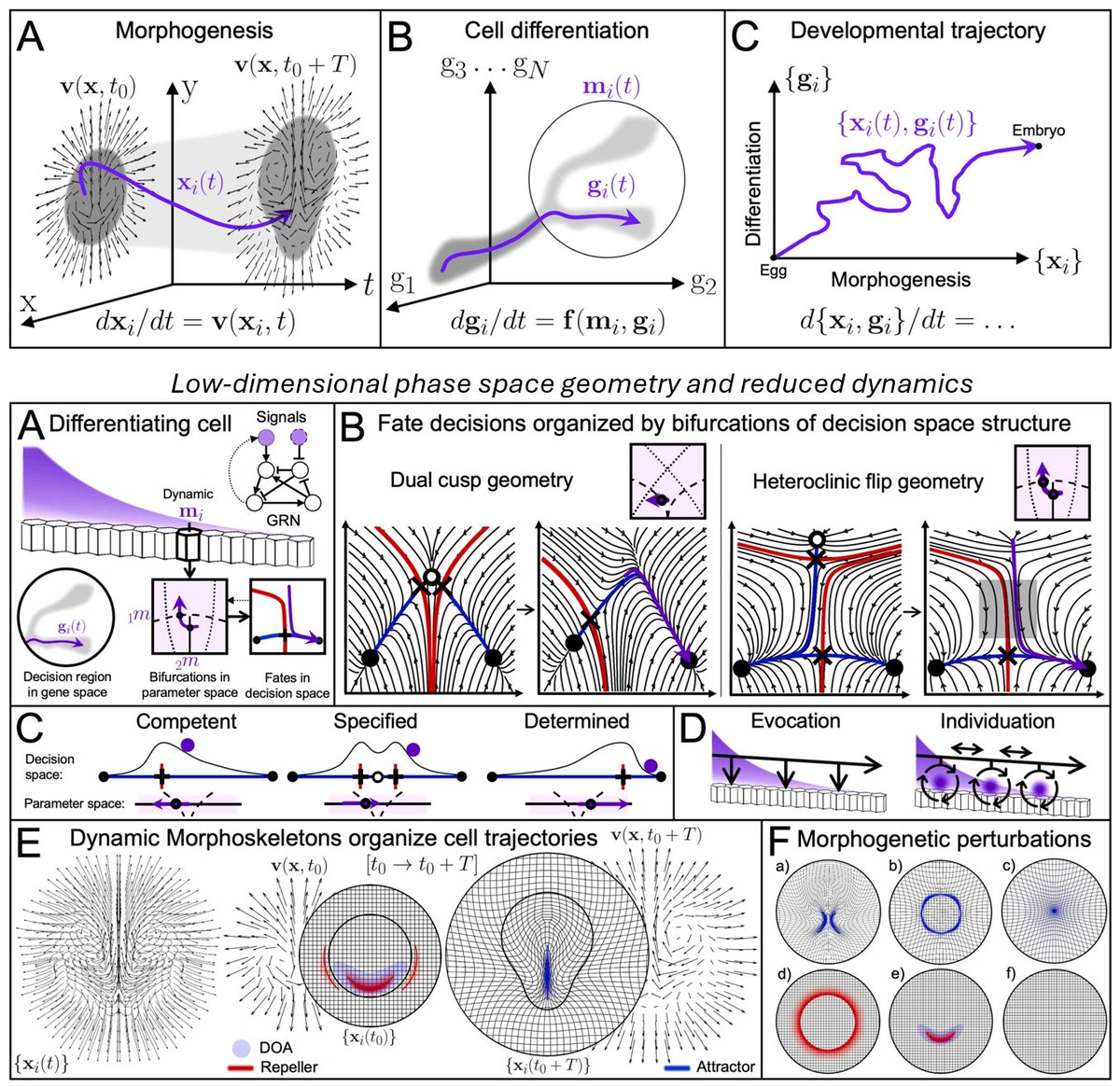
📣 New review! Dynamical systems and low-dimensional geometric structures in phase space help rationalize how embryos develop form and function, from large datasets. We focus on morphogenesis, cell differentiation, and their interconnection. @axplum
https://t.co/4TKTNMa5Eh