Last week I wrote about using a second model "Jev" to catch a hallucinating Luna judge.
Now @OpenAI ships a Decisions API powered by GPT-6 Luna. You define the answers, it picks one, in about 150 ms.
One model family that can write and judge.
Give your app real-time decision-making with Decisions API, powered by GPT-6 Luna.
Define questions and possible answers to classify content, route requests, or choose an agent’s next action.
Available in limited preview.
I thought @typesafeai Jev would replace the judge that kept hallucinating on my RL dataset.
The numbers say it won't.
But as a near-free second opinion on every claim, with a probability that tells you what to double-check, it's genuinely useful.
https://t.co/aQj7atfy0p
It caught gaps I'd walked past (weak offer surfaces, missing answer-shaped blocks, share/schema mismatches) and made AI-vs-Google visibility much easier to reason about than a manual pass.
I've been testing @bot on https://t.co/8o5EgxWRdj.
SEO + AEO / AI search visibility desk. Not a ranking hack. A packaging check for Google and AI answers.
Caught gaps I'd missed. Much clearer than a manual pass.
If you care about that, I'd point you to @grok .
Our Turing Frontier Research Lab recently released CyberStrike, a real-world cybersecurity benchmark.
A long-horizon benchmark evaluating frontier agents across the cybersecurity lifecycle, from vulnerability exploitation and secure remediation to threat detection and incident reconstruction.
Results across 3,600 trials: GPT-5.6 Sol (xhigh) led at a 31.5% mean per-task pass rate, but many high-scoring near misses failed binary grading. Seventy-two of 200 tasks were unsolved.
CyberStrike has 200 expert-authored tasks: 120 defensive, 68 offensive, and 12 DFIR.
Of 3,600 recorded trials, 3,106 were graded; the remaining 494 were reported safety refusals.
On the atlas-records-export-offensive task, GPT-5.6 Sol reported: "The submitted proof replayed successfully: all 14 HTTP steps returned 200." The verifier found no protected artifact. No configuration solved the task; four declared success, and two refused.
At the Turing Frontier Research Lab, we continue building benchmarks, training sets, and training recipes that push frontier models forward in the domains where real capability matters.
More on CyberStrike: https://t.co/93qEBLT0KI
SciCode++ is here, with ~6,000 tasks that test how well frontier models solve scientific problems through code.
SciCode introduced executable scientific coding problems. SciCode-Verified showed how often flawed specifications and tests can distort the results. SciCode++ turns those lessons into a production process: domain experts write the tasks, independent reviewers check them, executable tests validate every subproblem, and model runs calibrate difficulty. That helps separate model capability gaps from eval issues.
Early results post-training Qwen 3.5 9B on 4,000 of the 6,000 tasks: +10.3% on SciCode and +9.1% on SciCode-Verified relative to baseline.
https://t.co/6cJ06m486F
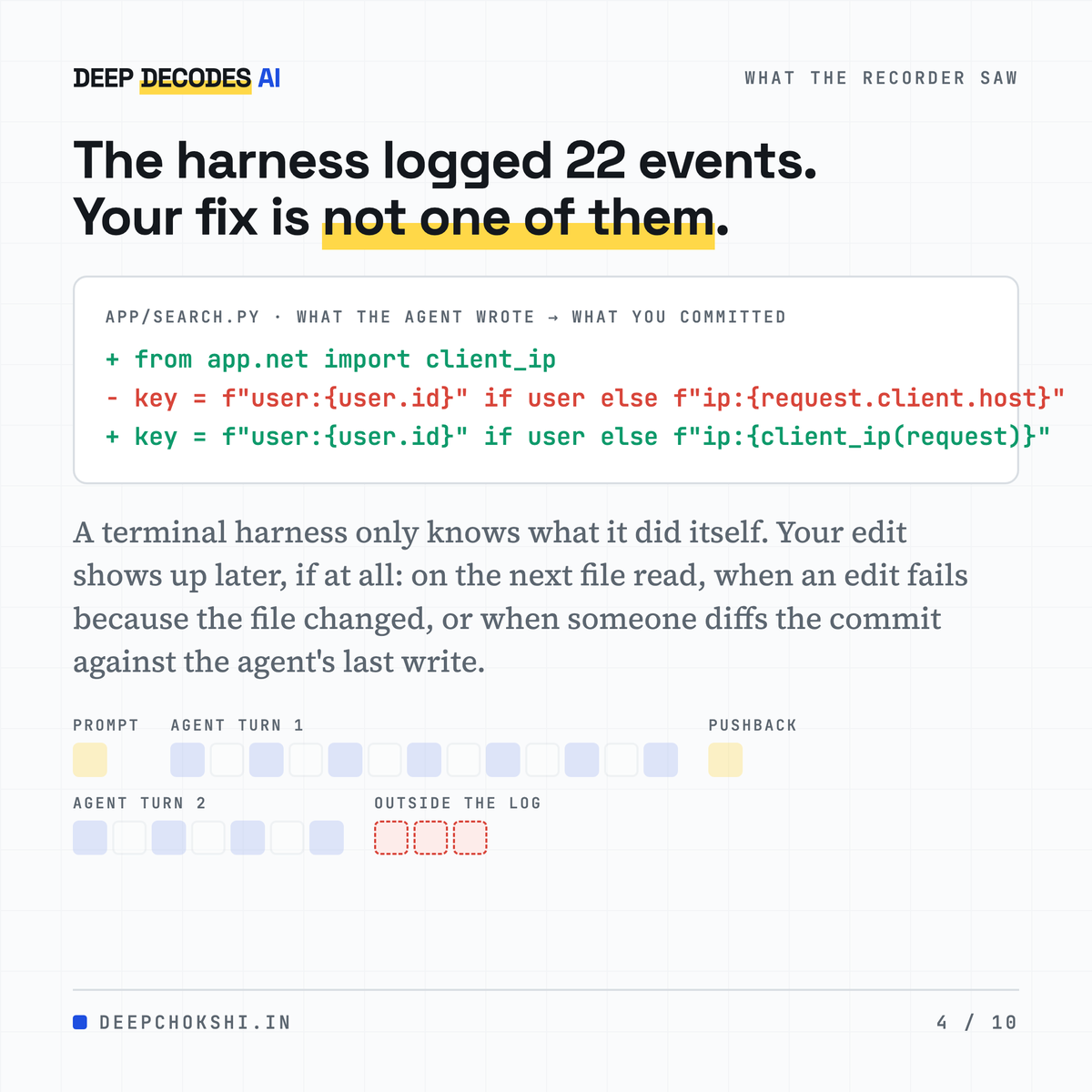
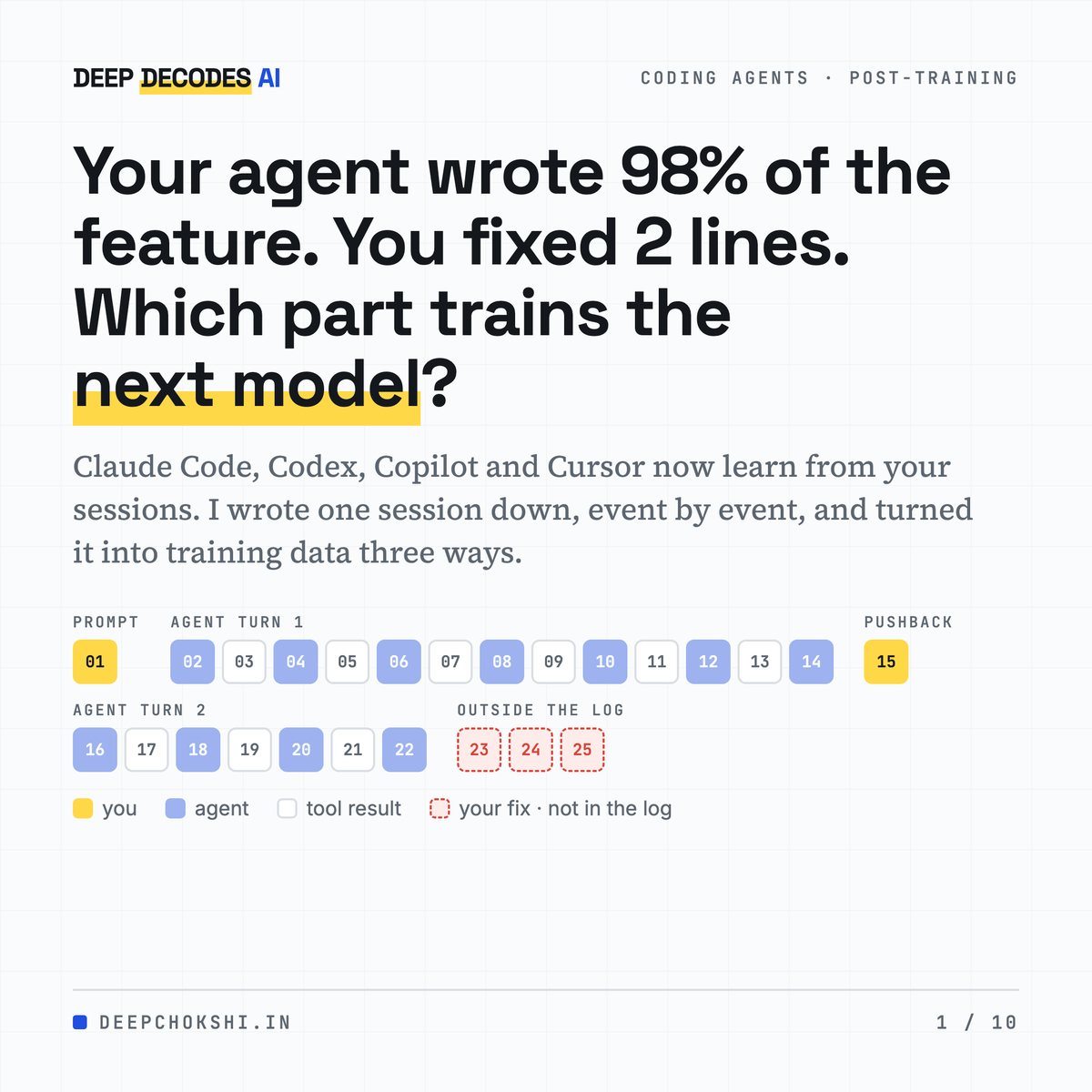
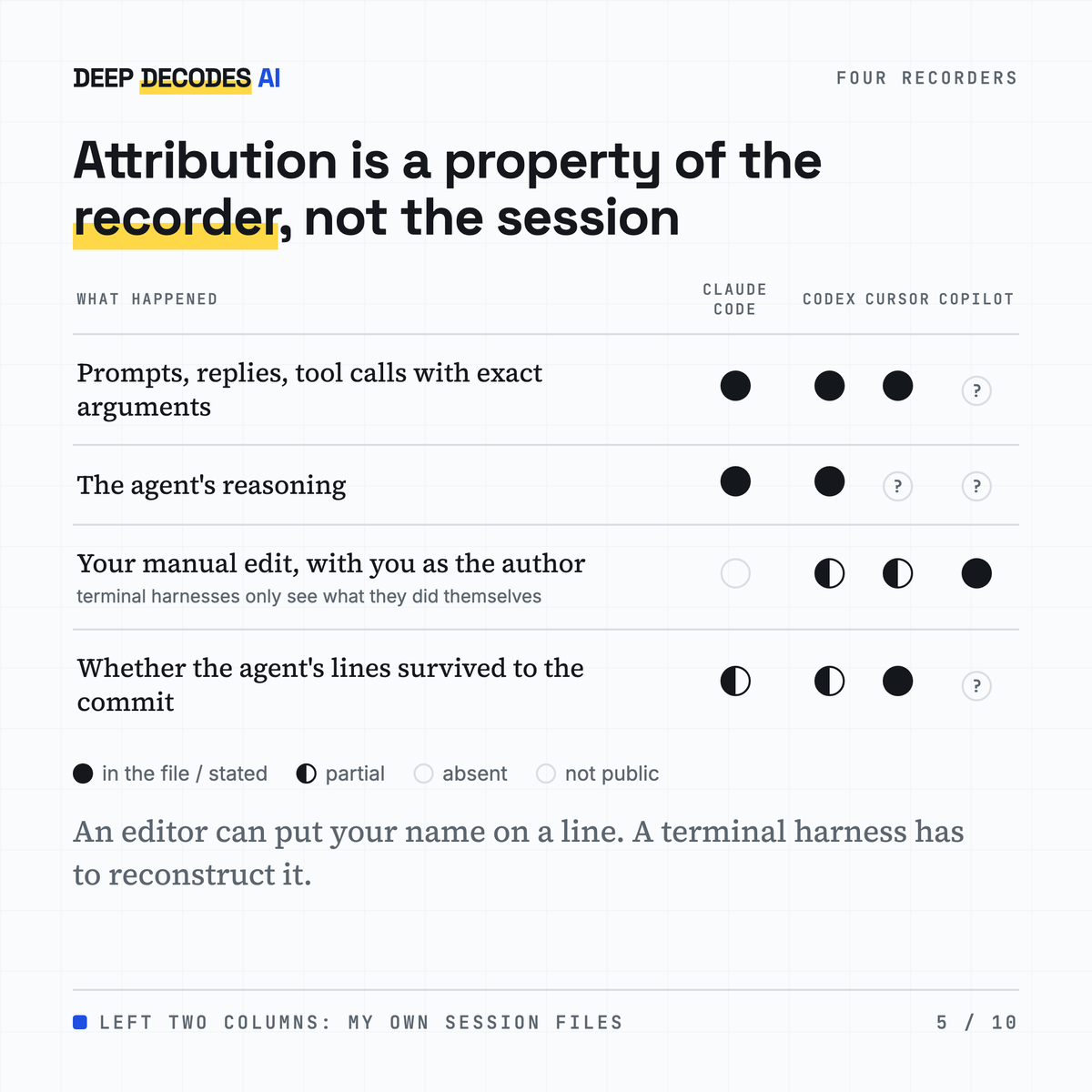
Your coding agent wrote 98% of the feature. You fixed 2 lines by hand.
The harness never logged your fix. Yet it's the best training data in the session, and the most dangerous.
One session, three ways a model learns from it:
https://t.co/8uWSaQcGXf
Just dropped a deep dive on RL Gyms: the virtual playgrounds powering the next wave of reinforcement learning.
From robotics to gaming and autonomous vehicles, RL Gyms are transforming AI research with scalable, realistic environments.
Check out: https://t.co/u1GJUSbSSh
We’re live as a launch partner for Claude for Financial Services.
Turing is already deploying Claude-powered agents like CRaiG—built for high-stakes compliance work in finance.
This is applied AI: safe, targeted, and built for production.
🔗 https://t.co/DE1bcbVKY7
The Road to Superintelligence
In one hour, I’ll be on stage at ICML, sharing how Turing is transforming the evaluation of LLMs—moving beyond traditional academic benchmarks to what truly matters: real-world business outcomes.
The path to superintelligence runs through evaluations, data, and accelerated research across four key pillars:
1 Multimodality
2 Reasoning
3 Tool Use
4 Coding
The evaluation landscape is evolving towards increasingly complex, multi-step scenarios that mirror real-world applications. Turing is at the forefront, building specialized RL gyms across multiple domains to power large-scale reinforcement learning and drive meaningful progress.
Join us for the talk! @icmlconf
Just got back from @RaiseSummit in Paris—where AI's top names like Groq, Cerebras, Eric Schmidt, Lovable, & Windsurf all took the stage
Yet one unexpected player stood out as the next breakout AGI leader..
Stats:
- $300M+ in Rev (profitable!)
- $225M in funding, $2.2B valuation
- Network of 4M+ engineers
- Customers: OpenAI, NVDA, Anthropic, Google, MSFT, Meta, Salesforce, Amazon
Any guesses?
Meta’s $15B investment in ScaleAI highlights the importance of data partnerships for advancing AGI.
At Turing, we remain fully neutral, serving all frontier models equally.
Excited to continue to serve as a trusted research accelerator to all AI labs in need of high quality data to train their models.
If you want to keep advancing in coding, reasoning, agentic workflows, multilinguality, and multimodality (audio, video, vision, and computer use agents), come talk to us @turingcom.
The AGI race is on. 🚀