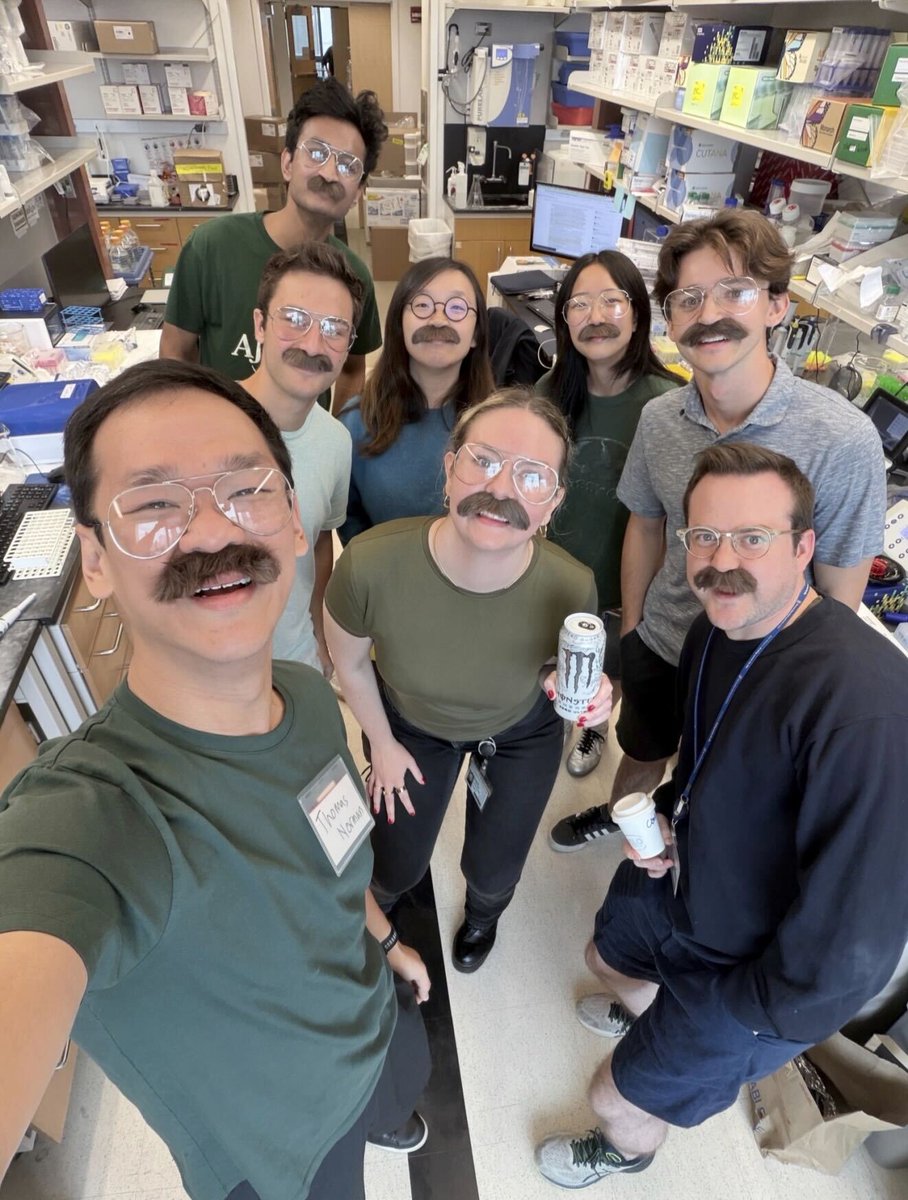
Super excited to share what we have been working on at the intersection of human genetics and Perturb-seq!
Check out Tom's tweetorial below for more details!
1/ Most genes and variants matter somewhere but look silent in any one cell model. Can we build conditions that reveal phenotypes? With @kanishkadey, we engineer cell states to expose hidden disease biology and trace how genetic risk reaches disease genes. https://t.co/pUHPPjxTkX
My lab at MSKCC in New York is hiring for two positions. Join us at the frontier of functional genomics, studying fibroblast state transitions, combinatorial genetics, and ECM in disease. Please share with anyone who might be a good fit! (Mustache not required.)
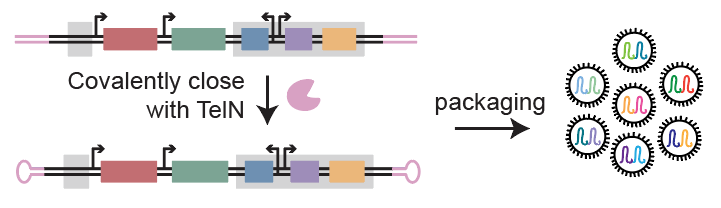
CAP cloning instead assembles and amplifies linear DNA in vitro, then uses TelN protelomerase to generate exonuclease-resistant, covalently closed molecules that package directly into lentivirus.
(Shoutout to Touchlight who pioneered this chemistry.)
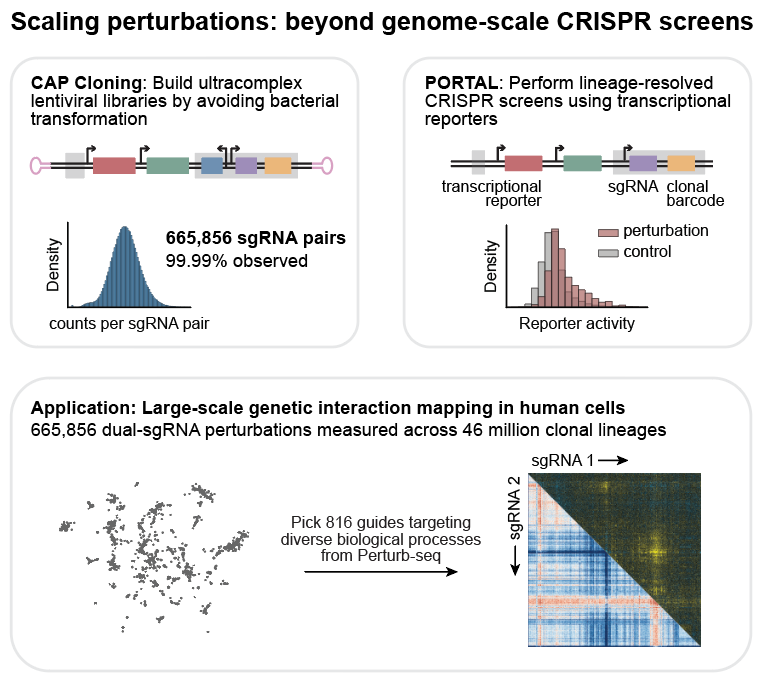
New preprint on technologies to scale up CRISPR screens.
We use them to map 665,856 pairwise genetic perturbations and outline a path to comprehensive interaction mapping in human cells.
We also introduce an approach for cloning lentiviral libraries with billions of elements.
Our paper is now out in final form at Nature Genetics! For those who missed the preprint, we used large-scale Perturb-seq targeting transcription factors to push primary fibroblasts into diverse transcriptional states, including those observed in cell atlas studies.
Our Multiome Perturb-seq paper is now out in @CellSystemsCP! As discussed in my thread on the preprint, this is an approach for linking CRISPR-mediated genetic perturbations to their effects on cellular chromatin state and gene expression. https://t.co/SeqTCGM6vH
Tri-i CBM held our annual retreat 10/27-28. We welcomed the new first years, had wonderful talks and discussions, and enjoyed rejuvenating group bonding time⭐️!
Application portals are now open for perspective applicants, and we invite you to join our CBM family!
Can we recreate the transcriptional states seen in single-cell atlas projects? In our new preprint we try to do this using large-scale Perturb-seq experiments. Along the way we discuss off-target effects of CRISPR epigenetic editors and identify drivers of key fibroblast states.
Excited to share our preprint "Multiome Perturb-seq unlocks scalable discovery of integrated perturbation effects on the transcriptome & epigenome". This work extends single-cell CRISPR screens to simultaneously profile gene expression & chromatin accessibility.
Interested in predicting mutational impact on protein:protein binding?
Our new preprint provides a workflow (using open-source software, Perses) for running free energy calculations on protein:protein complexes, focusing on diagnosis of sampling issues: https://t.co/Ww7W7cJY5l