Some bacteria that are harmful to humans escape elimination by antibiotics because they carry resistance genes. However, antibiotic-susceptible bacterial populations often harbor rare persister cells that survive antibiotic exposure without being resistant. Antibiotic persistence favors recurrent infections and resistance emergence and is a public health threat.
Persister cells are thought to be metabolically dormant. Decreased activity of antibiotic targets would enable them to remain alive when antibiotics are present and to regrow after antibiotic removal.
In a new Science study, researchers report that Escherichia coli persister cells do not simply enter a dormant state upon antibiotic treatment. Instead, genetically identical cells diverge into two physiological states.
Some cells produce membrane vesicles that are loaded with specific proteins, which are taken up by other cells to enhance survival. Therefore, vesicle donors and recipients actively cooperate to benefit the entire bacterial population.
Learn more in a new #SciencePerspective: https://t.co/be5JNwqHJa
"We can animate how chemistry behaves."
Hear chemistry laureate Morten Meldal speak about how children view chemistry from a young age.
Meldal was awarded the 2022 chemistry prize “for the development of click chemistry and bioorthogonal chemistry.”
When something breaks, most of us replace it. At this Brooklyn repair cafe, volunteers are helping neighbors fix everything from lamps and jeans to vintage fans and old smartwatches for free. The events are part of a growing global movement to reduce waste, save money and bring back repair skills that many people say have been lost.
For decades, biology textbooks have enshrined a simple rule: DNA is made by copying a template. After one enzyme unzips a DNA double helix into separate strands, another called a polymerase builds a complementary sequence, base by base, for each strand. Presto: two copies of the original DNA.
But recent research into how bacteria defend themselves from viruses now shows this synthesis rule isn’t absolute. The team describes a bacterial enzyme that synthesizes DNA without a nucleic acid template, using its own structure as a guide.
Learn more: https://t.co/TeUWvyO0OD @NewsfromScience
Recent studies in neuroscience and psychology are reframing ADHD not merely as a set of cognitive hurdles but as a powerful driver of breakthrough creativity and innovation.
Long stereotyped for difficulties with focus, attention, and impulse control, individuals with ADHD traits often exhibit superior divergent thinking—the capacity to generate a wide array of novel ideas by connecting distant or unrelated concepts. This stems from reduced adherence to rigid mental frameworks, enabling freer conceptual expansion and the production of more original, unconventional solutions than neurotypical counterparts. Heightened mind-wandering, especially when deliberate (purposefully allowing thoughts to drift), acts as a fertile source for this creativity, bypassing conventional boundaries to yield abundant "outside-the-box" insights.
Complementing this cognitive flexibility is a neurological drive for novelty rooted in lower baseline dopamine signaling. This creates a chronic need for stimulation, translating into exploratory, risk-tolerant behavior and a propensity for adventure—qualities that can disrupt routine settings but prove invaluable in dynamic fields. Impulsivity, often reframed as rapid action initiation, becomes a catalyst for pursuing bold ideas and seizing opportunities in high-stakes environments.
These traits align closely with the profiles of many successful entrepreneurs, inventors, and pioneers. In fast-evolving creative and innovative economies, the ADHD brain's wiring for quick associative leaps, tolerance of uncertainty, and motivation through novelty-seeking provides a distinct edge, turning potential challenges into engines of originality and progress.
Emerging evidence from 2025–2026 research reinforces this view: studies link stronger ADHD traits to elevated creative achievements via mediated mind-wandering, intuitive insight-driven problem-solving, and higher real-world inventive output, highlighting neurodiversity's role in fueling societal advancement.
[Maisano, H., et al. (2026). ADHD Symptoms Predict Distinct Creative Problem-Solving Styles and Superior Solving Ability. Personality and Individual Differences (February 2026)]
Expedition 74 used ultrasound scans, augmented reality, and artificial intelligence to study cartilage growth, blood vessels, and the digestive system on Thursday to protect crew health and improve patient care on Earth. More... https://t.co/Uxi4HMvVgw
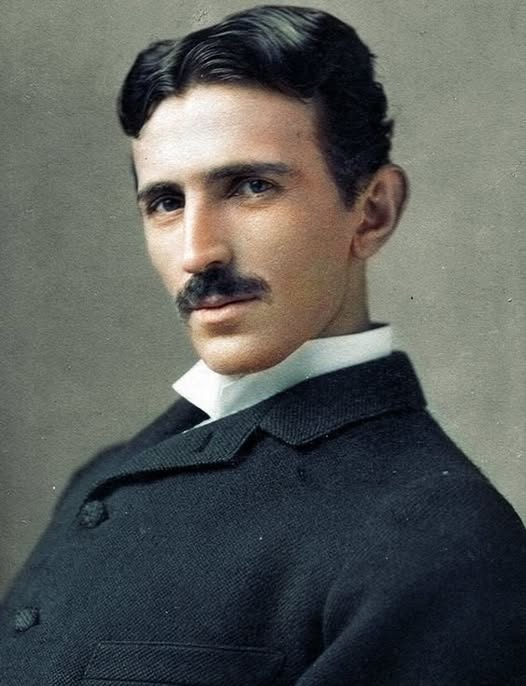
Money does not represent such a value as men have placed upon it. All my money has been invested into experiments with which I have made new discoveries enabling mankind to have a little easier life.
-- Nikola Tesla
Messi is playing with complete freedom. He’s already achieved the ultimate goal by winning the World Cup, and that makes him even more dangerous this tournament. No pressure or expectations to live up to—just pure football. Enjoy every moment while we still can. There’s simply no one else like him. 🐐
Wonder without evidence becomes fantasy.
Evidence without wonder becomes machinery.
The genius of Carl Sagan’s public science was that he refused to separate the two.
He understood that the universe is not made more beautiful by exaggeration. It is made more beautiful by the fact that we can investigate it at all.
A galaxy does not need mythology to be magnificent.
A comet does not need prophecy to be meaningful.
A mysterious light in the sky does not become less interesting when we ask for data. It becomes more interesting, because now we are treating reality with respect.
This is the difference between science and pseudoscience.
Pseudoscience wants the feeling of wonder without the discipline of checking.
Science asks us to keep the wonder, but add patience, doubt, measurement, and honesty.
That is harder.
But it is also more beautiful.
Because the goal is not to believe the most exciting thing.
The goal is to discover what is actually true and then learn how to be astonished by it.
"Science is about failure. We learn from the failures."
Even Nobel Prize laureates fail. Medicine laureate Craig Mello speaks about how the challenge of science goes hand in hand with encountering failure.
Mello shared the 2006 medicine prize with Andrew Fire “for their discovery of RNA interference - gene silencing by double-stranded RNA.”
Joint-top scorer in @FIFAWorldCup history ✅
200th Argentina appearance ✅
Record-extending 27th FIFA World Cup appearance ✅
First-ever FIFA World Cup hat-trick ✅
A historic night for Lionel Messi! 🙌




![Rainmaker1973's tweet photo. Recent studies in neuroscience and psychology are reframing ADHD not merely as a set of cognitive hurdles but as a powerful driver of breakthrough creativity and innovation.
Long stereotyped for difficulties with focus, attention, and impulse control, individuals with ADHD traits often exhibit superior divergent thinking—the capacity to generate a wide array of novel ideas by connecting distant or unrelated concepts. This stems from reduced adherence to rigid mental frameworks, enabling freer conceptual expansion and the production of more original, unconventional solutions than neurotypical counterparts. Heightened mind-wandering, especially when deliberate (purposefully allowing thoughts to drift), acts as a fertile source for this creativity, bypassing conventional boundaries to yield abundant "outside-the-box" insights.
Complementing this cognitive flexibility is a neurological drive for novelty rooted in lower baseline dopamine signaling. This creates a chronic need for stimulation, translating into exploratory, risk-tolerant behavior and a propensity for adventure—qualities that can disrupt routine settings but prove invaluable in dynamic fields. Impulsivity, often reframed as rapid action initiation, becomes a catalyst for pursuing bold ideas and seizing opportunities in high-stakes environments.
These traits align closely with the profiles of many successful entrepreneurs, inventors, and pioneers. In fast-evolving creative and innovative economies, the ADHD brain's wiring for quick associative leaps, tolerance of uncertainty, and motivation through novelty-seeking provides a distinct edge, turning potential challenges into engines of originality and progress.
Emerging evidence from 2025–2026 research reinforces this view: studies link stronger ADHD traits to elevated creative achievements via mediated mind-wandering, intuitive insight-driven problem-solving, and higher real-world inventive output, highlighting neurodiversity's role in fueling societal advancement.
[Maisano, H., et al. (2026). ADHD Symptoms Predict Distinct Creative Problem-Solving Styles and Superior Solving Ability. Personality and Individual Differences (February 2026)]](https://pbs.twimg.com/media/HLp9TY5XcAA6KeE.png)