Amid laughter and hugs, they took him to fulfill a dream: to see the sea.
His friends accompanied him to the shore, where happiness was reflected on his face and the waves seemed to celebrate with him.
@BTnewsroom Hoping the cameras captured everyone's face. A few years of unemployment & introduction to real life for these brainwashed fools will sort them out.
What a waste of an education.
The costume designer for F1 could have picked literally any luxury brand in the world.
Instead, Brad Pitt wore a shirt made using Tangaliya, a 700-year-old weaving technique from Gujarat. That's the kind of thing that gets my attention.
Every tiny dot on that shirt is hand-twisted into the weave, and the people behind it didn't hide the process, they built it into the product.
Most brands sell a story. In a world chasing fast fashion, this Make in India brand proves that craftsmanship, transparency, and patience still have a place on the global stage.
This is the best analogy yet with a solution for the mess that the UK is now in economically.
I bought a bird feeder. I hung it in my back garden and filled it with seed.
Within a week we had lots of birds taking advantage of the continuous flow of free and easily accessible food.
But then the birds started… Building nests in the shed, in the eaves,in the fences and in my garden bushes.
Then came the shit. It was everywhere,on the patio,on the chairs,the table,windows..everywhere!
Then some of the birds turned mean. They would dive bomb me and try to peck me even though I had fed them out of my own pocket.
And others birds were boisterous and loud. They sat on the feeder and squawked and screamed at all hours of the day and night And demanded that I fill it when it got low on food.
After a while,I couldn't even sit in my own back garden anymore. So I took down the Bird feeder and in three days the birds were gone. I cleaned up their mess and took down the many nests they had built all over the garden.
Soon,the back yard was like It used to be ..... Quiet,serene.... And no one demanding their rights to a free meal.
Now let's see......
Our government gives out Free food,subsidised housing,free medical care and free education, and allows anyone born here to be an automatic citizen.
Then the illegal’s came by the hundreds of thousands. Suddenly our taxes went up to pay for free services,small apartments are housing 5 families,you have to wait 6 hours to be seen by an emergency room doctor,your child's second grade class is behind other schools because over half the class doesn't speak English.
Corn Flakes now come in a bilingual box,I have to
press one to hear my bank talk to me in English,and people waving flags other than ”ours” are squawking and screaming in the streets,demanding more rights and free liberties.
Just my opinion,but maybe it's time for the government to take down the bird feeder.
He hadn't smiled in days, terrified of his upcoming 12-hour surgery. Then, two Navy SEALs walked into his room.
10-year-old Cody had been in the hospital for weeks, his body broken from a terrible car accident. To save his spine, doctors had to put him in a "halo brace," a metal ring bolted to a vest to keep him still. It was painful, scary, and he hadn't smiled in days.
He was facing another, even more dangerous 12-hour surgery. The night before, his Child Life Specialist, a woman whose job it was to help him cope, asked him what his one biggest wish was. "I want to meet a real soldier," he whispered. "A real hero."
That specialist had a brother. He was a Navy SEAL.
The next morning, the call went out. A SEAL team was in the middle of a 48-hour urban training exercise just miles away. When they heard the request, the team leader didn't hesitate. "We're going."
Two operators, still in full combat gear—faces covered in camo paint, night-vision goggles flipped up—walked into the pediatric ward. The hospital went silent.
They entered Cody's room. He'd been crying, but his eyes went wide.
"Hey, Cody," the first SEAL said, his voice gentle. "We heard we had a real fighter in here."
"You're... you're real," Cody whispered, his eyes locked on their gear.
"We sure are," the second SEAL said, smiling. "And we heard you were going into a tough fight today. We wanted to give you this." He unclipped a patch from his vest. "This is our team patch. We only give it to the toughest guys we know. And you? You're tougher than any of us."
For 10 minutes, Cody wasn't a sick kid. He was a new recruit, being visited by his brothers-in-arms.
Credit - original owner ( respect 🫡)
"Greater love has no man than this, that a man lay down his life for his friends." - John 15:13
A Study In Contrast.
Last week, a father publicly proclaimed that his child — diagnosed in utero with Down syndrome — was undeserving of life. In his own words: "Down Syndrome isn't a 'blessing,' it is objectively s— from a health perspective. I didn't realize just how rough it is for the child, let alone the family." He called it a difficult decision. Said he was thinking of his family. "I signed on to be a parent, come what may... but I just didn't fully understand what Down Syndrome entailed." Said, thankfully, he had a choice.
And then he and his wife aborted the baby.
In September 2008, Navy veteran, husband and father Thomas Vander Woude was working on his farm in Virginia with his youngest son Joseph — who has Down syndrome, and was 20 years old at the time — when Joseph fell through a corroded cover into a septic tank eight feet deep.
Thomas didn't deliberate. He didn't hesitate. He didn't produce a video lamenting his woes, detailing his options, and farming for clicks at the expense of personhood.
He jumped into the tank.
He JUMPED INTO the damn tank. Immediately.
For fifteen minutes, submerged in sewage, Thomas pushed his son up from below, keeping Joseph's head above the muck, while his wife and a workman pulled from above. When rescue workers arrived, they pulled them both out. Joseph lived. Thomas died where he had spent so much of his life — at his son's side.
At his funeral Mass, Bishop Loverde called his dying act "truly saintly" — the crown of a whole life of self-giving.
One man decided a life with Down syndrome wasn't worth the cost. One man decided it was worth everything.
One is the personification of self-love dressed as compassion — revealed, in the end, as cowardice and discrimination.
The other is the manifestation of unconditional love, sacrifice and courage. The definition of a father.
Remember Thomas Vander Woude. And remember Joseph — who is alive today because a father believed his child's life was worth dying for.
#TeamIronWill #DownSyndromeAdvocacy #IronWill #Personhood
https://t.co/h09QaERYnV
https://t.co/UE0YWFNdm4
GOD BLESS YOU SIR 🫵🏻🫡
My respect 96 years .
🇺🇸🇺🇸🇺🇸🇺🇸🇺🇸🇺🇸🇺🇸🇺🇸🇺🇸🇺🇸🇺🇸
AMERICAN MADE .
The GOAT !!
Clint Eastwood Said Something About Getting Old That Stopped Me Cold.
Aging is not gentle.
You are still here. Still present. Still watching the world move. But the body that carried you through everything - the wars, the work, the wildness of youth - begins to ask for more than you can give it. Joints that never complained now speak up in the morning. Eyes that once took in everything now flinch at the light. Breathing, which never required a single thought, starts needing little pauses.
But none of that is the hardest part.
The hardest part is the quiet.
At a certain age, you reach for the phone and remember there is no one left to call.
The people who knew you when you were young - who remembered the same summers, the same streets, the same faces
- are gone. One by one, then all at once, until the memories you carry have no one left to share them with.
So you tell the stories anyway.
To whoever will listen. With a little more color than perhaps the truth deserves. With a touch of pride you've earned and a grief you don't always name. You know the person across from you wasn't there. You know they can't quite feel it the way you do.
But you tell them. Because the telling is the holding on.
Those stories are not just memories. They are the proof that a life was lived. That people were loved. That things mattered.
And if no one asks for them - you offer them anyway, quietly, like setting something down on a table and hoping someone picks it up.
Old age is not simply what happens to a face or a body.
It is memory looking for a place to rest.
And what an older person needs - more than advice, more than solutions, more than someone telling them how to feel - is simply someone willing to sit down, be still, and listen.
Not to fix anything.
Just to be there.
That is the whole gift. And it costs nothing.
~Wild Whispers .
The standard narrative taught in global textbooks creates a massive logical blind spot: it confuses the origin of a word with the origin of the science itself. To be absolutely clear on the facts: the linguistic etymology is correct, the word "algebra" undeniably comes from the Arabic al-jabr via al-Khwārizmī’s 9th-century book. But al-Khwārizmī did not invent the mathematics.
~200 yrs before al-Khwārizmī wrote his book in Baghdad, the Indian mathematician Brahmagupta published the Brahmasphuta Siddhanta (The Correct Treatise of Brahma). Brahmagupta’s work was a mathematical revolution. He established the structural rules of algebra that we use today:
- Brahmagupta was the 1st to formalize 0 as a number in eqns, defining rules like A - A = 0 & explaining how zero interacts with (+)ve & (-)ve numbers.
- He introduced the concept of (-)ve numbers, calling (+)ve numbers fortunes (dhana) & (-)ve numbers debts (rina) & laid out the algebraic rules for multiplying them (e.g., a debt times a debt is a fortune).
- He gave the world the 1st explicit algebraic formula to solve quadratic eqns (ax^2 + bx = c).
In the 8th century, the Abbasid Caliphate established the Bayt al-Hikma (House of Wisdom) in Baghdad. They realized that Indian mathematics was centuries ahead of the rest of the world. Around 773 CE, an Indian astronomer & mathematician traveled to Baghdad bringing sanskrit texts, including Brahmagupta’s treatise. The Caliph ordered these texts to be translated into Arabic. This translated work became known in the Arab world as Al-Sindhind (a direct phonetic corruption of the Sanskrit Siddhanta).
Al-Khwārizmī sat in Baghdad with access to Al-Sindhind. He absorbed the Indian decimal system, the use of zero & the algebraic methods of solving eqns. When he wrote his famous book, he was systemizing these Indian methods into a textbook format for an Arabic-speaking audience. In fact, al-Khwārizmī wrote another book explicitly titled Kitāb al-Jamʿ wat-Tafrīq bi-Ḥisāb al-Hind (The Book of Addition & Subtraction According to the Hindu Calculation).
While the Arabic word al-jabr means restoration of broken parts, the ancient Indian Sanskrit word for algebra is far more philosophically & logically profound: Bīja-gaṇita.
Bīja means seed/element.
Gaṇita means calculation.
Indian logicians like Bhāskara II (who later wrote a definitive text titled Bīja-gaṇita) explained that arithmetic deals with visible, known quantities, but algebra deals with the hidden seed, the unknown variable (x). Just as a giant tree is hidden inside a tiny, invisible blueprint within a seed, the final answer of a complex universe is hidden inside the unknown variable of an algebraic eqn.
To the Arabic-speaking people who came to criticize my post yesterday:
“Did you forget Nagasaki and Hiroshima?”
“You’re just America’s slave.”
“Japan is a country of gropers.”
More than 90% of the comments were basically the same.
At some point, I honestly wondered:
are you all bots?
Japanese people have not forgotten.
Not Hiroshima.
Not Nagasaki.
It is true that the postwar occupation of Japan is complicated.
It is also true that Japan has a problem with sexual harassment and groping.
I am not trying to deny any of that.
But let me say this clearly one more time.
Japanese people have not forgotten Hiroshima.
We have not forgotten Nagasaki.
The lives lost that day,
the pain burned into our history,
and the scars left behind
are still part of Japan’s memory.
But we do not choose to hate the Americans standing in front of us today
because of what happened 80 years ago.
We do not force children, students, travelers, or friends
to carry the anger of the past.
That is not strength.
That is just taking old grief, turning it into hatred,
and letting it rot inside your heart.
Yes, the history of the occupation is complicated.
Yes, there are still things worth discussing.
And yes, Japan has issues with groping.
I will not pretend otherwise.
But if you want to talk about women’s dignity,
then start by respecting women as human beings.
Do not tell Japan that society becomes moral
by restricting women’s freedom.
Do not tell Japan that problems disappear
by hiding women’s bodies.
That way of thinking is not something we want forced on us.
Japan was wounded.
Deeply.
But Japan stood up again.
We rebuilt our cities.
We carried our losses.
And we moved forward.
And part of that history includes our relationship with America.
Remembering the past
and living as a prisoner of hatred
are not the same thing.
Hiroshima and Nagasaki are not words for you to use
as weapons against Japanese people.
They are Japan’s memory.
They are Japan’s pain.
And they are a warning to the world
that the same tragedy must never happen again.
Do not use our dead
as fuel for your anger.
In the North, you’ll find Kashi and Kedarnath.
In the South, Srisailam.
In the East, Puri.
In the West, Somnath.
Across the country, you’ll find the hands of Maa Ahilyabai, quietly rebuilding, preserving, and shaping the identity of Bharat - The Hindu Rashtra
#AhilyabaiHolkar
As an Iranian who stayed connected through Starlink during the blackout and chaos of the war, and now reunited with my compatriots online, I want to wholeheartedly confirm what President Trump has long understood and continues to show he knows:
"The Iranian people want to be free. They have lived in a world that you know NOTHING about."
(Trump said this during the height of the war)
For 47 years, my people have endured systematic torture, rape, murder, humiliation, anxiety, suppression, and grief under the Islamic Republic. It’s been a long, grinding suffering — punctuated by brutal spikes like the January protests, mass executions, and the recent war. The world has no idea of the scale or depth of these horrors. Only when this evil regime finally falls will the full truth pour out — in quality and quantity that will shock humanity.
We have now reached a point where almost no cost is too great if it rids us of this regime. Because the cost of it staying in power is infinitely higher.
Trump himself said it: he knows what we have gone through. But he is saying now that he is in no hurry to reach a deal. That’s fine — but he knows better than anyone that now is the time to act to finish this regime once and for all. Like he just said in the attached video about the Iran negotiations, it’s time to finish the job.
If you’re reading this and you can’t understand how any Iranian could feel relief at strong action — even if it means no quick deal or more pressure on the regime — I envy you. You have never lived what we have lived. You have never watched your people, friends, family, and loved ones get tortured, raped, or killed almost daily and over half a century. You have never seen an entire nation slowly but brutally suffocated like this.
We tried every alternative imaginable: massive protests, dissent, peaceful reform, negotiations — everything. None of it worked. The regime’s answer has always been bullets, gallows, and more terror.
Now, in these critical hours of ceasefire talks and negotiations, I write this with a heavy heart from inside Iran:
Whatever happens next — if there is still an Iran left to save and this regime is gone — the Iranian people will be happy with the result. No matter the cost. Because the cost of the regime remaining is higher, and for many of us, death itself is preferable to another day under this nightmare.
This is the true sentiment of the majority of Iranians — the voice of a people who often have no internet, no platform, and no way to be heard.
The world will soon understand why we say:
Anything to be free. Anything to end this evil.
#IranMassacre
#IranRevolution2026
#KingRezaPahlaviForIran
In 1910, the scientific elite of the British Empire were obsessed with building massive, coal-chugging engines & destructive artillery. But in a quiet, dimly lit room in Calcutta, a towering Bengali polymath was weaponizing thermodynamics for a completely different kind of war: the fight against human starvation. Surrounded by heavy medical treatises, legal charts, & blueprints of steam pressure, he forged a strange, multi-tiered iron cylinder.
He was not trying to conquer a nation; he was trying to feed 1. History would eventually reduce his revolutionary invention to a dusty kitchen utensil, erasing the mastermind who proved that a single spark of genius could save millions from the quiet horrors of disease & poverty.
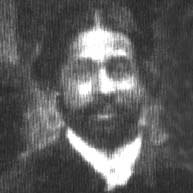
Born in 1869 into the aristocratic Mallick family of Guptipara (Hooghly), Indumadhab Mallick possessed a mind that refused to be contained by a single discipline. He did not just attend university; he conquered it.
He secured a Master’s degree in Physics, followed by another Master’s degree in Botany. Restless for more knowledge, he pivoted to law, earning a B.L. degree to understand justice. Still unsatisfied, he entered the grueling world of medicine, emerging from the Medical College of Calcutta as a licensed physician with an M.D.
He was a lawyer, a botanist, a physicist, a philosopher, & a doctor all at once. Yet, despite his staggering academic pedigree & the immense wealth he could have amassed in high society, Indumadhab’s heart remained anchored to the streets of Bengal, where poverty, famine, & deadly water-borne epidemics like typhoid & cholera were tearing families apart.
As a doctor, Indumadhab realized that medicine was only a reactive cure; the true enemy was contaminated food & severe malnutrition caused by a lack of fuel. In the early 1900s, poor households & students could not afford enough coal/wood to boil food long enough to kill deadly pathogens.
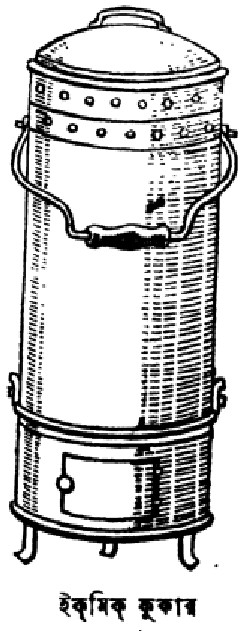
Combining his deep knowledge of physics, heat transfer, & biological sterilization, he invented the IC Mic-Cooker (The Indumadhab Cooker) in 1910.
The Engineering Marvel: It was a masterpiece of thermodynamic efficiency. A compact, portable, multi-tiered steam cylinder made of brass/iron. You placed rice, dal, vegetables, & water into separate compartments, locked the airtight lid, & placed it over a tiny fraction of the fuel normally required for a single dish.
1ce ignited, the cooker required absolutely no monitoring/stir-frying/extra fuel. The steam circulated perfectly through the chambers, utilizing latent heat to cook a full, highly nutritious, 3 course meal simultaneously.
Because it retained 100% of the food’s vital nutrients & completely sterilized it against cholera & typhoid germs, it became a sensation. It was embraced by the poor, by traveling students, & most famously, by India’s underground freedom fighters, who could cook highly nutritious meals in secret hideouts w/o generating telltale smoke that would alert the British police.
Indumadhab Mallick was a pure, altruistic scientist who fiercely believed that scientific innovation belonged to the collective survival of humanity, not the bank accounts of corporations. He refused to heavily commercialize/aggressively patent the IC Cooker for personal luxury. He kept the production accessible so that even the poorest households could afford it.
Because his groundbreaking work in heat dynamics took the shape of a domestic kitchen cooker rather than a complex, high-visibility laboratory machine, the British-led scientific establishment completely ignored its brilliant engineering. The academic elite looked down on it as a mere household trinket.
Over the generations, the "IC Cooker" became a vintage heirloom found in the fading kitchens of old Bengali grandparents. But as the physical cookers rusted away, the name Indumadhab was completely detached from it. He passed away in 1917, & within decades, his legacy was so thoroughly buried that if you ask his living descendants today, they might recall a vague family story about an old kitchen pot, entirely unaware that their ancestor was a towering, multi-degreed polymath who altered the survival of colonial India.
The grand laboratories of the world celebrate the inventors of steam engines that moved empires, but they forgot the man who tamed steam to save the starving. Dr. Indumadhab Mallick died w/o a single statue built in his honor, his memory fading into the steam of the very kitchens he revolutionized. He remains the ultimate ghost of science... leaving behind a legacy where his invention outlived his name, proving that the truest geniuses are not those who build monuments to their own vanity, but those who silently sustain the world from the shadows of an iron pan.
@gmishra We have to face the reality that a few scrupulous ones gamed the system, exploited loop holes & unfortunately the rest of the crowd pays the price.
The 8 lessons India taught me:
1. Death makes life sacred.
2. The body knows before the mind.
3. Beauty carries meaning.
4. Disfigurement does not erase dignity.
5. Pain can be held by the sacred.
6. Ritual gives life structure.
7. Immersion returns us to ancient time.
8. Uncertainty opens the soul.
India did not teach me to think harder.
It taught me to feel life more deeply.
Rammohun Roy the so called Sati reformer, hated the fact that his widowed mother Tarini Devi was a devout Hindu who contributed money for "idol worship" in Pujas. When he refused to pay his share from the family's land for contributions to Hindu ceremonies, his mother filed a case through his nephew, which Rammohun easily won due to his links with the British administrators. After winning the case against his mother, Rammohun took over all the property and kicked her out on the streets. His mother had to seek refuge in the temple of Jagannath Puri and died there in wretched conditions in 1822. When Roy's sister in law, Durga Devi also filed a case to recover back some money from family properties - Rammohun again ensured that his influence helped him win the case. He then forced his widowed sister-in-law out on the streets.
This is the man who is touted as the savior of widows - but himself ensured that the two widows in his own family were thrown out on the streets and forced to live in wretched poverty after taking over all their property - all in the name of his hatred against "idol worship".