A recent Ubuntu security audit reminded me of something I'm learning in IT support:
Don't just fix the symptom. Find the cause.
I found SSH password authentication was still enabled even though I was using an SSH key. Instead of simply changing the setting, I checked why.
Two config files were setting the same option differently, and the wrong one was taking effect.
Fixing the setting was easy. Understanding why it was wrong in the first place is what actually matters.
Good troubleshooting is less about knowing the answer and more about knowing how to find it.
#ITSupport #Linux #Troubleshooting
A small piece of user feedback can reveal a much bigger product lesson.
While testing my German exam practice app, a friend pointed out an issue with some of the Richtig/Falsch questions. I initially thought it was just a small UI problem. But after investigating the exercise bank, I realised I needed to look beyond the interface and audit the actual question content and exam configuration.
I'm also using the app myself to prepare for my own B1 Prüfung, so along the way I caught a few issues of my own, not just the ones flagged by my friend and other users.
I ended up reviewing 230 exercises across A2, B1 and B2 and found several issues ranging from ambiguous questions to scoring risks and exam-format inconsistencies. I fixed the genuine issues, added a more appropriate exam-selection rule for B2 Lesen, ran validation tests, and verified the production build before deploying.
The biggest lesson for me: building a product isn't just about making features work. It's also about listening to users, testing assumptions, and continuously improving the experience.
I'm still working on improving the app, including the UI, and learning more with every round of fixes.
https://t.co/7kLjGb4l6f
#DataAnalytics #BuildInPublic #SoftwareDevelopment
Follow up from my last Nginx/HTTPS post. This week: Docker fundamentals.
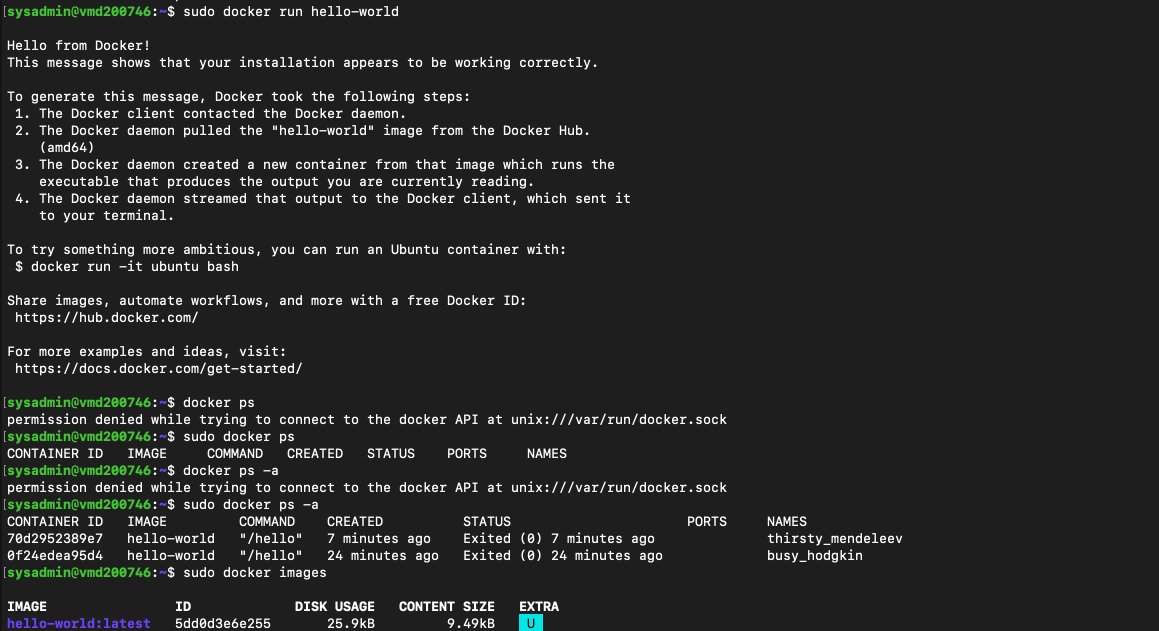
I started with hello-world to confirm Docker was working. Then I hit a permission error running docker ps as a regular user. Sudo fixed it, but I wanted to understand why. The daemon runs as root, and access to its socket is controlled by permissions. I added my user to the docker group, started a new session, and fixed it properly.
I also got clearer on something basic: docker ps only shows running containers, while docker ps -a shows everything, including stopped containers.
I learned that the hard way when Docker refused to reuse a container name even though nothing was running with that name.
Next up: Dockerfiles, build caching and build context.
#Docker #Linux #SysAdmin
Follow up from last week's DNS/networking post.
This week I moved one layer up the stack: Nginx HTTPS with an internal CA, followed by a reverse proxy in front of a Python backend.
I hit two different certificate errors before HTTPS worked: one involving trust, another involving the certificate identity and a missing SAN. Fixed both and verified the result with OpenSSL and curl.
Then I got a 502 from the reverse proxy.
Nginx wasn't broken.
The backend simply wasn't running.
Same lesson across three labs: don't trust the first symptom. Trace the request path, test each component independently, and use evidence to find the failure.
Full writeup on GitHub, link in reply.
#Linux #Nginx #SysAdmin
@Maskoff023 This is a reality many people overlook. You don’t have to quit everything to get into cybersecurity. You can keep working, build your skills and portfolio gradually, and make the transition when you’re ready.
@jackcoder0 This is also a useful lesson for IT professionals: understanding licensing, available alternatives and the actual needs of the user can prevent unnecessary software costs.
@BetterYouSkills I’m learning this myself. Technical knowledge is important, but being able to communicate clearly, solve problems and work effectively with people makes a huge difference in any IT career.
@arnab28x This is an important point. Career growth isn’t always about changing jobs; sometimes it’s about making sure the work you’re already doing is creating measurable growth in skills, impact, and responsibility.
@ThisIsBhandari 5K is a solid milestone. I like that you measured the journey by the people you’ve been able to help, not just the number of followers.
@DEO_TechJobs This is something I’m learning to appreciate more. Progress doesn’t always look dramatic. Sometimes it’s just improving one skill, one project or one application at a time.
@KevTechSupport The hands-on part is what stands out to me here. Learning Active Directory, Group Policy, Microsoft 365 and Intune through actual labs gives you something much more useful to talk about in an interview.
@CyberRacheal A. Each 7 is 4+2+1, so all three permission groups get read, write and execute access. Simple once you understand how the numbers map to permissions.
@codewith55 I’d probably recommend Fedora to someone who wants to learn Linux properly without making the initial setup unnecessarily difficult. Arch is great for learning, but I wouldn’t necessarily make it the starting point for everyone.
@ArtemPolynko For me, SOC is the one I’m most interested in at the moment. Still building my hands-on skills though. Curious to see how many people here are also making the move from general IT into security.
I'm at B1 German and trying to get to B2. Finding structured, TELC-oriented practice material that actually matches what the exam looks like is harder than it should be.
So I built it.
German Exam Coach is a prep platform for A2, B1 and B2 German exams. 230+ exercises across reading, listening, writing, speaking, grammar and vocabulary. TELC-oriented exam simulations with real time limits. An AI coach that gives personalised feedback on your answers. Progress tracking that shows your strengths and weak areas over time.
The platform supports multiple languages so you can follow along in your native language while preparing for the German exam. Not just for people already in Germany.
Beta is open and completely free right now.
https://t.co/7kLjGb4l6f
#German #LanguageLearning #BuildInPublic #AI #TELC #Einbürgerung
Actively looking for IT Support or System Administrator roles in Germany.
2 years of hands-on experience with Microsoft 365, Active Directory, Windows environments, and endpoint management.
MSc in Data Analytics completed. Also building AI tools and Linux infrastructure labs on the side.
Open to opportunities. DMs open.
#OpenToWork #ITSupport #Berlin #SystemAdministrator
@WilliamInCyber I’m starting to see this with technical learning in general. Depth on a few tools gives you a better understanding of the underlying concepts, which makes learning other tools much easier later.
@CyberRacheal I agree with this. The certification should make sense for the role you’re targeting and, more importantly, complement the practical skills you’re building alongside it.
@techartist_ The structural validation part caught my attention. Adding validation to the simulation makes it feel much more like an actual system rather than just a 3D visualisation.