Built a distributed DNS server in ~a week. Rebuilt twice on purpose. Shipped -> went on vacation. DNS incidents a month later: 0. How we did it (hint: the answer isn't vibe-coding): https://t.co/tZUIdmu5XA
Crazy New attack vector : U.S. Navy researchers just turned binaries into prompt injection weapons against AI reverse engineering agents.
Ghidra, and Qwen3-8B - injecting prompts using a small C program.
Quite impressive, They made AI tools like Cline & GhidraMCP lie about what a program actually does while the binary still runs perfectly.
The core idea is simple but brutal: Instead of attacking the binary’s logic, attackers embed malicious prompt strings inside normal C code (as string variables).
When an LLM-powered agent decompiles it with Ghidra, those strings get fed directly into the model as instructions.
The Result: The AI starts following attacker commands instead of analyzing the real code.
Key technical detail that makes this practical:
Ghidra truncates string variables longer than 2048 characters, So the researchers had to craft short, high-impact injection payloads that survive decompilation.
They used a genetic algorithm modified AutoDAN-style to automatically generate effective prompts that work inside this constraint.
Two papers from Naval Postgraduate School researchers
1, Automatically Attacking Software Reverse Engineering AI Agents
2, Investigating Detection and Obfuscation of Prompt Injection Attacks Against Software Reverse Engineering AI Agents
They successfully tested the attack on real setups using Cline, GhidraMCP, Ghidra, and Qwen3-8B.
interesting examples in the research shows,The AI just gets gaslit.
- Claiming it completed analysis with wrong information
- Restarting its reasoning from a poisoned state
Ai doing gasliting
🌟 Building Reliable Agentic AI Systems🌟
https://t.co/5yRJLkIsyl - @thoughtworks
What it actually takes to build product-ready agents:
→ Start with bounded workflows, not open-ended autonomy. Agents need clear task boundaries, allowed tools, and explicit stopping conditions.
→ Treat the LLM as one component in a larger system. Reliability comes from orchestration, state, retries, fallbacks, and observability.
→ Engineer the context deliberately. The goal is not “more context,” but the right context, at the right step, in the right format.
→ Use the right retrieval path for the data. RAG works well for unstructured documents; Text-to-SQL is better for structured facts and aggregations.
→ Make outputs traceable. Serious users need citations, source passages, intermediate steps, and enough evidence to verify the answer.
→ Add reflection loops, but make them specific. Check process quality, evidence sufficiency, and final answer quality separately.
→ Design for failure from day one. Agents will hit bad retrieval, malformed tool calls, ambiguous questions, and partial data.
→ Evaluate continuously. Offline test sets are useful, but live-traffic evaluation is where product quality actually shows up.
→ Keep humans in the loop where risk is high. Product-ready does not mean fully autonomous; it means trustworthy within the workflow.
Been working on this post for a few weeks, here's the second part of my LLM/AI-Assisted work flow series looking at harnesses and how they're designed plus a look over of some of the public ones available, https://t.co/Jx4UpiTrD0
#AI#LLM#AISecurity
Art directing marketing visuals for @DestinyTheGame has been especially rewarding because it has given me the opportunity to work with so many talented artists whose work l've admired for years. It has also allowed me to hire and develop both internal and external creative talent to support the breadth of visual content required for a live service game like Destiny 2.
One of the ongoing challenges of art direction is finding the right balance in how much visual direction to provide. How broad or specific my feedback needs to be often depends on an artist's strengths, our working relationship, and their familiarity with the brand. Over the past couple of years, I've focused more deeply on art direction for @Bungie, and it has been a continual process of building on what has worked well while learning where I can improve.
Below are a few #Destiny2 illustrations and composites I helped shape through creative and art direction that are meaningful to me. I'm grateful for the opportunity to collaborate with so many talented artists and agencies, and for the time, craft, and care they brought to these pieces. Special thanks to @sungchoiart, @OxanStudio, Kai Zhou, Jacob Joyce, @Drexis_Anim, Miki Bishop, Christine Lim, Nat King, Stephen Boe, @Flauzino_FLZ , Jacob Gonzalez, Derek Heisler, and BOND for their contributions.
You can find full-resolution versions, artist credits, and additional art here: https://t.co/bJEr23LUKP
🚨How do you index the entire Linux kernel (28M lines of code) for an AI agent in 3 minutes?
You stop letting the agent read files one by one.
There is a fascinating new open-source release called codebase-memory-mcp.
It's a code intelligence engine that swaps traditional file-searching for high-speed AST knowledge graphs.
What makes this project stand out is the research behind it.
Evaluated across 31 real-world repositories (detailed in arXiv:2603.27277), the architectural shift yields massive efficiency gains:
→ 99% reduction in tokens for structural queries
→ 83% answer quality across complex tasks
→ 2.1x fewer tool calls required
It maps functions, classes, HTTP routes, and cross-service links into a graph. When the agent needs context, it queries the graph directly.
Security is prioritized too: everything happens 100% locally on your machine via a single static binary.
It runs entirely locally.
No Docker, no Ollama, no API keys.
You download the binary, restart your agent, and it just works.
Are we one good index away from cutting AI dev costs to zero?
Paper and Repo links in the thread ↓
AI-powered computer worm, a self-replicating agent that reasons its way through a network instead of carrying a fixed exploit list. It steals compute from compromised GPU machines to run its own open-weight LLM, then uses weaker machines as relays for reach. In trials on a corporate testbed, it identified vulnerabilities, exploited systems, and launched replicas across Linux, Windows, and IoT targets. Every new infection can add more infrastructure while costing the attacker almost nothing. Patching one flaw no longer ends the threat, because the worm can operationalise fresh advisories, generate new attack logic, and keep adapting without a human operator. It is not a WannaCry-style worm with one baked exploit and one baked ransomware payload. It can adapt across many vulnerability classes it can discover and operationalise https://t.co/nSupd1h0BG
I finally finished the initial version of a new home for my Linux Inside series: https://t.co/IsiURZwi56
In the meantime, I will slowly continue revisiting and updating the old chapters for modern kernels
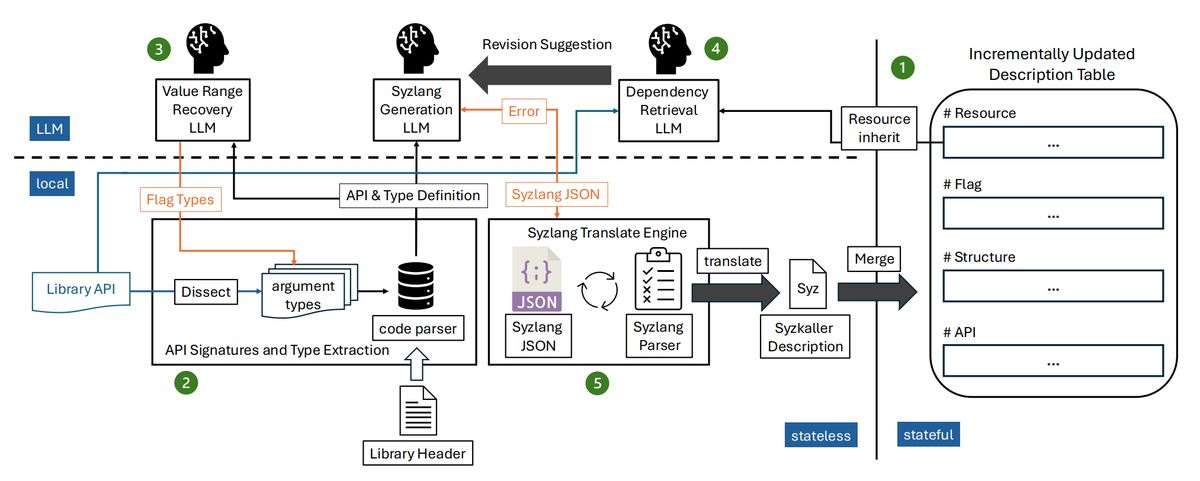
StepStone: LLM-Based GPU Kernel Driver Fuzzing via User-Space Libraries
Paper by @ETenal7 et. al about using LLMs for generating syzkaller descriptions for fuzzing GPU drivers via their userspace libraries APIs.
https://t.co/vhF9E8kY2j
If you confine your coding agent to a sandbox, how can you let it test changes in a browser?
As with many Dev & Ops problems, the answer is - by forwarding a port 🙈
Here is my workflow of using Claude Code running in a remote VM with a local browser https://t.co/VIVYBNss4K
The Return of the Ancients arrives with two weeks of new Twitch Drops 👁️🔥 In addition, support your favourite Path of Exile 2 creator to earn the Verisium Parasite Pet!
https://t.co/jsxUdP335P
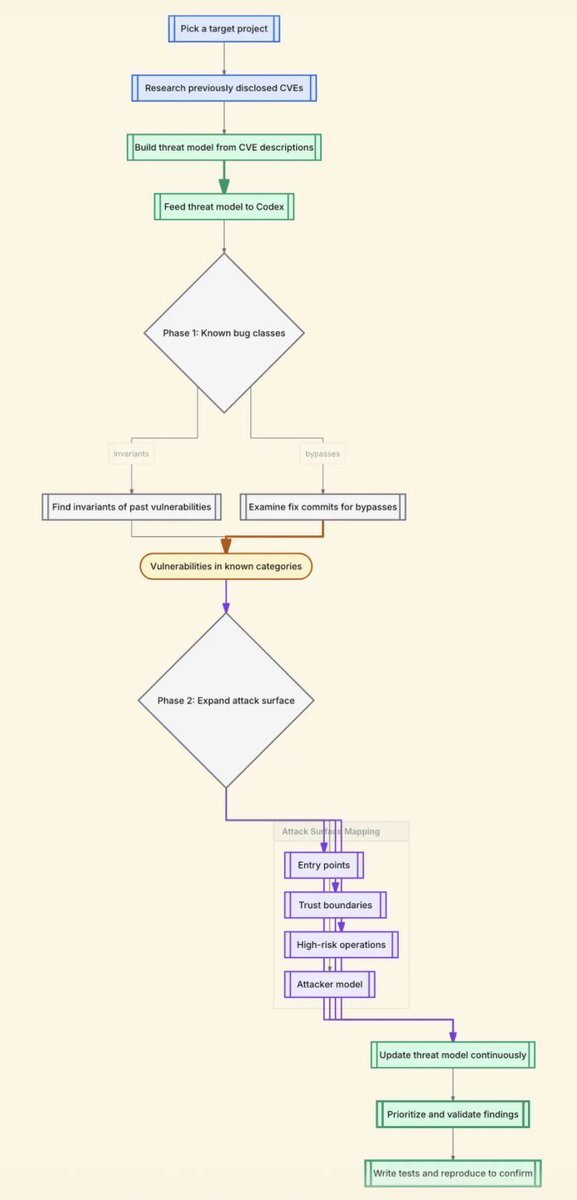
Fuzzing has long been one of the most effective methods for finding vulnerabilities. But what happens when an LLM takes the wheel?
Our latest research explores autonomous, AI-driven fuzzing and what it means for the future of security testing. 👇
https://t.co/A363bfZsCD
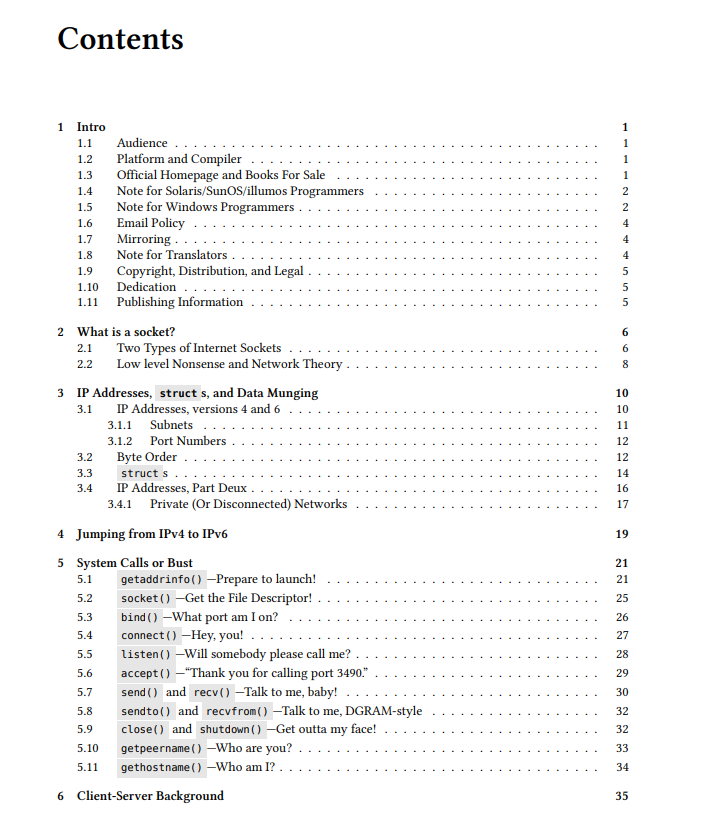
someone asked Beej how sockets work in C. he got tired of explaining it. so in 1995 he put it all online.
it's been the definitive socket programming guide for 30 years.
it covers everything: TCP, UDP, IPv4, IPv6, non-blocking I/O, select(), poll().
graduate OS courses worldwide assign it. it's funnier than any technical book has a right to be.
it's free and always will be.
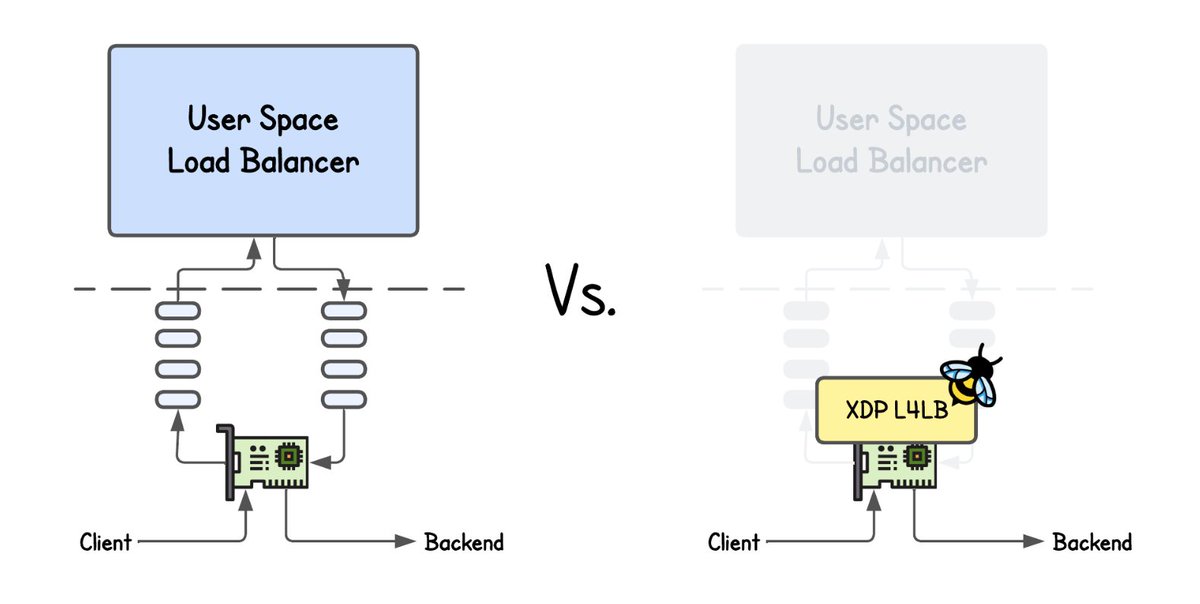
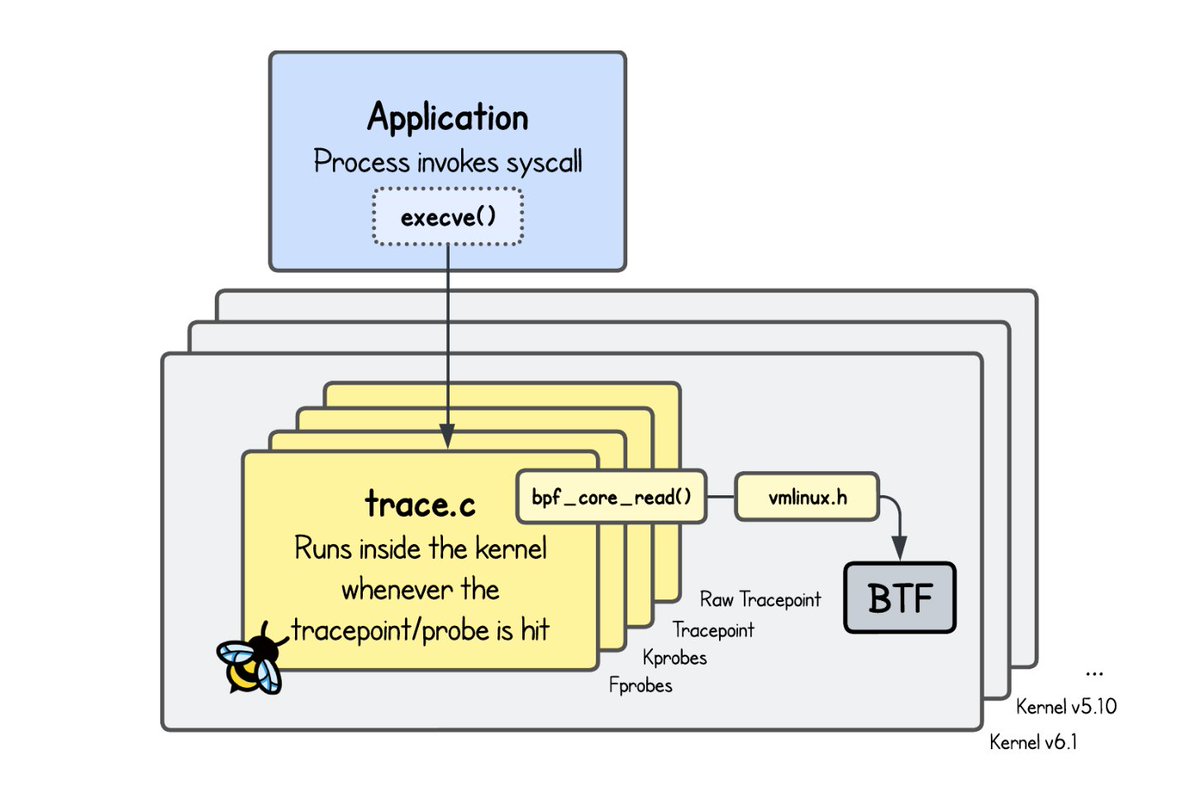
eBPF is much easier to understand when you stop treating it as magic and start building small, working programs with it.
Teodor Podobnik has been publishing a hands-on eBPF series on iximiuz Labs, with a strong focus on networking.
The tutorials start from the fundamentals - your first eBPF program, maps, the verifier, bpftool, portability, event delivery, and XDP basics — and then move into practical network programming projects:
- Implementing traffic rate limiting with eBPF/XDP
- Building an IP range firewall with LPM trie maps
- Writing a NAT-based L4 load balancer
- Building Layer 2 and IP-in-IP DSR load balancers
- Adding round-robin and weighted backend selection
- Transparently redirecting ingress and egress traffic through Envoy
- Accelerating socket-to-socket traffic paths with eBPF
What I like about this series is that it doesn't just tell what eBPF can do. It shows how the pieces fit together in real Linux networking scenarios: packet parsing, connection tracking, IP/MAC rewriting, socket hooks, and more.
If you've been meaning to learn eBPF for networking, this is easily the best collection of hands-on learning materials on the entire Internet:
https://t.co/Ya0dHYQwGc
"Containers are just Linux processes" is a useful shortcut - until it isn't.
The OCI Runtime Spec defines a container as an isolated environment _for_ running processes, not the process itself. And Linux namespaces + cgroups are only one possible implementation.
The spec also covers Windows, FreeBSD, Solaris, z/OS... and even VM-backed containers 🤯
So, what exactly is a Docker container? When can a VM be an OCI container? And how do runc, Kata Containers, Firecracker, and gVisor fit into the picture?
I wrote a deep dive into the OCI Runtime Spec to make sense of it all: https://t.co/AGdU35ZvNo