Keeping up the workouts with @devonscott_72!
Here is my updated report from today! My sister @BrookeStep2031 and I got to sign our first speed limit sign!
Front Squat +202.2% (45/136lbs)
Bench Press +157.8% (45/116lbs)
Vertical Jump +25.3% (17.4/21.8”)
5-10 Fly +5.8% (13.9/14.7mph)
10-10 Fly +3.9% (15.5/16.1mph)
Progress report from @devonscott_72 on how it started vs how it's going! I also got to sign my first speed limit sign; it won't be the last!
Front Squat +226.7% (45/147lbs)
Bench Press +157.8% (45/116lbs)
Vertical Jump +13.5% (19.2/21.8”)
5-10 Fly +1.4% (14.4/14.6mph)
10-10 Fly +4.5% (15.7/16.4mph)
I’ve watched the same for a while now, and was always surprised when looking at our anecdotal experience because it was somewhat frowned upon doing speed work out of order. Any specific performance circuit pairings or nuances you’re seeing more/less potentiation? I.e. better trends with 2-3 movements compared to 3-4 (obviously dependent on multiple factors) or differences using vertical expressions compared to horizontal? With us, our shorter timed flys are typically faster using circuits with hip snatch, seated broad jumps, etc.
It can be argued that ALL TRAINING is conditioning.
I choose to use the traditional coach's definition of conditioning… the mindless pursuit of fatigue, getting accustomed to exhaustion by running gassers, suicides, shuttles, laps, miles, stadium stairs, etc.
It's my belief that chasing fatigue prevents gains in speed and explosiveness. Twitchy athletes will mutiny. #CatsDontJog
There’s no doubt you can get fit and improve capacity without focusing on traditional aerobic work (unless your sport is an endurance sport).
Get fit by stacking performance-level anaerobic work.
Make practice the best part of a kid's day and let the sport train the demands of the sport.
Today I spoke with a college lacrosse athlete who must run a 12:30 two-mile for his conditioning test.
Training for the two-mile will detrain speed and explosiveness.
Parents will question 2 hours of strength training per week, focused on the health, well-being, & performance of their children.
But 4-5 games in a single weekend & you get the Facebook post about the long day at the ballpark..
One builds the athlete.
The other spends them.
GENERALLY SPEAKING when it comes to summer training:
If most FEMALE college athletes put as much effort/attention to their strength/power/speed work as they do conditioning, they would be better off.
If most MALE college athletes hit the gym 1-2 less days per wk (news flash..you don't NEED 5-6 days lifting) and used that time to do speed work and conditioning work, they would be better off.
If you know, you know!
Strength and conditioning is not just the weight room.
That is one of the strongest takeaways from Bishop, Chavda, and Turner’s 2026 narrative opinion. The paper makes a clear point that S&C has historically been viewed through the lens of performance enhancement, but its real value is broader. It supports athletic performance, mitigates injury risk, and contributes to long term health. That matters because human preparation is not casual training. It is the planned development of physical capacity inside a larger readiness system.
One of the best parts of the paper is the distinction between closed skill and open skill sports. In sprint cycling, the role of S&C can be more clearly reverse engineered: target time, required velocity, power output, strength, speed, and transfer. In soccer, that line is harder to draw. More sprint distance or high intensity running does not automatically explain winning. The paper points out that in one Premier League analysis, sprinting distance explained only about 10 percent of the variance in final league position. That does not make the data useless. It means practitioners need to understand what the data can actually tell them.
The injury risk section is where the paper carries real weight. Strength training showed large effects for reducing noncontact injury risk in the meta analytic evidence discussed, and the authors are careful not to oversell it as “injury prevention.” That is the correct language. We do not prevent all injuries in high performance environments. We build capacity, improve tissue tolerance, and reduce risk where we can.
For me, this paper is a reminder that S&C is not just about stronger athletes.
It is about more available, more durable, healthier, and better prepared human assets.
Speed can be DEVELOPED… here’s how ⬇️
1. Improve Squat/Deadlift to Bodyweight strength ratio.
2. Jump Maximally both vertically and horizontally.
3. Sprint Maximally.
If you do these three things, your speed will drastically improve! 🙌🏻📈
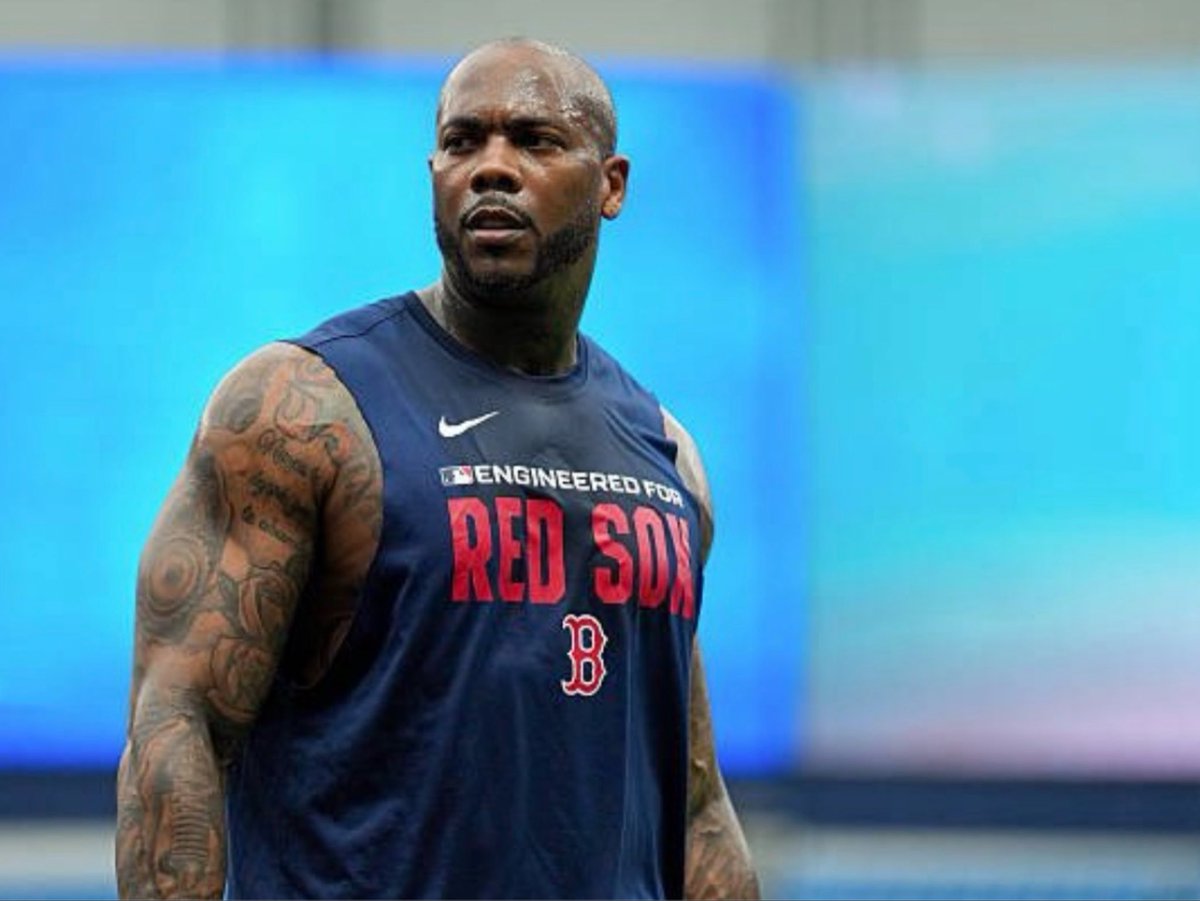
Somewhere, a skinny 13 year old baseball player is still afraid to lift weights. Meanwhile, this guy lives in the weight room & is throwing 102 mph at 38 years old
@Brandon_L_Davis Are you mostly assessing broad jump during training, “games day” or a dedicated testing day? If intra-workout, are your athletes collecting/recording data or are you spending the time doing it?