What if an AI could write an emulator from scratch?
zx-generation is a full JavaScript ZX Spectrum emulator — written entirely with Claude Code, Anthropic’s AI.
No human coding. Just prompting and iteration.
https://t.co/nc3OreAay3
Lo de restringir modelos frontera no es una noticia más de IA. Si una empresa americana puede usar modelos que una europea no puede tocar, la ventaja competitiva puede ser brutal.
No es solo IA. Es productividad, ciberseguridad, ciencia, software, negocios...
🟢 Álvaro Mateos, la mente tras Rocky 🥊, West Bank 🤠 y Capitán Sevilla. 🦸
📄 No te pierdas este extenso y apasionante artículo sobre uno de los autores más importantes de la época.
https://t.co/7S7ARGCtIP
#spectrum#zxspectrum#amstrad#commodore#msx
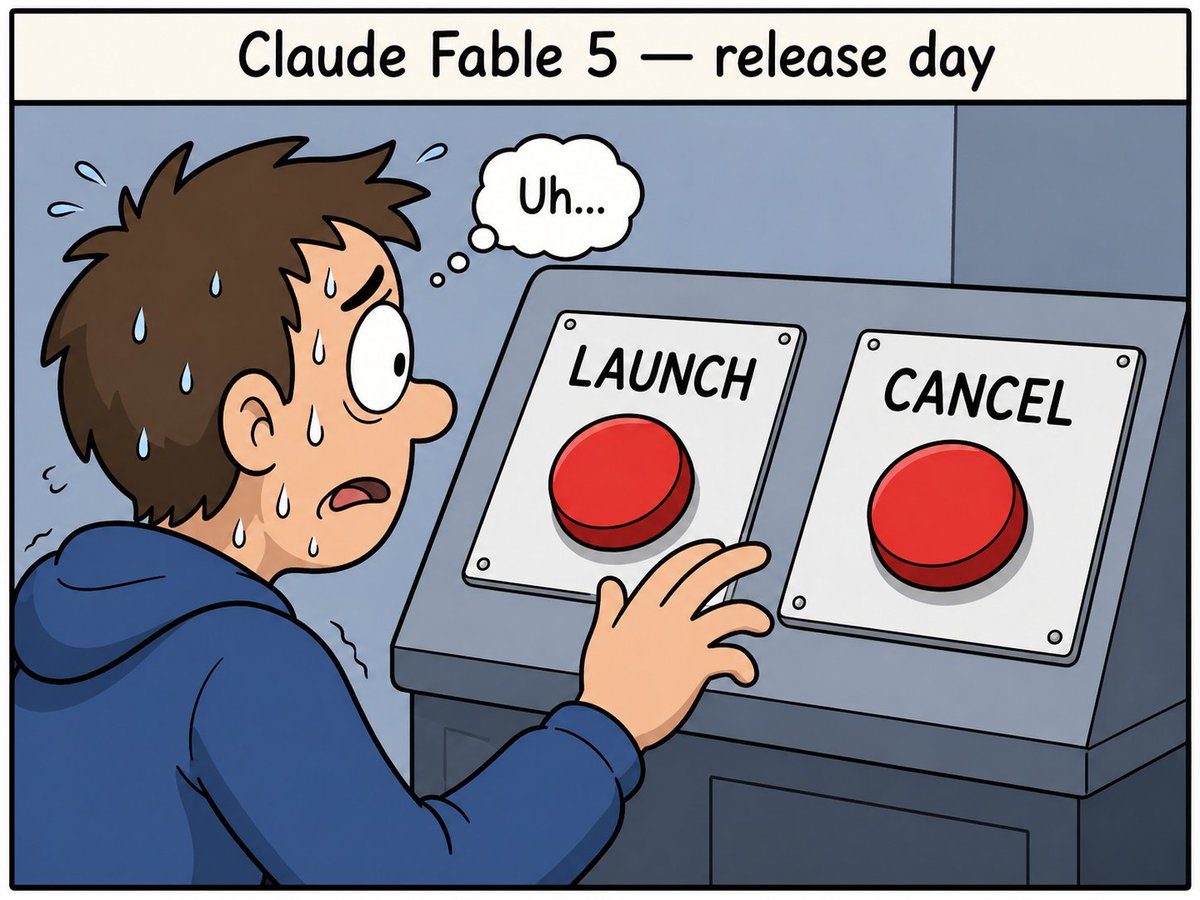
1/ Claude Fable 5 just launched, and I've been looking at what people are actually building with it.
There's a lot of hype.
But a few examples are genuinely worth paying attention to.
Here are 7:
This works really well btw, at the end of your query ask your LLM to "structure your response as HTML", then view the generated file in your browser. I've also had some success asking the LLM to present its output as slideshows, etc.
More generally, imo audio is the human-preferred input to AIs but vision (images/animations/video) is the preferred output from them. Around a ~third of our brains are a massively parallel processor dedicated to vision, it is the 10-lane superhighway of information into brain. As AI improves, I think we'll see a progression that takes advantage:
1) raw text (hard/effortful to read)
2) markdown (bold, italic, headings, tables, a bit easier on the eyes) <-- current default
3) HTML (still procedural with underlying code, but a lot more flexibility on the graphics, layout, even interactivity) <-- early but forming new good default
...4,5,6,...
n) interactive neural videos/simulations
Imo the extrapolation (though the technology doesn't exist just yet) ends in some kind of interactive videos generated directly by a diffusion neural net. Many open questions as to how exact/procedural "Software 1.0" artifacts (e.g. interactive simulations) may be woven together with neural artifacts (diffusion grids), but generally something in the direction of the recently viral https://t.co/z21CP5iQfu
There are also improvements necessary and pending at the input. Audio nor text nor video alone are not enough, e.g. I feel a need to point/gesture to things on the screen, similar to all the things you would do with a person physically next to you and your computer screen.
TLDR The input/output mind meld between humans and AIs is ongoing and there is a lot of work to do and significant progress to be made, way before jumping all the way into neuralink-esque BCIs and all that. For what's worth exploring at the current stage, hot tip try ask for HTML.
Esto es interesante: los modelos de Anthropic sufren más el "hablar" otros idiomas a nivel de uso de tokens.
En español el número de tokens usados se multiplica 1.62x respecto al modelo de OpenAI en inglés.
Introducing GPT-5.5
A new class of intelligence for real work and powering agents, built to understand complex goals, use tools, check its work, and carry more tasks through to completion. It marks a new way of getting computer work done.
Now available in ChatGPT and Codex.