“Electricity is a human right,” says @WorldBankGroup President Ajay Banga.
“You cannot deliver healthcare, you cannot deliver education, you cannot deliver hope without electricity,” he tells @FredKempe.
“600 million people in Africa are without electricity.”
In Bhabanipur, which is Mamata Banerjee's seat, Muslims are 21.9% of voters but account for 51.8% of those placed under adjudication, that is nearly 1 in 4 Muslim voters. For Hindu voters in the same seat, the figure is fewer than one in 17.
RIP ISO-NE FCM (2008-2026)
FERC approved ISO-NE's proposal to replace the Forward Capacity Market with a prompt capacity market in which an Annual Capacity Auction (ACA) would be held 1 month before the capacity commitment period.
सांसद "शत्रुघ्न सिन्हा" ने "अमीश देवगन" (गुल्लू) को "सोनाक्षी" के सवाल पर बढ़ि��ा जवाब दिया है🔥♥️
"अमीश देवगन" पूछते हैं कि आपकी बेटी का विवाह हुआ है, सब ठीक ठाक है!!?
"शत्रुघन सिन्हा" कहते हैं बिल्कुल ठीक- ठाक है, हम लोग बहुत खुश हैं, सोनाक्षी और ज़हीर Made For Each Other हैं।
आगे कहते हैं कि "हमने जो कुछ भी किया है कोई गैर कानूनी काम नहीं किया है, संविधान के खिलाफ़ नहीं किया है"
आखिर में "शत्रुघ्न सिन्हा" कहते हैं कि "बच्चे जवान हैं, एक दूसरे जो पसंद करते हैं, साथ में खुश हैं,
तो मियां बीवी राज़ी तो क्या करेगा काजी!!"
"अमीश देवगन" का मुंह देखने लायक था, क्योंकि मसाला नहीं पाया😂😂
Technical criticism aside, demonetisation was sinister. Not just bad policy, it was engineered cruelty. Conceived in opacity, executed in chaos, and enforced with indifference. It hit the most vulnerable the hardest. The poor stood in queues and the powerful found backdoors.
+
If anybody has open Public policy international affairs, and geopolitics combinations written in their bio, pls avoid them. They are just not reliable or informed. Only using the privilege to write opinions where they don't have knowledge.
This needs to be said: We are at Jim Corbett and apparently there is no restriction on loud music till 10:30pm in the night. The roads are full of cars speeding around, at least 30 jeeps plying in one area of the forest, you can see brunt land on both sides and massive tree felling.
So guilty of attending a family wedding here, I cannot say. There’s one I skipped because I didn’t want to be a party to destroying the habitat of animals. But why is Uttarakhand government allowing weddings in a forest reserve? I know my tweet will have zero reaction but
Please tag the concerned agencies when you read this.
@ukcmo@uttrakhand24@AniUttarakhand
Clues that someone grew up poor:
- Stores a massive amount of food in the pantry
- Cannot say no to children
- Isn't particularly worried about losing a job or financial calamity ("I've been poor before, I can do it again")
- Can remember a specific moment from childhood when they realized they were poor (often involving shoes or bread)
- Proudly not going to pay for kids' college ("I did fine without help. They can too" <-- it's always a man saying this, never a woman)
- Not expecting to live past ~40
- Don't ask for help
- When in deep financial trouble, they double down and work harder, including nights/weekends, even when their health suffers
All of these are real clues from real people on my podcast, Money For Couples
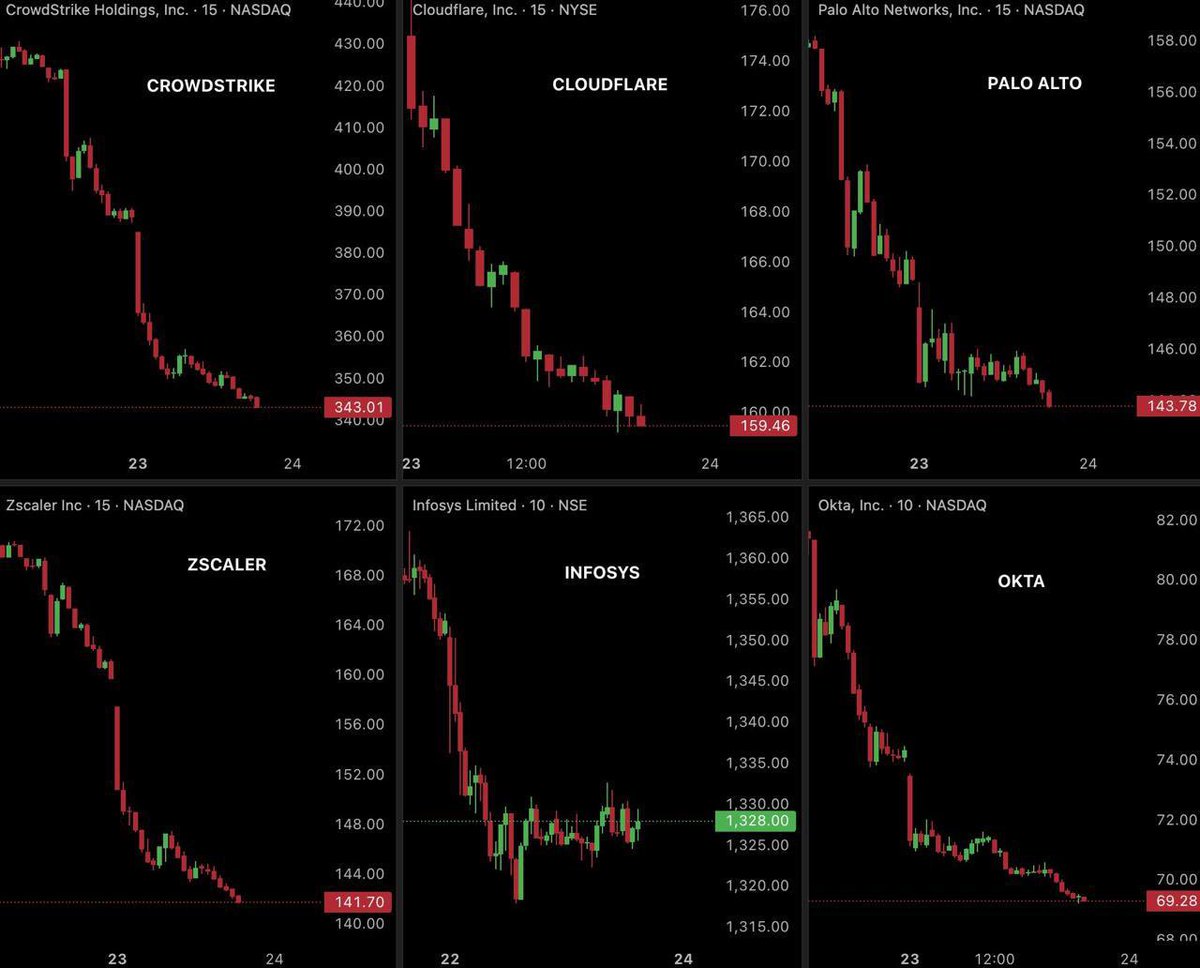
MASSIVE CRASH IN CYBERSECURITY STOCKS SINCE ANTHROPIC LAUNCHED CLAUDE CODE SECURITY.
Over $52.6 billion wiped out in just 2 days.
CrowdStrike is down 20%, wiping out $19.6 billion.
Palo Alto Networks is down 8.9%, wiping out $11.7 billion.
Cloudflare is down 18.5%, wiping out $11.2 billion.
Zscaler is down 17.3%, wiping out $4.6 billion.
Infosys is down 3.4%, wiping out $2.9 billion.
Okta is down 16.7%, wiping out $2.6 billion.
You place an order from a D2C site:
- the bank sends an SMS and email
- the brand sends an Sms, email, and WhatsApp message
- the brand sends a packed notification email, Sms, whatsapp
- the shipping company sends an email, Sms, WhatsApp for packing
- now repeat the above for shipping, out for delivery, delivery
- and then the otp
20+ notifications for sure.
For a simple 200rs order sometimes.
Honestly this is the poorest argument ever could be made. I wonder who was this policy team expert who thought to attack the general class divide.
It's a really tangential point and does not at all address why fair wages and exploitation of workers is normalised.
Last one on this topic, and I have been holding this in myself for a while.
For centuries, class divides kept the labor of the poor invisible to the rich. Factory workers toiled behind walls, farmers in distant fields, domestic help in backrooms. The wealthy consumed the fruits of that labor without ever seeing the faces or the fatigue behind it. No direct encounter, no personal guilt.
The gig economy shattered that invisibility, at unprecedented scale.
Suddenly, the poor aren't hidden away. They're at your doorstep: the delivery partner handing over your ₹1000+ biryani, late-night groceries, or quick-commerce essentials. You see them in the rain, heat, traffic, often on borrowed bikes, working 8–10 hours for earnings that give them sustenance. You see their exhaustion, their polite smile masking frustration with life in general.
This is the first time in history at this scale that the working class and consuming class interact face-to-face, transaction after transaction. And that discomfort with our own selves is why we are uncomfortable about the gig economy. We want these people to look our part, so that the guilt we feel while taking orders from them feels less.
We aren't just debating economics. We are confronting guilt. That ₹800 order might equal their entire day's earnings after fuel, bike rent, and app cuts. We tip awkwardly, or avoid eye contact, because the inequality is no longer abstract. It's personal.
Pre-gig era, the rich could enjoy luxury without moral discomfort. Labor was out of sight. Now, every doorbell ring is a reminder of systemic inequality. That's why debates explode. It's not just policy. It's emotional reckoning. Some defend the system (“they choose it”), others demand change (“this isn't progress, its exploitation”).
And here’s the uncomfortable twist: the unsaid ask of clumsy ‘solutions’ isn’t dignity. It is about returning to invisibility.
Ban gig work and you don’t solve inequality. You remove livelihoods. These jobs don’t magically reappear as formal, protected employment the next day. They disappear, or they get pushed back into the informal economy where there are even fewer protections and even less accountability. Over-regulate it until the model breaks, and you achieve the same outcome through paperwork instead of slogans: the work evaporates, prices rise, demand collapses, and the people we claim to protect are the first to lose income.
And then what happens?
The rich get their old comfort back. Convenience returns without faces. Guilt dissolves. We go back to clean abstractions and moral posturing from a distance. The poor don’t become safer, they become invisible again: back in cash economies, back in backrooms, back in shadows where regulation rarely reaches and dignity isn’t even debated.
The gig economy just exposed the reality of inequality to the people who previously had the luxury of not seeing it. The doorbell is not the problem. The question is what we do after opening the door.
Visibility is the price of progress. We can either use this discomfort to build something better (which we keep doing continuously as delivery partners are our backbone), or we can ban and over-regulate our way back into ignorance. One of those choices improves lives. The other simply helps the consuming class feel virtuous in the dark.
15 years of this and Indian fabric of people with love has been cut short to a country with a billion hateful content creators funded or inspired by BJP's success with the same content.
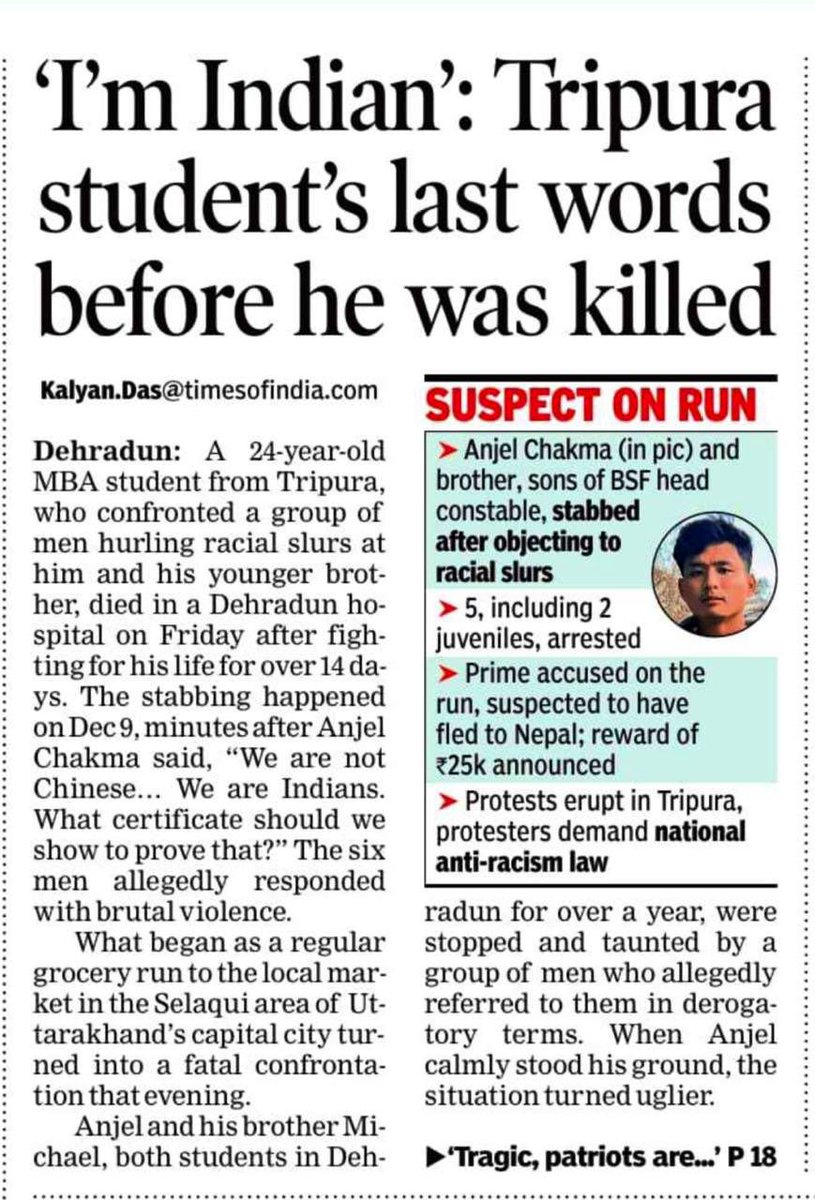
What happened to Anjel Chakma and his brother Michael in Dehradun is a horrific hate crime.
Hate doesn’t appear overnight. For years now it is being fed daily - especially to our youth - through toxic content and irresponsible narratives. And it’s being normalised by the hate-spewing leadership of the ruling BJP.
India is built on respect and unity, not fear and abuse. We are a country of love and diversity. We must not become a dead society that looks away while fellow Indians are targeted. We must reflect and confront what we are allowing our country to become.
My thoughts are with the Chakma family and the people of Tripura and North East. We are proud to call you our fellow Indian brothers and sisters.
#JusticeForAnjelChakma
@sadigalisabzi This is the kind of stories my timeline should be flooded with, in the next year. This year (and last few years tbh), things have been pretty shit.