"Wiki2Prop: A Multimodal Approach for Predicting #Wikidata Properties from #Wikipedia" predicting which properties should be attached to a Wikidata item, using
its Wikipedia page embeddings.
(Luggen et al, 2021)
https://t.co/WyNpt04Tcy
#NLProc
In the framework of the Digital Humanities, projects on palaeography and the development of digital tools to facilitate the palaeographer's work have proliferated. Read about the latest advancements here ⬇️ #dhum1727
https://t.co/hnup1VRzBE
Malaga is hosting the world forum on digitalisation of museums and cultural management models on June 21 & 22. Click here to read about it ⬇️ #dhum1727
https://t.co/rzNwwqsPiY . .
For Asian-Americans, the move to digital civic engagement means that access to democratic institutions—everything from voting registration to local news— is impeded by linguistic barriers.
https://t.co/0mI4lP3r0v
'Uncertain Archives: Critical Keywords for Big Data will particularly appeal to scholars from across STS, applied data science, digital humanities and many others thinking about and with data across disciplines' @mitpress https://t.co/8VEFpO3qRe
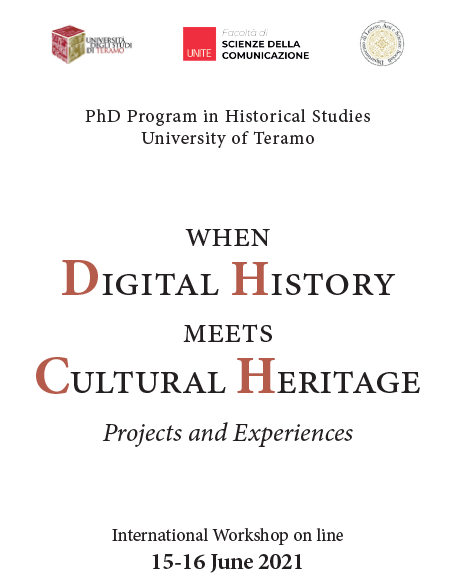
Los días 16 y 16 de junio hablaré sobre #humanidades digitales, #patrimonio y lo que hacemos desde los grupos #cinter y #masopa en el seminario online “When Digital History meets Cultural Heritage” organizado por @UniTeramo https://t.co/6WI5q4RhAH
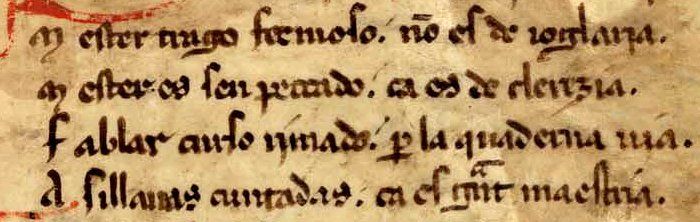
➡️#Clerecía es un experimento digital que pone a disposición de la comunidad científica los materiales que sirvieron de base para la elaboración de la Tesis Doctoral de @elenagbg , defendida en 2008.
https://t.co/WIAFYV7uzV #HumanidadesDigitales#DigitalHumanities
Came across a new, very exciting digital humanities project in African American History - the "3D Black Boston Project" - that @ksbaumg, @angeldnieves, Jessica Linker, and others are building. Can't wait to see it take shape and use it in the classroom! https://t.co/0IUMsFoU61
How do new technologies challenge existing rights? Has emerging tech created a need for new rights? Join us on June 23 at 12 PM ET for a panel discussion on The Future of Rights, exploring these questions and their implications for designers, practitioners, policymakers, & more.
Reading is not only one of the most intense of all pleasures, but I think it is the most healing of all pleasures. I think it is more profoundly therapeutic than most of what is urged upon us as therapy.
How can we do digital research multilingually? A series of blog posts from our researchers curated by @politonaiz for Day of Digital Humanities: https://t.co/KhcWPesCpN #dayofdh2021
"Men Are Elected, Women Are Married: Events Gender Bias on #Wikipedia" event-centric study of gender biases on a large English Wikipedia corpus shows that personal life related events are more likely to appear for females than males.
(Sun et al, 2021)
https://t.co/P3FV6OiW5l
Today we want to introduce you to a really interesting book: "Digital Humanities for Librarians" by Emma Annette Wilson (@DrEmmaAWilson). It guides librarians towards making the most out of their expertise for the benefit of DH 🤓🤓 #dhum1727
This Friday, join the @LA_Humanities and Larry Powell for a conversation with Josh Levin and Christopher Johnson, host and producer of the @Slate podcast "Slow Burn: David Duke," the 2021 Best in Digital Humanities awardee. https://t.co/z2d2PeH5Ew
My new article was just published: It is a conceptual tour of how to use #GIS, #SNA, #LOD & other #DigitalHumanities techniques to model geospatial networks w/ #Attalid example.
https://t.co/5GJUhUhYYL
Color images here: https://t.co/vtnfHw769t
#LAWDI#digitalclassics#hgis