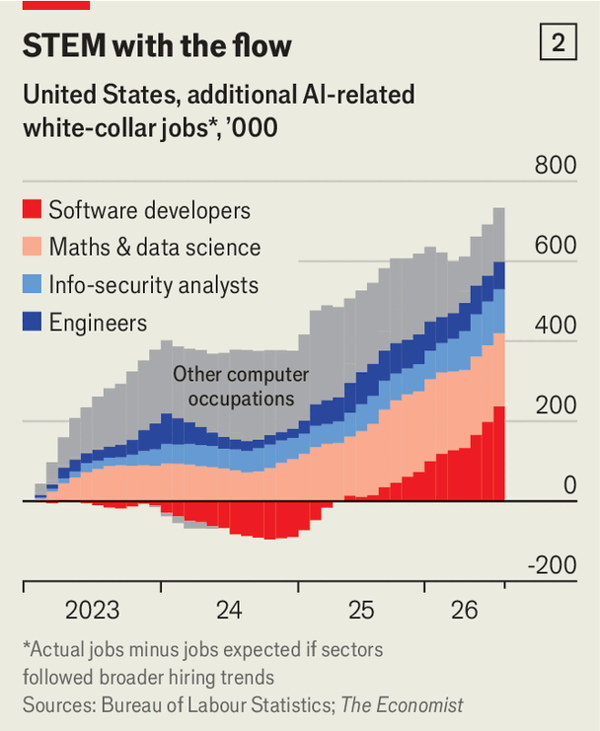
The jobs apocalypse is postponed. An AI jobs boom is here
According to @TheEconomist, AI is actually proving to be a net job creator in the US, easily generating over 1M new positions (from data center construction to AI engineering) to offset back-office layoffs.
While routine admin and customer service roles face real disruption, the overall labor market is proving resilient.
https://t.co/uVomCUvwSf
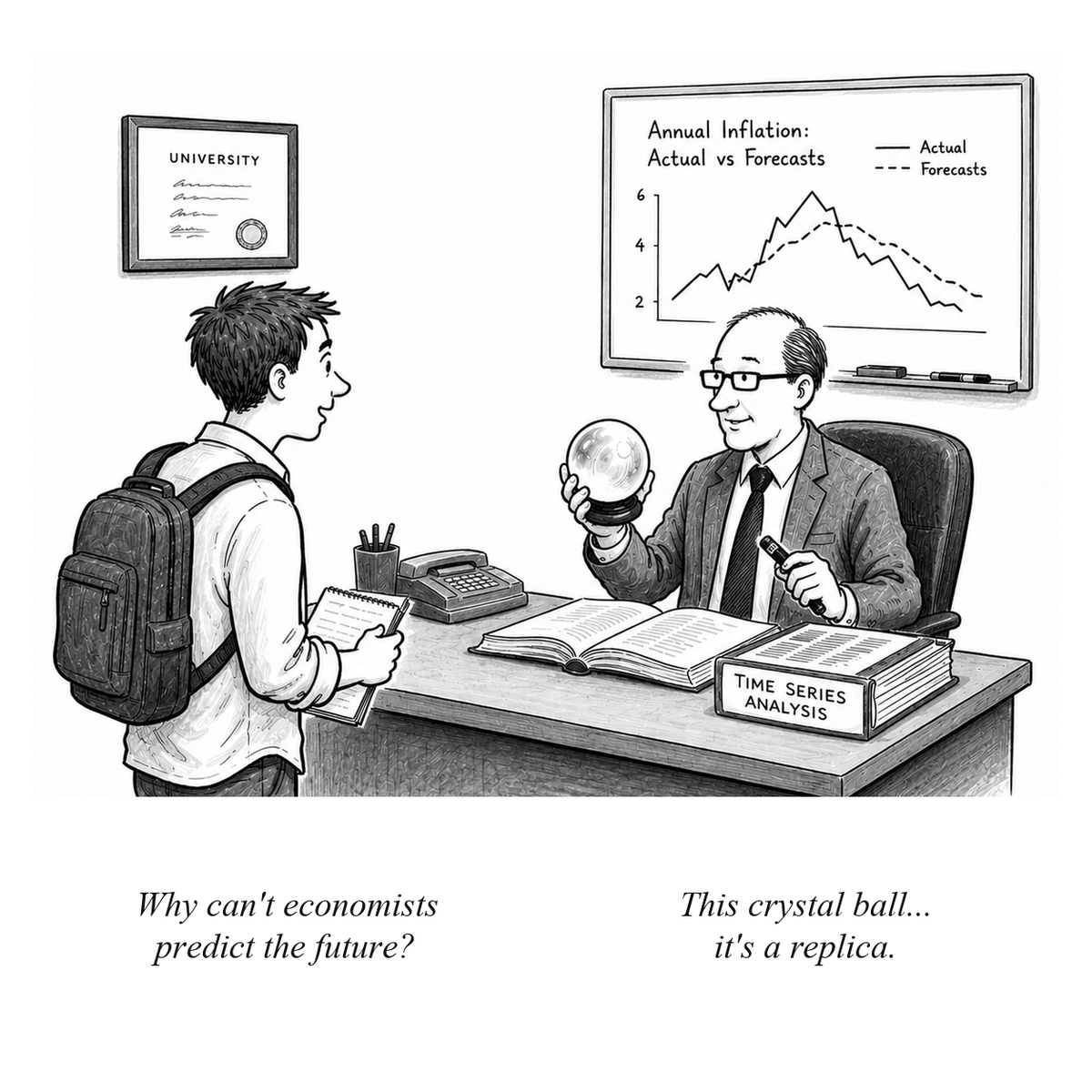
Introducing TimesFM-3, a state-of-the-art time series foundation model that enables accurate multivariate time series forecasting in a single forward pass, significantly outperforming other forecasting models across major benchmarks.
More on the blog →https://t.co/uSlnIdUJ4Q
⚽️ #México | ¿Cuál fue el impacto económico del Mundial? @diego_lopezt analiza en @eleconomista las primeras señales: un impulso menor al esperado y concentrado en las sedes.
Lee el artículo aquí ⬇️ https://t.co/0XZTTVNeAY
La tasa de informalidad laboral en México llevaba años bajando. Pero desde mediados de 2024 cambió la tendencia y se estabilizó cerca de 55%. ¿Qué está pasando? Un hilo con lo que encontramos siguiendo a las mismas personas trimestre a trimestre 🧵
Finally read Gopinath-Gourinchas-Rey-IMF point on Yuan and imbalances. I agree completely with the central message.
Their central message. Global trade imbalances (dominated by China-US) are not due to exchange rate/monetary policy (much), but (mostly) to fiscal policy and other underlying primitives. ✅
My view: Yep. This is pure common sense! FX/monetary policy can have effects, but temporary not for decades + undervalued Yuan→inflation boom (typically) but we see deflationary slump.
My view 2. Imbalances are still implicitly portrayed as a terrible thing, to be "fixed", but I am less sure whether there is a clear argument here once we say the reason lies in primitives or fiscal policy---rather than monetary policy, say. Sure, you can change fiscal policies and affect imbalances, but that's not the same as saying "a big additional motivation for changing fiscal policy is to "fix" these imbalances", the change in imbalances is simply a side product.
Why? Consolidating public+private the aggregate US acts as impatient borrower and aggregate China as a patient saver, taking those as given, the resulting imbalances are likely mostly efficient responses. Changing these fiscal policies may well be optimal, but that can simply reflect issues of optimal tax, redistribution, insurance and debt management; not mainly or at all a focus on international capital flow statistics.
Again, I'm just using common sense here (and some economic theory in the background).
🇺🇸 Estados Unidos anunció nuevos aranceles bajo la Sección 301.
Aunque México 🇲🇽 enfrenta una tasa adicional de 10%, la exención para bienes que cumplen con el T-MEC limita el impacto directo y mantiene una posición relativa favorable📊
@BBVAResearch
https://t.co/mCIsJghVF5
Acá el hilo donde organizo mejor los hallazgos a los que he llegado con el análisis de los resultados de los examenes de ingreso a licenciaturas en la UNAM. Así, es... abro....¡HILO! 🧵🧵🧵
Still no good news from the tariffs. New research from Ahn, Rotunno, Ruta show that tariffs have led to a drop in the *quality* of products the US imports. So basically, the tariffs did little to reduce the prices of exports to the US and instead we rotated to cheaper lower quality imports. In addition to paying higher prices inclusive of tariffs the quality has dropped. https://t.co/ZkWZloBaFN
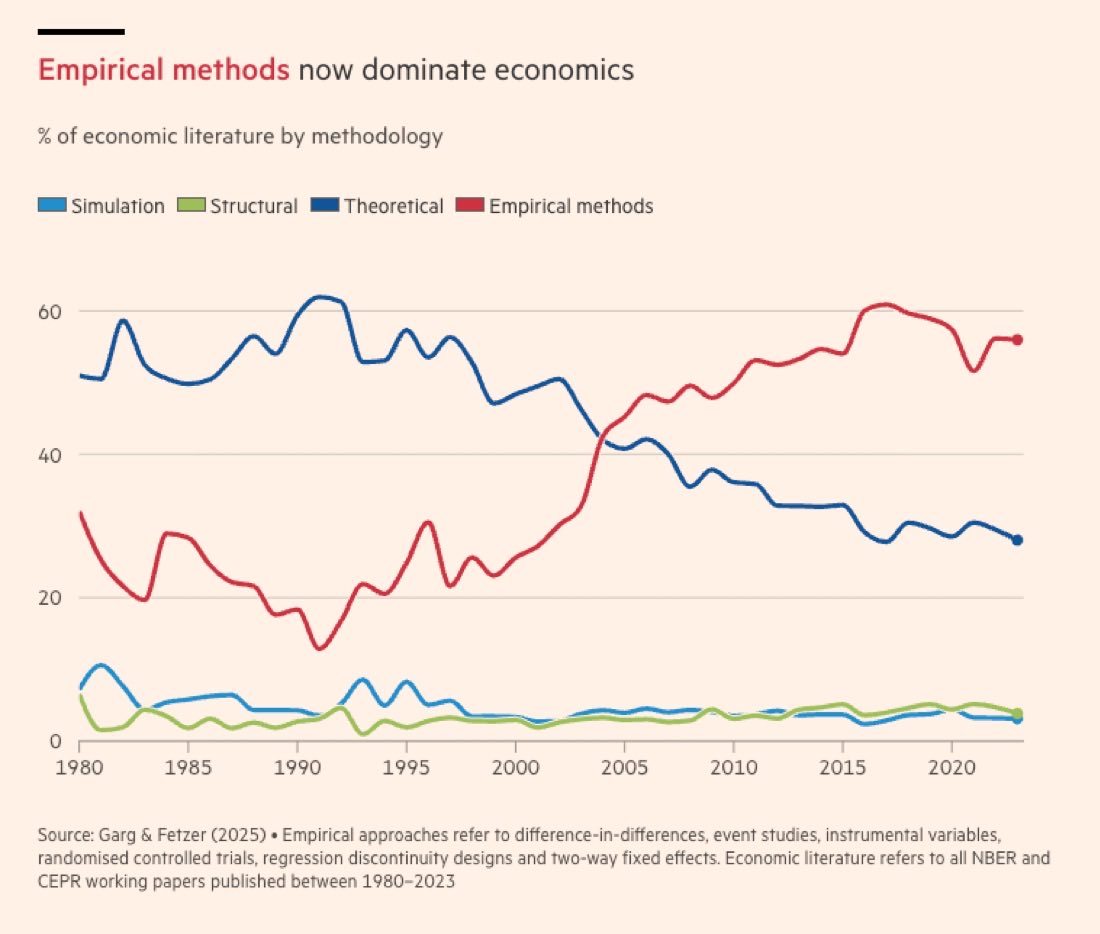
Fundamental Theorem of Welfare Economics: Every competitive equilibrium is Pareto optimal.
How did Arrow and Debreu prove it?
My new article about it:
https://t.co/IugMbqIzvu
Economist were SHOCKED to find that well-ranked teams were given unfair advantages and favors over lower-ranked and untraditional teams by non-transparent decision-making process of a professional organization.
Agree with Fed Chair Kevin Warsh's call to review forward guidance. At @IMFNews we had pointed out the risks as early as 2022/2023: A quote from my speech in Sintra in 2023: "The forward guidance provided by central banks during the pandemic may have been too much of a straitjacket and prevented a faster reaction to inflation surprises."
https://t.co/GM4V4WXYkD
El 15 de junio, Banxico publicó la Circular 8/2026: puede comprar bonos del gobierno en el mercado secundario por 1a vez en su historia moderna. Entrará en vigor el 17 de agosto
¿Monetización del déficit? ¿Fin de la autonomía? No. La distinción importa y hay que explicarla
🧵
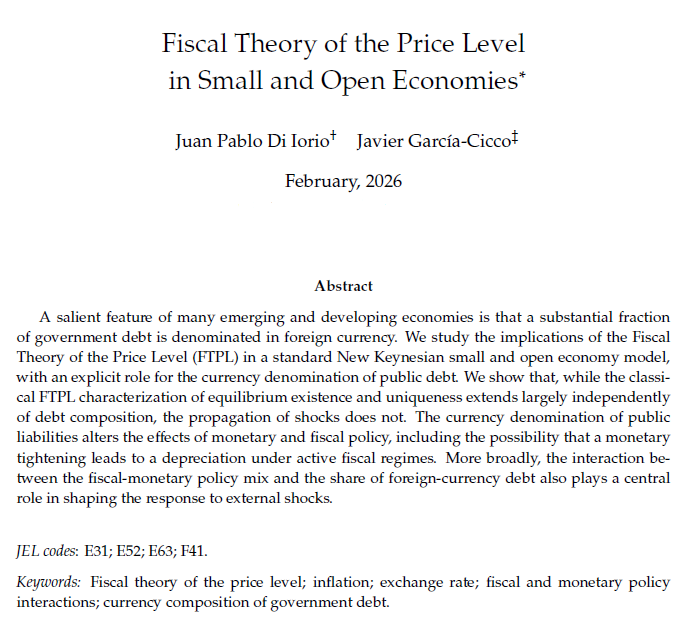
¿Puede una suba de tasas generar una depreciación? Sí.
Si te interesa macro abierta, política monetaria o entender por qué los mercados emergentes se comportan "al revés"… este paper de nuestro profesor @JavierGC14 y @juanpdiiorio (maestría 2022) es para vos.
👉https://t.co/3uGshvIawn
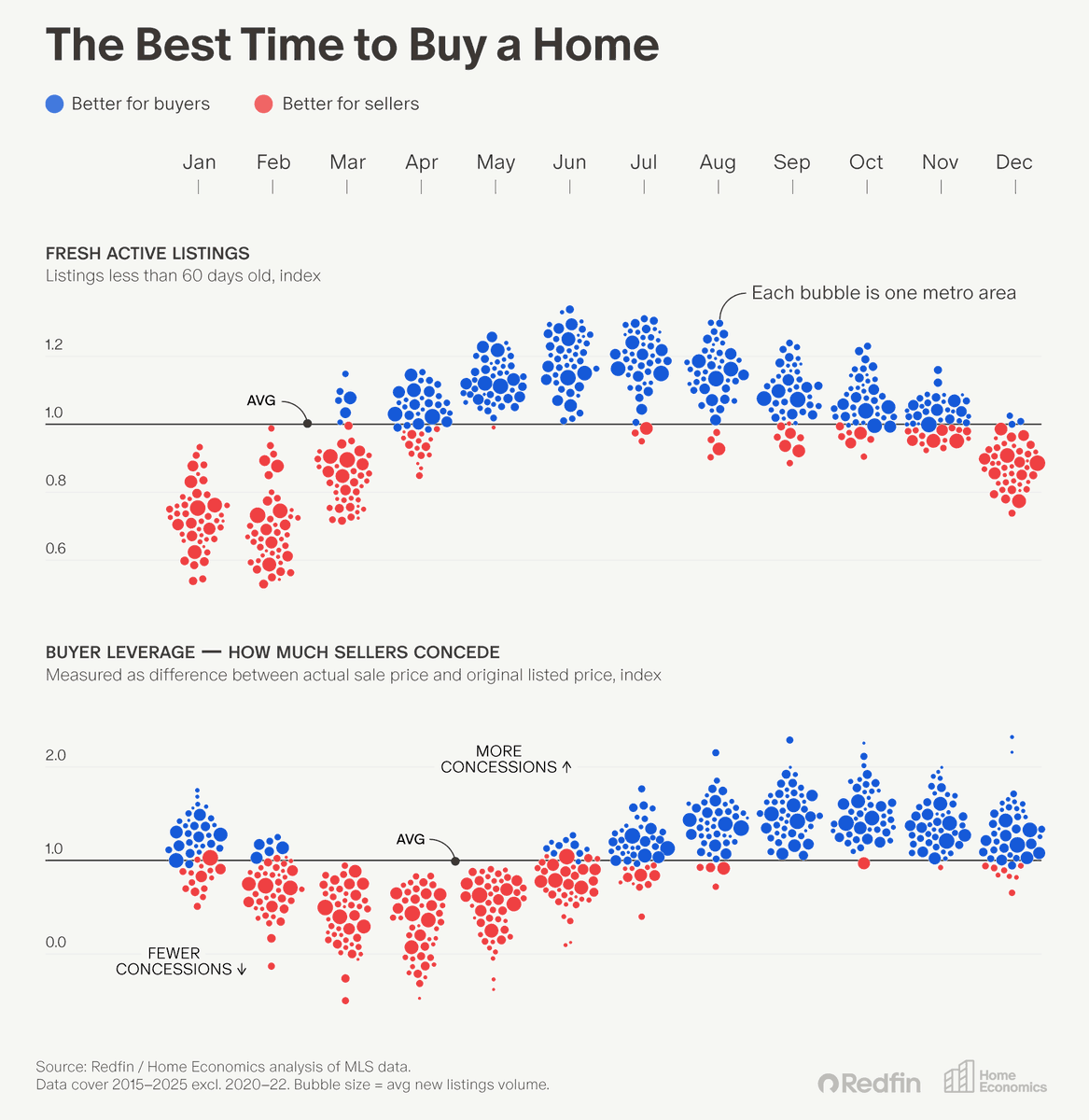
When's the best time to be house hunting? It depends—if you want to see the freshest listings, you should be looking now (late April). If you are flexible and looking for a great deal, you're more likely to find one in the fall. From analysis I published with the team @Redfin...