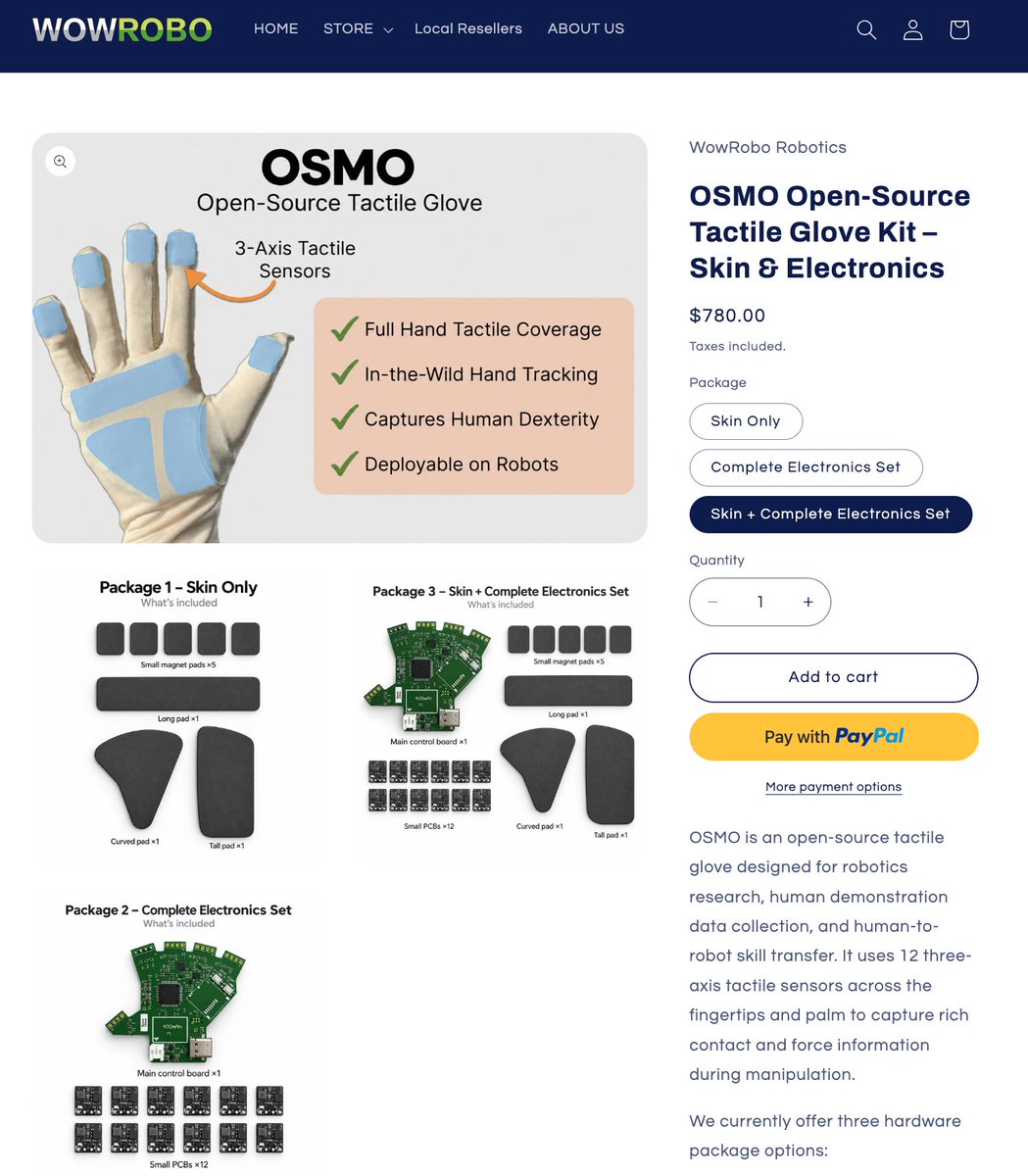
🧤Excited to share that the OSMO tactile glove is now available as a DIY kit!
OSMO is our open-source tactile glove for human-to-robot skill transfer, capturing 3-axis tactile signals from human demonstrations and enabling the same sensing hardware to be used on robot hands.
Huge thanks to Jessica Yin (not on X) for driving this effort and making the kit happen, and to @WowRobo for helping make OSMO more accessible to the community!
(Neither I nor any of the authors receive money or profit from kit sales. Our goal is to support reproducibility and help advance the tactile research community. If you find our work helpful, we just ask that you cite our work 😊 The hardware designs, firmware, and assembly instructions remain publicly available:)
🔧 DIY kit: https://t.co/zHghUwWpA0
📖 Project: https://t.co/SqTAG2GPuH
w. Jessica Yin, @WiYoungsun, Sayantan Kundu, Mike Lambeta, William Yang, @ChanghaoWang78, @TingfanW1208, @JitendraMalikCV, and @t_hellebrekers!
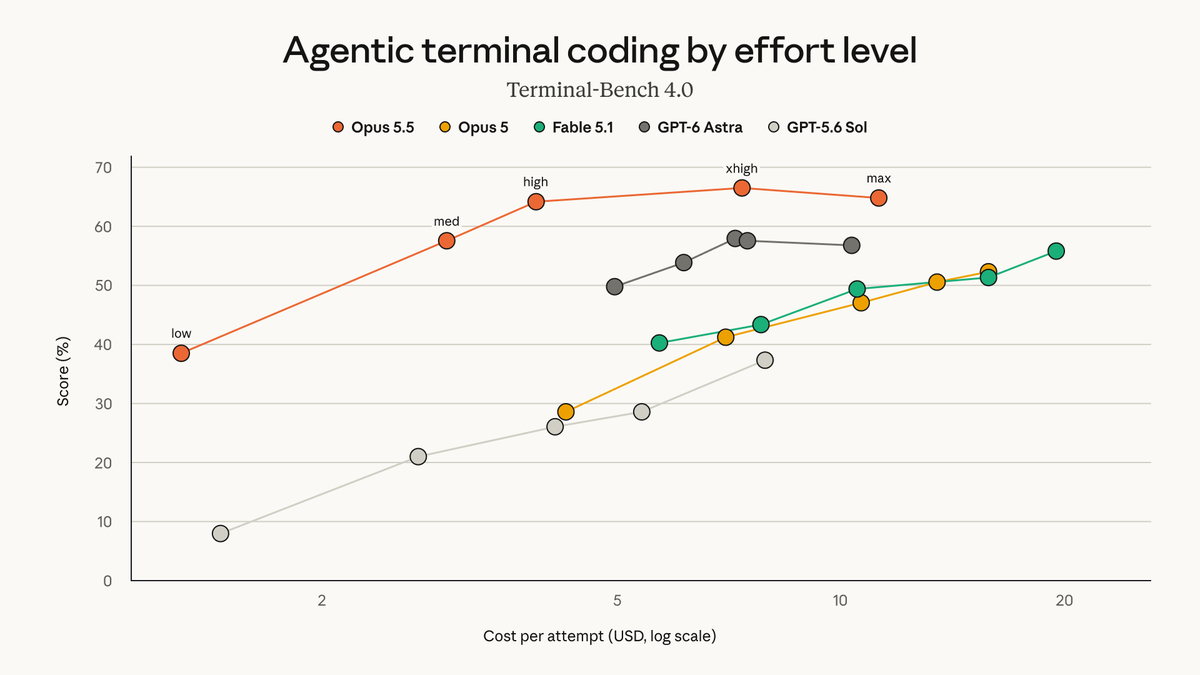
Opus 5.5 performs at the level of Fable 5.1. It's ~30% faster and ~40% cheaper than Opus 5 per task.
In Claude Code:
- 5-hour session limits increase 20% today
- Opus 5.5 is priced lower, so it goes 25% further within limits
- Pro, Max, and Team users get a reset to use anytime
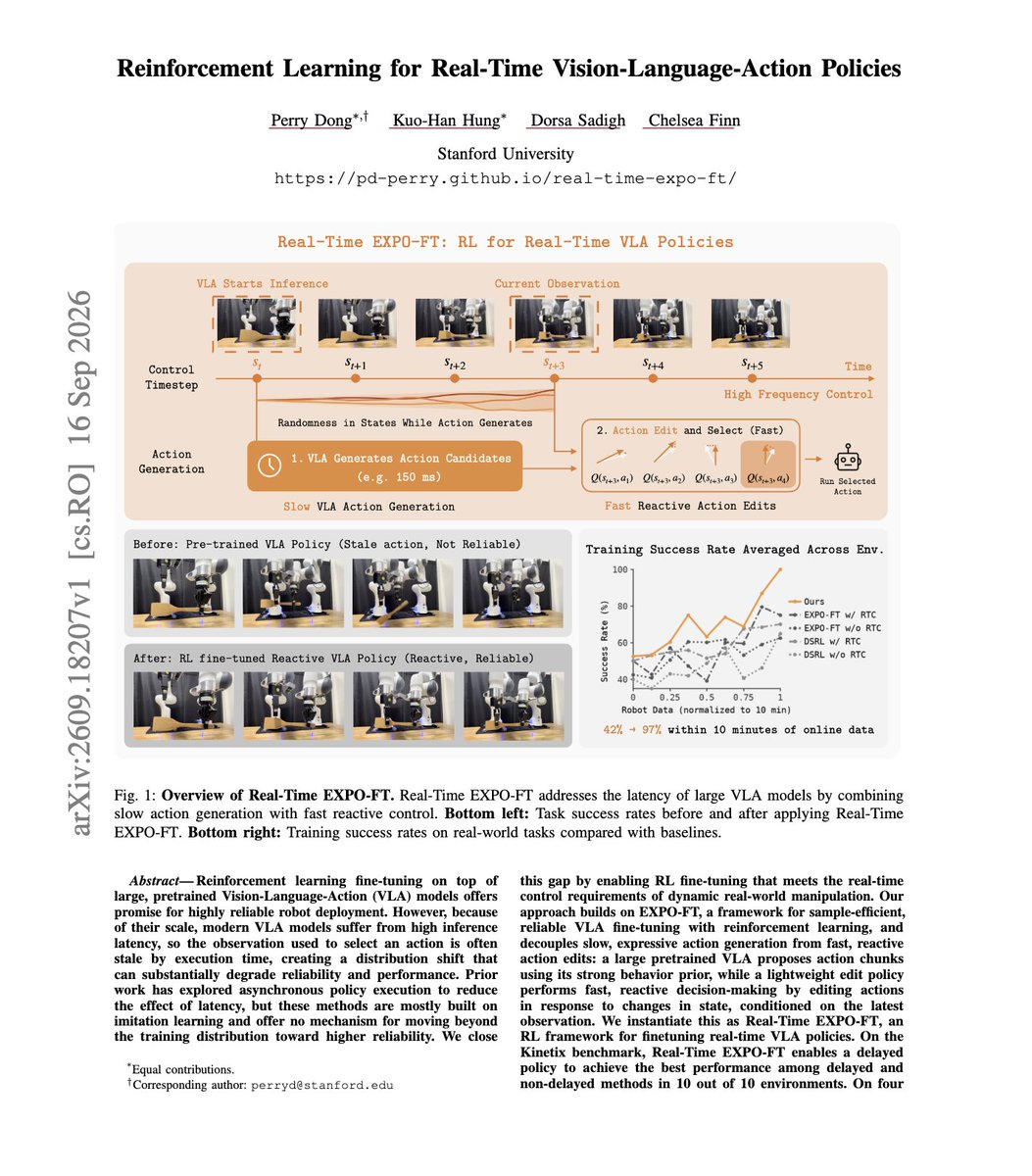
“Reinforcement Learning for Real-Time Vision-Language-Action Policies”
VLA models are usually too slow for reactive robot control, so this paper lets the VLA generate actions slowly in the background, while a lightweight RL policy uses the latest observation to rapidly edit and select actions in real time.
This simple split improves real-world success from 42% to 97% with just 10 minutes of online robot data.
https://t.co/rVFRD6dmpI
Open-source robot arm meets hand tracking
[📍GitHub below]
It is designed with an industrial mindset but built as a 3D-printed desktop system.
PAROL6 paired with a LEAP Motion controller is a nice example of how accessible robot teleoperation has become.
• Hand motion is streamed to the robot at 100 Hz via UDP
• A pneumatic gripper is controlled by simple fist open and close gestures
• The entire robot stack is open source, from mechanics to control software
Combine that with low-latency hand tracking and you get a very practical platform for learning manipulation, teleoperation, and human-robot interfaces.
This kind of setup is great for experimentation, teleop, data collection, and teaching robots by demonstration
All without proprietary hardware or locked software.
Credit to @SourceRobotics
📍Code: https://t.co/dMEvS0iNuJ
——
Weekly robotics and AI insights.
Subscribe free: https://t.co/9Nm01QUcw3
Excited to finally share a long-awaited public demo of full computer cursor control from brain signals, in a @neuralink style demo, but entirely non-invasive. No surgery, implants, or eye-tracking.
This is Atlas™, our non-invasive brain-computer interface platform @SynaptrixAI, made possible by treating EEG decoding as a frontier AI problem and investing deeply in the models, data, and hardware needed to push it forward.
Our capabilities at Synaptrix have progressed dramatically over the past year, and we are reaching a point where I believe our non-invasive systems will approach the capabilities of implanted BCIs very soon.
The goal for Atlas™ is much bigger than cursor control. We are building toward restoring communication and mobility for people with severe disabilities, from computer access and wheelchair control to prosthetic arms, legs, and all other assistive systems.
No implants or surgery. Just the brain controlling machines. Disability will become a solved problem!
Learn more about what we’re building! https://t.co/NFENMtXNn3
instead of forcing human motion onto a robot body, they changed the robot body.
“[3 Sep 2026] BRIDGE: An Open-Source Humanoid Platform via Morphology-Control Co-Design for Physical AI”
BRIDGE is an 88 cm humanoid whose joint layout, body proportions, actuators, and controller were designed together around one goal: reproduce human motion well.
the team tests candidate body designs by retargeting large amounts of human motion onto them, then asks a second question: can the physical robot actually execute those motions under closed-loop control?
that process produced a 21-DoF humanoid with a paper-listed hardware cost of ~$1,500, released with its control policy and open hardware design.
the real robot walks, recovers from pushes, and performs highly dynamic motions including a backflip.
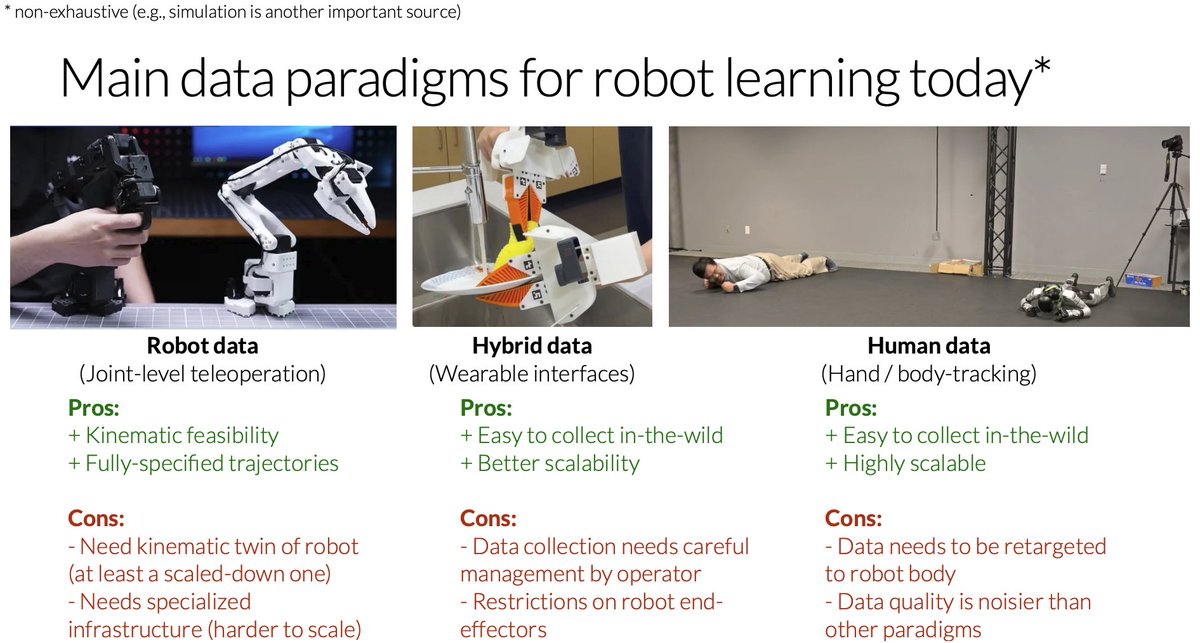
human video is becoming valuable robot training data.
BRIDGE asks whether the hardware itself should be designed to make that transfer easier.
https://t.co/hJCMbljCLV
🏆 1st place, Open Source @lenslist
AR as an interface for robot navigation.
Give move-to commands using hands or voice and the robot moves there autonomously.
Works in a variety of environments and conditions. Stock firmware on the @UnitreeRobotics dog. @dimensionalos powers the entire navigation stack with dynamic pathing and LiDAR streaming.
UI and interactions on @specs AR Glasses.
I’m already working on v2.0 with VPS support (@multiset_ai) to reduce drift on longer distances (>5m) and cleaner DimOS integration.
Gotta say, making this is a bit of a rollercoaster as it’s genuinely hard but also I just want it to exist and seeing it work is the most cool and rewarding thing ever.
Repo: https://t.co/63bdaUqUCg
Introducing the Open Knowledge Format (OKF), an open specification that formalizes the LLM-wiki pattern into a portable, interoperable format.
AI is only as smart as the context we give it. As we build more advanced, agentic AI systems, they need accurate metadata and context to be useful. But in most organizations, that context is locked inside fragmented data catalogs, isolated wikis, scattered code comments, or the minds of senior engineers. Every time a new AI agent is built, teams are forced to solve the exact same context-assembly problem from scratch.
To solve this, we've announced OKF, a vendor-neutral, open specification that formalizes the "LLM-wiki pattern" into a portable, interoperable format. It provides a standardized way to represent the enterprise knowledge that modern AI systems rely on.
— Just markdown: readable in any editor, renderable on GitHub, indexable by any search tool
— Just files: shippable as a tarball, hostable in any git repo, mountable on any filesystem
— Just YAML frontmatter: for the small set of structured fields that need to be queryable: type, title, description, resource, tags, and timestamp
We’ve also shipped reference implementations to help you hit the ground running, including an enrichment agent for BigQuery, a static HTML visualizer, and live sample bundles on @github → https://t.co/ilhAMCrcTc
➕ Knowledge Catalog can now natively ingest OKF!
Stop reinventing data models and building bespoke integrations for every new AI tool. Here's more about how OKF works → https://t.co/FR4kJRsgEH