$IREN Thesis: H2 2026 - 2027
Financial Model: https://t.co/cNsypVJ1or
Previous Thesis Review
I'd like to start each updated thesis by reflecting on what went right and wrong on my previous thesis (1) and if the wrongs are being addressed.
Although I flagged HBM as potential trajectory altering bottleneck in February (2), I saw the HBM bottleneck impact as increased Capex but did not foresee the issues arising from delays in GPU deliveries.
You see, GPUs and HBM are co-packaged. This means, Nvidia secures the HBM supply and then TSMC integrates the GPU and HBM into the same package to make a GPU chip. Nvidia then controls the GPU chip deliveries to hyperscalers or server integrators like Dell, SMCI, and Lenovo.
IREN was getting GPUs from both Dell and Lenovo late which actually means Nvidia did not prioritize them. In ramping up a datacenter, there's only so much theory based preparation IREN can do. In hardware engineering, ramp up problems can arise sequentially. Only once you get the a significant batch of GPUs and run them for longer periods of time, do you uncover cooling deficiencies. Only once you get the cooling right, can you run networking stress test scripts. I'm sure IREN had built in slack time to mitigate delays but there's no mitigation for GPU deliveries arriving months late. Thus we have seen a painful revenue ramp for IREN in H1 2026.
For 2027, the largest change was that Nvidia and IREN formed a strategic partnership to accelerate deployment of AI Infrastructure (3). Contract wise, this is written has Nvidia gets options to buy IREN at $70 vesting upon "Nvidia GPU infrastructure is deployed across IREN campuses and only fully vest upon deployment of 600k GPUs" (6:40-6:55 of 4). However, for Nvidia, these options aren't the true motivator, but rather it's about expanding their ecosystem as I will explain later.
For H2 2026, the change will be that B300/GB300 production will be fully ramped. In 2025-H1 2026, beyond the unprecedented demand, exacerbating the demand-supply imbalance was that the B200/GB200 was a smaller generation of GPUs compared to H100/H200 and B300/GB300 because the Blackwell ramp had faced technical and supply chain challenges (5).
Demand Review
In early February, I identified that Anthropic would release unprecedented growth numbers would result in urgent GPU demand (6). While the demand from Anthropic has played out, Anthropic subsequently signed with everyone possible from CRWV (7), xAI to Akamai Cloud (8) and Amazon, Google, Microsoft. IREN opted to make their flagship SW1 campus be Vera Rubins rather than GB300s but I will explain why this is a prime site for Anthropic.
The Core Thesis
Every AI thesis should be firmly grounded on roadmap and incentives of the AI Hyperscalers: Nvidia, Anthropic and OpenAI.
The previous generation of Hyperscalers followed the Amazon model: excel at cloud infrastructure for in-house projects and provide managed software services for enterprises applications.
The AI generation of Hyperscalers will follow the Anthropic model: excel at agentic AI that builds software in house and provide agentic AI for enterprises to build vertically integrated applications and tailored software infrastructure.
Why vertically integrated applications and tailored software infrastructure? Contrary to misconception, AI does not make SaaS obsolete but rather raises the bar for SaaS. Just like how excelling at Leetcode and reading DDA is no longer sufficient for software engineering interviews, application level software is no longer sufficient for SaaS companies.
We saw the following business solidify their moat through vertically integrated applications and tailored software infrastructure:
2000s: Amazon, Google
2010-2025: Meta, Netflix, Uber, Salesforce, Airbnb, TikTok, Palantir, Tesla.
In the 2026-2030 AI will enable smaller teams to output more software and having vertically integrated applications and tailored software infrastructure will be a requirement of SaaS companies to have proprietary services and squeeze out optimizations. In other words: if you've played around with Claude Code at all, you will know that application level software by itself is not a differentiated business.
Beyond the OpenAI and Anthropic, there will be a important role for open source and custom models. However, generating application code and connecting it to Token APIs will not be a differentiated business. The margins will come from optimizing the inference stack based on application call patterns down to bare metal. Some companies like Cursor and $TEM have gone as far as building their own custom models to derive proprietary differentiation and accrue margins.
Open Source Models
Open Source will be important. Open Source Models will be like Linux: very important but optimizing Linux is not a big business. Many leading enterprises have in-house customized distributions of Linux optimized for their workloads.
While there is alot of chatter about how Anthropic and OpenAI Token cost have become borderline untenable (9), the thing you have to understand is that Anthropic and OpenAI are building a ecosystem not a token generator. If Open Source takes significant enterprise market share because it's cheaper, Anthropic and OpenAI will have different tier models on the cost curve. Both Anthropic and OpenAI need high market share to achieve economics of scale and form an ecosystem. They already have cost tiered models but if Open Source starts to take significant enterprise market share, OpenAI and Anthropic will get more aggressive.
Let's me put it another way: principal engineers at Google are using Claude Code to build GCP (10). Claude Code is improving rapidly. Do you think the AI Natives and Leading Enterprises of tomorrow will build their own software infrastructure or pay out 80% margins to Neoclouds?
IREN's Role
I see IREN's software acquisitions in Mirantis as a 2-3 year stop gap while AI Natives and Leading Enterprises ramp up on AI while Claude Code continues to improve.
In the age where Nvidia/Anthropic/OpenAI are the Hyperscalers, I see IREN as the Exxon ($XOM). XOM does alot more than producing oil and gas, they do all the downstream work to refine, distribute and create chemcial dervatives of oil. Likewise, IREN has the expertise to do power studies to secure grid connected power and build out power infrastructure but vertically integrated in the sense it does datacenter design, datacenter operations for hardware uptime, and managed Kubernetes.
Some who are trying to invest in Neoclouds as an AI play are ignoring the risks of how AI will disrupt software. AI does not make software obsolete at all but it increases the software which leading enterprise will have optimized in-house. There will be many successful Colocation providers and Neoclouds but IREN unique in that it has more vertical integration than colocation providers (CIFR, WULF, HUT) but without higher valuation premium for the software layer (CRWV, NBIS) primed for disruption and more grid connected power secured than anyone else outside the old HS.
Other Neocloud investors may say electricity is cheap but once you look $BE, you realize secured power is valuable. The margin which other Neoclouds like $ORCL and $NBIS give up to BE is margin advantage for $IREN. In other words, with 4.9GW of secured power and multi-GW pipeline, $BE and $IREN have a shared-factor exposure to power but with $BE market cap at 86B, IREN's power component isn't properly valued yet.
Anthropic/OpenAI as Foretellers of Software in the Age of AI
Just how Amazon pioneer web architecture which became the forerunner runner of managed services, Anthropic and OPenAI are the pioneers are AI driven software development and serve as guidance of how the software landscape will develop in the next 5 years.
Those who think Anthropic is depending on AWS, CRWV or god forbid Akamai for Cloud Infrastructure don't understand that Anthropic is the best software company on earth. Prior that title belong to Google who developed all their software infrasturcture in house. Anthropic was recently hiring for engineers for ROCm (11), this shows that Anthropic is developing their entire inference stack down the AMD GPU. You bet that already have optimized inference and training stacks for Nvidia GPUs if they are already working on porting it to AMU GPUs.
OpenAI is partnering with Dell to bring Codex to on-prem (12). On-prem means deploying Codex to an enterprise's own datacenter. Clearly this means OpenAI has their own inference stack. There's no reason for OpenAI to make this an Dell exclusive, OpenAI will allow enterprises to deploy Codex onto bare metal as this allows them to expand their market share beyond their allocated compute. This will be a tool as they fight Anthropic and Open Source for market share.
The takeaway is that Anthropic and OpenAI have optimize their model, inference stack, and workload orchestration all the way to the accelerator. Anthropic and OpenAI will be running optimally whether on CRWV, NBIS, or IREN bare metal GPUs. No matter if you are on CRWV, NBIS or IREN bare metal, Nvidia instruction set architecture is the same. For Anthropic who brings their own inference stack, none of the Neocloud software matters.
Nvidia
Now why would Nvidia be incentivize to increase IREN's priority for GPU deliveries? @Agrippa_Inv and @franklee6924T have written extensively about NVIDIA DSX initiative where IREN's SW1 site will the "flagship deployment for Nvidia's DSX architecture but I'll explain it from a historical angle.
Nvidia has extremely well in building a moat from iterating on CUDA, to buying Mellanox to dominate backend inter-rack GPU networking, to buying Groq for low latency inference. However Nvidia has a key risk as long as AWS, Azure, GCP own the customer relationship, the risk of these Hyperscalers developing their own ASIC is always there. Granted these ASICs are not immediately threatening to Nvidia, Jensen works on long foresight and prevents threats before they rise.
Jensen practically brought up CRWV to hedge against the Hyperscalers and then gave strong backing to NBIS. Now, it's strategic parternship with IREN is the third leg to hedge against the trio AWS, Azure and GCP.
In the 1990s, Wintel (Windows Intel) dominated the margins. Echoing Andy Grove's strategy of commoditizing your complement, Nvidia is trying to commoditize the current hypperscalers. IREN might yet be the best match for Nvidia strategy because it's about monetizing power at scale and not trying to grow margin on the inference stack. In other words, Nvidia is the modern day bigger Intel, Anthropic/OpenAI are the modern day bigger Windows/OS X, and IREN, CRWV, NBIS are the modern day bigger Dell, IBM, Compaq. In the page of AI, infrastructure buildout will be much larger than PC integrators and IREN will be XOM scale DC/IaaS buildout.
Research Posts
Above is the overarching view on the IREN thesis. I have written posts covering individual components of the IREN thesis and will continue to cover developments.
Financial Model: https://t.co/kk5RuXkg6A
Power Bottleneck: https://t.co/BLDcv4odis
Value of Secured Power: https://t.co/Tq3C4ZsXbw
IaaS and PaaS Markets: https://t.co/lZ3gBigik5
Why AI Research Breakthrough that drastically Reduces Need for GPUs is Highly Unlikely: https://t.co/iefzZ18GhW
Edge AI: https://t.co/ppSa7MNiiq
Netflix Case Study: https://t.co/8II8eRJHXf
Open Source Models on Open Sourced Infrastructure: https://t.co/mo4sNFNXbi
Mirantis Strategy: https://t.co/l1Tx3jVmpR
Mirantis Technical Capabilities: https://t.co/r0miDdCcGd
Mirantis Sovereign AI: https://t.co/ezva8bwmZZ
Datacenter Vertical Integration: https://t.co/OcSbKsylY2
Hybrid DLC + RDHx Cooling: https://t.co/C2fD6gNa9K
Credits
X accounts actively posting IREN Research that I read:
OGs who research I've read from $5:
@FransBakker9812 - analyzes everything IREN including satellite images, documents for powered land developments, and site employee hearsay for his sub group
@Agrippa_Inv - the cleanest thesis and long form research
@_Sgr_A_Star - gets deep into financial releases
@bitcoinbutcher1 - sunday spaces lead
@Umbisam - risk cautious but not risk adverse insights
@nanotitan28 - doing IREN TA since day 1
Large Accounts with Excellent IREN Coverage
@TheTechInvest - great coverage of Tech Stocks with all in IREN allocation, previously all-in Nvidia
@kevinxu - 8 figure successful investor with high IREN conviction
@moninvestor - small/mid cap specialist who fully understands the IREN thesis
Industry Coverage:
@scludweed/@alanbialo - great repost and who happen to be whales. Not listed here but the biggest retail whale has a bigger allocation than seed investors but shouldn't be revealed for privacy reasons.
@MarkosAAIG - Day 3 NBIS Investor Industry Coverage
@pepe_maltese - Institutional Grade POV
@GlobalCollapse - options dealing
@XCapitalMgmt - the legit account covering IREN with Capital in it's name
@GyujinAAIG - Korean Medical Resident also covering IREN, Semis and Materials
@ilzmcfly - forensic grade digging
@StockAnalystPro - AI Director at MSFT POV
Seed Investors: @BTCYESPLS, @mikealfred, @TheBigDegen, @roberto45580514
$RBLX Long Roblox at $45/47. ✍🏻
Roblox has now filled the gap it left in 2024 at $43 and found support at that multi year support level of $40.
Now stock had a bullish crossover on the 1W HMA this week, with stock closing above $45.5. These crossovers signal a change of trend coming for the stock on the macro.
If we see stock tapping $45 again, that’s to it signal to get an entry. Watch out for this name.
The next 5-10 years will RETIRE you.
MILLIONAIRES will be made from the AI super cycle build out.
Here’s how I and those following me will position:
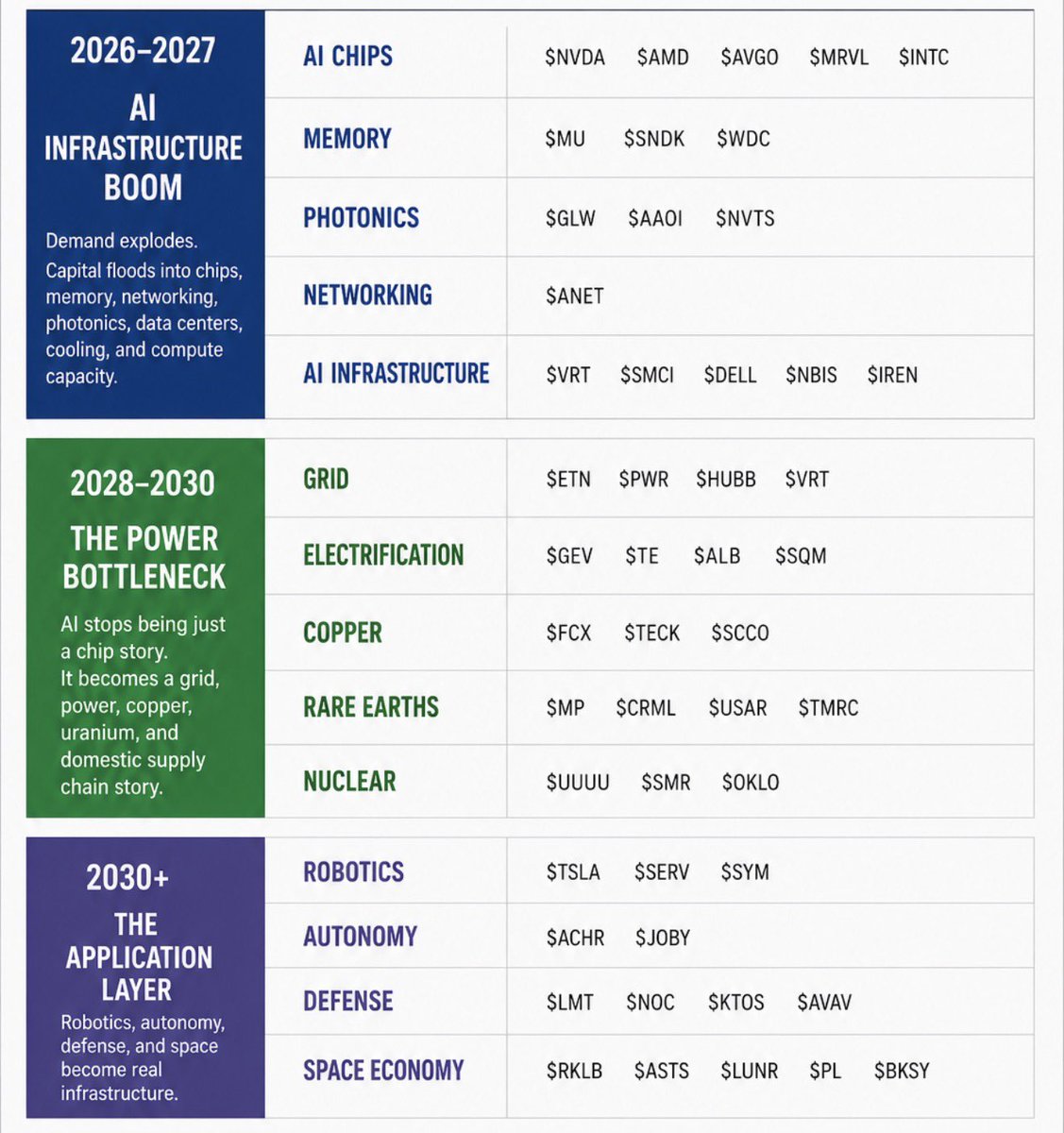
2026–2027: AI Infrastructure Boom
Money floods into chips, memory, networking, photonics, data centers, cooling, and compute capacity.
AI Chips: $NVDA $AMD $AVGO $MRVL $INTC
Memory: $MU $SNDK $WDC
Photonics: $GLW $AAOI $NVTS
AI Infrastructure: $VRT $SMCI $DELL $NBIS $IREN
2028–2030: The Power Bottleneck
It becomes a grid, power, copper, uranium, and domestic supply chain story.
Grid: $ETN $PWR $HUBB $VRT
Electrification: $GEV $TE $ALB $SQM
Copper: $FCX $TECK $SCCO
Rare Earths: $MP $CRML $USAR $TMRC
Nuclear: $UUUU $SMR $OKLO
2030+: The Application Layer
Robotics: $TSLA $SERV $SYM
Autonomy: $ACHR $JOBY
Defense: $LMT $PLTR $KTOS $AVAV
Space: $RKLB $ASTS $LUNR $PL $BKSY
I’m trying to help you position and become a MILLIONAIRE. I will make sure it happens.
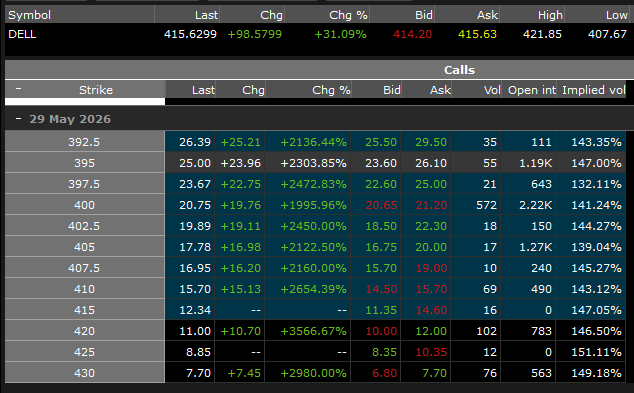
Yesterday, $DELL spiked 45% after its Q1 earnings.
Options exploded 20000%-30000% in 1 day (rare).
Next week, there's 4 earnings with exact same set-up:
1. $CRWD 📅 Earnings: June 3 (After Close)
As enterprises deploy thousands of AI agents, cloud workloads, and connected endpoints, the security perimeter expands infinitely, making Falcon's AI-driven threat detection not optional but mandatory.
No one builds a $500B AI datacenter and skimps on security. $CRWD is the toll booth on the AI buildout highway and that moat compounds with every new customer and dataset feeding its threat intelligence engine.
Target: $800 median | $700 Wedbush & Benchmark | $750 Oppenheimer
2. $AVGO 📅 Earnings: June 2 (After Close)
Custom AI chip (XPU) demand from hyperscalers accelerating every quarter. $AVGO is the silent infrastructure backbone of the AI supercycle.
While $NVDA dominates training, Broadcom owns the custom silicon layer designing the XPUs that $GOOG, $META, and Tiktok use to run inference at hyperscale, plus the networking chips that stitch datacenters together.
As hyperscalers race to reduce $NVDA dependency and build proprietary AI chips, Broadcom is the only company with the design expertise and manufacturing relationships to deliver.
Target: $500 avg | $480 Susquehanna | $560 high
3. $PANW 📅 Earnings: June 2 (After Close)
Platformization strategy converting AI security budgets into sticky, recurring revenue.
AI doesn't just create new threats it supercharges existing ones, making next-gen cybersecurity a non-negotiable line item for every enterprise on the planet.
PANW's platformization strategy is purpose-built for this world: one unified platform replacing dozens of point solutions, with AI models running across network, cloud, and endpoint security simultaneously.
Target: $320 avg | $340 high | $300 median (75 analysts)
4. $GTLB 📅 Earnings: June 2 (After Close)
AI-native DevSecOps platform controls full dev lifecycle as code volumes explode.
AI is going to produce more code in the next five years than humans wrote in the last fifty and all of it needs to be managed, secured, and deployed somewhere.
While competitors like GitHub Copilot focus on code generation, GitLab controls the entire pipeline and that becomes more valuable, not less, as AI-generated code volumes explode.
Target: $40 median | $60 high (Macquarie) | $27 low (Cantor)
$ORCL earnings is on June 10 and $MU is on June 24. These will explode like $DELL did most likely.
♻️ RESHARE this post and write 1 comment, I'll DM the best $MU contract to get for earnings right now.
$RDDT might have the best earnings and growth profile of any company below $35B market cap.
I haven’t seen numbers like this since early $PLTR $HOOD etc.
This past week, Larry Ellison said that AI is becoming commoditized because most models are being trained on almost the same exact data.
Unique data and information information is becoming a bottleneck, Reddit has 20 years of data and human conversations that have a chance to be monetized.
Not only do they have deals with OpenAI and Google, but they’re in a legal battle with Anthropic because Anthropic was scraping Reddit’s data without their permission.
If (and when imo) Reddit wins this case, it seems likely Anthropic will start to pay Reddit for their data.
OpenAI, Anthropic, and Google want Reddit’s data.
Very interesting proposition here for a profitable company growing 70%.
- $AAOI at $12B
- $SIVE at $2B
- Foci at $2.8B
- Shunsin at $2B
Usually the best risk/reward to me currently. Lot of my answers before like $AXTI already 10x’d, so different lineup this time.
$AAOI due to absurd H1 2027 revenue projections from capacity ramp, doing everything from laser fab to assembly in America.
$471M/month… that’s in 2027, the TAM increases exponentially in 2028.
$SIVE is also ramping absurdly high, 77% revenue pipeline growth of the entire company’s history to ~$799M
Primarily from photonics… in a single quarter. And they’re projecting 60% gross margins off that.
Foci - $NVDA / $TSM primarily FAU supplier and bottleneck for COUPE. Genuinely not sure how this is $2.8B.
BOM share for their passive components + FAU are massive in 2028. Just a bit early H1 2026.
Shunsin - Legit you see Foxconn get CPO/photonics related orders over and over for $NVDA and others.
Just nobody knows the packaging/testing gets done by Shunsin.
A lot of contracts are also under Shunsin’s subsidiary too.. so markets/algorithms don’t know what’s coming imo.
Runner up is $XFAB, they’ll probably be central to EU CHIPS act 2 for silicon photonics at ~$1.5B MC.
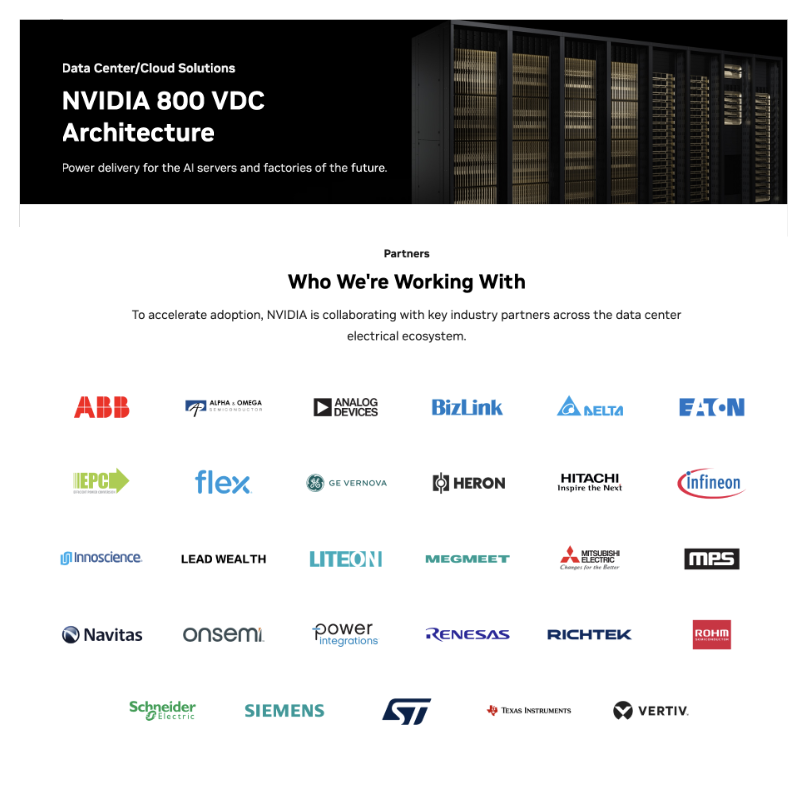
And of course SiC/GaN foundries should go brr with 800vdc push by Nvidia.
Especially if they’re the only high volume one in United States per Dpt. Of Commerce.
And it’s such a low price/book ratio so you’re kinda getting the company upside for free, while US Gov/EU Gov subsidize their capex.
What's happening in the MLCC market
First off, MLCC as a whole is a $15B market. MLCCs for servers were a $1.3B market in 2025 ($600m for AI servers, $700m for general servers)
The AI server MLCC market is growing at 80%+ CAGR, and the general server MLCC market will also accelerate due to agentic AI increasing CPU demand (around 30%-40% CAGR)
We will see negative growth in the smartphone/mobile MLCC market for at least 2026-27.
Humanoids are another future high-growth market for MLCCs
Book-to-bill ratio for most MLCC suppliers is over 1 now
Reasons for price hikes-
High Nickel & Silver are affecting all segments
There is a supply-demand mismatch in the high-end (high capacitance, high voltage) segment, which is used in autos & servers
High-end MLCC lead time is over 20 weeks
Spot/distributor prices have increased by 20%-40% for low capacitance & consumer device MLCCs due to hoarding and double booking, especially in China
OEM contracts have not seen large price hikes yet
What's happening now:
Rapid capacity expansion happening across the industry
Murata expects blended ASP prices to remain flat (ASP going down in consumer electronics, expansion in AI server market)
Tier 1 players like Murata, Taiyo Yuden, SEMCO building capacity to serve AI server MLCC market
This will create opportunities for Tier 2/3 and Chinese suppliers to expand in the mid to low end market (Macronix effect)
Future:
MLCC production equiment & raw materials suppliers will be the biggest beneficiary of this CAPEX boom
MLCC producer stocks have performed well, and it is finally spilling to raw material/equipment producers
I expect them to outperform MLCC producers now