Local politician @Scott_Wiener: I will make AI safe!
Scientists: You are literally doing the opposite
"This bill...will hurt the innovation in California, and it will result in a more dangerous rather than a safer world."
- Prof. Ion Stoica (UC Berkeley) on SB 1047
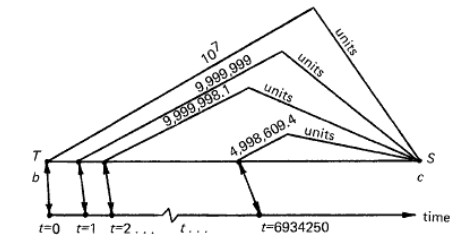
The James Webb Space Telescope has started capturing images of galaxies so far away that they are causally disconnected from the Earth — nothing done here or there could ever interact. 🧵
1/
I've thoroughly enjoyed going back through the @TheRestHistory podcast catalog — the dry British humor from @holland_tom and @dcsandbrook makes for a wonderful companion and complement to the other giants of the space (Dan Carlin, Mike Duncan, etc.)
appreciate it @cosminnegruseri 🙏. one of the best coworker and friend someone can have :). I'm new to X but will keep sharing insights here
Pinterest was really fun and I'm lucky to have had a career that compounded for 9 years. The key was a _really_ amazing team and supportive manager. while making some calls that in hindsight was right:
1⃣[2013] building vector dbs @ berkeley. and becoming one of the very few that knew how to build billion document scale embedding search @ sub 100ms latency.
2⃣[2014] all in on deep learning @ pinterest. after seeing how much better alexnet embeddings were compared with SIFT features for CV. luckily deep learning was a bigger trend than just embeddings.
3⃣[2015] studying deep learning foundations @ stanford (@karpathy 's cs231n was key). handwriting backward passes was fun
4⃣[2016] adopt pytorch in prod early. learned what worked and didn't from a team-wide training framework setup perspective. and later being _the_ expert at pinterest.
5⃣[2016-] start building embeddings for everything. Later being integrated in everything at pinterest (150+ use-cases across 10+ embedding entities)
6⃣[2018-] viewing the ideal rec system as e2e ML learned and working towards replacing heuristics to learned. (e.g. user as sequence of clustered content embeddings => e2e learned user representations in embeddings and ranking)
7⃣[2021-] commit to moving the company towards one shared pytorch-first training framework. And learning how to sell that to execs / engineers. Worked and made it much easier for research => deployment to occur as well as deep investments in ML efficiency
@danielgross Interesting, I think I had the opposite reaction — I thought the soundtrack brought the film together really well, essp. "Manhattan Project", "Meeting Kitty", and "Kitty Comes to Testify". Maybe it's because I wasn't a fan of Zimmer's Interstellar nor Dunkirk soundtracks...
Thanksgiving dinner topic with my parents: why is von Neumann absent from the Oppenheimer film, while plenty of other "cameos" make it: Gödel, Fermi, Szilard, etc. Our conclusion is that he is a future Nolan film subject.
It makes me immensely happy to see this kind of research being done in AI. Growing neural networks seems like a satisfying alternative to designing model architectures by hand.
Introducing Neural Developmental Programs (NDPs)🧬🧠Instead of neural networks with fixed architectures, we allow neural networks to grow through a dynamic self-organizing process, inspired by how biological nervous systems develop👇
PDF: https://t.co/3YiByyKwph
the most important animation of how papyrus scrolls are made, carbonized, and resurrected you will watch today
it's time to read the scrolls!
https://t.co/KYVyona2fW
@slaterstich@ledwards curiously, when Napier was working on (discovering) logarithms to simplify multiplication, I reckon he was thinking in in terms of distances, as he was trying to "fill in the gaps" in geometric series. But then it all got compressed to tables and abstracted away by Euler's time
@roydanroy If you have a pre-training image dataset (ImageNet is OK, but larger datasets optimal, weakly-supervised is OK), ViTs are certainly outperforming CNNs for embeddings and most prediction tasks
An AI license? As in, a license to do big matrix multiplications and gradient descent? Pretty disappointing that the discourse is moving there. If there's regulation, it should be addressing specific harms at the application layer, not at the modeling stack.
Modeling "agents" in A-life / neuroevolution experiments is too restrictive and feels like a dead end. My mental model is that the modeled "entity" has to be an entire environment or biome (open-ended environments) for interesting intelligent behavior to emerge.
A ridiculous open question that confounds artificial life (and trad biology): what exactly constitutes “something”, and how is it separate from the environment? A classic example is the “agents” that emerge in critical cellular automata: their agency is kind of just our opinion
I'm thrilled to announce Chroma's $18M seed round led by Quiet Capital
We are excited to continue to invest deeply in the project and make it a ubiquitous open source standard
https://t.co/6z9svklAfF
I think the most interesting neural networks in the near future will have dynamic computation graphs with highly variable latency: it shouldn't surprise us that certain queries need 1000x more computation!
Most LLM prompt hacks — eg “let’s think step by step” — are basically introducing looping to a feed forward network. Every new token generated is a loop, and the more you give the LLM space to “talk” the better it can compute because looping is essential for that.