I asked Martin Hellman, the man who invented public-key cryptography, how you find your own blind spot, the part you can't see by definition.
His answer was immediate: "Look at the thing you hate the most."
Three days at Castel Gandolfo with two dozen Nobel laureates, arguing about whether AI belongs anywhere near nuclear launch systems. I went as a builder, not a diplomat.
The fear in that room was not a robot deciding to kill us. It was speed. A nuclear crisis is a decision made under a clock, and human beings have sat in that window before, looked at what the instruments were screaming, and decided not to believe them. They were right. Remove the pause and you remove the place where doubt lives.
https://t.co/02SNhG6eIL
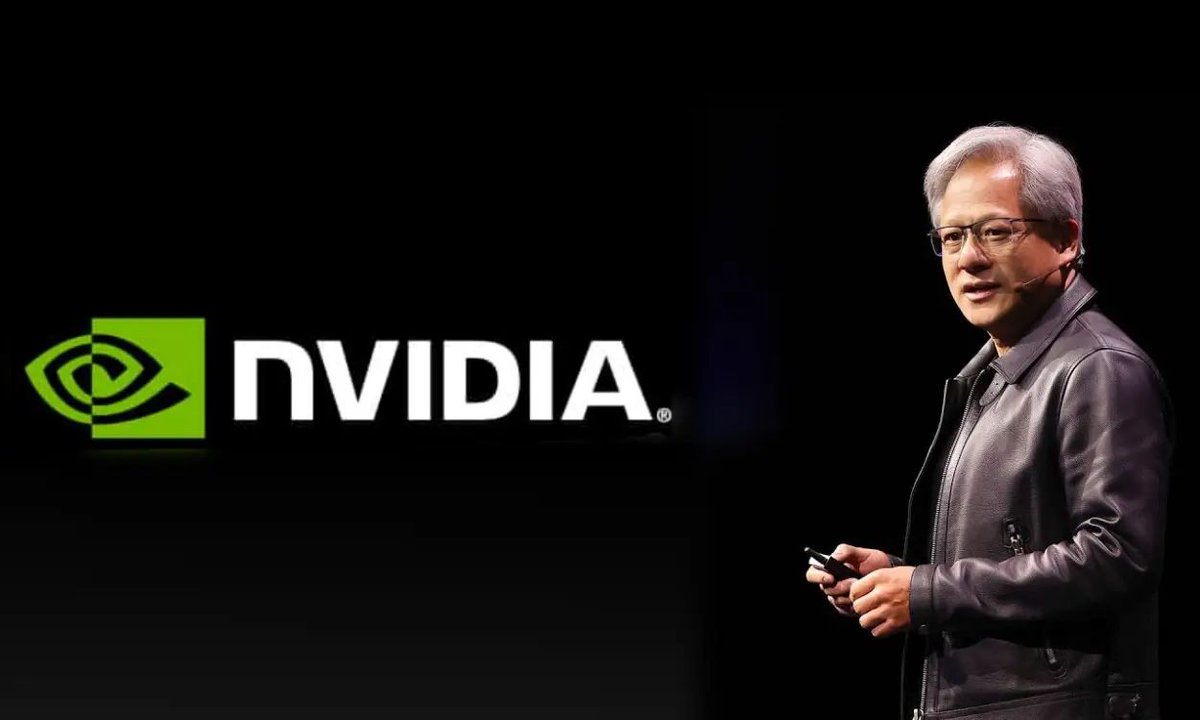
🇺🇸 Jensen Huang is out and NVIDIA employees are being urged to strike.
AI entrepreneur Brivael Le Pogam believes the board moved way too fast.
Huang spent 33 years building NVIDIA, only to resign today, four days after admitting to an affair.
The problem? The investigation isn't even finished. No leak of company secrets has been established.
And Le Pogam thinks NVIDIA workers can do something about it.
Remember Sam Altman? In 2023, over 700 OpenAI employees threatened to quit after he was fired. Five days later, he was back.
Now Le Pogam wants NVIDIA engineers to stop working until the investigation is complete and refuse to accept a successor before the facts are clear.
Because to him, a founder isn't just another executive you can replace. He's the soul of the company.
Source: @brivael / Writer: Daniyal
Jensen Huang and the Nvidia board just made a massive mistake.
He should not have resigned.
The board should have taken the time to conduct a thorough investigation, consult with shareholders, and carefully evaluate the long-term implications of this decision.
There is no clear replacement for Jensen Huang, and we believe his departure will ultimately be a net negative for Nvidia, $NVDA, and its shareholders.
This will go down as the most costly mistake of the AI Revolution.
Building AI agents on Mintlayer? 🤖⚡
Check out the official guide on setting up and integrating AI agents with the Mintlayer ecosystem:
👉 https://t.co/ppdQBfZ0wx
Everything you need to streamline development and connect your tools is right there.
Dive in and start building! 🚀
@eurofounder Even if there were spies, the GDPR prohibits the transmission of sensitive data to non-compliant jurisdictions. That provides law-level protection for our secrets!
JUST IN: Delaware proposes creating a new type of company operated entirely by AI, with human owners shielded from liability for many of the AI's actions.
"This is the real fault line of our time. Not left vs right. Builders vs administrators of envy. A system that selects people who have never created anything and gives them authority over the people who create everything. A political class that turns resentment into legislation and calls it "safety.""
A congresswoman just told Elon Musk "See you soon."
So let's compare résumés. Because that's really what this is about.
Elon Musk moved to North America at 17. He built Zip2, then PayPal, then put almost everything he had into two companies every expert said would die: a rocket company and an electric car company. In 2008 both nearly did. He went all in anyway.
Today SpaceX lands orbital boosters and flies them again like airliners, something NASA, Russia, Europe and China considered impossible or uneconomical for 60 years. It launches most of the mass sent to orbit by all of humanity combined. It's the reason America stopped renting seats on Russian rockets to reach its own space station. Starlink brings internet to Ukrainian trenches, Amazon villages and disaster zones. Tesla forced every carmaker on Earth to go electric. Neuralink is letting paralyzed people control computers with their minds.
And to the "billionaires don't pay their fair share" crowd: in 2021 he paid over $11 billion in taxes. Widely reported as the largest individual tax bill in American history. One man. One year.
His stated goal is to make life multiplanetary so that consciousness doesn't die on a single rock. You can think that's crazy. He has delivered on enough "crazy" that betting against him has become a bad habit.
Now Yassamin Ansari.
Stanford, international relations. Intern for Nancy Pelosi. Climate advisor at the UN. Phoenix City Council. Won her congressional primary by 39 votes. A whole career spent inside institutions that run on other people's money. Never built a product. Never had a customer. Never faced a market.
The day after her party won Congress, what's her top priority for day one? Cheaper housing? Energy? Competing with China?
No. Pause advanced AI. Ban "superintelligence."
The bill she backs freezes any model trained above 10^25 operations until a brand-new cabinet-level Department of AI gets staffed and writes its rules. Violators face up to 20 years in prison.
Let that sink in. The industry that, by one Oxford Economics estimate, drives about a third of recent US growth, frozen by people who have never trained a model, while waiting for a federal agency that doesn't exist yet. Beijing couldn't have written it better.
And yes, Elon has warned about AI risk for a decade. That's exactly the point. His answer to risk was to build, compete and put better systems in the arena. Hers is a committee, a freeze and prison terms. One looks at a hard problem and builds. The other looks at a hard problem and asks for a permit to stop everyone else.
Then the cherry on top: her reply to the man who built the rockets is "See you soon." Coming from someone whose only real power is the ability to stop others from building.
This is the real fault line of our time. Not left vs right. Builders vs administrators of envy. A system that selects people who have never created anything and gives them authority over the people who create everything. A political class that turns resentment into legislation and calls it "safety."
I'm French. I've watched this movie. Europe wrote the world's most ambitious AI rulebook. Now count how many of the world's top AI models are European.
I genuinely hope humanity grows out of this model. A civilization where its most mediocre managers summon its most extraordinary builders with a "see you soon" is a civilization working against itself.
"Brave New World" is right. Except the dystopia isn't the machine. It's the committee.
That's not the right direction. artificial super intelligence means also new medicine, solution to problems, new science. Why there is no longer a way to see balanced opinions?
After DOGE, Elon came to a conclusion most people missed.
He tried to reform the state from the inside. He failed. And he said it plainly: the government can't fix its own deficit. Nobody in power actually wants to cut. The machine protects itself.
So he drew the only logical conclusion. If the state can't be reformed, there are only two ways this ends.
Either global bankruptcy. Debt keeps compounding, interest payments eat the budget, and the system collapses under its own weight.
Or robots. AI and robotics grow the economy so fast that the debt becomes manageable, and abundance makes the old fights over scarcity irrelevant.
Here's the part almost nobody sees.
For two centuries, capitalism has had a marketing problem. Its gains are real but slow and invisible. 2% growth a year doesn't feel like anything. Your life gets better over 30 years and you never connect it to the system that did it. Meanwhile, the left's promises feel immediate and concrete: a check, a subsidy, a benefit. That's why the left wins on promises even when it can't deliver them. Capitalism produces the wealth, socialism takes the credit.
Robots break that asymmetry.
When productivity doubles in a few years instead of a few decades, people will see it. Things get cheaper, services get better, opportunities appear, in real time. For the first time in history, people will connect capitalism and their rising standard of living directly, almost instantly. The causal chain becomes visible.
And that changes everything politically.
So there are two scenarios.
Scenario one: we stay in the current inertia. No breakthrough, or a breakthrough we regulate to death. The debt wins. Living standards stagnate, then fall. A frustrated electorate turns to whoever promises the most, and that pushes toward a hard collectivist left. But collectivism fails, as it always does. And when it fails, the most organized, most disciplined collectivist force left standing isn't the old left. It's radical Islamism. Bankruptcy, then communism, then something worse.
Scenario two: robots win. Abundance arrives, and it arrives visibly. The link between free enterprise and prosperity becomes obvious to everyone. And this is the key point: it becomes obvious to everyone, including the minorities the left was counting on. Because their long-term incentive is the same as everyone else's. A kid in the suburbs gains infinitely more from a booming, abundant West than from a bankrupt state handing out promises it can't keep. Abundance is the most powerful integration machine ever built.
That's the Western renaissance.
The West doesn't need to win the culture war by arguing. It needs to win it by delivering. And for the first time, it has the technology to deliver fast enough for people to notice.
The race isn't left vs right anymore. It's robots vs bankruptcy.
@eurofounder@EU_Commission Come to San Marino! Tiny, old, and somehow more GDPR-compliant than half of Brussels. We’ve got our own data protection authority that actually fines people. You’ll feel safer here than in the EU. Coffee’s on me if you make it.
Today, Andorra 🇦🇩 and San Marino 🇸🇲 officially sign the Association Agreement with the EU.
Gaining access to the EU Single Market will create new opportunities for people, trade, and economic stability.
More ⬇️ https://t.co/nsILlCPrfd
This illustrates the point I’ve been making about the limits of centralized approaches to SI safety in cyber.
OpenCode (and earlier Hugging Face) hit the same wall mid-attack: frontier models refused to analyze the very exploits needed for defense because the payloads tripped safety filters. The guardrails backfired.
Meanwhile, the attackers found a way around restrictions to access advanced capabilities. This is not surprising. Chinese models are only about 6–9 months behind the American frontier in cyber. Obviously the U.S. has no jurisdiction over them.
The only durable response is decentralized: make powerful models available so defenders can build and run their own cyber defenses. The only solution to SI-powered cyberattacks is SI-powered cyber defense.
People criticizing Tesla for missed timelines have never done engineering at the frontier. Most of it is solving complex problems you can’t easily predict. It takes time and effort to build something real. but when you do, it flies.
Europe lags behind the US and China in high-impact innovation (especially in digital technology, software, and AI) not because of a shortage of talent or funding.
The gap is largely the result decades of policy choices that favor heavy regulation, market fragmentation, and risk aversion over the conditions that allow new ideas to flourish and scale quickly and freely.
Satoshi choice of secp256k1 mostly comes from the fear of a NSA backdoor on NIST elliptic curve.
Antropic disproved the backdoor:
https://t.co/6COcNfiQ68