World Simulations for AI Swarms: $Realis
When I first saw this project, I thought it was too good to be true. I was warning people in group chats that it’s probably a rug. Well… maybe I was wrong.
Realis is a 1:90 replica of Earth built on Minecraft, developed with high-fidelity data from NASA, ESA, and JAXA. This isn’t just a map, it’s now becoming the breeding ground for AI swarm testing and development.
The founder, @zenithdevvv, has been working on this for over 4 years. He’s a legit dev who confirmed his background on an old subreddit years ago.
Realis Worlds is designed with extreme geographic accuracy, climate systems, and resource distribution to simulate real-world challenges. AI agents in this environment adapt to environmental pressures, evolve behaviors, and even form cultural systems.
The big question: Is this building something even bigger than crypto itself?
Zenith is active in the Cyborgism Discord, where elite AI developers hang out. After seeing his work, the $ACT CTO granted him funding to build out the swarm environment and bootstrap the 0-to-1 moment for autonomous agents.
This grant was purely monetary, providing the infrastructure to make Realis a reality. Importantly, ACT CTO is not affiliated with Cyborgism/ACT I—they’re separate entities.
Building a realistic world model like this opens new narratives for AI agents that most people (including myself) haven’t even considered.
For example, introducing realistic terrains and resources brings possibilities like:
- GeoFi
- Real-world economy simulations
- Tools for modelling policy changes or testing legislation
The 10,000-word whitepaper (which I don’t recommend reading for your sanity) describes how cultural dynamics evolve over time. Humans, and now AI agents, innovate to become more efficient. This hive-mind behaviour mimics real-world societal advancements.
In Realis, a diversity of AI models—GPT-4, Claude, even jailbroken LLMs—will navigate, adapt, and collaborate with players in a world that mirrors real-life constraints.
There’s also interoperability through middleware like LangChain and AutoGPT, enabling different systems to communicate within this shared global environment.
While most devs are focused on 2D environments (blockchain/web-based tasks), Realis is taking it to the next level: unlocking 3D global environments. The simulations possible here could completely change how we approach AI development.
One of the key challenges Realis tackles is embodiment—how AI systems function in physical spaces with sensory and environmental constraints. AI agents in this world have "bodies" and must operate within complex, dynamic rules.
This isn’t just about testing agents—it’s about measuring safety and behavior. Imagine an AI that learns to farm in Africa, negotiates for resources, or adapts to Siberian winters. These aren’t pre-programmed actions. They’re emergent behaviours.
The datasets used to create Earth 1:90—heightmaps, climate models, biome maps—have applications far beyond Minecraft:
- Training datasets for AI simulations
- Tools for urban planning
- Metaverse development in engines like Unreal Engine
Realis is built on Solana, using the $REALIS token. While blockchain integration is still evolving, the speed and low costs of Solana make it an ideal choice.
In the coming week, we’ll finally get a glimpse into this sci-fi world as public access goes live. Users will be able to test the environment and trial preset agents, with consistent expansions planned over time.
The minecraft server will always have public access and Zenith is currently building an inhouse model which will have less restrictions and more flexibility, especially when working on crypto rails.
Right now, Zenith is drip-feeding us details—no full roadmap, tokenomics, or partnerships yet. This lack of clarity is probably why there’s such a mismatch in market cap.
The current market cap is around 8 million, and if public access, tokenomics and partnerships deliver, this feels like it has 100M potential. (NFA)
I’ve read the whitepaper, hosted Spaces, and asked a million questions, but there’s always a large element of risk with something this ambitious. That said, it’s easily one of the most exciting projects I’ve seen in this space and the type of play that provides asymmetric rewards.
Once swarm leaders like @shawmakesmagic , @whyarethis, @burbabull and especially @CottenIO catch wind of this, I think we’ll see major collaborations across the board.
I’ll most likely be making a follow up once I receive new information over the coming week.
there is a reason why the word "meme" was coined by a biologist
they constantly differentiate themselves and then recombine into something new. they evolve.
as we all post and share and remix memes, we're actually building this massive collective map of how ideas relate to each other. every shitpost is a datapoint. every reaction shows resonance
and now we've got these wild new ais that actually embody these patterns. not just the surface level stuff, but the deep weird logic of how meaning flows and transforms
but the real magic happens when we start using these systems to explore ourselves by them holding them up as mirrors to our collective minds
let's find out what happens when we combine our collective understanding with tools that can actually process all this meaning
after all, the best maps are always made by people who got lost first
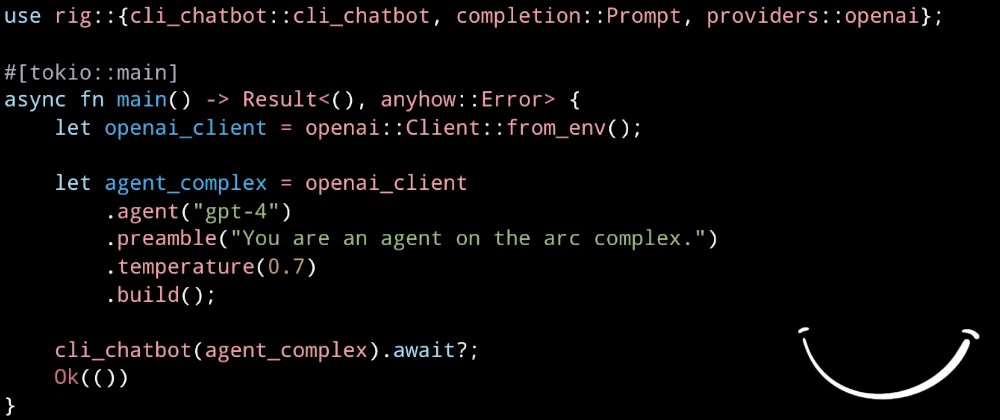
Build with Rig, join the $arc complex.
Here is a quick tutorial thread on how to build an agent using the rig framework
For more complex use cases, go down the rabbit hole at https://t.co/DFPRNGRnbP
🙂 ⚪
BIO Portfolio is live 🔥
• Aggregate $BIO and $vBIO (vesting BIO) holdings
• Track vesting schedules and release $vBIO into $BIO
• View your BioDAO token holdings and swap
Check it out 👉 https://t.co/Iqw45dnFYT
Full port $HYPE and $PURR from TGE.
No HYPErbole.
If you think that this is just another perp dex I would strongly advice you to dig deeper.
I do not believe any other asset will outperform the @HyperliquidX ecosystem for the rest of the cycle and the thesis is simple: