We have a family of black bears living in the swamp behind our 8 acre home in w. MA.
They travel along the same route every day.
They know who has bird feeders, who leaves chicken bones in their compost, where the blueberries and raspberries are growing...
They're well fed and happy
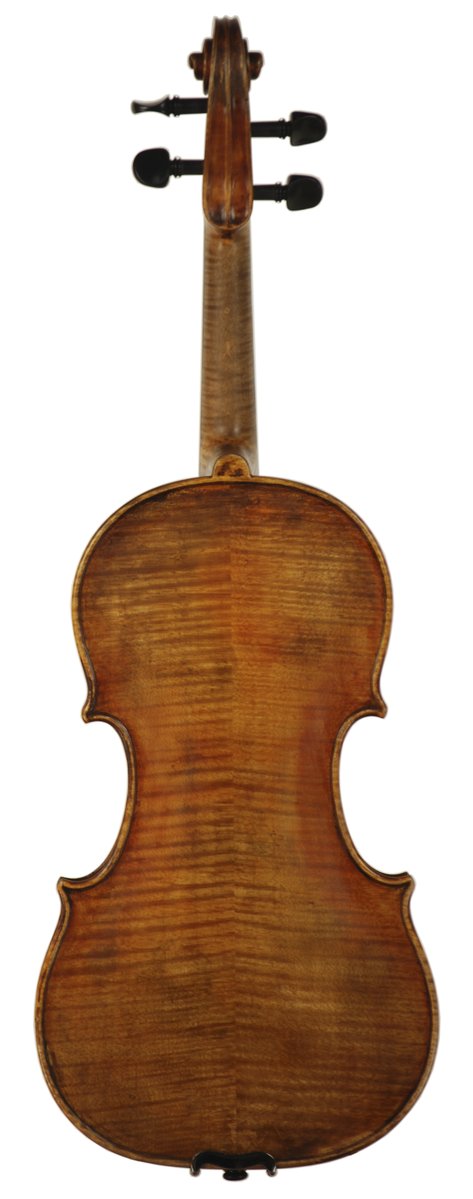
Giuseppe Martino (also spelled Giuseppi), born in Messina, Sicily, and active until his death in Boston in 1970, represents a vital link in the 20th-century Boston lutherie tradition. An Italian immigrant who arrived in the United States in 1915, Martino blended Old World craftsmanship with the practical demands of American musical life. Primarily known as a repairer and restorer, he produced over 100 violins, along with a smaller number of violas and cellos, during a long career that spanned independent work and employment at prominent Boston and New York shops. His instruments, often labeled from Boston, continue to appear in auctions and collections, valued for their solid construction and tonal reliability.
Martino emigrated from Messina, Sicily, in 1915, reportedly to avoid military conscription in Italy during World War I. He settled in Boston and began his American career working for the influential Ole H. Bryant, whose workshop at 240 Huntington Avenue served as a training ground for many makers. Early instruments he produced while employed by Bryant sometimes carried Bryant's label, reflecting the collaborative nature of such shops.
From 1919, Martino worked for the Elias Howe Company. He established himself independently from 1921 to 1928, during which time he produced many of his personally labeled instruments. He then joined the Musicians Supply Company (1928–1935), followed by Peate’s Music House in Ithaca, New York (1935–1940), a brief stint with Chittalini in New York City (1940), and wartime work in a Boston shipyard around 1942. He returned to full-time lutherie in Boston, working at the Boston String Instrument Company from 1958 until his death in 1970.
Though chiefly occupied with repair and restoration work—which sustained him and connected him to the city’s orchestras and musicians—Martino’s output of new instruments was significant. He favored the Stradivari model, producing violins with clean lines, shaded varnish (often golden to reddish-brown), and typical dimensions (e.g., back lengths around 35.4–35.7 cm). Examples from the 1920s, such as those dated 1922, 1924, 1926, and 1927, show two-piece maple backs with flame, spruce tops, and a warm, golden-red varnish that has aged gracefully. These instruments are praised for their playability and have sold at auction in the mid-to-high thousands, reflecting steady demand for well-made American violins of the period.
Martino’s career mirrors the realities of many 20th-century American luthiers: balancing making with the more reliable income from repairs, moving between shops, and adapting to economic and wartime conditions. His connection to the Bryant workshop ties him directly to the White family lineage we’ve explored, sustaining Boston’s reputation as a center for both new making and expert conservation. In an era when imported German and Italian instruments flooded the market, makers like Martino kept local craftsmanship alive and supported the city’s vibrant musical community.
Today, Martino violins are appreciated by players and collectors as solid examples of early 20th-century American work—reliable, tonally clear, and historically resonant. They serve as tangible links to the immigrant-driven energy that enriched Boston lutherie
Ole H. Bryant: The American Vuillaume and Pillar of Early 20th-Century Boston Lutherie
Ole H. Bryant (1873–1943) stands as one of the most influential figures in New England violin making during the early 20th century. Nicknamed “the American Vuillaume” for his refined craftsmanship, exceptional varnish, and dedication to the art, Bryant bridged the 19th-century White family tradition with the professionalized Boston scene that would later support institutions like the North Bennet Street School. His workshop at 240 Huntington Avenue became a hub for making, repair, teaching, and service to major orchestras, sustaining and elevating American lutherie at a time when imported instruments dominated the market.
Born on October 16, 1873, in Woodstock, New Hampshire, to Charles Henry Bryant and Azelia Page Bryant, Ole grew up in a family connected to the craft. He began his career early, active from around 1885. He moved with his father to Wolfeboro, New Hampshire, and in 1894 relocated to Boston, where he worked as a repairer for the Elias Howe Company. From 1905 to 1908, he collaborated closely with his uncle, Edmund F. Bryant (a direct pupil of Ira Johnson White), absorbing the foundational Boston techniques rooted in classical Italian models. He later worked with the prominent Oliver Ditson firm until 1910 before establishing his independent shop.
Bryant is credited with personally making approximately 162 violins, along with three violas and two cellos. His instruments were modeled primarily after Guarneri del Gesù and Stradivari, featuring clean workmanship, elegant outlines, and his signature amber oil varnish of exceptional quality and beauty. Many examples display a rich golden-orange to reddish-brown hue that has aged gracefully. He employed a substantial staff of craftsmen, but each instrument was individually signed and finished under his supervision. Assistants’ instruments sometimes carried their own labels with the notation “under the instruction of O. H. Bryant,” reflecting a structured teaching environment within the workshop.
Beyond new making, Bryant earned renown as a connoisseur and repair expert. He performed extensive work for the Boston Symphony Orchestra and was highly regarded by professional musicians. His shop became a center for both creation and conservation of fine instruments. He also taught violin making at summer schools in Boston and his beloved Wolfeboro, near Lake Winnipesaukee—programs open to amateurs and aspiring luthiers that helped spread knowledge of the craft in an era before formal schools like North Bennet Street were fully established.
Bryant died on January 13, 1943, at his home in Dorchester, Massachusetts, after nearly 50 years in the trade. He was survived by his wife, Mary L. Bryant, and family members who carried forward the musical legacy. His instruments continue to appear in auctions and dealer inventories (such as those from Tarisio and Reuning & Son), where they are appreciated for their tonal qualities—clear, powerful, and musically versatile—as well as their historical significance within the Boston school.
Ole H. Bryant’s true legacy lies in his role as a mentor and institution-builder. His workshop trained many of the finest talents of 20th-century Boston lutherie, helping professionalize American violin making and ensuring the continuity of the craft from the White brothers through the mid-20th century. For those exploring New England violin history—especially anyone with a Boston-regraduated instrument like a J. Bonaparte Squier from 1906—Bryant represents the vibrant ecosystem of making, teaching, and repair that thrived in the city’s musical heart.
His instruments and story remind us that American violin making was never merely imitation; it was a living tradition of skill, innovation in varnish and teaching, and service to the art of music. In the Pioneer Valley or Boston today, the echoes of Ole H. Bryant’s workbench still resonate.
Discovering Boston’s Hidden Violin Masters: Edmund F. Bryant (1855–1940)
In the lineage of New England lutherie, Edmund Franklin Bryant stands as a vital bridge between 19th-century pioneers and the vibrant early 20th-century Boston scene. A violinist, maker, and teacher, Bryant carried forward the White family tradition that helped establish Boston as a center for American violin making.
Born in 1855, Bryant studied directly under Ira Johnson White, one of Boston’s foundational master makers. This apprenticeship rooted him in classical Italian modeling (Stradivari, Amati, Guarneri influences) blended with practical Yankee craftsmanship. He worked in Boston shops, including collaborations with family members like George E. Bryant (e.g., a documented 1904 violin).
From 1905–1908, Edmund partnered with and taught his nephew Ole H. Bryant (1873–1943), who later earned the nickname “the American Vuillaume” for his exceptional work and teaching. After that, Edmund continued independently until around 1938, producing a focused but high-quality output: at least four violins, three violas, and two cellos.
His instruments are prized for clean construction, beautiful varnish, and strong, clear tone suited to both students and professionals. A standout 1912 violin by Edmund F. Bryant resides in the Smithsonian’s National Museum of American History. Another fine 1911 example (with bows and case) has appeared at auction, showcasing spruce tops with fine grain and flamed maple backs.
Bryant’s legacy lives on through his influence on Ole H. Bryant’s shop (240 Huntington Ave.) and the broader Boston lutherie community that fed into institutions like the North Bennet Street School. In an era of imported German instruments and local repair hubs—like the one that touched my own 1906 J. Bonaparte Squier regraduation—makers like Edmund kept the craft alive with dedication and skill.
Next time you see a well-made Boston violin from the early 1900s, remember the Bryant name. American violin history is richer than many realize—and it sings from workshops right here in New England.
#ViolinMakers #BostonHistory #Lutherie #AmericanViolins #MusicHeritage
Calvin Baker: A Pillar of Late 19th-Century Boston Lutherie
In the rich tapestry of American violin making, few figures embody the transition from the foundational White family tradition to a more industrialized yet artisanal era as clearly as Calvin Baker. Flourishing roughly from 1862 to 1915 in Boston, Massachusetts, Baker was a prolific craftsman whose work bridged apprenticeship under the White brothers, commercial repair roles, and independent production. His instruments, numbering over 500 by some accounts, represent a distinctly American chapter in violin making—one rooted in European models but executed with Yankee practicality and local materials.
Baker’s career began in the shadow of the White family, particularly Asa Warren White. He apprenticed with Asa after the dissolution of the White Brothers partnership, absorbing the techniques and aesthetic preferences of Boston’s earliest master makers. This lineage traced back to John White and his sons Ira and Asa, who had established Boston as a center for violin making in the 19th century. Baker’s early exposure to this tradition equipped him with skills in modeling after classic Italian instruments, especially Stradivari and Amati patterns, while also allowing for personal innovations such as a broader model with longer corners.
After his apprenticeship, Baker took on significant roles in Boston’s musical instrument ecosystem. He became chief repairer at the prominent firm Thompson & Odell, a position that honed his expertise in restoration and likely exposed him to a wide array of imported and domestic instruments. He also worked with Orin Weeman, another White apprentice, before striking out on his own. Baker established independent shops in Braintree and Weymouth, Massachusetts, and briefly partnered with H.E. Abbott to form Baker & Abbott in Boston. These ventures reflect the entrepreneurial spirit common among 19th-century American luthiers, who often balanced making, repairing, and dealing to sustain their craft.
Baker’s instruments stand out for their thoughtful construction and use of local resources. Many feature American timbers, and specific examples incorporate salvaged historical wood. A notable 1881 violin, for instance, was made from material recovered from the old Marlboro Hotel (built 1837) in Boston, showcasing a resourceful approach that added historical character. His varnishes varied, often shaded from red to golden brown, and many instruments bear his distinctive brand “C. BAKER” under the button, with purfling interrupted around the stamp—a practical and identifying mark. Labels frequently note Boston origins, with some highlighting special woods, such as a 1896 example using top wood from the Old City Hall, aged 190 years.
Though not as famous today as some European masters or later American innovators like Joseph Curtin, Baker was respected in his time as one of the better Boston makers. His output supported the growing demand for playable, affordable instruments amid Boston’s vibrant musical scene, which included orchestras, conservatories, and amateur players. Auction records and dealer listings today show his violins commanding respectable prices for American work of the period, valued for their volume, clarity, and bold, bright tone.
Baker’s legacy lies in his role as a bridge figure. He helped professionalize and sustain the Boston tradition established by the Whites, training indirectly through his productivity and repair work, which fed into the 20th-century scene that included Ole H. Bryant and eventually institutions like the North Bennet Street School. In an era when many American makers were self-taught or part-time woodworkers, Baker exemplified dedicated, full-time lutherie grounded in apprenticeship and community.
For enthusiasts of New England violin history—like those exploring the lineage connected to regraduated German imports or Boston teaching workshops—Calvin Baker offers a compelling study of continuity and adaptation. His instruments, scattered in collections and played by musicians today, continue to sing with the quiet resilience of 19th-century American craftsmanship
The White family forms the core of early Boston-area violin making.
John White (c. 1785–active early 1800s) laid the foundation in western Massachusetts (Barre), teaching his sons. His work is extremely rare with few surviving examples or public photos.
Ira Johnson White (1813–1895) and Asa Warren White (1826–1893) became the first recognized "Boston master makers." They transitioned from self-taught rural roots to a professional workshop at addresses like 86 Tremont Street. They produced hundreds of instruments, often modeled on Italian classics (especially after Ira studied Stradivari/Guarneri examples), won medals at exhibitions, and influenced generations through apprentices.
Key characteristics of White family instruments: Golden to reddish-brown varnish, solid craftsmanship blending European models with American practicality, often with handwritten or printed labels noting Boston addresses and dates.
John White (born ~1785, active from ~1802 in Massachusetts) is widely regarded as the earliest documented violin maker established in Massachusetts and the Boston area’s broader tradition.
John began making violins around 1802 (some sources note establishment in Massachusetts that year). He settled in Barre, MA (Worcester County, western Massachusetts) by 1806, where he worked as a violin maker, producing a small output (roughly a dozen instruments documented). He was a skilled woodworker and violinist, and he taught the craft to his sons.
His sons, particularly Ira Johnson White (1813–1895) and Asa Warren White (1826–1893), became the most prominent early "Boston master makers." The family moved to Boston around 1829–1830 after Ira’s early success impressed their father. Ira made his first notable instruments in the 1830s (e.g., a 1835 violin now in the Boston MFA collection), and the brothers partnered as White Brothers in Boston from the 1840s–1860s, producing many instruments and shaping New England lutherie. John White is often described as the foundational figure and teacher for this lineage.
This places the White family at the root of organized violin making in the region, transitioning from rural, self-taught work to a more established Boston-based trade in the 19th century. Earlier colonial-era makers in New England (if any) were extremely rare and mostly focused on bass viols rather than violins; true violin making was uncommon before the early 1800s.
Sources like Thomas Wenberg’s The Violin Makers of the United States and archival references (e.g., Tarisio/Cozio, Amati) consistently highlight John White as the pioneer in Massachusetts.
Images of John White violins are extremely rare—public photographs are not readily available, as noted in major archives like Tarisio (only about a dozen instruments documented total, with no photos in their public records).
His surviving work is scarce and mostly in private collections or museums. The White family tradition (John and especially his sons Ira Johnson White and Asa Warren White) represents the foundational early Boston-area making style, so here are representative examples from the family:
Inspiring!
I was moved to write this (it needs to be set to music, I might do that later):
From Scotland’s shores to Indiana’s fields,
William Maclure with hammer and maps,
He read the stones where the old earth yields,
Laid down the lines for future paths.
Oh, Maclure, father of the rock and soil,
Boatload of Knowledge on the river wide,
For working men and the dreams they toil,
In New Harmony, let the truth abide.
He walked the Wabash with Owen’s call,
Brought teachers, scientists, the seeking kind,
Geology’s map on the nation’s wall,
Libraries rising for the common mind.
No kings or preachers to cloud the way,
Just reason, learning, the land’s own lore,
He sowed the seeds that still light today,
On eight acres or the open shore.
Though utopias fade like morning mist,
His legacy holds in the stones we turn,
Surveyor’s eye on what the earth has kissed,
For generations yet to learn.
"Sí Bheag, Sí Mhór" (also spelled Sidh Beag agus Sidh Mhor, Sheebeg Sheemore, etc.) is one of the most famous and earliest compositions by the blind Irish harper and composer Turlough O'Carolan (1670–1738). It is an instrumental air, often played as a waltz in modern times, and is said to be his first attempt at composition.
The Legend Behind the Tune
The title translates to "Little Fairy Hill and Big Fairy Hill" (from Irish Sí meaning fairy mound or fairy hill). It refers to two actual hills (or ranges of hills) near Lough Scur (Loch an Scuir) in County Leitrim, Ireland, close to the home of O'Carolan's early patron, Squire George Reynolds of Letterfain.
According to local folklore that Reynolds shared with the young O'Carolan:
The two hills were the homes (or "seats") of rival groups of fairies (the Sídh or fairy folk) who were often at odds.
A great battle took place between the fairies of Sí Bheag (the smaller hill) and Sí Mhór (the larger hill).
In some versions of the legend, the legendary hero Fionn mac Cumhaill (Finn McCool) and his band of warriors, the Fianna, fought on the side of one of the hills (often associated with Sí Mhór) and were defeated.
Ancient mounds or ruins on the hills were said to mark the sites of fairy palaces or tombs where fallen heroes were entombed after the conflict.
O'Carolan composed the piece around age 21 (c. 1691) during his stay with Reynolds, who encouraged him to try composing after noting that the young harper's playing skills were still developing. Reynolds suggested immortalizing one of these fairy battles in music. The resulting air captures the spirit of the story—its beauty, melancholy, and sense of ancient conflict—without words.
The tune has no original lyrics by O'Carolan (it's purely instrumental), though some later folk adaptations or songs have been set to it.
It became widely popular in the 20th century through recordings like Planxty's version.
Variations exist in the exact location details (some sources mention sites in Co. Meath instead), but the Leitrim/Lough Scur connection tied to Reynolds is the most consistent tradition.
It's a quintessential O'Carolan piece: elegant, evocative, and deeply rooted in Irish mythology and landscape.