We've hired humans with many years of experience in validating top networks and crafting blockchain tools.
While we bark, they ensure the nodes run smoothly.
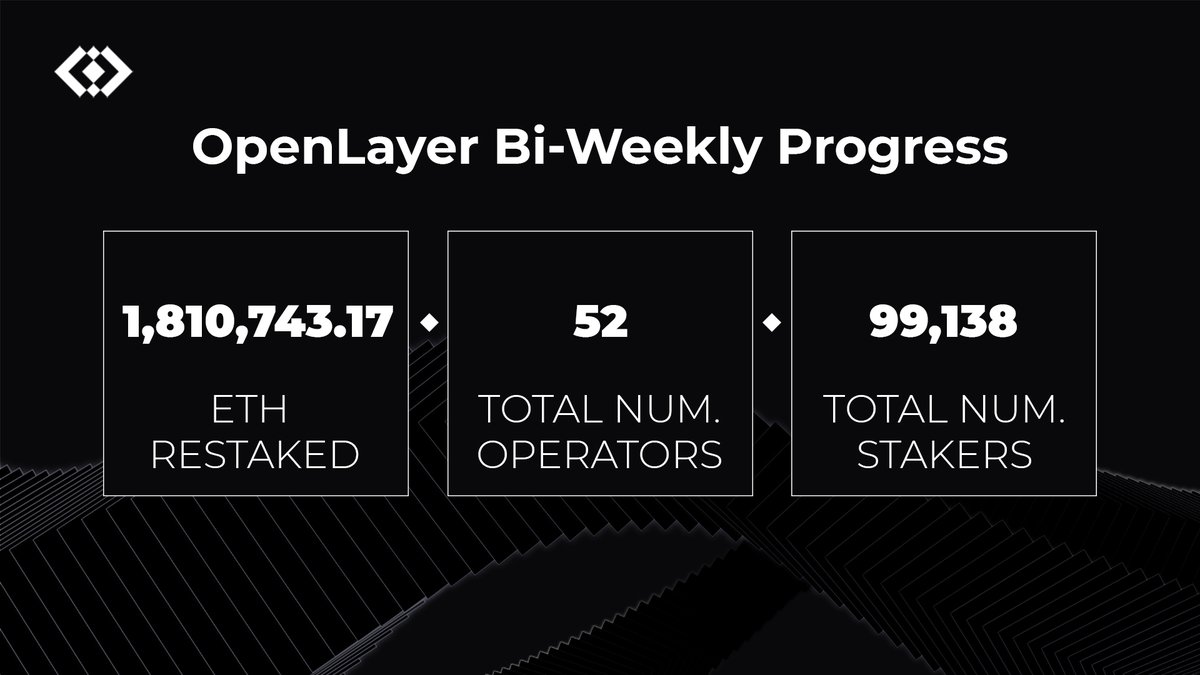
📢 OpenLayer Bi-Weekly Progress Update!
We are pleased to share our latest stats with our amazing community.
🙏 A huge THANK YOU to our incredible community - we couldn’t have achieved this without your support. Community is everything to us.
🤝 Sharing our progress means sharing YOUR progress too.
The EigenDA team is excited to announce support for Optimism's new Alt-DA interface for OP Stack.
Starting today, production OP Stack chains can seamlessly leverage EigenDA’s industry-leading throughput, restaked Ethereum security, and cost efficiency.
New Infinite Layers 🎧
Fluent: The first blended execution network featuring @0xdinoeggs and @dmitry123 of @fluentxyz.
Today June 6 9:00am PT 🕘
Live streamed on @X or join the discussion here: https://t.co/cpR6a4LQ6L
1/ 📢 Excited to announce the MVP launch for Rewards on testnet at https://t.co/e4qfzyc8sN!
AVS’s can now start integrating Rewards functionality to incentivize Restakers and Node Operators.
Read the full details in this blog post: https://t.co/xrPE5brbn4
EIGEN FAQ
Since announcing the EIGEN token, we've received many community questions. Check out our FAQ to find answers to the most frequently asked questions 👇
https://t.co/BeQ0kFOmM9
—
Let’s dive into a few questions here:
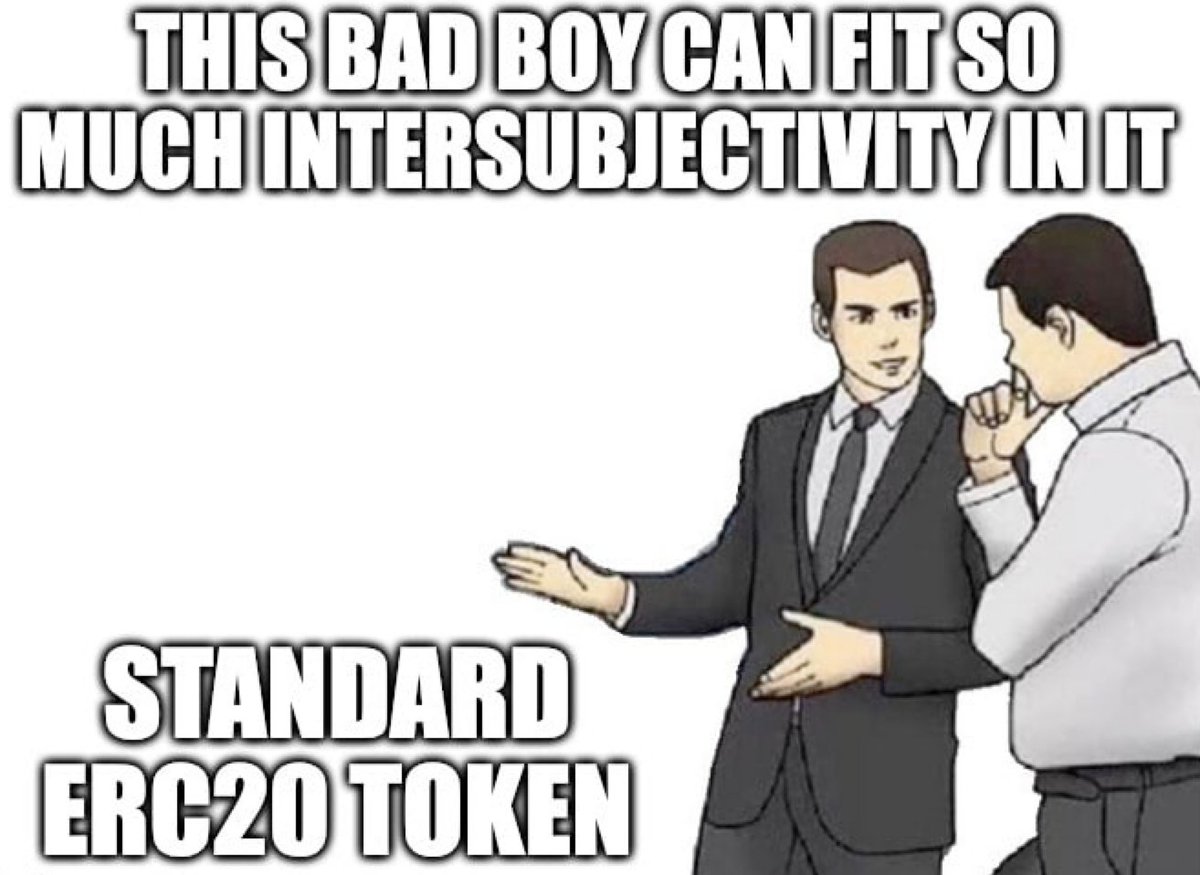
1/ What are intersubjectively attributable faults?
These faults are identifiable by broad consensus among external observers about their occurrence, even outside the blockchain.
—
Unlike objectively attributable faults, intersubjectively attributable faults might not be provable mathematically and cryptographically onchain.
—
Example: Is data available in the Data Availability layer at a specific time? This can be externally observed through data availability sampling, but data unavailability cannot be proven within a smart contract.
—
2/ How does EIGEN staking complement ETH restaking?
In many AVS protocols, safety is ensured through objective slashing, while liveness and censorship resistance, which used to rely on stake decentralization assumptions, can now be secured through EIGEN staking.
—
Services using ETH restaking for safety and EIGEN staking for liveness can split fees between the two quorums, optimizing resource allocation.
—
In core Ethereum ecosystem services, dual staking with ETH and EIGEN enhances security. ETH restaking can foster decentralization and collusion resistance, securing majority trust from Ethereum participants, while EIGEN staking ensures cryptoeconomic security via token forking.
—
EigenLayer enables AVSs to integrate two modalities: objective staking from ETH and intersubjective staking from EIGEN. Additionally, AVSs will be able to leverage their native tokens to enhance validation through support from an aligned community of AVS token stakers.
—
3/ How does EIGEN staking accelerate innovation in AVSs with objectively attributable faults?
By leveraging the EIGEN token for cryptoeconomic security with intersubjective slashing, EIGEN staking allows AVSs to operate effectively in scenarios where writing on-chain fraud proofs is infeasible or complex. This approach enhances security while reducing technical complexity.
—
How does EIGEN staking provide security throughout the lifecycle of a new objective AVS?
EIGEN staking provides crucial security during the bootstrapping phase, enabling a faster deployment of the MVP. As the system matures and faults become more objectively identifiable, the AVS can transition to utilizing ETH restaking.
—
4/ What are some examples of AVS that could be secured using the EIGEN token?
• Censorship Resistance: Ensure propagated transactions are included in the ledger, with off-chain detection of censorship leading to slashing.
• Ledger Growth: Maintain continuous addition of transactions. Halted execution is an off-chain fault leading to slashing.
• Data Availability: Guarantee accessible data across the network, with off-chain fraud detection allowing for slashing of non-compliant providers.
• Oracles: Provide reliable real-world data, with off-chain detection of discrepancies leading to slashing of malicious nodes.
—
Application Use Cases: These foundational modules can be combined to create more complex modules, which can then be utilized in various AVSs. For example:
• New Chains: Building new blockchain networks with customizable security and features for different modules.
• Prediction Markets: Develop decentralized prediction markets using intersubjective staking for reliable oracles.
• AI Systems: Ensure the validity and security of AI training, benchmarking, and inference with intersubjective staking.
• Intents and MEV: Manage transaction ordering and prevent malicious MEV activities with innovative order matching engines.
AND many more
—
Note that currently EIGEN is currently stakeable, but full functionality mentioned above will be enabled once the token becomes transferable.
Discover the full vision and details of EIGEN in the whitepaper and blog post:
Whitepaper: https://t.co/ZcfELU2etq
Blog: https://t.co/lfrkSsYmfE
Check out the new https://t.co/bczIKiNI0H website: currently 17 rollups launched or in development, 3 rollup stacks supported, and 6 RaaS providers.
EigenDA is the best option for developers that want fast, cheap, onchain transactions, and network effects across all Eigen AVSs.
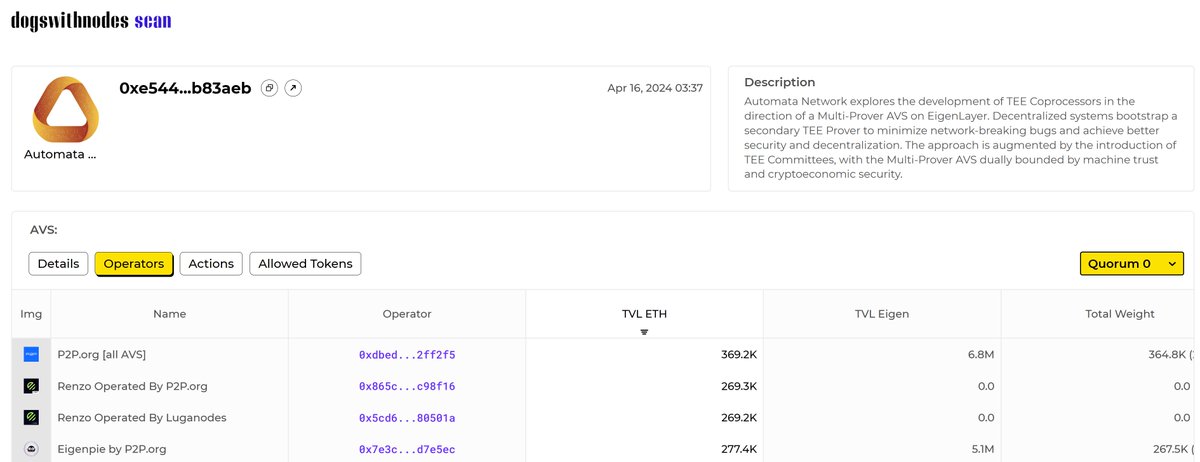
Dogs with nodes has joined @AutomataNetwork Multi-Prover AVS as an Operator on EigenLayer Mainnet!
Automata extends machine trust to Ethereum with TEE Coprocessors. Its Multi-Prover AVS enable rollup systems to bootstrap decentralized TEE Committees and harden security.