1/9 Glad to announce that the #CAPTURE study manuscript has been published today in @Annals_Oncology
Would you like to learn more about it? Just follow this #tweetorial thread 👇
https://t.co/bKnMtKeTs3
@Dolmos77 insightful discussant & first I’ve seen do a pooled analysis of 2 prior oral pres 👏. The point on earlier + earlier exposure to PARPi & risk of long-term tox is real when treated for yrs in #mHSPC. Needs to be looked at with earlier #PSMA RLT too?
#ASCO26@OncoAlert
Great discussion from @Dolmos77 on covering a complex area and a mix of clinical and basic data on biology and clinical benefit of PARP inhibitors! Bottom line is that biomarkers remain important and AR suppression probably doesn’t mimic DDR deficiency #ASCO26@ASCO
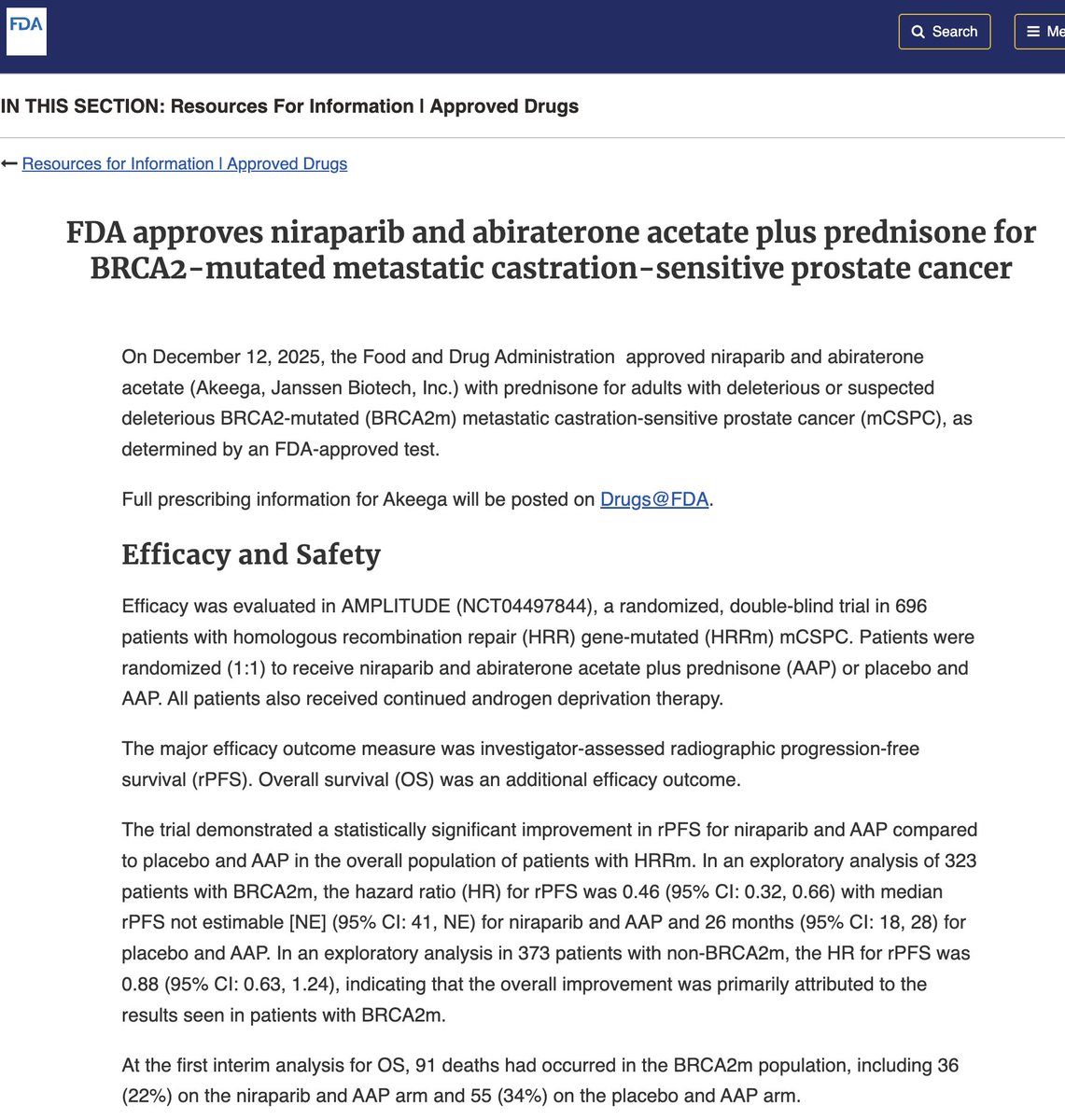
#ASCO26 | Nuevos datos de #TALAPRO3 (publicado en @NEJM) y #ZZFIRST refuerzan el papel de la medicina de precisión en cáncer de próstata metastásico.
Liderado por @quimmateo, el papel Grupo de Cáncer de Próstata del #VHIO fue clave en ambos estudios, incluyendo el liderazgo del ensayo académico ZZFIRST, promovido por @wearemedisr
➡️ https://t.co/Co1XsSgM7b
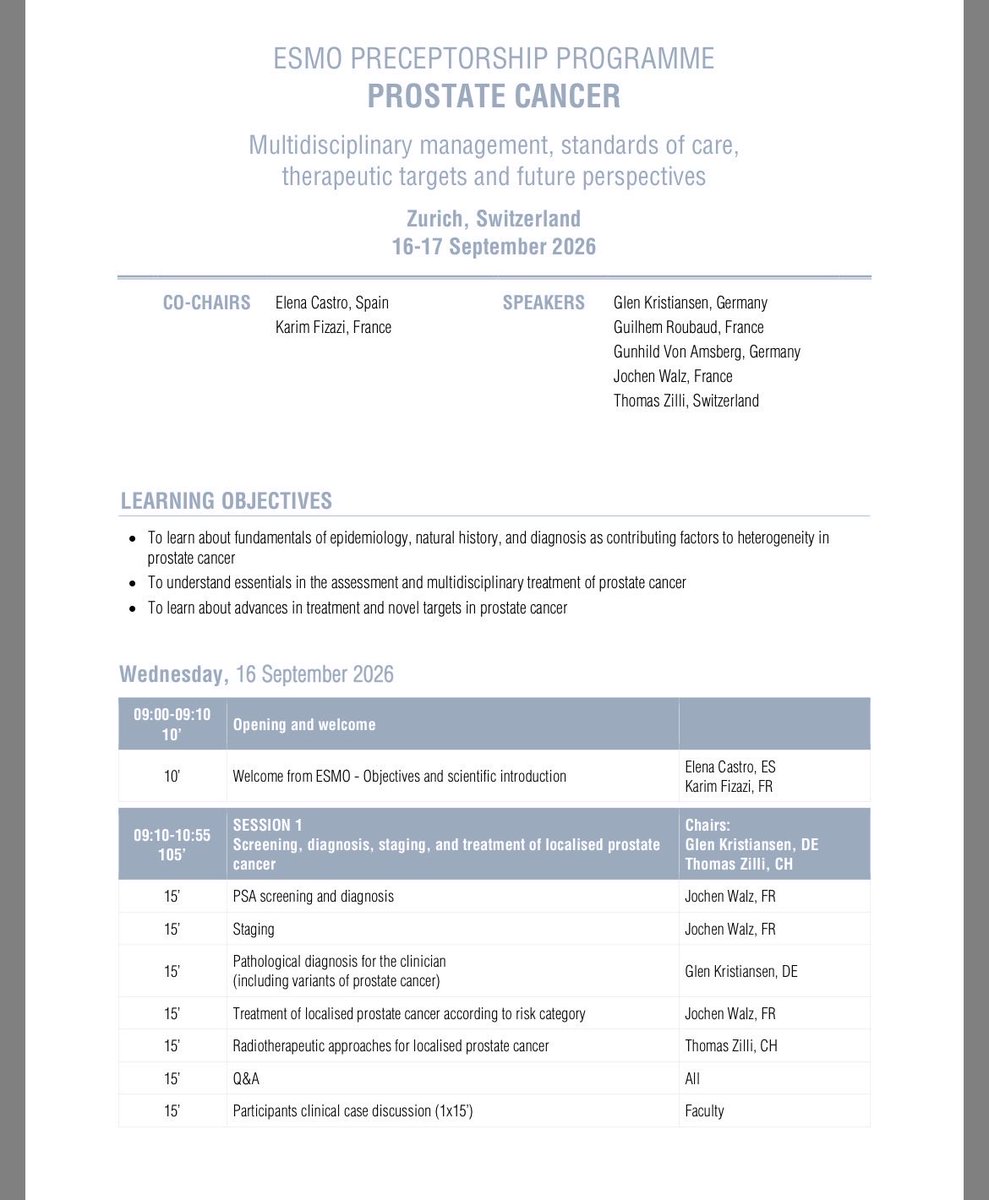
📣Applications to the 2026 ESMO preceptorship on prostate cancer are open until 22 June‼️
Join us in Zurich 16-17 Sept. Complementary registration and accommodation are provided. @myESMO
https://t.co/2PBpmvYMCy
👏👏 Excellent talk by a great friend and colleague @DrFelixGuerrero against the BCG combos in HR-NMIBC with low benefit adding ICIs and probably the future are intravesical local strategy @OncoAlert@ASCOPres#ASCOGU26
I have a lot of respect for Dr. Barbacid. But he is not even close to curing cancer.
He worked on KRAS in mice and I worked on KRAS in human ... so I understand what he did and the relevance but also the complexity.
KRAS mutations is one way to develop cancer.
There are mutations in TP53, CDKN2A/p16, and SMAD4/DPC4, along with DNA damage repair genes like BRCA1/2 and ATM. Alternative drivers BRAF, ALK, NRG1, RET, and ROS1, ERBB2 and more. They cause cancer too.
That means cancer can manifest in many ways and cancer cannot be treated with one treatment option.
We also have similar treatment in clinical trials for KRAS.
Also translation from mouse to human is a huge issue with this study ...
He used mice and mice are more resilient to cancer - Most mice in labs get cancer because we inject stuff into it to induce cancer or because they are transgenics. They do not naturally get cancer (most of the time).
This is different to humans. There are differences between induced tumors and naturally formed tumors and how they respond to treatment.
Mice live for 2 years and humans on average over 70 years.
The tumor has more time to cook inside a human creating more complexity. For example what I encountered in human studies is a phenomenon called cancer heterogeneity. One mutation creates other mutations. So even within the same person there can be two tumors that has different mutation complexities. But this takes time.
Mice do not live long enough to experience this.
So ... here is my estimation for the study based on complexities surrounding this research.
He needs to first validate efficacy and toxicity (usually human cell lines, organoids, cats and dog studies where ethics really slow down things and make all studies more expensive)
Once that has been validated this can be taken into a small human trial ... first to see if it works ... and then later to see toxicity and efficacy etc. Then if all that works ... three phases of rigorous clinical trials.
Billions ..
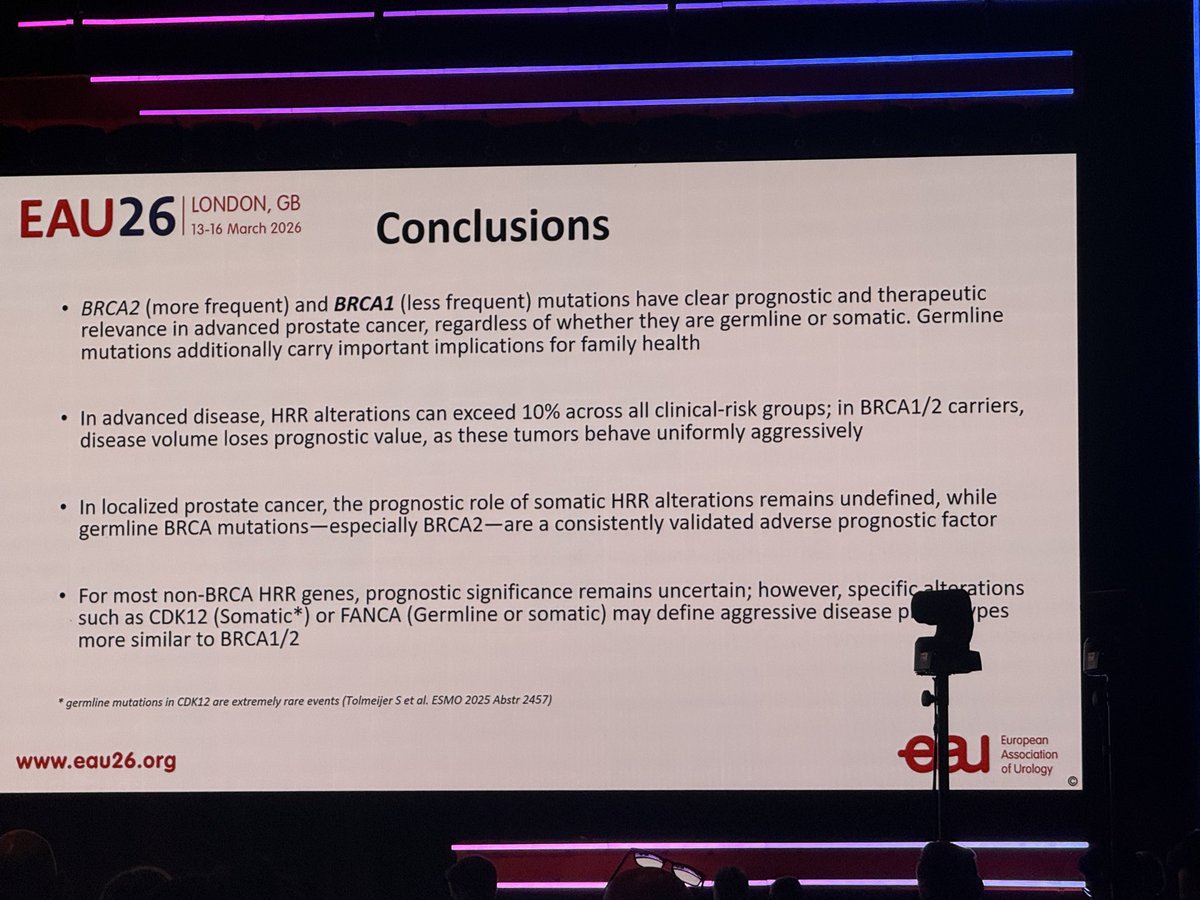
@DrRishabhOnco@weoncologists Germline frequency depends a lot on population genetics, the existence or not of founder mutations increases these rates, i.e. series with the highest rates of gBRCA2 are always enriched with founder mutations