NEW: Satoshi Nakamoto's earliest collaborator Martii 'Sirius' Malmi just released their entire email history.
At 120 pages, its the most significant addition to the archives of #Bitcoin's unknown inventor.
Here are the most important new findings ✨
Two months ago, I created a System Design repo on Github, and I'm excited to share that it recently reached over 3000 stars.
Thanks to everyone who has starred or forked the repository!
The repository contains a collection of resources to study:
- Around 40 System Design concepts
- Around 50 System Design problems categorized by difficulty level
My goal with this repo is to curate the best resources to learn System Design and prepare for interviews.
If you find it valuable, consider giving it a star.
Check it out here: https://t.co/pkVpi6LxSV
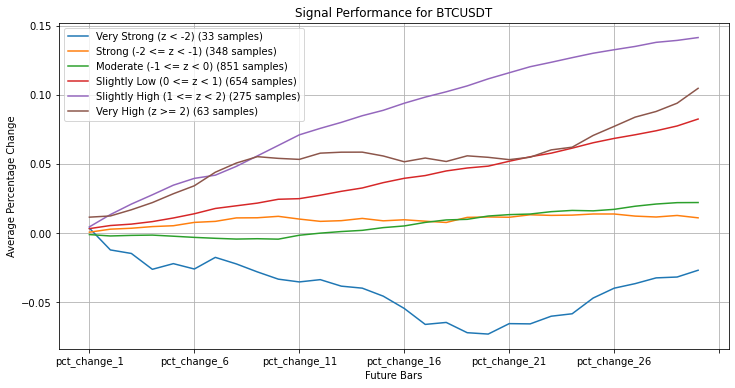
Optimizing Trading Systems while Navigating Overfitting and Ensuring Robustness
For every optimization there's a cost.
You must consider the upside of those optimizations and understand if it's worth to incur in that risk.
There's no free lunch.
Let's get into it below.
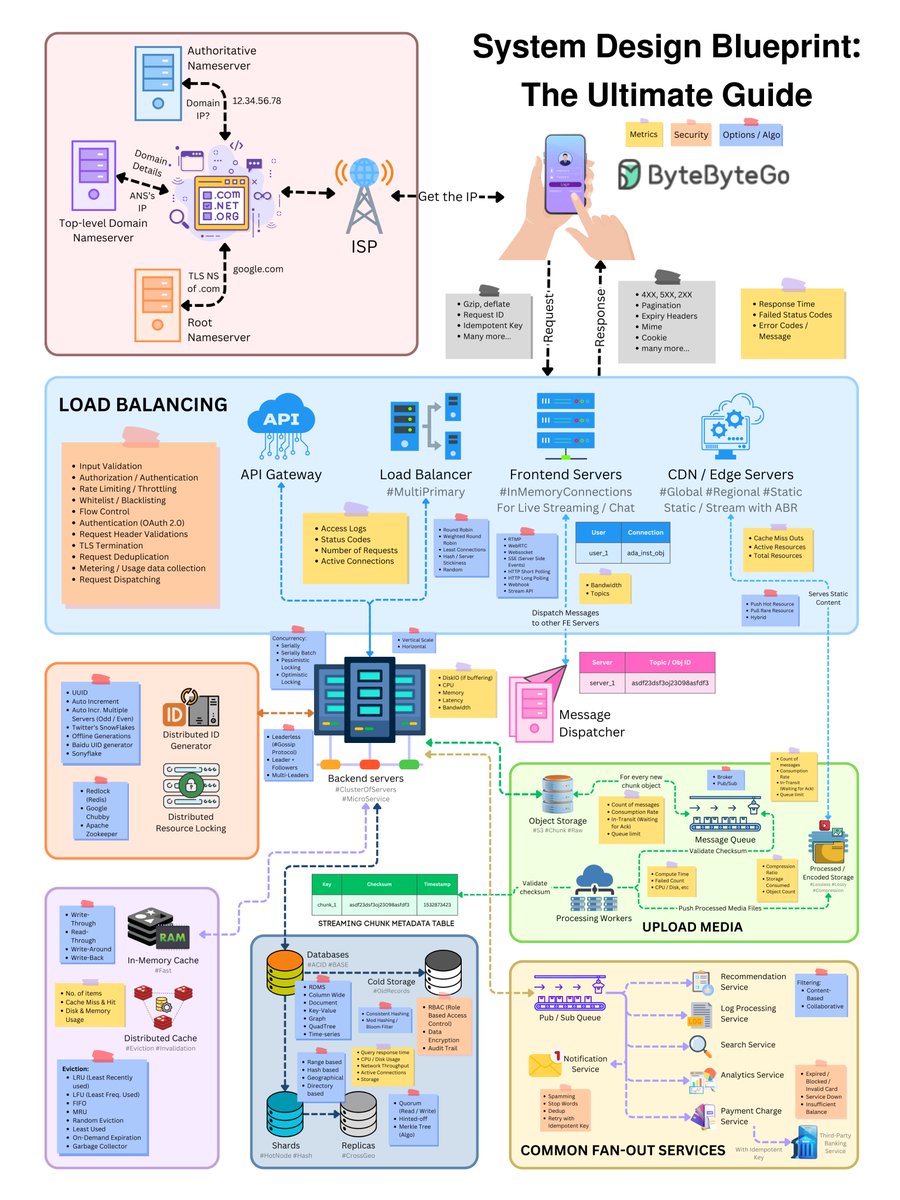
System Design Blueprint: The Ultimate Guide.
The method to download the high-resolution PDF is available at the end.
We've created a template to tackle various system design problems in interviews.
Hope this checklist is useful to guide your discussions during the interview process.
This briefly touches on the following discussion points:
- Load Balancing
- API Gateway
- Communication Protocols
- Content Delivery Network (CDN)
- Database
- Cache
- Message Queue
- Unique ID Generation
- Scalability
- Availability
- Performance
- Security
- Fault Tolerance and Resilience
- And more
Subscribe to our newsletter to download the high-resolution system design blueprint. After signing up, find the download link on the success page: https://t.co/uc5M7CdXXC
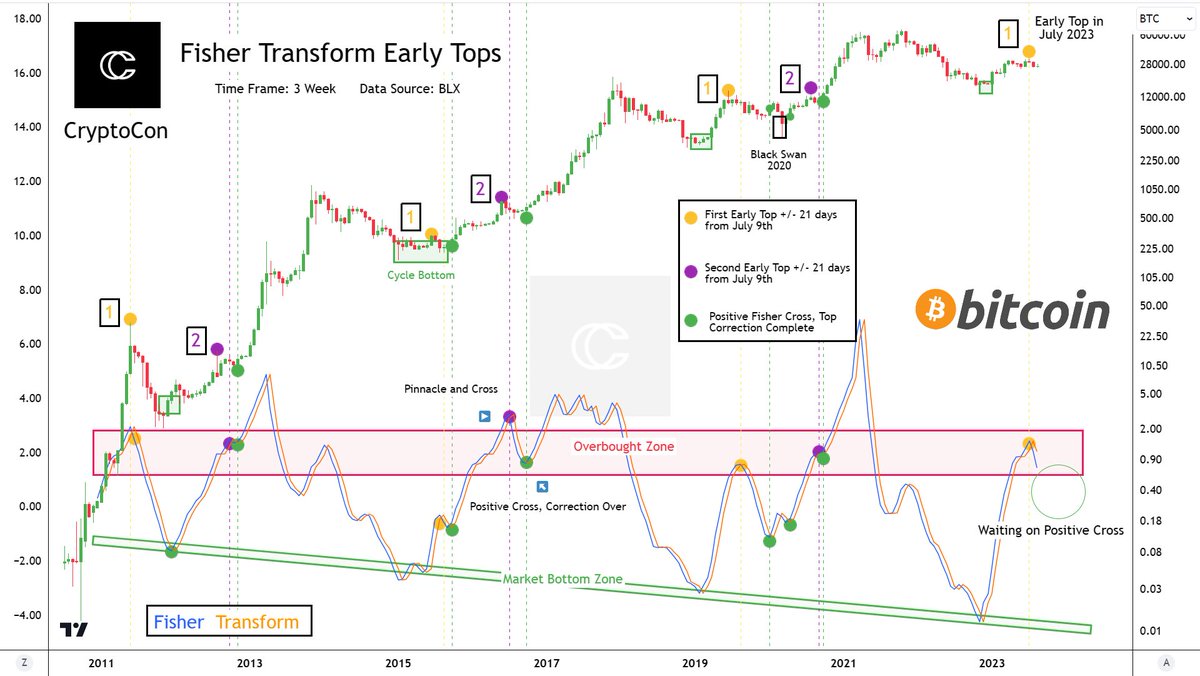
The overbought zone on the 2 Week Fisher Transform has caught 6/7 early #Bitcoin tops, including the most recent one in July.
Bitcoin has very obviously bottomed with the large swing to the Market Bottom Zone at 15.5k.
Now we are waiting on the next signal to confirm, a positive Fisher Transform Cross. This will tell us the early top correction is over.
It will take some time, but not nearly as long as last cycle with the massive black swan in middle.
It's time to be patient!
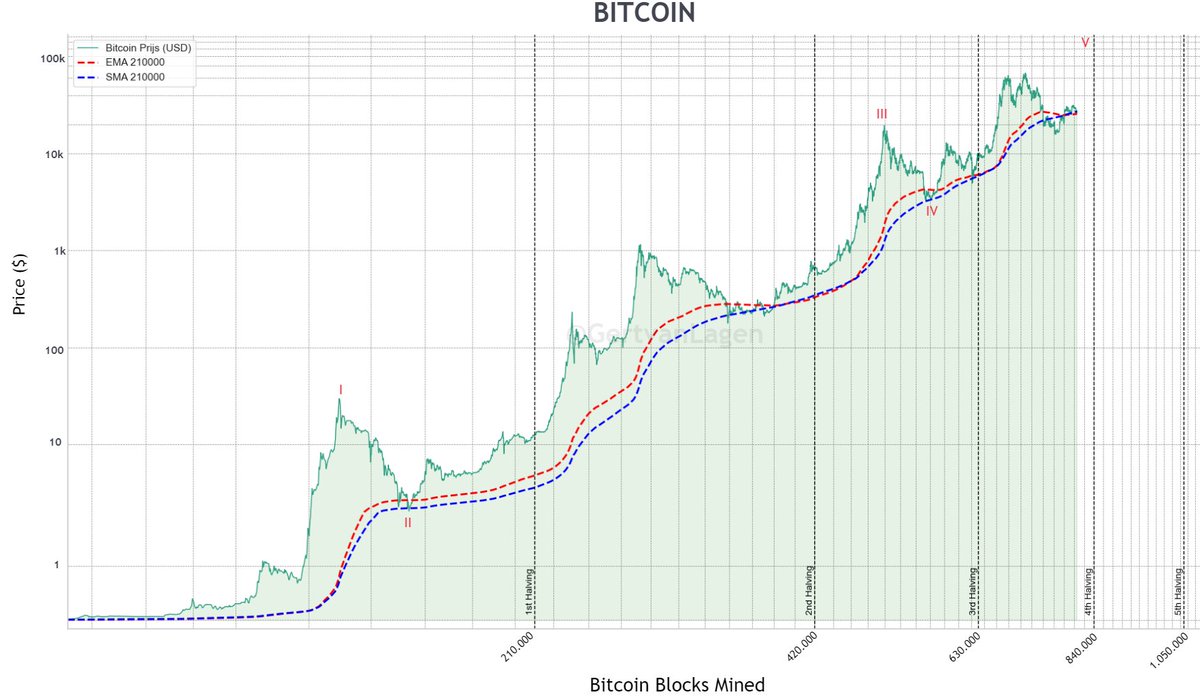
Hold the halving MAs - Strong bottom potential!
Bitcoin is testing the 210.000 blocks EMA at $25.5k for support (red dashed line).
This is a very strong support zone historically and closely aligns with each bear market bottom.
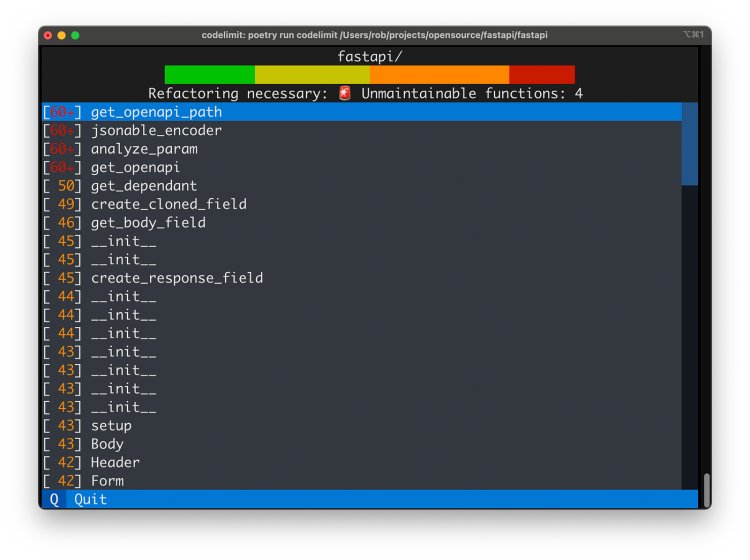
When to refactor your code?
Check out this new #codequality tool and excellent write up on our blog by @robvanderleek 💪 😍 🎉
https://t.co/dsovMAAAQz
Give it a try and let us know how it works for you ... 🙏
#python#cleancode#refactoring
20 ChatGPT prompts that use next-level mental models to help you make strategic business decisions:
1. Second-Order Thinking
Prompt: "Apply Second-Order Thinking to assess [my business decision]. Consider not only the immediate consequences but also the second-level consequences that may arise."
2. Pareto Principle (80/20 Rule)
Prompt: "Use the Pareto Principle to evaluate [my business decision]. Focus on the 20% of factors that could be responsible for 80% of the results."
3. First Principle Thinking
Prompt: "Use First Principle Thinking to evaluate [my business decision]. Rethink the problem from the ground up and separate the underlying facts from the assumptions made based on them."
4. Regret Minimization Framework
Prompt: "Use the Regret Minimization Framework to assess [my business decision]. Think long-term and weigh the emotional impact to minimize future regret."
5. Opportunity Costs
Prompt: "Assess [my business decision] by considering the Opportunity Costs. Think about the costs arising from choosing this option against every other option available."
6. The Sunk Cost Fallacy
Prompt: "Assess [my business decision] while avoiding the Sunk Cost Fallacy. Evaluate the decision based on future value, not past costs."
7. Occam's Razor
Prompt: "Apply Occam's Razor to assess [my business decision]. Choose the less complex explanation or option that satisfies the conditions without unnecessary multiplication."
8. Systems Thinking
Prompt: "Use Systems Thinking to assess [my business decision]. View the problem as part of an interconnected system and understand how variables influence one another."
9. Inversion
Prompt: "Utilize Inversion to analyze [my business decision]. Look at the problem from the endpoint instead of the starting point and ask: 'What must I avoid?' rather than 'What do I need to do?'"
10. Leverage
Prompt: "Analyze [my business decision] through the lens of Leverage. Determine how the right lever can amplify my efforts and lead to significant outcomes."
11. Circle of Competence
Prompt: "Apply the Circle of Competence to analyze [my business decision]. Make sure the decision aligns with [my areas of expertise]. Straying outside of my circle can lead to poor decisions."
12. Law of Diminishing Returns
Prompt: "Evaluate [my business decision] using the Law of Diminishing Returns. Consider the turning point where additional investments offer less value and costs may rise."
13. Niches
Prompt: "Analyze [my business decision] focusing on Niches. Determine how specialization within a niche can lead to expertise and success in this context."
14. Margin of Safety
Prompt: "Use the Margin of Safety to evaluate [my business decision]. Assume that your assumptions might be wrong and plan with a safety margin to mitigate risks."
15. Hanlon's Razor
Prompt: "Evaluate [my business decision] through Hanlon's Razor. Don't assume ill intent when mistakes can be explained by ignorance or error."
16. Randomness
Prompt: "Evaluate [my business decision] with the concept of Randomness in mind. Remember that not everything follows cause-effect relationships and some outcomes may be random."
17. Critical Mass
Prompt: "Analyze [my business decision] by considering Critical Mass. Recognize if you are at a point where momentum may become self-sustaining."
18. The Halo Effect
Prompt: "Evaluate [my business decision] while considering the Halo Effect. Recognize how impressions in one area can bias judgment in others."
19. Feedback Loops
Prompt: "Analyze [my business decision] through the understanding of Feedback Loops. Consider how actions and reactions within the system can influence subsequent decisions."
20. Scarcity and Abundance Mindset
Prompt: "Evaluate [my business decision] considering both Scarcity and Abundance Mindset. Reflect on how your mindset can influence the decision-making process."
All algorithms implemented in Python 🤯
This library has 163k stars on GitHub!
It includes a ton of algorithms from arithmetic analysis to blockchain to data structures.
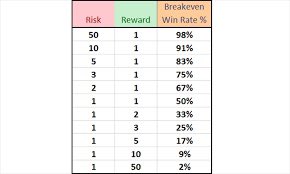
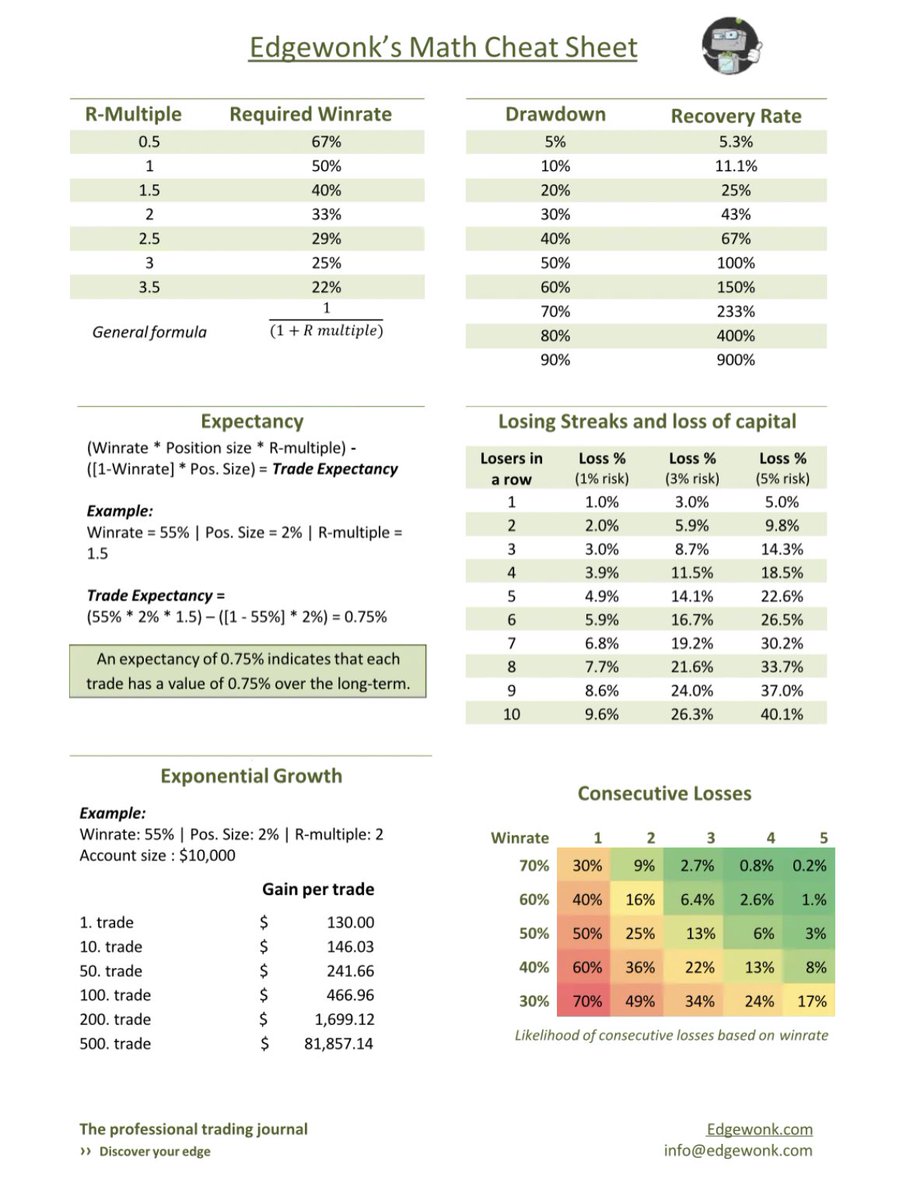
Trade Like A Casino, Not A Gambler
Anyone who has driven down the strip in Las Vegas can tell who is rolling in the money – the Casinos! Why do gamblers keep going back, despite losing the majority of the time? A combination of misplaced hope, fantasies about the Big Win, promising themselves they will be able to walk away at will, and probably the inability to calculate probabilities.
These symptoms are often shared by new traders who have lost money in the stock market, when visions of effortlessly trading their way to prosperity clouded their judgement.
In gambling there are only two sides; you are a either gambler, or you are the house. The gamblers have the long term odds stacked against them. The casino has stacked the odds against the gambler, and the more they risk, the greater the chance that they will leave empty-handed.
The book featured in this blog post explains the winning principles of trading by using the casino paradigm. Profitable traders operate like casinos, with the odds in their favor over the long term. They have learned to trade with historically, back-tested trading systems that put the odds on their side. Much like casino operators, they risk small amounts of equity per trade (around 1% – 2% of their accounts), so no one trade can hurt them.
Most unseasoned traders behave like gamblers. They bet on stocks so haphazardly that they have a 50-50 shot like a roulette wheel – red or black. Many times, these traders hurt themselves by buying into the market in a downtrend and shorting into a rally, believing that they can pick the bottom or top. Some new traders would love to have a 50/50 win ratio, because most don’t get that lucky.
New traders often have no concept of risk management, and like gamblers, they eventually give back all their winnings to the house. Richard Weissman’s book is about becoming the casino by using math and probabilities instead of emotions. By being psychologically disciplined and refusing to become invested in outcomes, traders will overcome emotional barriers to trading success.
Casinos set table limits so a gambler cannot hurt their bottom line on any one bet. By understanding the importance of risk management and a positive expectancy model, traders will control their own odds.
Traders must have the discipline to stick with positive expectancy models. Casinos don’t panic and change their rules when a gambler goes on a winning streak, because they know luck eventually runs out.
Traders should never go off their trading plan to try and win back money that they lost. Luck is what gamblers hope for, while good traders are trading for a positive expectancy. Successful traders and casino operators consistently play the probabilities and manage risk in order to win.
Traders should trade the market – not the money involved in their account. Each trade must be based on a proven trading system of entries and exits, and not by how much money a trader hopes to make. Traders should follow the flow and let the market come to them, never letting failed trades from their past force them to revenge trade.
Winning traders always stick with their historically proven trading system.
Casinos do not close down if gamblers go on a winning streak, because they have calculated the odds and play based on those odds. Trading Like a Casino is a great book with a great analogy to explain how to win at the trading game. The principles the book explains are spot on, and are easy to understand.
If we can’t beat them, let’s join them. Be the casino, not the gambler.
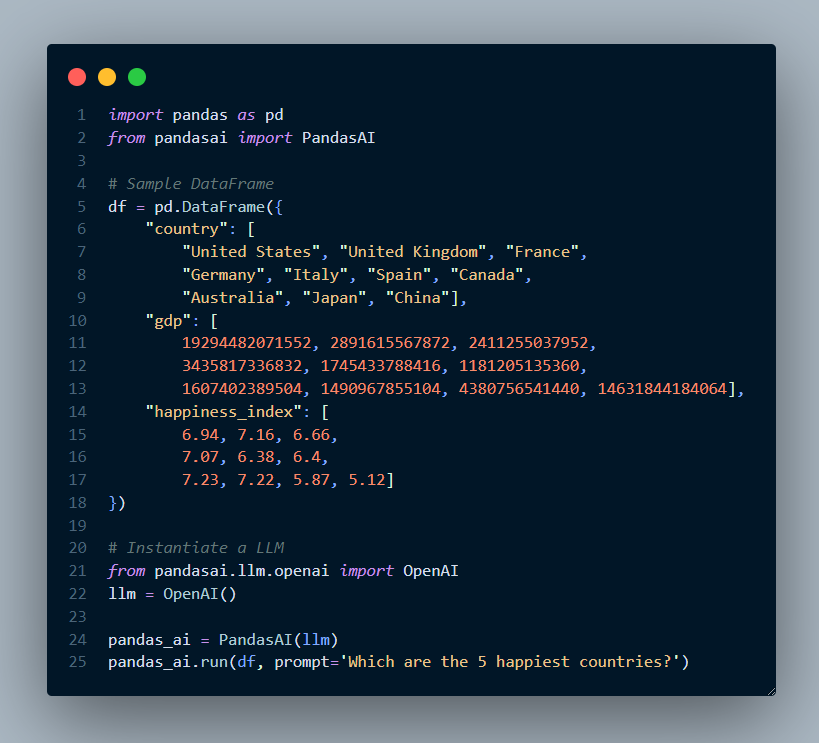
This is pretty slick: LLMs integrated with Pandas.
You can:
• Run aggregations
• Automatically plot
• Easily chain GPT calls together
• Integrated w/ other LLMs, like StarCoder
Only a matter of time until we see more tight integrations like this.
Software engineers are going to love this.
Input code in any language and GPT-4 will translate it to any other coding language.
& It's free with your OpenAI key👇





![moritzkremb's tweet photo. 20 ChatGPT prompts that use next-level mental models to help you make strategic business decisions:
1. Second-Order Thinking
Prompt: "Apply Second-Order Thinking to assess [my business decision]. Consider not only the immediate consequences but also the second-level consequences that may arise."
2. Pareto Principle (80/20 Rule)
Prompt: "Use the Pareto Principle to evaluate [my business decision]. Focus on the 20% of factors that could be responsible for 80% of the results."
3. First Principle Thinking
Prompt: "Use First Principle Thinking to evaluate [my business decision]. Rethink the problem from the ground up and separate the underlying facts from the assumptions made based on them."
4. Regret Minimization Framework
Prompt: "Use the Regret Minimization Framework to assess [my business decision]. Think long-term and weigh the emotional impact to minimize future regret."
5. Opportunity Costs
Prompt: "Assess [my business decision] by considering the Opportunity Costs. Think about the costs arising from choosing this option against every other option available."
6. The Sunk Cost Fallacy
Prompt: "Assess [my business decision] while avoiding the Sunk Cost Fallacy. Evaluate the decision based on future value, not past costs."
7. Occam's Razor
Prompt: "Apply Occam's Razor to assess [my business decision]. Choose the less complex explanation or option that satisfies the conditions without unnecessary multiplication."
8. Systems Thinking
Prompt: "Use Systems Thinking to assess [my business decision]. View the problem as part of an interconnected system and understand how variables influence one another."
9. Inversion
Prompt: "Utilize Inversion to analyze [my business decision]. Look at the problem from the endpoint instead of the starting point and ask: 'What must I avoid?' rather than 'What do I need to do?'"
10. Leverage
Prompt: "Analyze [my business decision] through the lens of Leverage. Determine how the right lever can amplify my efforts and lead to significant outcomes."
11. Circle of Competence
Prompt: "Apply the Circle of Competence to analyze [my business decision]. Make sure the decision aligns with [my areas of expertise]. Straying outside of my circle can lead to poor decisions."
12. Law of Diminishing Returns
Prompt: "Evaluate [my business decision] using the Law of Diminishing Returns. Consider the turning point where additional investments offer less value and costs may rise."
13. Niches
Prompt: "Analyze [my business decision] focusing on Niches. Determine how specialization within a niche can lead to expertise and success in this context."
14. Margin of Safety
Prompt: "Use the Margin of Safety to evaluate [my business decision]. Assume that your assumptions might be wrong and plan with a safety margin to mitigate risks."
15. Hanlon's Razor
Prompt: "Evaluate [my business decision] through Hanlon's Razor. Don't assume ill intent when mistakes can be explained by ignorance or error."
16. Randomness
Prompt: "Evaluate [my business decision] with the concept of Randomness in mind. Remember that not everything follows cause-effect relationships and some outcomes may be random."
17. Critical Mass
Prompt: "Analyze [my business decision] by considering Critical Mass. Recognize if you are at a point where momentum may become self-sustaining."
18. The Halo Effect
Prompt: "Evaluate [my business decision] while considering the Halo Effect. Recognize how impressions in one area can bias judgment in others."
19. Feedback Loops
Prompt: "Analyze [my business decision] through the understanding of Feedback Loops. Consider how actions and reactions within the system can influence subsequent decisions."
20. Scarcity and Abundance Mindset
Prompt: "Evaluate [my business decision] considering both Scarcity and Abundance Mindset. Reflect on how your mindset can influence the decision-making process."](https://pbs.twimg.com/media/F3LGO63agAEKtON.png)