Every pathology slide tells a story.
Artera's multimodal AI assesses comprehensive tumor biology from routine H&E slides to support more personalized treatment decisions.
https://t.co/omY5V4f9Jh
#DigitalPathology#PrecisionMedicine
How are clinicians using AI in #prostatecancer care?
Watch Dr. Elisabeth Heath discuss the role of AI-based biomarkers, multidisciplinary care, and shared decision-making in this @UroToday interview: https://t.co/wxetRV58fp
#AIinHealthcare#ArteraAI
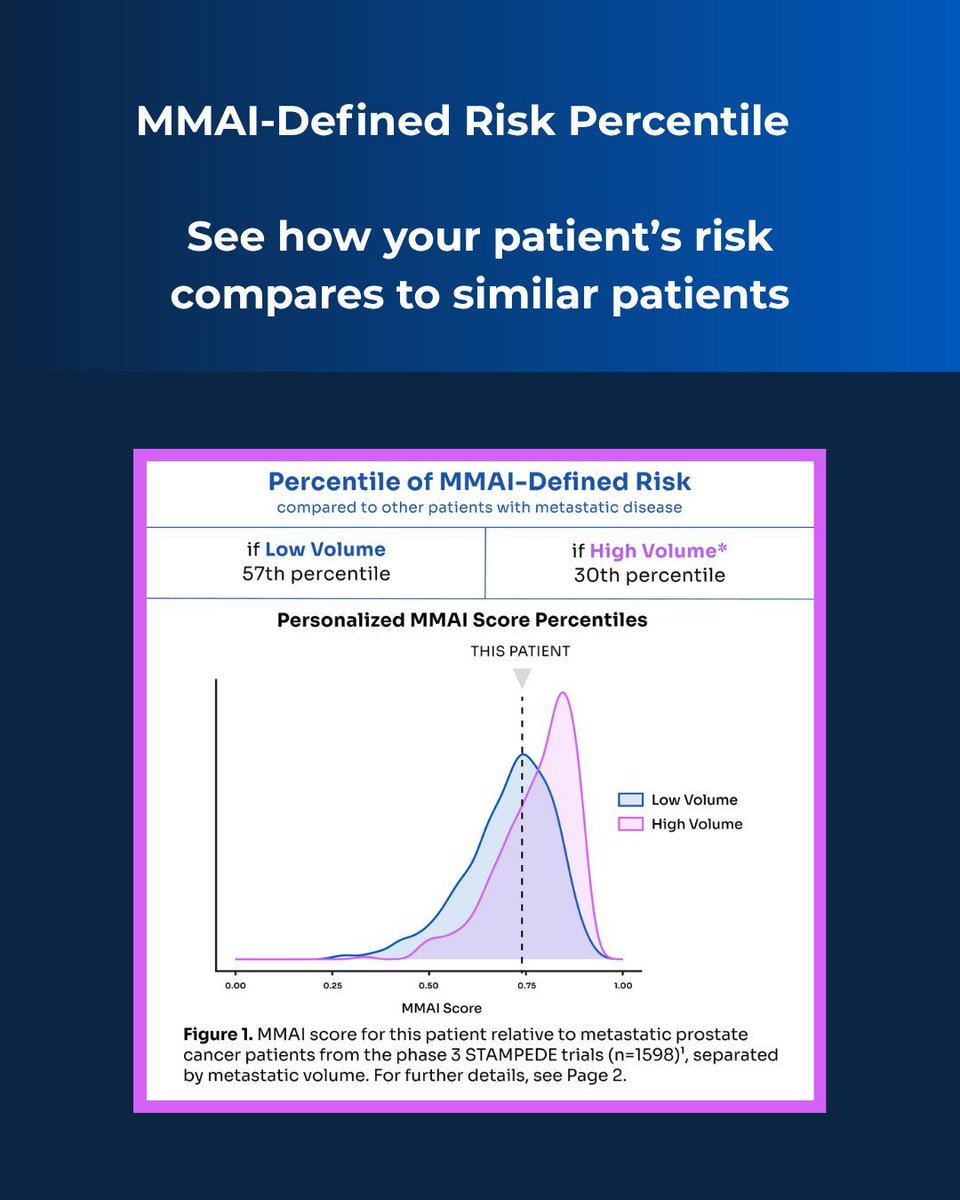
The ArteraAI Prostate Test (#mHSPC) provides individualized risk estimates, including risk percentile and 5-year PCSM risk on ADT + ARPI.
Higher-than-expected risk may help inform treatment intensification.
Learn more: https://t.co/EdXJuMY2ej
GG1 Prostate Cancer can (rarely) be locally advanced!
➡️ BCR rate is low (10% at 15 yrs) and slow (only 3.2% at 5 years) and not resulting in mets or death
Congrats @MWatfa26 💪 💪
@JaneNguyen44@GaganFervaha@CleClinicUro
Risk stratification after prostatectomy remains a key challenge in #prostatecancer care.
Watch Dr. R. Jeffrey Karnes discuss the external validation of a multimodal AI prognostic model in this @UrologyTimes Special Report: https://t.co/Y1bd1rVrGm
#AIinHealthcare#ArteraAI
Rethinking what's possible in #BreastCancer care.
Learn how The #ArteraAI Breast Cancer Test delivers personalized prognostic insights through multimodal AI.
Explore the benefits: https://t.co/lP158EiQrO
#AIinHealthcare#DigitalPathology
Not all high-risk #prostatecancer patients benefit equally from treatment intensification.
See how the #ArteraAI Prostate Test may help personalize care decisions, especially around the use of abiraterone.
Read more: https://t.co/ppE6DSfrhs
Check out my new video on YouTube. This should be most helpful for residents and fellows as they start looking for their first job!
How to Choose a Urology Job that Fits You by Dr. Ronney Abaza https://t.co/1qpkuWVGme via @YouTube
🧠 𝑩𝒓𝒂𝒊𝒏 𝑻𝒖𝒎𝒐𝒖𝒓 𝑫𝒊𝒂𝒈𝒏𝒐𝒔𝒊𝒔: 𝑭𝒓𝒐𝒎 𝑾𝒆𝒆𝒌𝒔 𝒕𝒐 𝑴𝒊𝒏𝒖𝒕𝒆𝒔
Many of my #AIinHealthcare posts are about future potential; this one is about current performance.
Hetairos, developed by researchers at @DKFZ German Cancer Research Center and the University of Heidelberg, predicts 102 molecular subtypes of CNS tumours directly from standard H&E-stained tissue slides.
These are glass microscope slides holding micro-thin slices of biological tissue that have been treated with two specific dyes: hematoxylin and eosin (yeah, I asked AI to explain this 😉), which is considered the global gold standard in 80% of medical tissue diagnostics.
This can change pathology, now! Instead of 12 days for a molecular workup, answers in as little as 12 minutes.
This is a 99.93% time compression.
It is effectively workflow obliteration!
Boom ... 💣
The model was trained and validated on over 11,000 slides from 9,606 patients across 11 facilities and four continents ... the data is robust and generalizable.
In high-confidence cases, accuracy reached 87%. And in a blinded comparison, it outperformed five board-certified neuropathologists on histology-only classification (68% vs 30%). It was tested in real diagnostic workflows, not just benchmarked in controlled conditions.
Here's why this really matters: DNA methylation profiling, as noted above is the gold standard, but it is expensive, time-consuming, and simply unavailable across most of the world.
On the other hand, Hetairos runs on hardware most pathology labs already have. This is a big #HealthEquity win.
Importantly, the five neuropathologists HetAIros outperformed were working without clinical context. The tool used age and tumour location alongside the slide. It wasn't a fair fight.
And to be clear, this is not a call to "replace pathologists". Hetairos narrows differentials and flags tissue regions of interest. It's a force multiplier for expert judgment, not a substitute and elevates the critical skills and judgment of a pathologist.
This is an example of AI as "infrastructure" done right in diagnostic medicine; prospective validation, real-world deployment, honest confidence scoring, and equity-conscious design.
This is #ResponsibleAI in healthcare.
Nature: https://t.co/K27wKG2tdD
DKFZ: https://t.co/gczphtN5JP
@LundinCancer@cancersociety
Honored to receive support from @ClevelandClinic and @bikeVeloSano for our bladder cancer biomarker study. Using MRI, 🩸urine/plasma ctDNA and AI, we aim to better predict cCR/pCR and identify the RIGHT candidates for bladder preservation. Grateful to work with @AmandaNizamMD and @Purysko .. I also see our fabulous @MoningiShalini and her study 📚 >>> https://t.co/iEy2dlOGPU
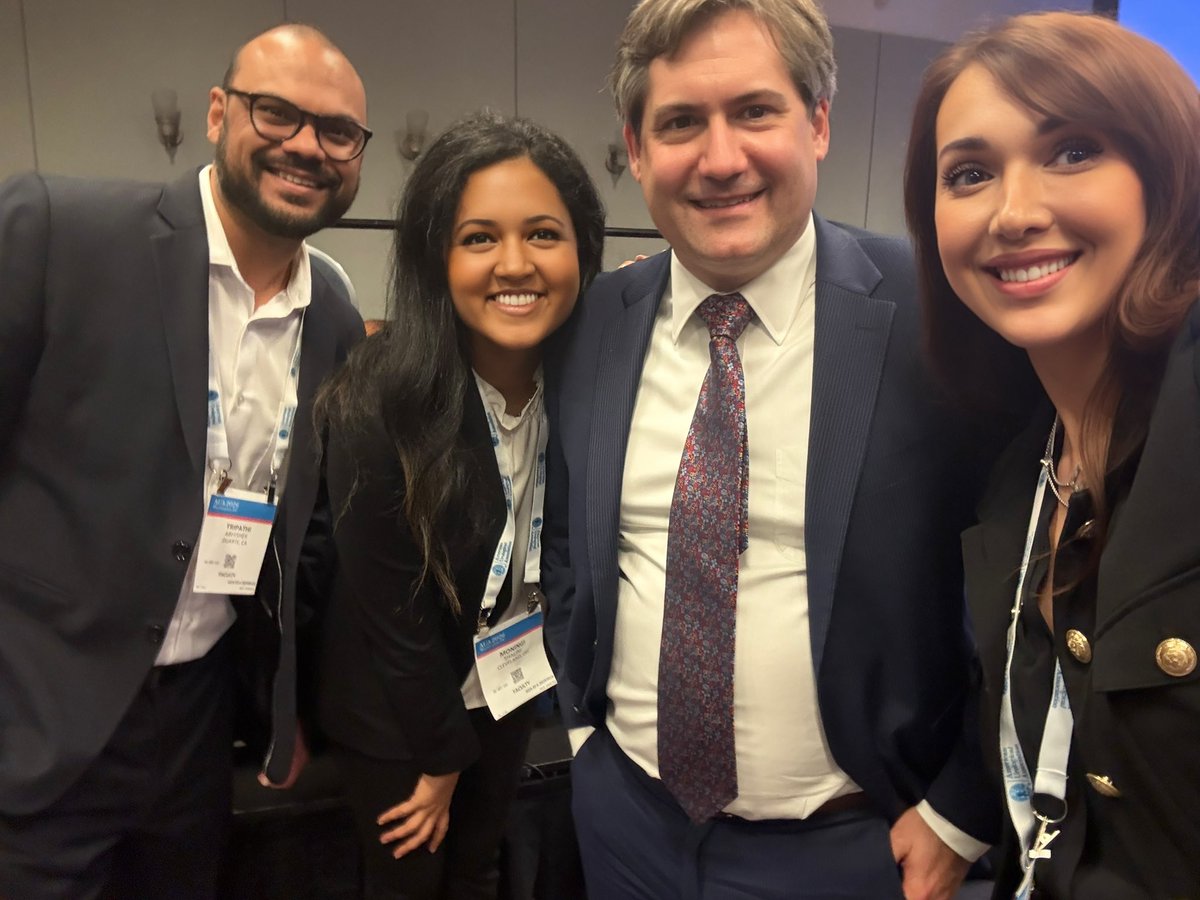
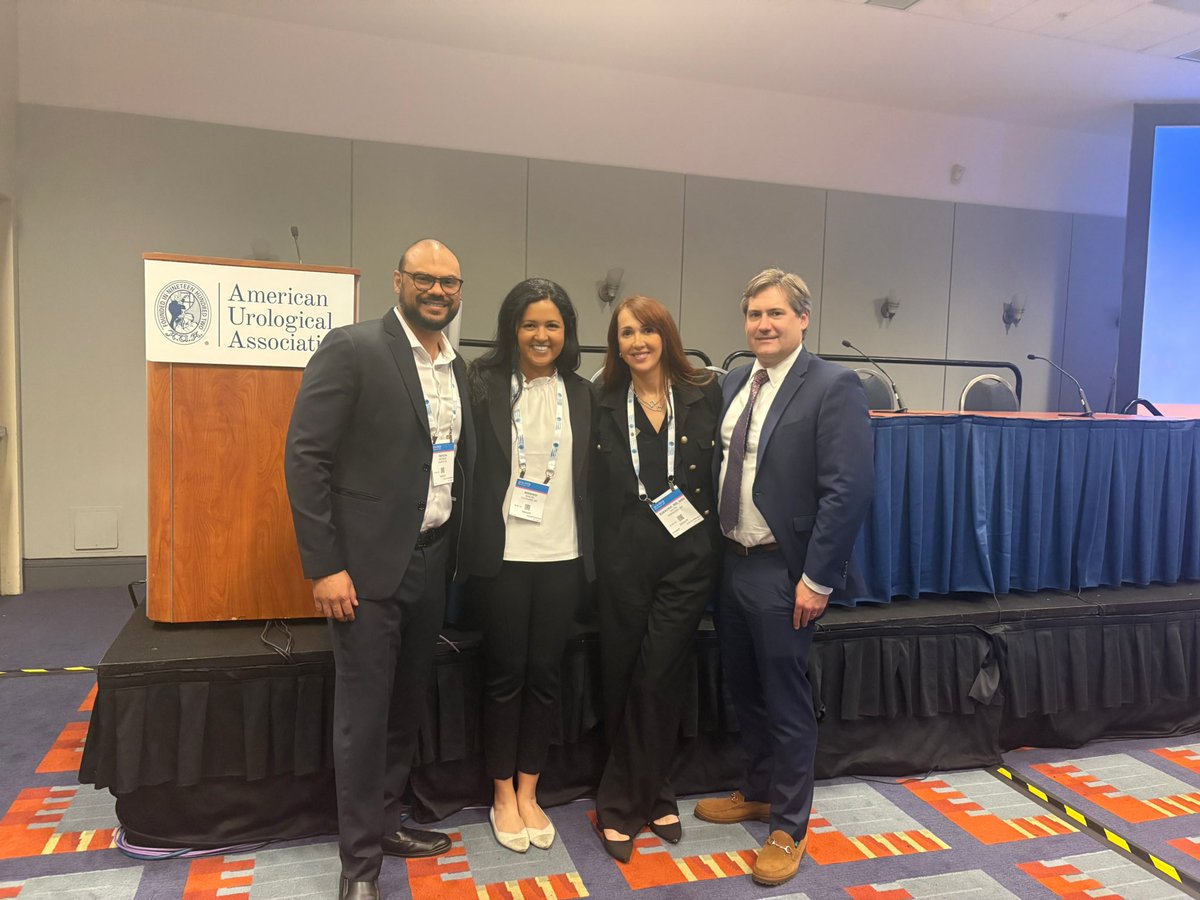
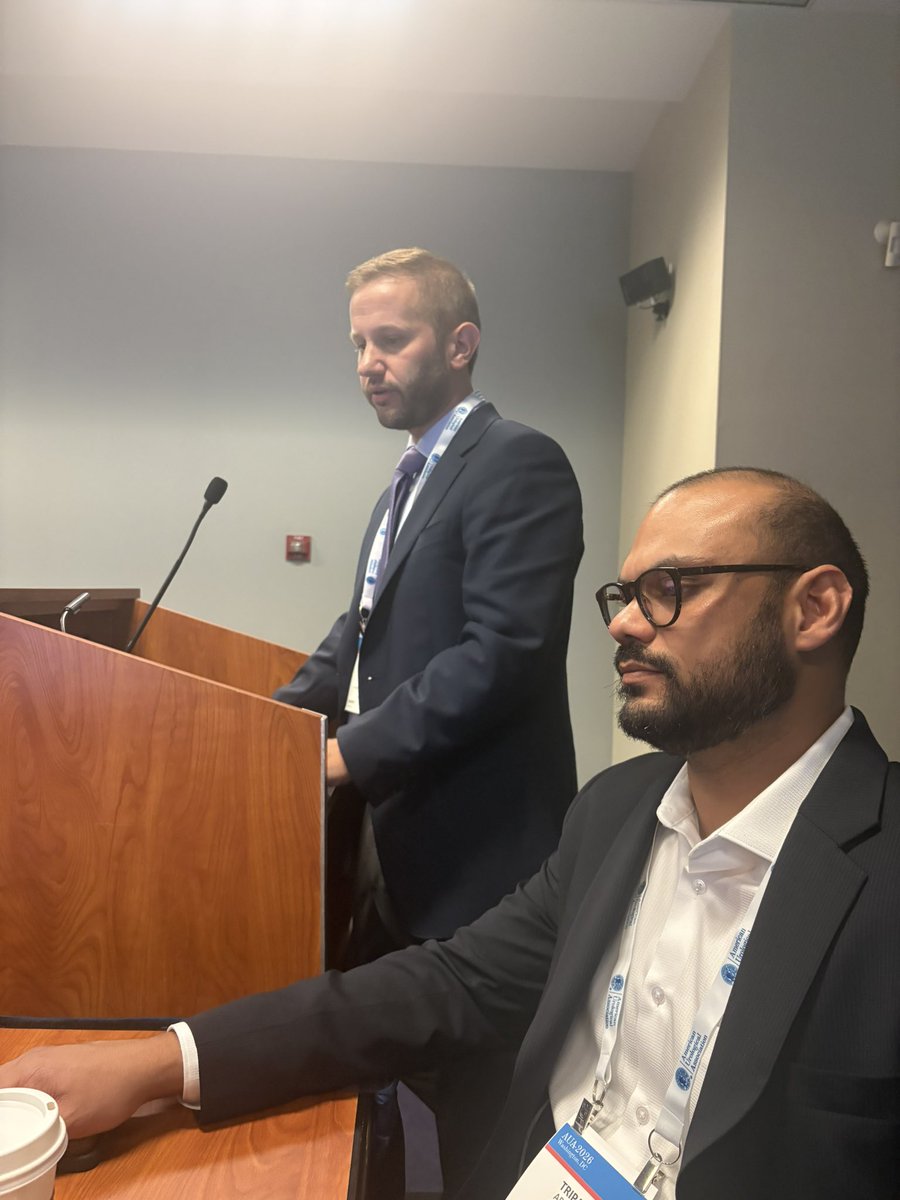
Great work by @CleClinicUro research fellow @MWatfa26 highlighted across multiple #AUA2026 abstracts!
Heads up residency programs! He is coming your way soon.
Packed room at our annual #SPARC event celebrating the successful #SP collaboration and productive #AUA26 with 17 abstracts presented from the group @CleClinicUro@drjkaouk
Thank you #AUA26 for the best poster award for our work evaluating preoperative predictors of immediate urinary continence following #SP Transvesical Robotic Radical Prostatectomy @CleClinicUro@drjkaouk