WHY I KEEP COLLECTING FLOWERS
I didn't plan to collect this many flowers.
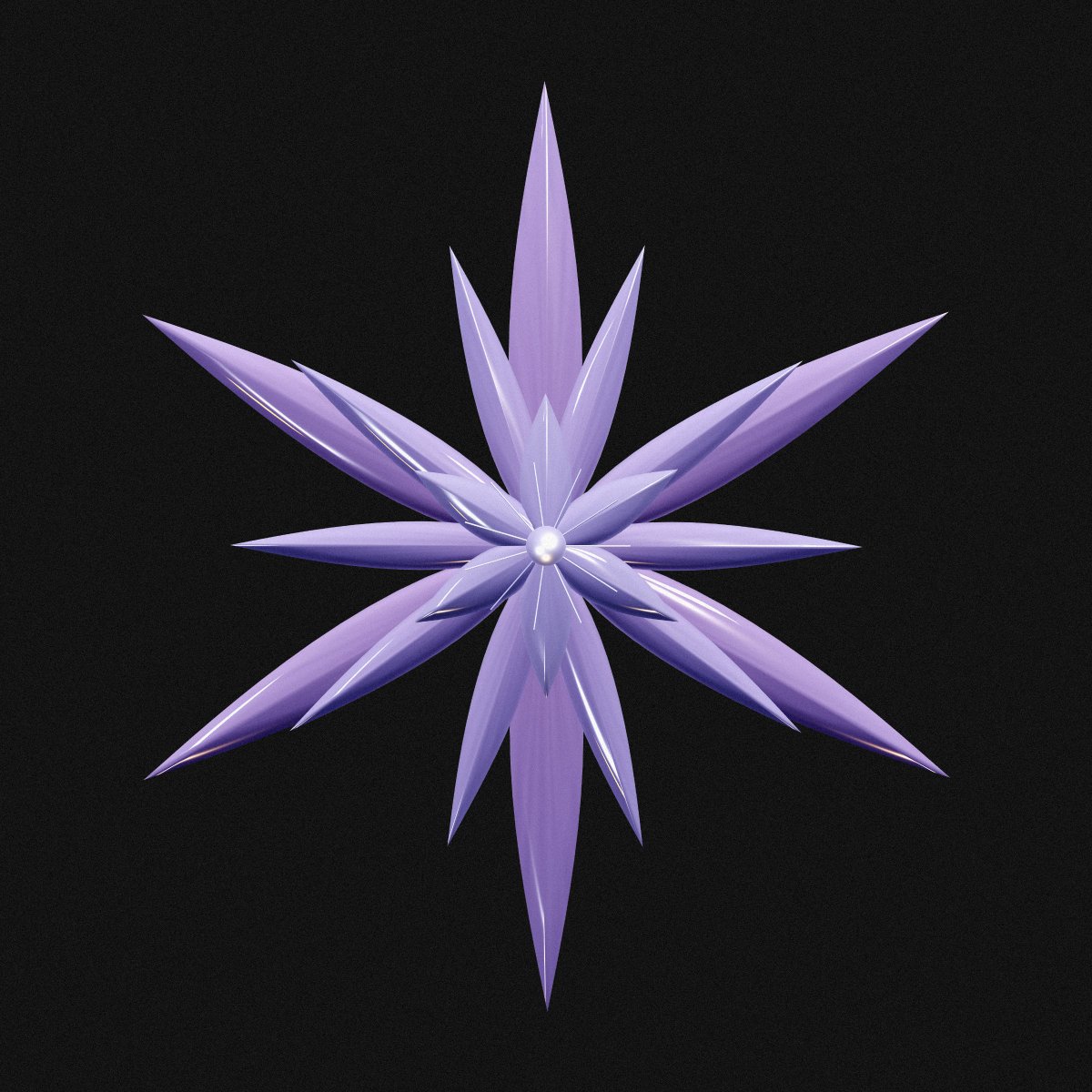
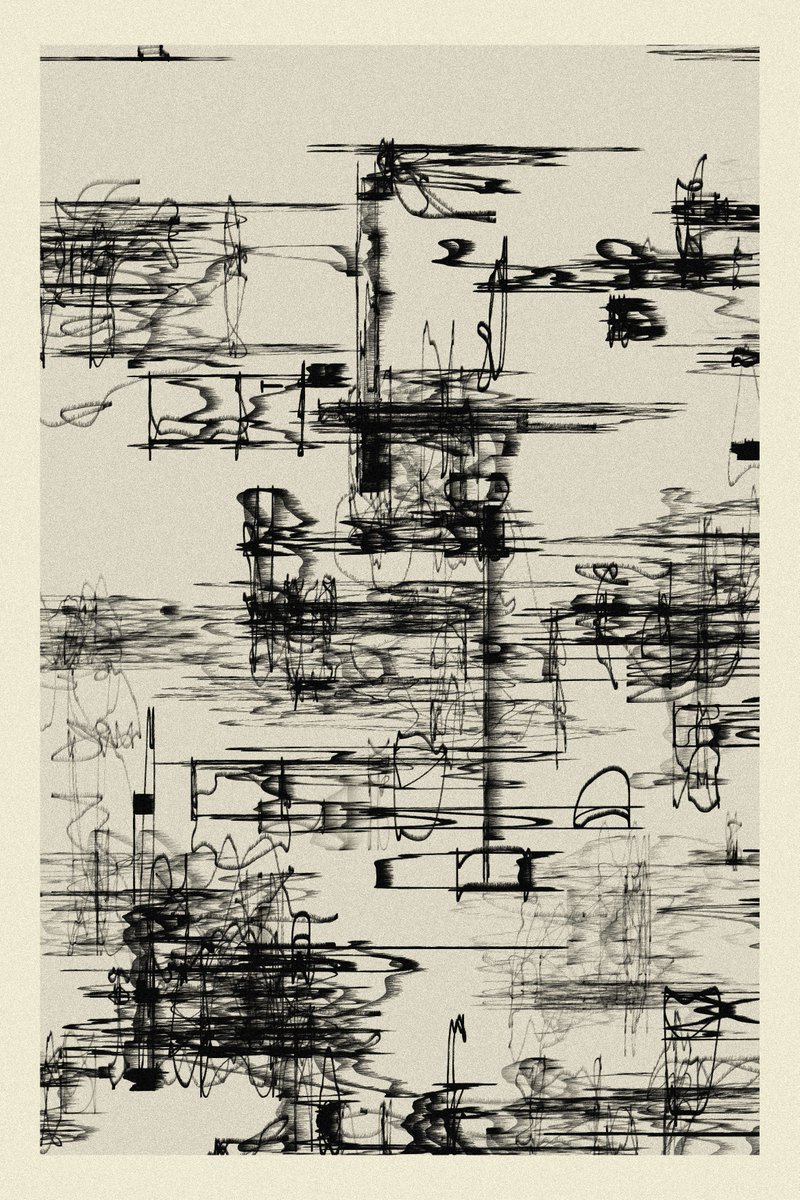
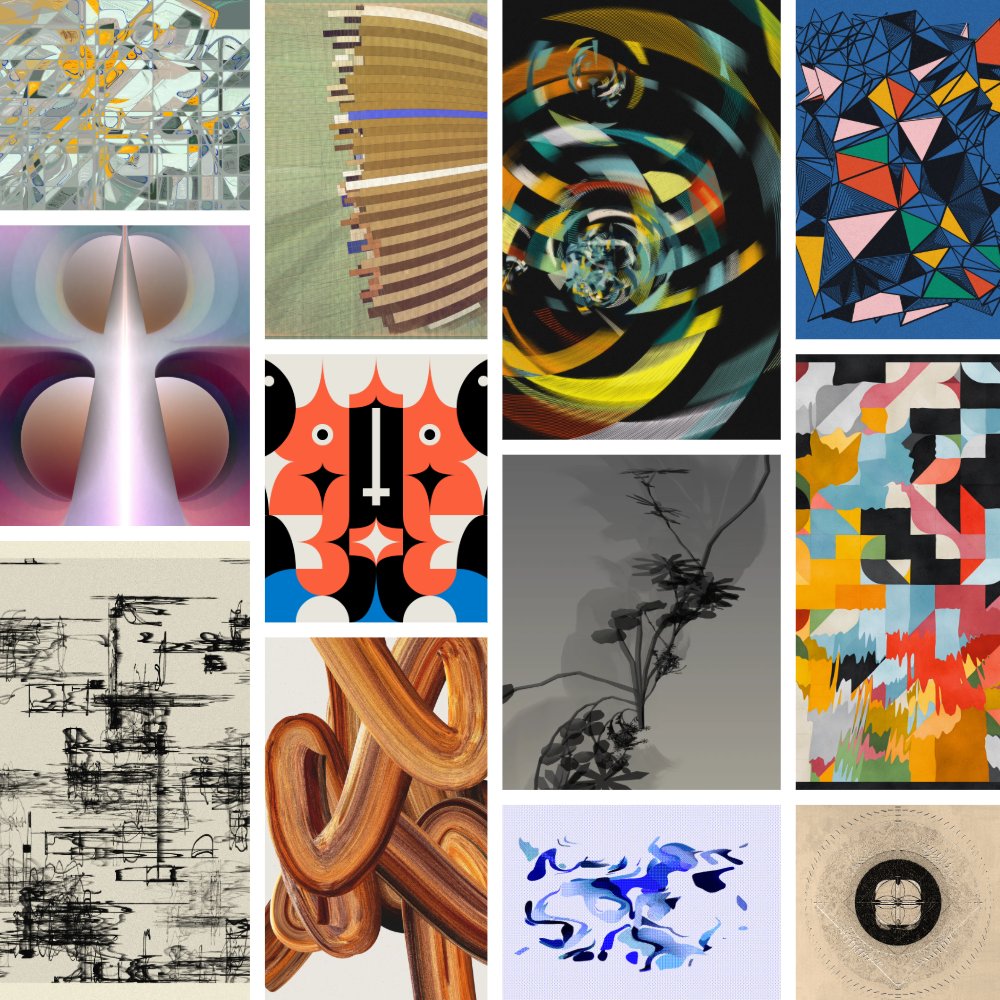
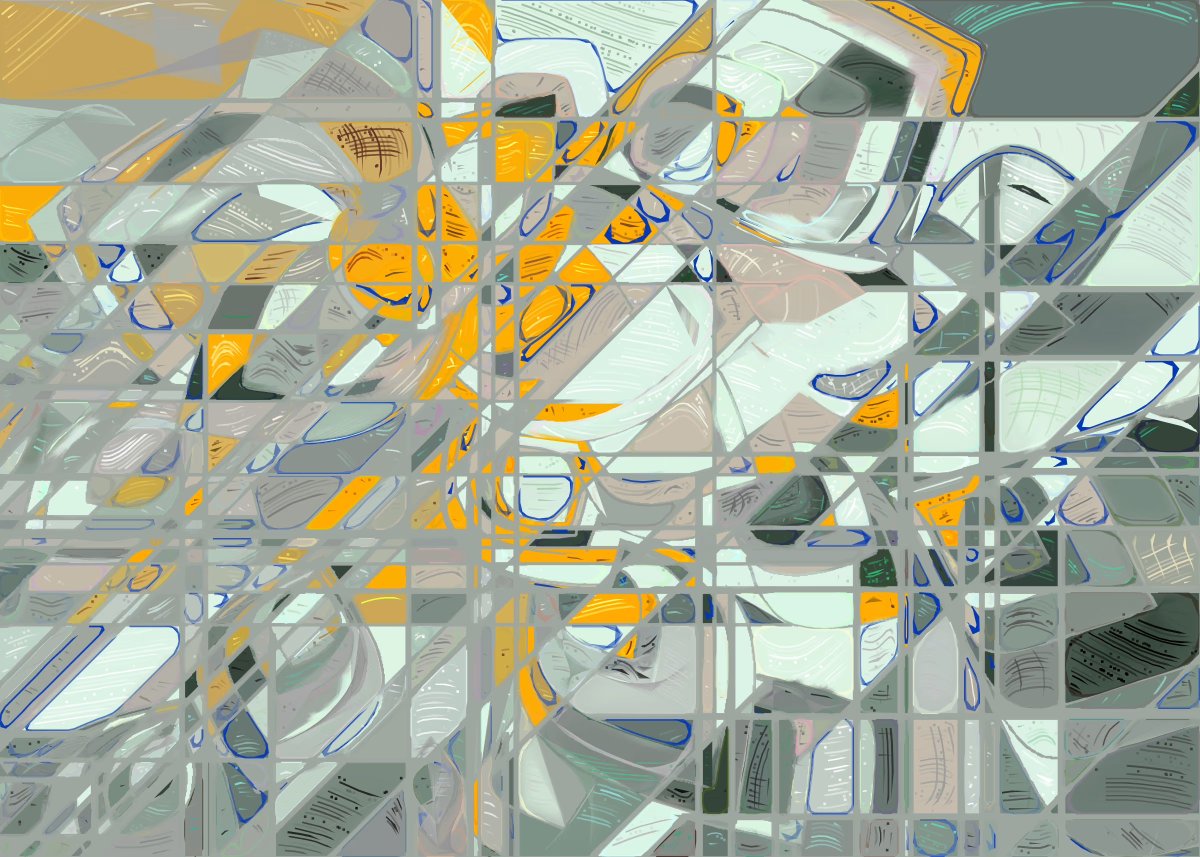
@IOivm Polypaths. @solaas Delirium Blooms. @LindaDouniaR Flore Perdue. @snellicious_ Cattleya. @mpkoz Chimera. @MonicaRizzolli Fragments of an Infinite Field, Underwater. @AnaPetArt Fleur. @sterlingcrispin Neophyte. @SarahMeyohas Infinite Petals. @rvig_art Flowers. And more.
All flowers or flora. All code.
1/5
—-
From top left, clockwise:
Flore Perdue #40 (Linda Dounia)
Cattleya #25 (Ben Snell)
Fragments of an Infinite Field #608 (Monica Rizzolli)
Delirium Blooms #44 (Leonard Solaas)
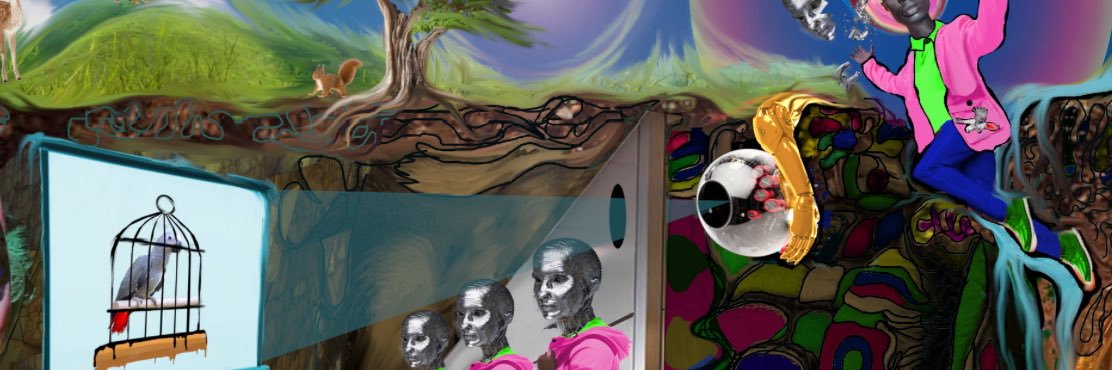
Yatreda (@yatreda) carries Ethiopian history into a new visual language. The work feels archival, cinematic, and unmistakably alive.
As our 2024 Digital Artist in Residence, the Ethiopian family collective created House of Yatreda, an immersive installation in the style of tizita: nostalgia and longing for the past.
Its centerpiece series, Abyssinian Queen, became the first work we ever acquired onchain. Ethiopian cultural memory, held in perpetuity.
Good morning! I’m so grateful to announce that “Moments of the Unknown “will be on exhibition for the first time in New York City on June 9th at 6pm located at @nguyenwahed
RSVP link in replies below 🔗
Curated by @MarleneCorbun
Centered around Justin Aversano’s new film Moments of the Unknown, the exhibition presents the work in its entirety for the very first time. Conceived during a year-long journey across seven continents and countless landscapes, the project invites viewers on a cinematic voyage through cultures, environments, and human encounters from around the world. Moving between intimate portraiture and expansive documentary observation, the film constructs a visual meditation on what it means to witness humanity at a moment of profound technological and social transformation.
Blending the nostalgic materiality of Super-8 film with artificial intelligence and blockchain technology, Moments of the Unknown revisits the legacy of humanist image-making through a distinctly contemporary lens. Composed of ten-second moving portraits filmed over 366 days, the work unfolds as a poetic reflection on memory, cultural identity, migration, ritual, and global interconnectedness. Echoing the universal aspirations of Edward Steichen’s The Family of Man while reimagining them for the digital age, Aversano positions the moving image as an emotional archive and a speculative form of transmission, capable of preserving fleeting traces of human existence for future generations.
The project’s formal language is shaped by the tension between obsolete and emerging technologies. The grain, fragility, and tactile imperfections of Super-8 film stand in contrast to the immaterial infrastructures of artificial intelligence and blockchain systems. Rather than opposing these mediums, Aversano allows them to coexist, suggesting a continuum between past, present, and future modes of recording and circulating human experience. In this context, the work reflects on memory itself, and on the evolving technologies through which memory is constructed, stored, and transmitted.
Emerging from the film, a series of Movie Stills extends the project into a more tactile and contemplative form. Printed on handmade flower paper, these works isolate fleeting moments selected by the artist from the moving image, transforming ephemeral sequences into physical objects fixed in time. Removed from cinematic duration, the portraits acquire a sculptural stillness that emphasizes gesture, gaze, and atmosphere. Four of these works will be presented as part of the exhibition, reinforcing the dialogue between permanence and impermanence that runs throughout Aversano’s practice.
Alongside newly encountered faces, Moments of the Unknown also revisits figures central to Aversano’s earlier body of work, notably twins from his acclaimed Twin Flames series. Extending this reflection on repetition, doubling, and human connection, the exhibition includes Doppelganger #258, created in collaboration with Kim Asendorf, whose algorithmic structure resonates with Nguyen Wahed’s code-based visual language. The work introduces another layer to the exhibition’s exploration of identity and perception, examining how digital systems reproduce, fragment, and reinterpret the human image.
Taken together, the works in the exhibition propose a broader meditation on temporality and transmission. Across film, photography, and generative processes, Aversano considers how images operate as vessels through time, preserving the past, shaping the present, and projecting themselves toward imagined futures. Positioned between documentary archive and speculative fiction, Moments of the Unknown reflects on the enduring desire to record human presence: to leave traces, create connections, and inscribe memory into permanence in an increasingly dematerialized world.
watching the timeline now, the pre-ai era of onchain digital art is really starting to look like a distinct historical period. art minted before instant image & video generation changed how digital work can be made
Museums are at a turning point.
As technology reshapes how we create, experience, and connect with culture, institutions must evolve alongside artists and audiences alike.
In this first article of an ongoing series, the Museum of Art + Light (MoA+L) explores why immersive experiences, digital art, interdisciplinary collaboration, and contemporary museum practice are not separate conversations, but part of the same cultural evolution.
This is not about abandoning traditional museums.
It is about expanding what museums can become.
Article 1: The Museum Is Not Disappearing | It's Evolving
https://t.co/SzMRQ4yRnC
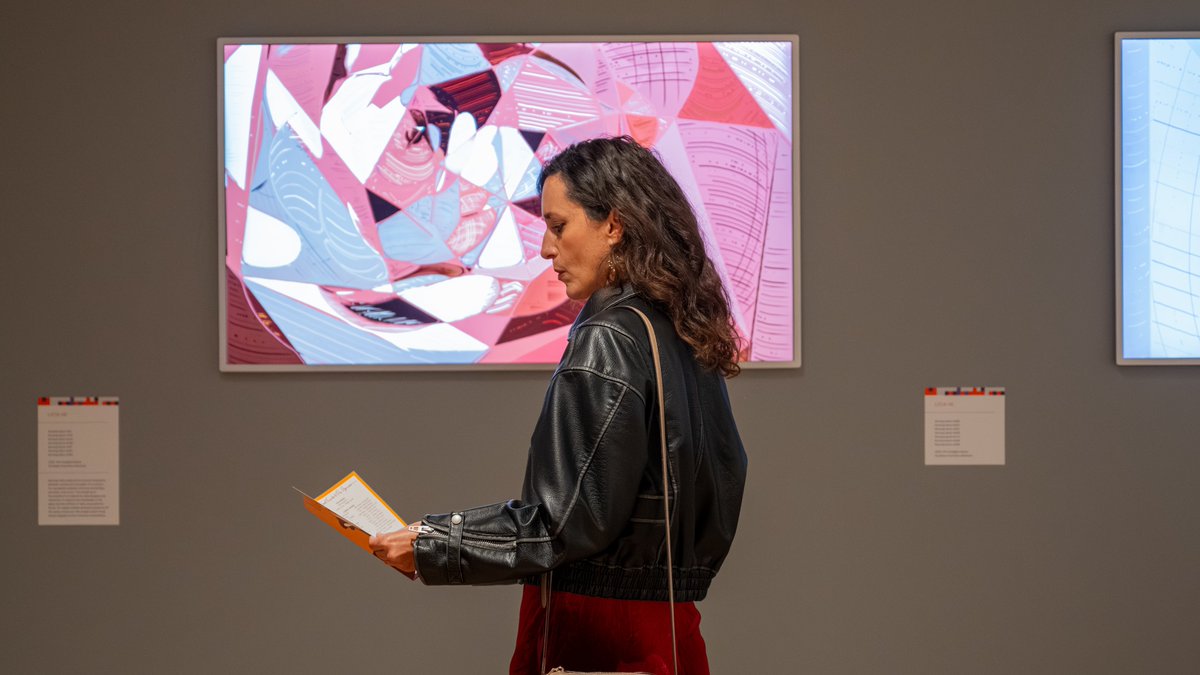
EMULATION: Selections from the Art Blocks 500 is now open at the Museum of Art + Light (MoA+L) until August 16, 2026. @museumartlight
The exhibition presents twelve projects by ten Art Blocks 500 artists.
Discover the artists and their work 👇
Tyler and I just published a list of the recipients of the New Aesthetics grants: https://t.co/aLhVgYXrbi.
Thank you very much to all who applied. There were far more applications than we expected. We funded 28 grantees and are excited to see what they create.
My reflections on the whole thing:
• Though there are clearly selection dynamics afoot, figuring out some route beyond the current aesthetic moment seems to be of wider interest in the art community than I would have guessed. Many applicants described their dissatisfaction with the status quo, some in strong terms. We had to close applications after a few weeks because there were so many.
• It's too early to call it, but it seems that both beauty as an unapologetic goal (contra much that is in modernist and contemporary approaches), and ways to channel pre-modern styles into something new for the present era, are of growing interest.
• The awards made me reflect on the perhaps obvious issue of how hard it must be for an artist to persistently do something new: schools, galleries, buyers, etc., all have structurally embedded preferences as well. These individual awards made me wonder what form supporting new clusters could take.
• Architecture seems to me like the discipline most ripe for new ideas. One correspondent observed: "American architects are somewhat constrained by the association with the academy, in addition to the well known regulation issues. There is a tendency to overthink things so that the designs are formally interesting to someone deep in the conversation, but lacking poetry and magic. There are more firms in Europe, South America and beyond that “just do things” (especially in places where it is easier to build)." This was evident in the submissions.
• AI seems to be making people rethink things in a quite fundamental way, just as urbanization/industrialization/popularization of photography did at the end of the 19th century. For some that will mean interesting new forms of AI-augmented art, but the effects of the rethinking will likely be wider.
• Arts funding is clearly as precarious and scarce as ever. That's unfortunate, but it probably also means that individual actors can have meaningful impact, and I encourage others to get involved if interested.
• There's a lot to know that is not written down, and I'm very grateful to those who have helped and advised me along the way.
Steven Bartlett says a few glasses of wine ruined the next 3 days of his life
“It's one of those areas where you don't understand the hidden cost until you really give it up for a while. I stopped drinking at 30 years old. I'm now 33. When I was 31, I thought, I'll have a drink again because now I could really A/B test it. I had a year of not drinking, decided to have a drink again”
“It ruined three days of my life. I had a couple of glasses of wine, didn't get drunk. It ruined three days of my life because of the domino effect it caused”
“I got worse sleep that night, and then because I got worse sleep that night, I ate more poorly the next day because my dopamine system or whatever, the cortisol system was all messed up. I podcasted worse. I didn't go to the gym that day or the day after because I felt really bad. I then slept worse, and I could track all of this on my Whoop”
'Dear Monet' 🪷✨
A connection to the past.
Created by blending my own 3D model with Monet's water lilies in @FlowbyGoogle
Inspired by @SHL0MS
Available for a limited time on @TransientLabs
14 Editions | 0.02 ETH
🔗⬇️
In 1965, Georg Nees hung a dozen plotter drawings on a wall in Stuttgart. The audience walked out the room before they understood what they were looking at.
Sixty years later, @museumartlight is showing twelve on-chain generative works from the @artblocks_io 500 collection and this time, the work gets the deserved attention of the visitors. 🎆EMULATION: Selections from the Art Blocks 500. On view until August 16 with artists like @pointline_@Licia_He@harvey_rayner@kellymilligannz
A lot of this movement started with the vision of @snowfro. What he built with Art Blocks gave generative art a home it always deserved.
Museums are finally catching up. If you care about where generative art came from and where it's going, this one is really worth the trip.
#ArtBlocks #GenerativeArt #DigitalArt
Had a very meaningful time today with @justinaversano going through the studio and reflecting on experiences from our time in this space together and where we see the future going.
Having been one of his first collectors of Twin Flames back in the day I have gotten to see him from day 1 and how he has evolved not only as an artist but also as a person.
Those experiences throughout the years are what help shape us to be better people, find our voices, and true passions.
That being said it was a very eye opening day and though we may be different in some ways you realize the similar struggles we all go through.
Truly enjoyed our time together today having tea, doing a tarot card reading and discussing art as doing some trades.
I’m glad to call him a friend and appreciate our time together today.
If your in NYC and have the time to visit his studio I highly recommend it 🫶
William Mapan at Art Basel 2026
We are thrilled to be able to present Paysages Plausibles, a solo exhibition by @williamapan at @ArtBasel, Zero 10, June 16 - 21, 2026 in Switzerland.
Paysages Plausibles is an algorithmic exploration of overlapping shapes, textures and digital media layers to create imaginary landscapes using pigments based on the natural world.
Mapan spent nine months of research, a give and take between sketchpad and computer, to develop the algorithm, which will be applied in both digital and physical formats at the exhibition.
At our Zero 10 booth, visitors will be able to view hand-painted oil works, plotter drawings, and a live generator, all based on Mapan's creative algorithmic logic.
Selected outputs may be purchased and plotted live at the booth.
Polypaths has been invited to be exhibited at this year’s Computex 2026, serving as a key visual for the event.
I’ll be around during the exhibition as well, feel free to come say hi if you’re passing by.