From @LisaSglobal at @focpuae Forum:
Huge potential reduction of cervix cancer deaths if prevention/early detection measures could be fully implemented - could be achieved DECADES earlier if current best treatments were widely available
Better, More Affordable Prescription Drugs in China!
First China's open-source DeepSeek shames closed-source ChatGPT, and now China's pharmaceutical companies are producing better drugs, cheaper.
#China
As medical oncologists, one of the most important aspects of care that we deal with is end of life care. EOL is also where the potential for harms is paramount. Unfortunately, there is very less formal training about this in oncology training programs.
A fantastic group of authors led by @ChernyNathan have just published The Most Comprehensive review on this topic. I’d strongly recommend all oncology and palliative care colleagues- most importantly all trainees- to read this very comprehensive review on EOL care. It’s open access. @ESMO_Open
https://t.co/LfKV8RHJ0T
A guided tour of the Papillon Unit, Clatterbridge Cancer Centre, Liverpool. Patients are referred here with cancers of the lower rectum and offered organ-sparing treatment instead of life with a colostomy.
Good to see a big success story in the NHS. Huge credit to Prof Sun Myint
A guided tour of the Papillon Unit, Clatterbridge Cancer Centre, Liverpool. Patients are referred here with cancers of the lower rectum and offered organ-sparing treatment instead of life with a colostomy.
Good to see a big success story in the NHS. Huge credit to Prof Sun Myint
@ProfAJChalmers @UofGlasgow@KUHeS_mw Big challenges for Rad Onc in Malawi:
- possibly highest mortality from cervical cancer in the world
- not one radiotherapy facility
(Radiotherapy the only curative modality for locally-advanced ca cervix)
Sad day for medical physics.
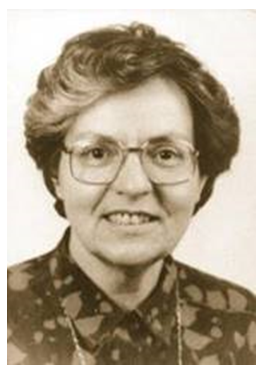
Andrée Dutreix, pionneer of medical physics worldwide and in France, and head of the physics department at @GustaveRoussy in 1953-1988, passed away.
She had a major impact on the early days of medical physics. RIP.
#WomenwhoCurie
🚨The Turkish-Palestinian Friendship Hospital, the main cancer centre in the Gaza Strip, is no longer functional because of lack of fuel and damage due to airstrikes in its vicinity over the past 48 hours.
@WHO calls for sustained access at scale for humanitarian aid – including fuel, water, food and medical supplies – into Gaza. We also call for the active protection of civilians and health care. #NotATarget
A thoughtful paper (as expected from these authors) on the problem of identifying the site for the RT “boost” after oncoplastic breast surgery:
https://t.co/DuuLb2j2wR
One thing that is overlooked, though: IORT at the time of resection could avert all the difficulties outlined
Breast cancer patients & carer perceptions:
-Postop radiotherapy: disruptive to work, home, adds travel burden & discomfort of side effects
-TARGIT-IORT during lumpectomy: efficient, min. if any disruption to quality of life & the safer option
Preprint
https://t.co/2hZmQKQuy6
@ParikhSimul This question and answers highlight a major global problem - those parts of the world where the rates of cervical cancer are highest tend to be those where access to brachytherapy is most difficult, even non-existent
Taking the treatment to the patient rather than bringing the patient to the treatment is impossible to achieve completely with radiotherapy, but peripheral centres such as this area great step forward
@DavidSherMD I wonder if you are familiar with the techniques described by Ralston Paterson ("Manchester School") in the mid-twentieth century? Small volumes, multiple fields, high dose per fraction. No attempt to treat uninvolved nodal areas.
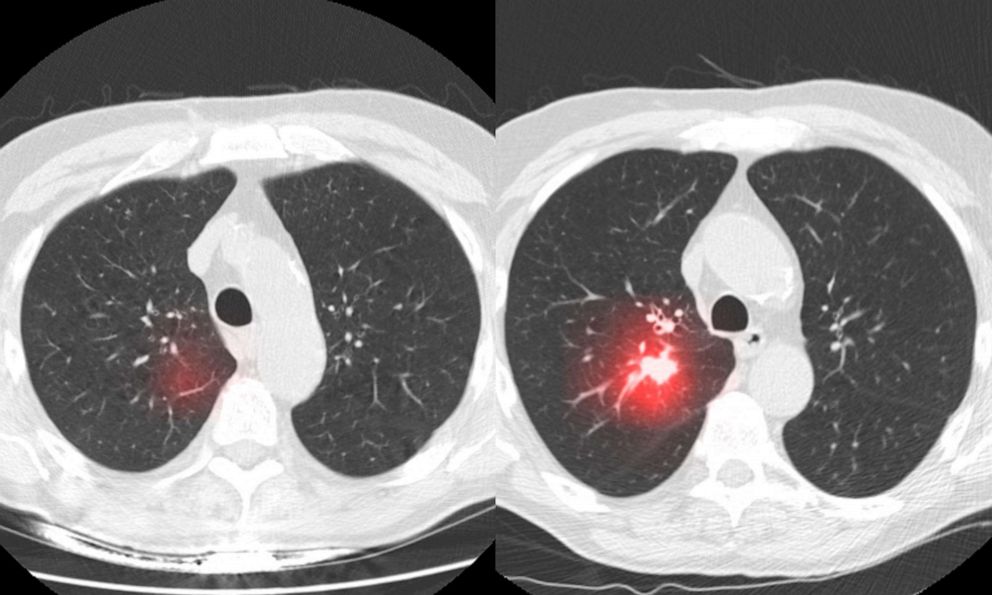
How AI is used to detect, treat cancer -- and the potential risks for patients https://t.co/F3N8RFvtdB glad this article provides some balance; however, I can't let the suggestion that we screen everyone for lung cancer like we do for colon cancer go unchallenged 🧵
A cancer-drug shortage in the United States has led to the collaboration between China’s Qilu Pharmaceutical and the U.S. Food and Drug Administration (FDA), which has begun importing the drugmaker’s generic cancer treatment, cisplatin.
Qilu Pharmaceutical’s cisplatin injections are marketed and manufactured in China and have not received FDA approval in the U.S.
“We’ve taken steps for temporary importation of certain foreign-approved versions of cisplatin products from FDA-registered facilities and used regulatory discretion for continued supply of other cisplatin and carboplatin products to help meet patient needs,” FDA Commissioner Dr. Robert Califf said.