Research Consultant at Centre for Chronic Disease Control, New Delhi, Yoga & Naturopathy doctor (≠homeopathy/botanicals/neutraceuticals) Husband and Father
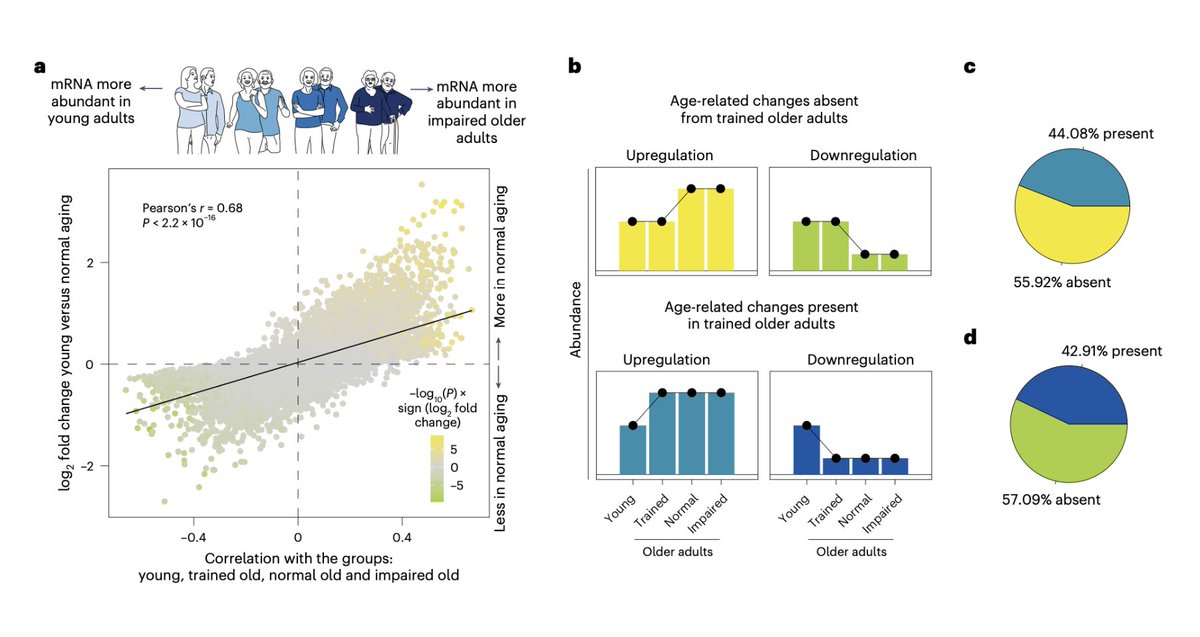
Most exercise and aging studies can't answer a basic question: is muscle deterioration from aging itself, or just from decades of moving less? A new Nature Aging study solved this by recruiting older adults who moved as much as people in their twenties.
The researchers from Amsterdam UMC and Maastricht University recruited four distinct groups: young adults in their twenties, older adults whose daily step counts and high-intensity activity matched the young group, older adults who had trained consistently for years (three structured hour-long sessions per week for over a year), and older adults with early physical impairment.
They took muscle biopsies before and after a one-hour cycling session, then measured over 24,000 gene transcripts, 135 metabolites, and 1,383 lipid species.
By matching activity levels between young and older groups, any molecular differences couldn't be blamed on the older adults simply moving less. This isolated aging from inactivity for the first time at this molecular depth.
Key findings:
• The defining molecular signature of muscle aging is an energy crisis. Comparing young adults to activity-matched older adults, 1,106 genes were downregulated with age. These genes build the mitochondrial machinery that produces cellular energy: ATP synthase, cytochrome c oxidase, and NADH dehydrogenase subunits. Mitochondria are the power plants of cells, converting nutrients into ATP, the energy currency cells use to function. When these genes decline, cells lose their ability to generate energy efficiently.
• NAD+ levels declined and triglycerides accumulated inside aging muscle. NAD+ is a molecule required for energy production and cellular repair. Lower NAD+ means less capacity to convert fuel into usable energy. Triglycerides are stored fats, their accumulation inside muscle indicates unburned fuel piling up as the tissue loses its ability to process it.
• More than half the molecular signature of muscle aging was absent in trained older adults. Specifically, 57.1% of age-related gene downregulation and 55.9% of upregulation were missing in the trained group. Their muscle resembled young adults far more than their chronological age would predict.
• The changes training preserved were specifically the energy metabolism ones. Genes like NDUFS1 and COX5A, which were depleted in normally active and impaired older adults, sat at youthful levels in the trained group across all five mitochondrial respiratory complexes. The single most prominent feature of muscle aging turned out to be the single most preventable.
• Being generally active was not enough. Structured training was the difference. The normally active older adults walked as much as young adults, and their energy metabolism genes declined anyway. What preserved the youthful molecular profile was structured, sustained training. Filling a step counter and being genuinely trained are not equivalent at the molecular level.
• Roughly half of muscle aging persisted regardless of training. Changes in genes controlling synaptic transmission (how nerves communicate with muscle) and WNT signaling (a pathway regulating tissue maintenance and stem cell function) appeared in all older adults, trained or not. This unavoidable half is where drugs will have to work.
• The fittest muscle mounted the largest inflammatory response to exercise. All groups activated stress and immune genes after exercise, including IL6, IL1B, and TNF. But the magnitude scaled with fitness. Trained older adults most closely resembled young adults in their response, followed by normally active, with impaired older adults showing the most blunted response. The stress response to exercise appears to be the mechanism of adaptation, not damage to be minimized.
This raises a concern about anti-inflammatory longevity strategies. If the inflammatory stress response is how exercise produces its benefits, chronically suppressing inflammation may blunt the adaptation that exercise depends on. It doesn't mean inflammation is beneficial in general, but the timing and context matter.
A separate discovery: the proteasome appears to regulate NAD+. The proteasome is the cellular machinery that breaks down damaged proteins. When researchers inhibited it, NAD+ levels rose in both muscle and liver cells to a degree comparable to NAD+ precursor supplements. This opens a new route to understanding NAD+ decline that operates through protein turnover rather than just supplying more raw material.
The study draws a clear line between what lifestyle can address and what will require therapeutics. The energy metabolism decline, mitochondrial deterioration, and NAD+ depletion that define muscle aging are largely preventable through structured training. The synaptic and signaling changes that persist in all older adults represent the unavoidable half where drugs will need to work.
The decisions made about structured training in midlife determine which molecular trajectory muscle follows in later decades. Half of muscle aging is optional. The other half isn't. Knowing which changes belong to each category is knowing where behavior ends and biology takes over.
On day 3 of the ongoing Short Course on Grant Writing for Clinicians and Public Health Researchers, the concepts of "statistics" were brought to life. Participants tackled one of the most challenging yet crucial aspects of #grantwriting—the statistical framework.
#Statistics
Yet another landmark trial in Yoga and cardiac rehabilitation.
Yoga-based Cardiac Rehabilitation (Yoga-CaRe) in comparison with exercise (home-based) based rehabilitation and enhanced standard care in Pulmonary hypertension. @CCDC_YPHR@INDIACCDC@PMOIndia@MoHFW_INDIA
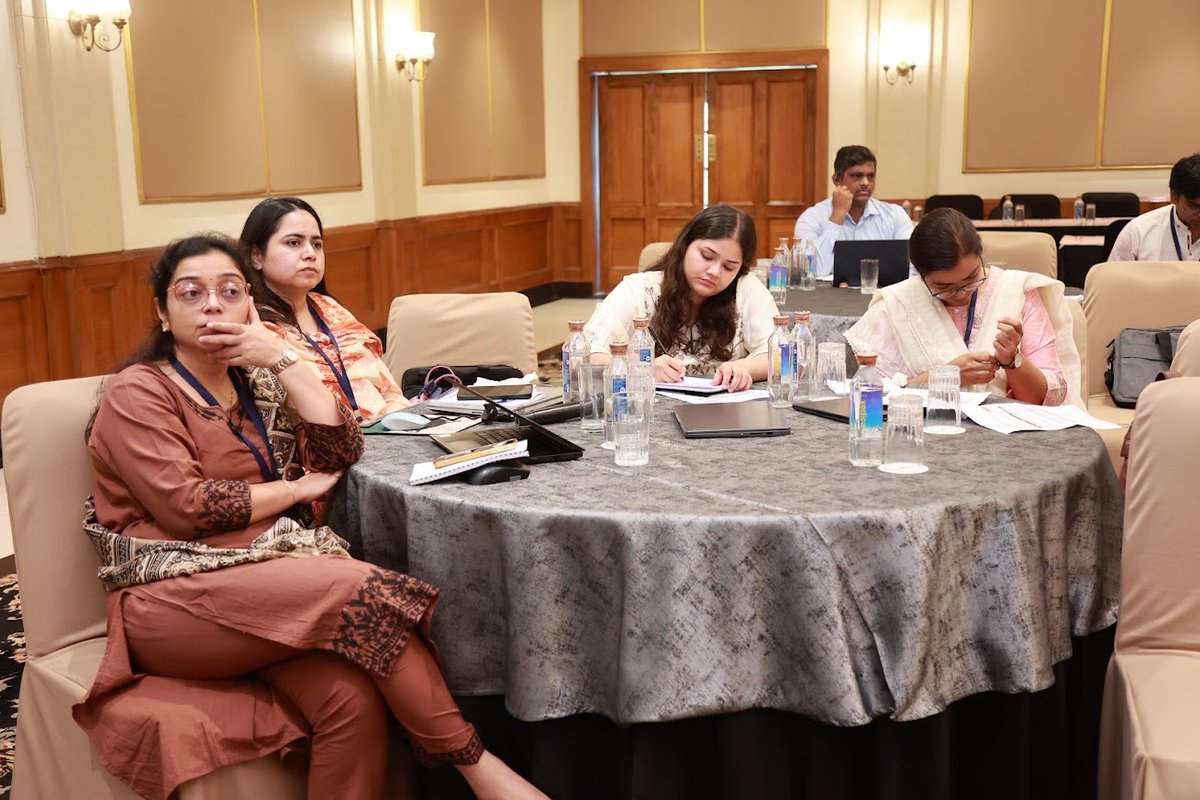
The Central Council for Research in Yoga & Naturopathy (CCRYN), Ministry of Ayush, in coordination with the Centre for Chronic Disease Control, organised the Investigators' Meeting of the multi-centric randomised controlled trial "Yoga in Pulmonary Hypertension" on 20 August 2026 at the Central Research Institute of Yoga & Naturopathy, Jhajjar.
Director, CCRYN, Dr. Jyoti Keswani addressed the gathering. Investigators from the participating institutions reviewed the protocol, recruitment and follow-up status, safety reporting and statistical monitoring, and deliberated on the way forward.
#CCRYN #MinistryOfAyush #Yoga #PulmonaryHypertension #YogaResearch #ClinicalTrial
@moayush@narendramodi@mdniy@PMOIndia@AmitShah@PIB_India@mpprataprao@ICMRDELHI@vaidyakotecha@WHO@MoHFW_INDIA@MYBharatHQ
The Central Council for Research in Yoga & Naturopathy (CCRYN), Ministry of Ayush, in coordination with the Centre for Chronic Disease Control, organised the Investigators' Meeting of the multi-centric randomised controlled trial "Yoga in Pulmonary Hypertension" on 20 August 2026 at the Central Research Institute of Yoga & Naturopathy, Jhajjar.
Director, CCRYN, Dr. Jyoti Keswani addressed the gathering. Investigators from the participating institutions reviewed the protocol, recruitment and follow-up status, safety reporting and statistical monitoring, and deliberated on the way forward.
#CCRYN #MinistryOfAyush #Yoga #PulmonaryHypertension #YogaResearch #ClinicalTrial
@moayush@narendramodi@mdniy@PMOIndia@AmitShah@PIB_India@mpprataprao@ICMRDELHI@vaidyakotecha@WHO@MoHFW_INDIA@MYBharatHQ
@carrier@CarrierMideaInd - Just one year and three months. Zero courtesy and customer support. All personnel from the mechanic to the so called Delhi head. Till date the issue is not solved.
Do not recommend or strongly advise everyone not to purchase Carrier products in India.
@reliancejio
What is happening in Safdarjung Development Area,, New Delhi. It is just six days without internet in jiofiber.
Just one message saying, we are fixing the issues.
No other option to communicate with customer care service!
As interest in yoga continues to grow globally, strengthening the evidence base and advancing its integration into public health have become increasingly important.
Dr. Ambalam M. Chandrasekharan, Head, Centre for Yoga in Public Health Research, CCDC, will participate as the Guest of Honour at the National Seminar on Yoga Education and Research, hosted by the Faculty of AYUSH, Swami Vivekanand Subharti University, Meerut, on 18 June 2026.
The seminar will bring together leading academicians and experts to discuss the role of yoga in public health, education, and evidence-based practice, and to explore how research can help translate traditional wisdom into effective, people-centred health solutions.
#YogaResearch #YogaInPublicHealth #PublicHealth #IntegrativeHealth #EvidenceBasedYoga #CCDC #AYUSH
Cycle 4 - Certificate Course (Apr-26) –
A unique opportunity to blend your expertise in yoga and naturopathy with evidence-based cardiac care.
✅ Enhance your clinical practice
✅ Learn from top cardiologists & rehab experts
✅ 100% online, and flexible
https://t.co/QSAPU9ck7e
I am writing on behalf of all the investigators to share this exciting news that TOPSPIN main manuscript is published in Nature medicine (Impact factor – 50, one of the top journals in medicine). This is the first RCT of this big size to study the effect of various anti- hypertensives in Indian population. I am attaching the paper for your kind reference, and it can also be accessed from here - https://t.co/K04yuvHtc9
I thank Dr Prabakaran sir , Dr Àmbuj Roy sir, our management and administration , the research team , my peers , all my co-investigators especially Dr Mohini Singh and Dr Meena Iyer for their full support.
Many thanks to all our participants !
@INDIACCDC@DrDPrabhakaran@drambujroy@SRIHER_Official@SRMC_official@CsiChennai
Gratifying feeling always to wrap up our annual 10-day International @ISCEP_Society Seminar in CVD #epidemiology . Engaging lectures , group interactions & a challenging study protocol development exercise to round it off in Lisbon’s Santa Maria Hospital !
#capacitybuilding#CVD
#Hypertension is a significant cause of mortality and disability in India, affecting more than 30% of the population. @INDIACCDC, in collaboration with @aiims_newdelhi and @imperialcollege, has been advancing hypertension care by examining the effectiveness of a combination of dual drugs in a single pill. We evaluated three such combinations for high blood pressure management in the recently concluded Treatment Optimisation for Blood Pressure with Single-Pill Combinations in India (TOPSPIN).
Our paper publication is now available on @NatureMedicine; read it here: https://t.co/1ES8AanVGb. Watch the video to know the key findings!
#TOPSPINStudy #Hypertension #BloodPressure #ChronicDiseases #GlobalHealth
@DrDPrabhakaran@drmohanv@kondal17374@DrPoornimaP@drambujroy@drapjtweets@dramcsekar@ShifalikaGoenka@ICMRDELHI@CSI_Con@theapiofficial
Manuscript Alert!
TOPSPIN trial - A strategic trial to identify the best first dual therapy for hypertension in a single pill for south Asians- A trial of near 2000 patients demonstrating equal efficacy of any of the two agents - ACEi, CCB and diuretic.
@MoHFW_INDIA@Nature
#Hypertension is a significant cause of mortality and disability in India, affecting more than 30% of the population. @INDIACCDC, in collaboration with @aiims_newdelhi and @imperialcollege, has been advancing hypertension care by examining the effectiveness of a combination of dual drugs in a single pill. We evaluated three such combinations for high blood pressure management in the recently concluded Treatment Optimisation for Blood Pressure with Single-Pill Combinations in India (TOPSPIN).
Our paper publication is now available on @NatureMedicine; read it here: https://t.co/1ES8AanVGb. Watch the video to know the key findings!
#TOPSPINStudy #Hypertension #BloodPressure #ChronicDiseases #GlobalHealth
@DrDPrabhakaran@drmohanv@kondal17374@DrPoornimaP@drambujroy@drapjtweets@dramcsekar@ShifalikaGoenka@ICMRDELHI@CSI_Con@theapiofficial
@CarrierMideaInd We are just about to complete four months after the issue and till date, the @CarrierMideaInd customer care didnt call or ask what is happening. All they do is forwarding the emails to the agency against which we are complaining.