A flexible, high-throughput system for studying mRNA translation kinetics in vitro and in cellulo with HiBit technology https://t.co/mUG8Xc6kbP #biorxiv_molbio
If you’re at #CamLung2023 and want to know more about the work carried out in @DrCathyWilson ‘s lab on targeting MYC, come talk to Janice and I at poster 1!
Walid Khaled & Sara Pensa receive our new Biology to Prevention Award to explore the use of therapeutic agents in #chemoprevention to alter premalignant cellular changes driven by #BRCA1 & the use of blood monitoring to guide the administration of chemopreventative agents [5/7]
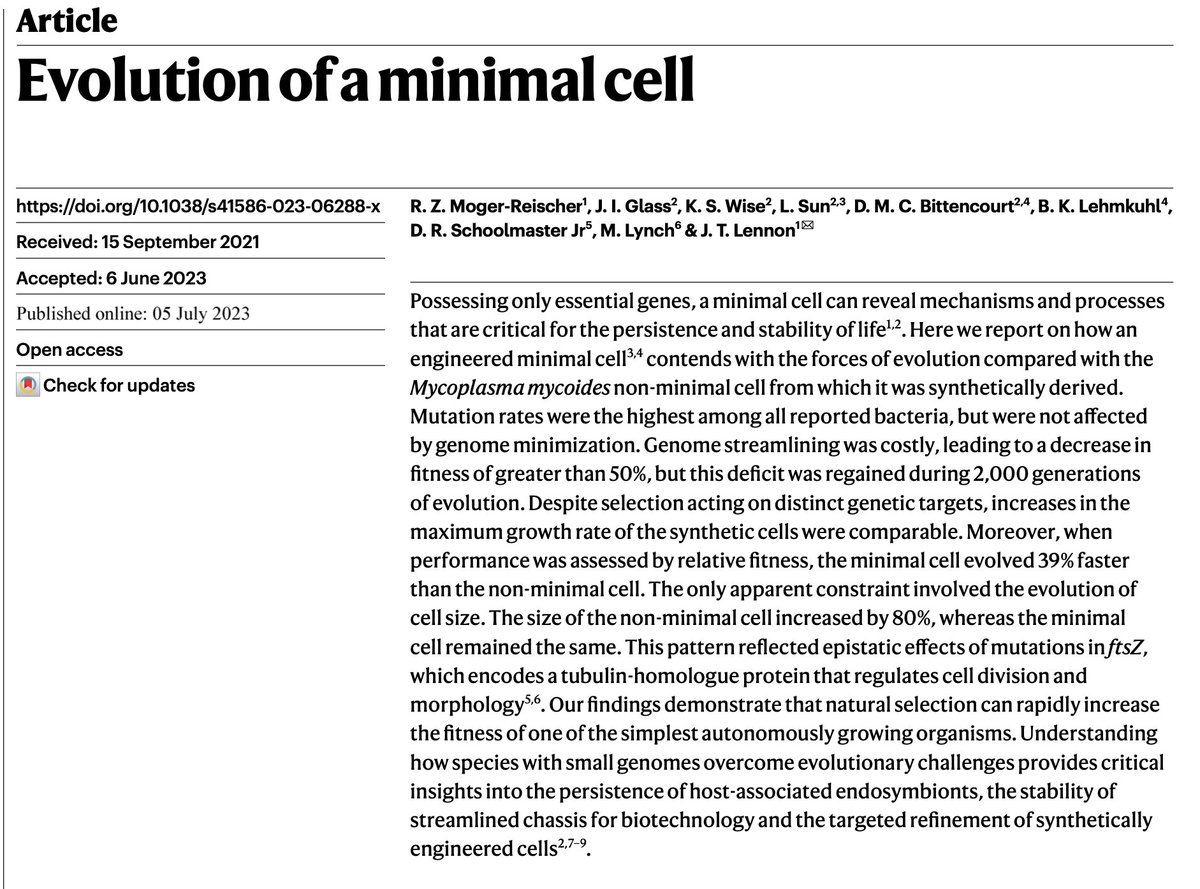
A mind-blowing paper has come out today in @Nature
In 2016, JC Venter Institute scientists trimmed a bacterial genome to its barest minimum required for life to synthesize what they called a "minimal genome" (https://t.co/Rk8oZJ0bUj).
Today, a group of scientists from Indiana University reports how that minimal genome evolved over 2000 generations in comparison to the non-minimal genome.
The authors found that even when you reduce a bacterial genome to its absolute minimum where every nucleotide matters, the genome undergoes mutational events generation after generation as much as the non-minimal genome. One simply cannot stop the evolution.
Just over 300 days of evolution (equivalent to 40,000 years in humans) the minimal cell has gained everything it lacked in fitness on day one in comparison to the non-minimal cell.
When comparing the evolved traits between the minimal and non-minimal cells, the scientists found something striking. The evolutionary process increased the cell size of non-minimal cells but not that of the minimal cell. But that is not the striking part.
The scientists were able to identify the key mutation that resulted in cell size evolution. And it turned out that the mutation that helped the non-minimal cells to grow bigger is the same that helped the minimal cells to stay smaller. Growing bigger had a survival advantage for non-minimal cells and not growing bigger had a survival advantage for minimal cells. So, the mutation had a context-dependent effect. This just demonstrates that the evolutionary effects on traits have no absolute direction. All that matter is what is beneficial for the organism's survival.
The conclusion of the paper is metaphorically a quote from the Jurassic Park movie:
“Listen, if there’s one thing the history of evolution has taught us is that life will not be contained. Life breaks free. It expands to new territories, and it crashes through barriers painfully, maybe even dangerously, but . . . life finds a way". (https://t.co/UlxRlb86CT)
https://t.co/zA9OAqSoAu
We are very happy to announce that Cynthia Okoye, part of the Lindon Group, has passed her PhD viva!🎉🥳
Her thesis is titled 'Harnessing the Anaphase Promoting Complex for Targeted Protein Degradation'
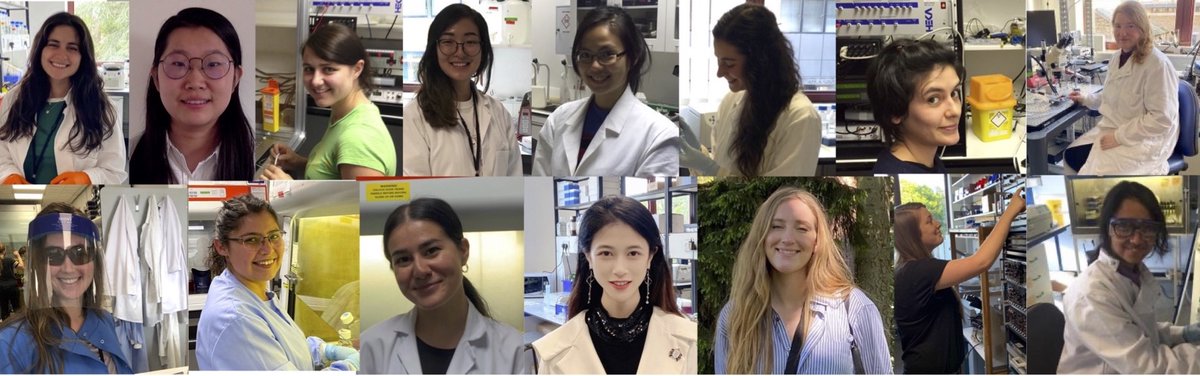
My post for #InternationalWomenInScienceDay was embarrassingly incomplete, thus reposting.
Thanks to the amazing women who have driven our research over the past 10-years: Maya, Minji, Laura, Jiwon, Sin Lih, Ines, Zoe, Toni, Becky, Paulina, Helen, Lanhui, Anne, Katie & Sampurna
New paper from @LindonLab explains some of the mystery of AURKA biology by redefining degron sequences that mediate its destruction at each cell division. @UnivCamPharm@Abdelbaky47 @cyncoso @DrAscanelli
https://t.co/KmPaaTeBoo
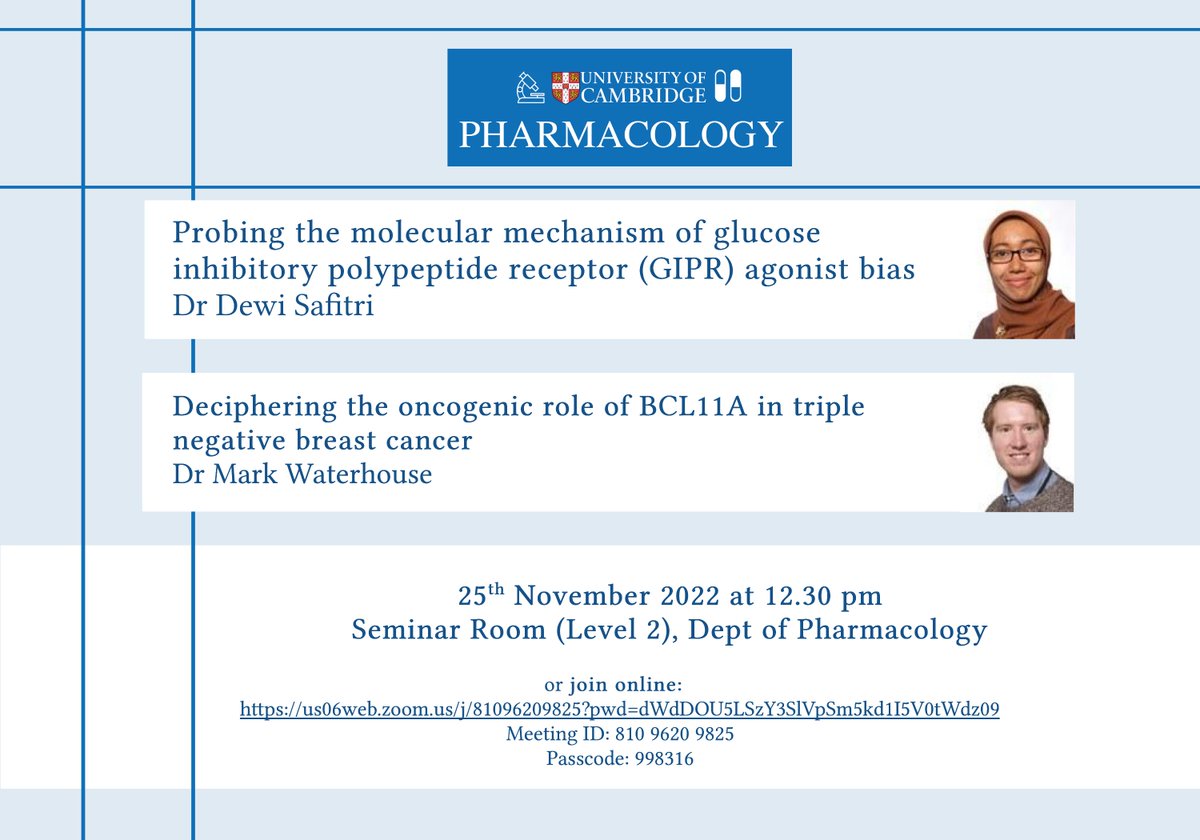
This week we have two of our very own postdocs presenting their work for our weekly seminar @dewi_safitri_88 & @MPWSci, talking about receptor bias & breast cancer respectively.
12:30 UK time in the Dept. & on Zoom 👉 https://t.co/GMXaYTfGXq
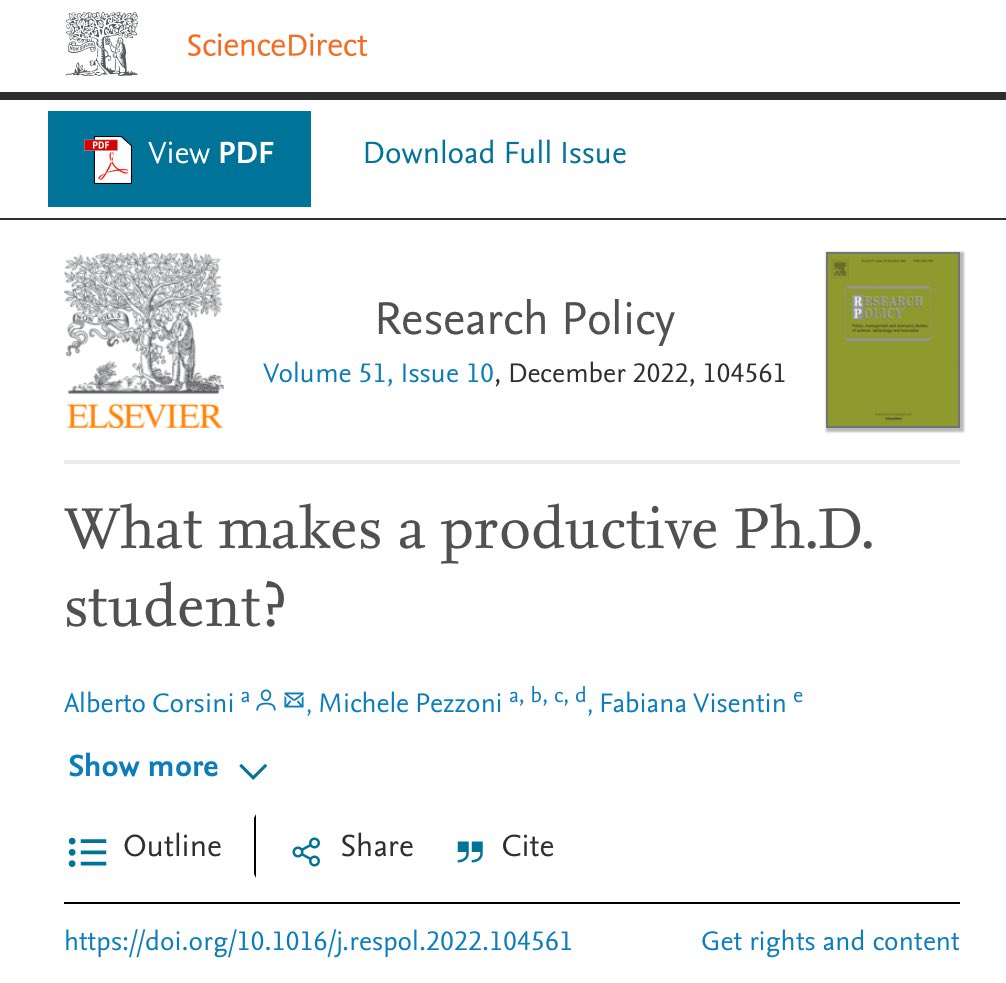
What makes a productive #PhD student?
A. A SUPPORTIVE supervisor
B. SUFFICIENT salary each month
C. LIMITED working hours
That’s all needed for a PhD fellow to perform productively.
Link: https://t.co/UgjfSsUTPG
@OpenAcademics @PhDVoice
Congratulations to Mark Waterhouse from @WTKLAB, 1 of 6 winners of the @AstraZeneca R&D Postdoctoral Challenge!
Mark was selected from a field of 120 applicants & now has the opportunity to take up his research project with AstraZeneca
https://t.co/h59ATuOeDF
New Research: HRas and Myc synergistically induce cell cycle progression and apoptosis of murine cardiomyocytes: Aim
Adult mammalian cardiomyocytes are incapable of significant proliferation, limiting regeneration after myocardial… https://t.co/soWyQgo3sF #cardiovascular
This Friday we welcome Shiladitya Sengupta who will give a seminar entitled:
Engineering insights into the strange world of cancer
12:30 UK time, in person & on Zoom 👉 https://t.co/IXXBmAeXcl


![CRUKresearch's tweet photo. Walid Khaled & Sara Pensa receive our new Biology to Prevention Award to explore the use of therapeutic agents in #chemoprevention to alter premalignant cellular changes driven by #BRCA1 & the use of blood monitoring to guide the administration of chemopreventative agents [5/7] https://t.co/Xh1hPTozau](https://pbs.twimg.com/media/F4M4UWtXsAAzS80.jpg)



![CRUKresearch's tweet photo. Walid Khaled & Sara Pensa receive our new Biology to Prevention Award to explore the use of therapeutic agents in #chemoprevention to alter premalignant cellular changes driven by #BRCA1 & the use of blood monitoring to guide the administration of chemopreventative agents [5/7] https://t.co/Xh1hPTozau](https://pbs.twimg.com/media/F4M4n0gW8AAWWqd.jpg)