Our new paper from @brkthroughprize Listen @OxfordPhysics graduate student Brian Rogers explores how guided latent flow matching can be used to uncover information buried in large datasets: https://t.co/DSeVCElAAA
Interstellar comet 3I/ATLAS just passed its closest approach to Earth. @brkthroughprize Listen has undertaken observations of this object with our suite of telescopes and we provide a summary, and public data and code, here (spoiler: no aliens): https://t.co/T3B2t6Kk2E
A new paper by @UofT / @brkthroughprize Listen undergraduate intern @peterma02 (with @drcroft@chrislintott & Andrew Siemion) presents a new technique for investigating candidate SETI signals akin to "reverse image search" algorithms used by search engines https://t.co/ag4D7NPy5V
Might megastructures or lasers modify signatures of planets passing between us and their stars? Anna Zuckerman, previously an undergraduate researcher with @brkthroughprize Listen (now a @CUBoulder grad student) looks for weird transits in her new paper: https://t.co/Oa5DnirXcP
Search of @GreenBankObserv data by @brkthroughprize Listen researcher Carmen Choza places strongest constraints to date on powerful intergalactic transmitters. See the press release from @OxfordPhysics https://t.co/ka3JJKMhZY
ET phone Dublin?
Scientists from @TCD_physics, Breakthrough Listen, and @OnsalaRymd are scanning the Universe for “technosignatures” from distant planets that would provide support for the existence of intelligent, #alien life.
Read more at: https://t.co/kmVakeAUPU
PRESS RELEASE: https://t.co/FIvEBYeRBc
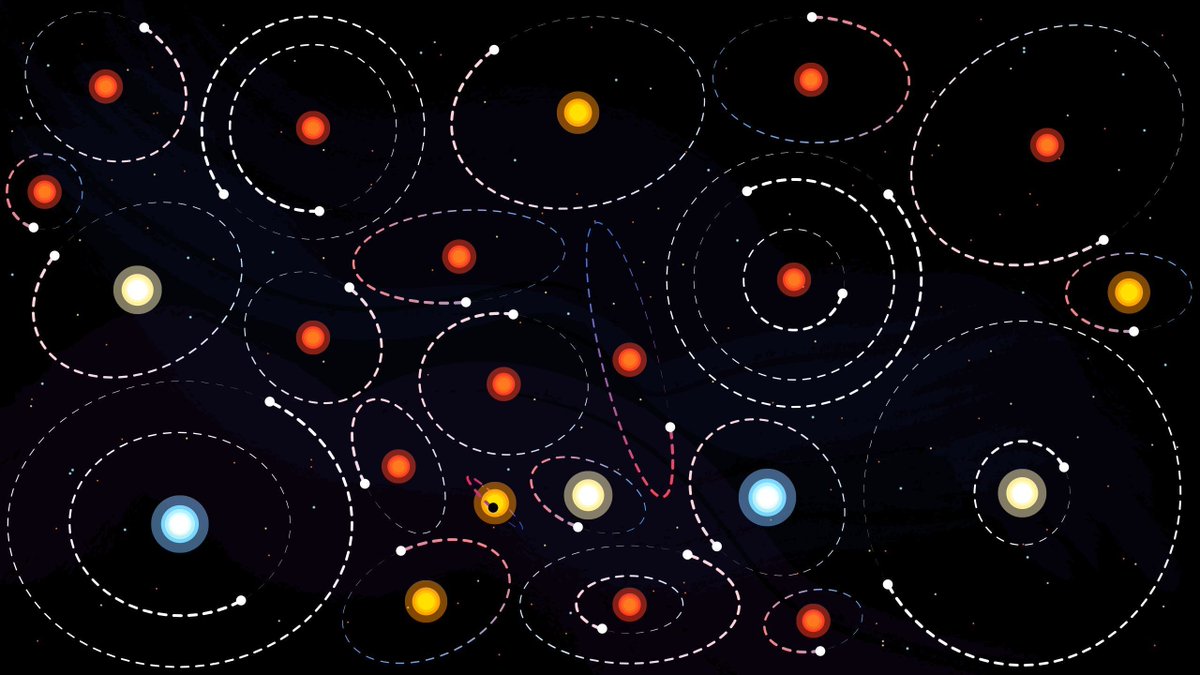
In a new study published in the Astronomical Journal, researchers used the known population of exoplanets and extrapolated to the larger, unknown population of exoplanets to set better thresholds for planetary effects on signals from ETIs.
We're delighted about the next phase for Breakthrough Listen as we enter into a new partnership with @UniofOxford@OxfordPhysics https://t.co/tTkeVZ7tBq