The randomized trial results are in for the GLP-1 drug Exenatide for Parkinson's disease. Spoiler: NO symptomatic or disease modifying effect. Tom @foltynie@DavidStandaert and I interviewed in the @nytimes@ginakolata on the latest paper just published in @TheLancet by Tom and his colleagues.
Key Points:
- 'Rigorous' study randomly assigned Parkinson’s folks to take exenatide (a relative of Ozempic).
- 194 folks enrolled in the UK.
- "No benefit or slowing of the course of Parkinson's after 96 weeks."
- "No effect on patient symptoms, no effect on brain scans, no subgroup that showed any benefit. No matter how the researchers sliced the data the results were the same."
My take: “This is a sobering moment. This is a really well done study, and it came up empty-handed.” Animal studies and small human studies previously suggested benefit. Another recent smaller study of a similar drug, lixisenatide, in the @NEJM was positive. “Researchers started digging into claims databases...and asked if patients who had taken GLP-1s might be less likely to get Parkinson’s or, if they had it, would have a disease that progressed more slowly...the results were promising." "They looked at epidemiological studies. They found that people with diabetes who took GLP-1s were less likely to have Parkinson’s." When the first study came out Gina quoted me as saying we were “nibbling at the edges of disease modification.” We were however all humbled and this reminds us how important it is to do the science, and not to rush to market or judgement. Dave commented that “he wouldn’t do another study like this unless you learn what is the target...what is the biochemistry you are trying to change in the brain? How do these drugs work, anyway?” Good science means replication. Good science protects the public and in the case of GLP-1s, there can be associated weight loss and loss of muscle mass, and that is something we probably want to avoid in Parkinson's. Ab uno disce omnes – from this one example we learn (all the rest). Let's stay humble, but keep learning and advancing the science for the benefit of those w/ Parkinson's and beyond.
https://t.co/7N3xmGkqwH
NYTimes article:
https://t.co/FvVMm3spo7 #Parkinsons #GLP1 #ozempic #diabetes
From Mentee to Mentor. In 2018, the MDS LEAP Program transformed my life as a mentee. Today, I proudly return as a mentor, guiding the next rising star in movement disorders. Want to know how this experience is making a lasting impact? @movedisorder@Neuro_Patagon
#IAPRD2025 is extending the abstract submission deadline to 20 December 2024 by popular demand! Join us to present your work in New York City next May. https://t.co/R8ek9sIBnO
@ParkinsonismD
#IAPRD2025 is pleased to co-host this session with the Mount Sinai Health System. Check out the full scientific program and register for the Congress now to get the best rates! https://t.co/ZcMCu7BavR
@ParkinsonismD
En el deporte, el público tiene el poder de cambiar la historia. Una ovación hace 2,000 años decidió un combate épico. Hoy, como fanáticos, somos el jugador más influyente. ¡Anima con pasión y haz la diferencia! ¡Vamos Rayados!
#ElPoderDelPúblico#VamosRayados#LigaMX
When should you consider active management of tics? Danny Martinez our old @FixelInstitute nails it on one slide. Treat the person not the paper! Use these common sense points to guide your decisions.
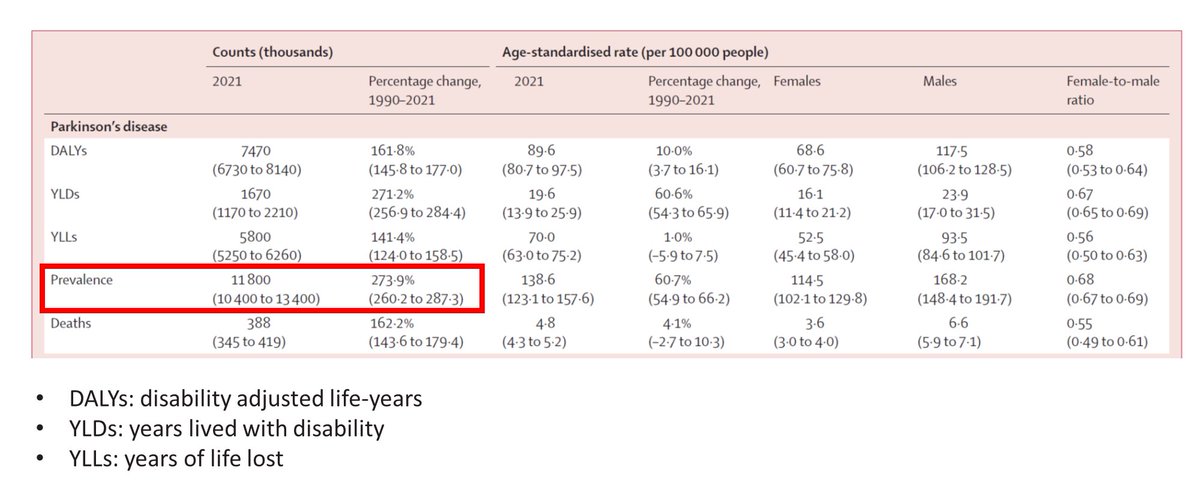
1/ The Global Burden of Disease study came out with a new report on global burden of neurological disorders - estimates that 11.8 million people have #Parkinson in 2021 (up from ~6.1-6.3 million for ~2016). This growth far exceeds previous estimates.
https://t.co/b4ISmbZI26
Hoy tuvimos el honor de recibir en el Tecnológico de Monterrey a Ignacio Fernandez “Nacho” Mata, PhD, Agradecemos profundamente a Nacho por su visita y por enriquecer nuestra comunidad académica y científica con su presencia y sabiduría. Su trabajo inspira y motiva. @nachogenePD