📜 ज्ञान भारतम् मिशन के अंतर्गत उपलब्धि
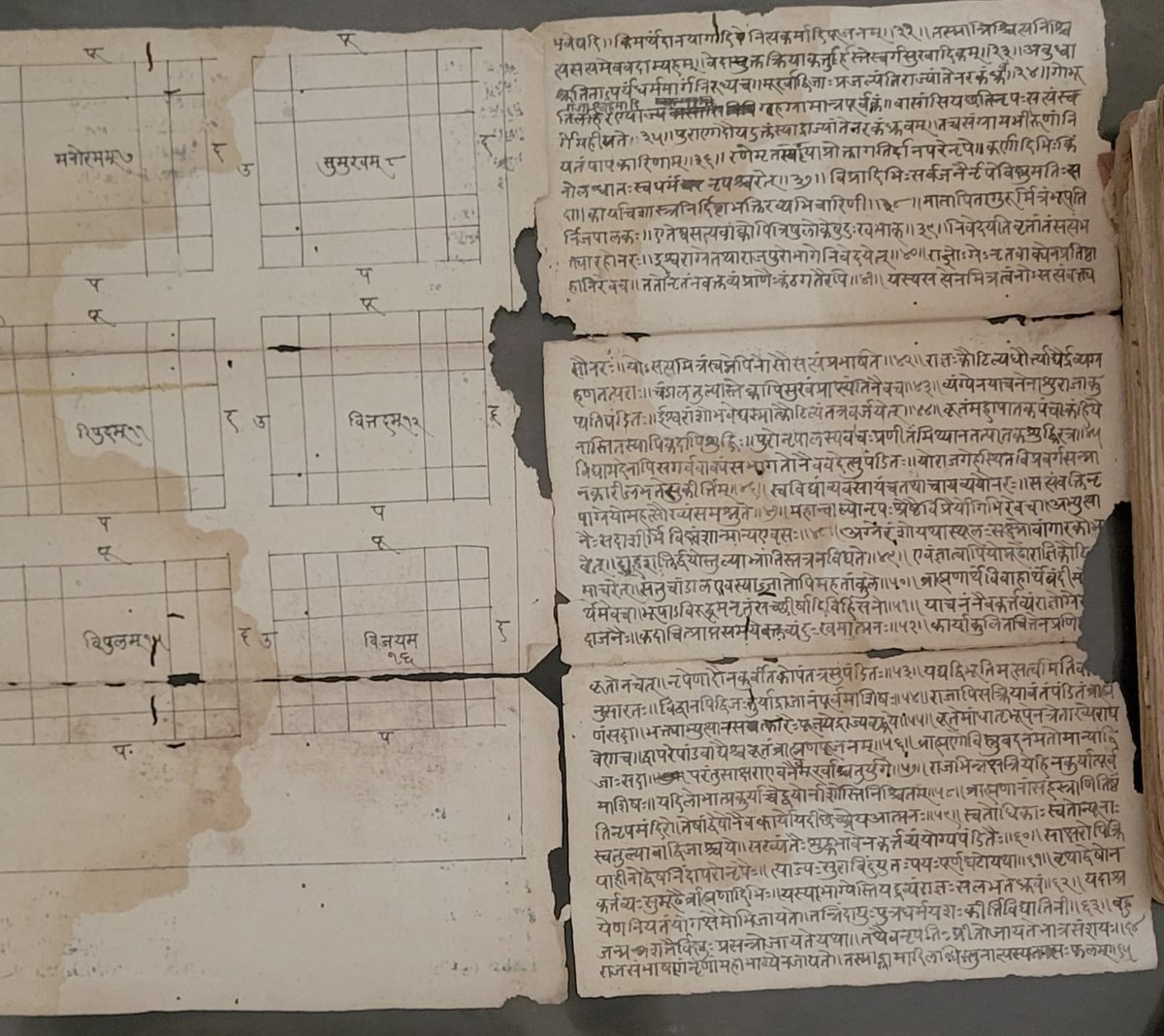
जयपुर स्थित पण्डित जवाहर लाल नेहरू बाल साहित्य अकादमी में संरक्षित महाराजा सवाई जयसिंह कालीन दुर्लभ वास्तुशास्त्र पाण्डुलिपि का सफल डिजिटलीकरण किया गया।
@narendramodi@gssjodhpur@MinOfCultureGoI@nehruBalsahitya
John von Neumann’s letter of recommendation for Alan Turing for a Procter Fellowship at Princeton for the year 1937-38, ca. June, 1937.
📷 Princeton University
On this day — June 2, 1686 — the Royal Society in London arranged for the publication of Isaac Newton’s Philosophiæ Naturalis Principia Mathematica (the Principia).
Edmond Halley personally funded the printing. This single book revolutionized mathematics: it introduced the world to Newton’s laws of motion and universal gravitation, gave calculus its first major real-world applications, laid the foundation of classical mechanics, and transformed how we understand the physical universe.
One of the most influential works in the entire history of mathematics and science.
VEDIC CIVILIZATION WAS MARITIME FROM THE EARLIEST PERIOD, going back into the Ice Age.
With numerous references in RigVeda to the ocean (Samudra). Varuna as deity as the sea. Rishis connected to the sea like Bhrigu-Varuni, Maitri-Varuni Vasishta, Maitri-Varuni-Agastya, with two or four oceans, east and west, earthy and heavenly.
Sarasvati was the central river but Ganga, Sarayu (Ayodhya), and Narmada were part of it and Dwaraka. Travel by sea was common, including to South India, Persian Gulf and Southeast Asia.
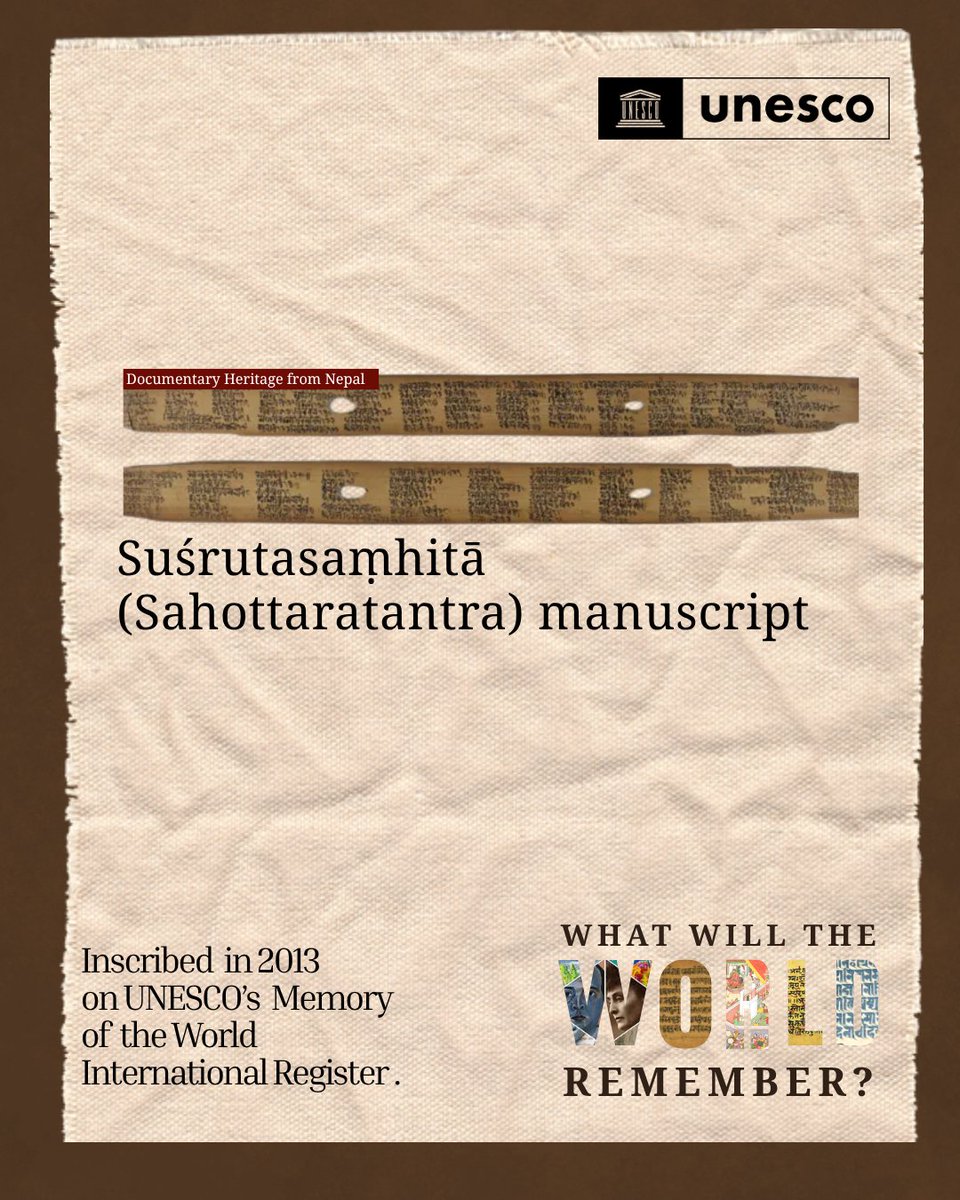
Plastic surgery. Nose reconstruction. Removal of bladder stones. Pre and post-surgical care. A list of 20 main surgical instruments and 101 supporting tools.
Written in 878 CE. On palm leaf. In Kathmandu.
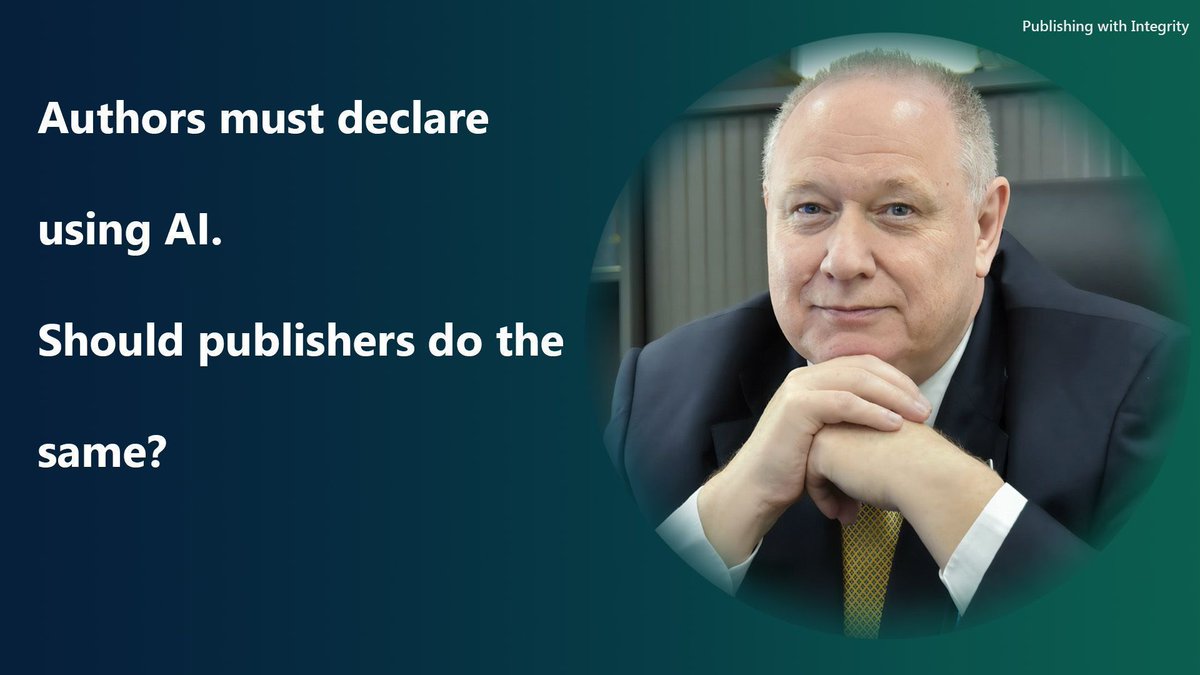
Many journals require researchers to declare the use of AI tools for writing, editing, image generation or manuscript preparation. This declaration is normally published as part of the article.
The justification is transparency. Readers, reviewers and editors are entitled to know when AI has contributed to the production of scholarly work.
________________________________________
But there is another side to this discussion that receives far less attention.
What about publishers? AI is already becoming part of editorial and publishing workflows.
It may help with:
⚫️ Manuscript triage
⚫️ Reviewer recommendations
⚫️ Plagiarism and image checks
⚫️ Scope assessment
⚫️ Editorial prioritisation
⚫️ Production workflows and summaries
The pressure on publishers to use AI is obvious. Submission volumes continue to increase, peer review systems are under strain, and editorial teams are managing enormous workloads.
________________________________________
AI offers an effective way to speed up the peer review/publishing process and reduce costs. The question is not whether publishers will use AI, as they probably already do so. The more important question is whether that use should be disclosed at paper level.
Many publishers rely on broad policy statements somewhere on their websites. But that is not the standard applied to authors. An author cannot simply place a sentence on their homepage saying:
“I may use AI tools in my academic writing.”
Similarly, universities cannot place a generic statement on their website saying:
“Some of our researchers may use AI.”
Journals require the declaration to appear on the individual paper itself, becoming part of the scholarly record. So, should the same principle apply to publishers?
If AI contributes to reviewer selection, manuscript assessment or editorial workflows, should that be declared on the published article itself?
________________________________________
This matters because editorial decisions shape careers, promotions, funding outcomes and institutional reputations.
Academic publishing depends heavily on trust. If authors are expected to disclose AI use transparently on each paper, is it reasonable that publishers should be held to the same standard?
What do you think?
You can see the full (LinkedIn) newsletter on this topic here: https://t.co/RjKH3rIS0p
🚨 ASTRONOMERS FINALLY SOLVE SATURN’S DECADES-LONG SPIN MYSTERY.
For over 40 years, scientists couldn’t agree on how long a day on Saturn actually lasts.
The planet’s fuzzy, featureless atmosphere made traditional measurements impossible. Different spacecraft gave conflicting answers.
Now, a new study has finally cracked it using the planet’s own rings as a natural clock.
Why this matters:
• Saturn’s true rotation period has been one of the biggest unsolved puzzles in planetary science
• The new method is so precise it could work on other gas giants too
• It changes how we understand the internal structure and history of Saturn
• This is a rare case of a 40-year-old mystery being solved with existing data
The deeper implication is enormous:
We are getting better at reading the hidden clocks inside giant planets even when their surfaces give us nothing to go on.
What if the same technique reveals the true rotation of other mysterious worlds we’ve never been able to measure?
Follow for more frontier space discoveries.
Standing on the banks of the Chenab River, Akhnoor Fort is a unique confluence of medieval architecture and ancient history. The fort features lofty fortification walls, watchtowers and riverside palace with mural paintings. Excavations within the fort revealed cultural remains spanning the Harappan, early historic, and Kushana periods.
Vikram-1 had to be big enough to carry the fuel to reach orbit, and smart enough to shed that weight along the way. Nearly as tall as a 7-storey building, getting something that size to orbit demands precision engineering at every stage of the climb, as much as it demands raw power. This episode is about how the team broke out of that loop and the systems that make it possible.
#JourneyToOrbit #Vikram1
For centuries, India’s heritage has influenced cultures and civilisations across the world. Today, India is reaffirming its commitment to protecting and preserving this timeless legacy on the global stage.
Guided by the vision of Hon’ble Prime Minister Shri @narendramodi, the return of the sacred Piprahwa Buddha Relics after 127 years marks a historic moment for the nation. More than the recovery of a sacred treasure, it symbolises India’s dedication towards reclaiming and safeguarding its civilisational heritage with dignity and resolve, while ensuring that the treasures of its past receive the honour and respect they deserve worldwide.
This achievement reflects the spirit of a resurgent India, anchored in its heritage, confident in its identity, and unwavering in its resolve.
#12YearsOfVikasBhiVirasatBhi #CultureUnitesAll
Discernment in the Age of Distraction 🦢
I've worked with machines most of my life. The biggest lesson they taught me? How to be more human.
Every space mission carries a zero-g indicator, a small plush toy that floats the moment gravity lets go. It's a tradition. A quiet symbol in the middle of all that engineering.
For Axiom Mission 4, we chose a swan.
The swan is sacred across all three cultures our mission represented — Poland, Hungary, and India.
In Indian tradition, it's the vehicle of Saraswati, goddess of knowledge. And it holds a rare ability: to separate milk from water. To find what's real inside what's mixed.
We named her Joy.
Because I think that's what focus actually feels like when you find it, not rigid or mechanical, but Joyful.
Today's generation has more to filter than any before them. Distraction isn't accidental anymore — it's designed, optimized, and delivered at scale. To stay focused now takes something deeper than discipline. It takes discernment.
Know what matters. Float above the rest. 🦢
#shux #space #shubhanshushukla #india #axiom4 #motivation
Liquids can fracture like solids under extreme stress: Scientists | Christopher McFadden, Interesting Engineering
New research shows liquids have a breaking point, fracturing under stress instead of flowing as scientists long believed.
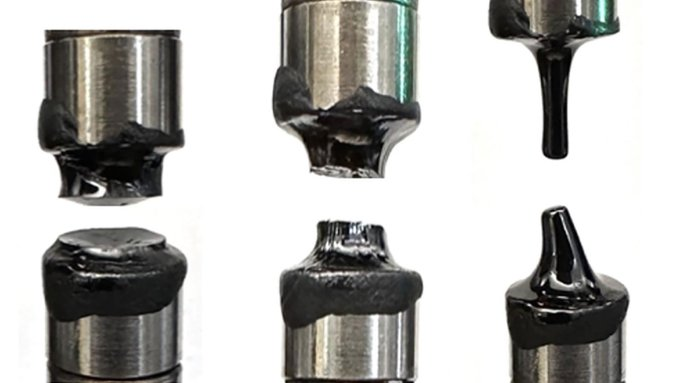
Researchers from Drexel University have discovered that liquids can, it appears, fracture like solids under specific conditions. In a discovery that could shift our understanding of fluid mechanics, it now appears that viscous fluids can suddenly break when stretched with enough force.
Unlike solids, which will stretch and eventually snap, liquids have never been believed to have a breaking point. This new research, however, appears to challenge this belief.
“Our findings show that if pulled apart with enough force per area, a simple liquid — a liquid that flows — will reach what we call a point of ‘critical stress,’ when it will actually fracture like a solid,” said Thamires Lima, Ph.D., an assistant research professor in Drexel’s College of Engineering, who helped to lead the research.
Interestingly, the team also found that the liquid “snapping” produces a sudden noise, like that of breaking solids. Needless to say, this was also not expected.
“What we observed was so unexpected that we needed to repeat the experiments a few more times to make sure it was real,” explained Nicolas Alvarez, Ph.D., a professor in the College of Engineering whose lab led the research.
“Once we confirmed the phenomenon, the research became an entirely different scientific endeavor,” he added.
Liquids can break after all
“This was an incredibly surprising thing to behold,” Lima said. “The fracture caused a very loud snapping noise that actually startled me. I thought at first the machine had broken, but soon realized that the noise came from the stretching fluid,” she said.
The critical element to the research is that liquids will only break like this when pulled apart at speeds that prevent them from “flowing away” from stress. Like in solids, this provides enough time for stress to build up enough for a sudden fracture to form.
From experimentation, the team found that liquids tend to break at around 2 megapascals of tension. The exact figure, of course, depends on the liquid’s viscosity (thickness).
The higher the viscosity, the easier it appears it can snap. “This is likely true for all simple liquids, including common examples, such as water and oil… This fundamentally changes our understanding of fluid dynamics,” she added.
“Although viscoelastic and polymer liquids — things like Oobleck or homemade slime — have demonstrated solid-like fracture behavior, simple liquids have always been thought to exhibit continuous deformation at temperatures above their glass transition and therefore would not fracture,” Lima said.
As for what this means for the real-world outside of a lab, it could open some interesting lines of research in various industries. “Showing that viscous effects are enough to promote solid-like fracture behavior opens a world of new questions to explore in this area of scientific inquiry,” she said.
Interesting future study possibilities
For example, 3D printing, which uses liquid polymers, could benefit from a better understanding of liquid fracture limits. Fiber manufacturing, which tends to stretch liquids into threads, would clearly also benefit from such insights.
In medical sciences, things like blood (which are liquids) could be investigated to see if it fractures under certain conditions and find ways to avoid it. Hydraulics could also be another interesting area of study.
“This suggests that many other elastic liquids might also break at a relatively similar critical stress point,” Lima added. “This points to a phenomenon that is relatively chemistry independent and possibly generalizable to a wide range of liquids,” she explains.
Another interesting area of study could be cavitation from boat or submarine propellers, pumps, and some sonar systems. Here, tiny bubbles form and then collapse violently, which can damage metals, create shockwaves, and make noise.
With a better understanding of the physics going on, it might be possible to limit or even eliminate cavitation issues in the future.
“Now that we have reported this unanticipated behavior, the work of fully understanding why it happens and how the behavior manifests in other liquids is an important next step,” Lima said. “It will also be interesting to see how this finding may be applied to assist fiber spinning and other applications that use viscous liquids,” she added.
Read more:
https://t.co/ThDBGXqbNl
Drexel Exhibition Reveals What Students Keep in Their Dorms - A mix of objects and photographs loaned from students and Drexel University Archives, as displayed in the show. “How do objects in dorms and other ... - https://t.co/LHztfWgt82
Excited to see this innovative senior design project coming out of Drexel Nanomaterials Institute! 🌞💧
👏 Great work by the team exploring how advanced nanomaterials can support sustainable solutions.
Read full post:
https://t.co/nNecPrbehB
મધ્યપ્રદેશના ભોજશાળા વિવાદ પર હાઈકોર્ટનો ચુકાદો
‘આ મસ્જિદ નહીં પણ વાગ્દેવીનું મંદિર છે’, મુસ્લિમોની નમાજ પર પ્રતિબંધ!
ASI (ભારતીય પુરાતત્વ સર્વેક્ષણ) ના રિપોર્ટ અને ઐતિહાસિક પુરાવાઓને આધારે કોર્ટે જાહેર કર્યું કે આ માળખાનું ધાર્મિક સ્વરૂપ મંદિરનું છે. તે રાજા ભોજના સમયનું સંસ્કૃત શિક્ષણનું મોટું કેન્દ્ર હતું.
કોર્ટે હિન્દુ પક્ષની માંગણીઓને સ્વીકારીને ત્યાં નિયમિત પૂજા-અર્ચનાનો માર્ગ મોકળો કર્યો.
કોર્ટે કેન્દ્ર સરકારને પણ સૂચન કર્યું કે લંડનના બ્રિટિશ મ્યુઝિયમમાં રહેલી મા વાગ્દેવી(સરસ્વતી)ની મૂળ મૂર્તિને પરત લાવવા માટે પ્રયાસો કરવામાં આવે.
શું છે આ ભોજશાળા વિવાદ?
વાર્તા શરૂ થાય છે 11મી સદીમાં.
માલવા પર રાજ કરતા રાજા ભોજે મધ્યપ્રદેશ વિસ્તારના ધારમાં એક ભવ્ય વિદ્યાપીઠ બનાવી હતી. સંસ્કૃત સાહિત્ય અને વિજ્ઞાનના અભ્યાસ માટેની એ સમયની ઓક્સફોર્ડ યુનિવર્સિટી કહી શકાય.
અહીં દેશ-વિદેશથી લોકો ભણવા આવતા. દીવાલો પર વ્યાકરણના નિયમો કોતરાયેલા હતા અને મધ્યમાં મા વાગ્દેવીની મનોહર મૂર્તિ બિરાજમાન હતી.
14મી અને 15મી સદીમાં ભારત પર આક્રમણોનો દોર શરૂ થયો. અલાઉદ્દીન ખિલજી અને ત્યારબાદના શાસકોએ આ શૈક્ષણિક ધામની પવિત્રતા ખંડિત કરી તેને મસ્જિદમાં ફેરવવાનો પ્રયાસ કર્યો.
જોકે, મંદિરના મૂળ પથ્થરો અને સ્થાપત્યે પોતાની ઓળખ ગુમાવી નહીં. આઝાદી પછી આ વિવાદ કોર્ટમાં પહોંચ્યો અને છેલ્લે 2003થી તો એવી વ્યવસ્થા હતી કે મંગળવારે હિન્દુઓ પૂજા કરે અને શુક્રવારે મુસ્લિમો નમાજ પઢે.
કોર્ટના આદેશથી ASI (ભારતીય પુરાતત્વ સર્વેક્ષણ) દ્વારા કરવામાં આવેલ વૈજ્ઞાનિક તપાસના આધારે જાણવા મળ્યું કે :
દીવાલો પર હજુ પણ સંસ્કૃતમાં શ્લોકો અને સ્તોત્રો અકબંધ હતા.
મસ્જિદ જેવી દેખાતી દીવાલોના પાયામાંથી કમળ, શંખ અને ગદાની કોતરણીવાળા પથ્થરો મળ્યા.
આખું સ્થાપત્ય વૈદિક વેદશાળા મુજબનું હતું, જે મુસ્લિમ સ્થાપત્યશૈલીથી તદ્દન અલગ હતું.
ઈન્દોર હાઈકોર્ટે તમામ પુરાવાઓ તપાસ્યા પછી ચુકાદો સંભળાવ્યો કે,
- આ ભોજશાળા મૂળભૂત રીતે હિન્દુ મંદિર જ છે.
- હવે ત્યાં શુક્રવારની નમાજ પર કાયમી પ્રતિબંધ રહેશે.
- હિન્દુઓને ત્યાં નિયમિત પૂજા અને અર્ચના કરવાનો સંપૂર્ણ અધિકાર મળશે.
- લંડનના મ્યુઝિયમમાં કેદ મા સરસ્વતીની મૂર્તિને પરત લાવવા સરકાર પ્રયાસ કરશે.
#Bhojashala