Most crypto backtests are built on a lie. Pavel Kycek has the data to prove it.
When you backtest a crypto strategy today, you're testing against the coins that survived. The ones that went to zero aren't in your dataset. Your backtest never sees a single wipeout.
In equities, survivorship bias is a known problem. Researchers account for it. In crypto, Pavel's research puts it at 5-10x worse. The population of failed projects dwarfs the equities equivalent by an enormous margin.
The practical effect: strategies that look profitable in backtests frequently fail in live trading, not because the logic is wrong, but because the test environment was never honest about the full universe of assets.
The fix isn't complicated. You need to include delisted and failed assets in your historical data. Test against the full population, not just the survivors.
The strategies that survive that test are the ones worth running.
Most crypto algo traders never make this adjustment.
Their backtests look excellent right up until they encounter something the test never included.
Great news, we are finally getting onboarded to Stuttgart Exchange!
In a week or two we are opening first subscription window for the ETF-like algorithmic trading programme.
More information here: https://t.co/5nuVbMigRd
@JoachimMo1985 Reminds me of when I was a kid and I heard on the radio that green cars will pay less taxes so I thought, why doesn't everyone get their car painted green??
Crypto Benchmark page is live!
Over 30 charts and tables.
A few examples:
1/ Crypto is not one market.
Bitcoin and broad altcoin exposure have produced very different outcomes.
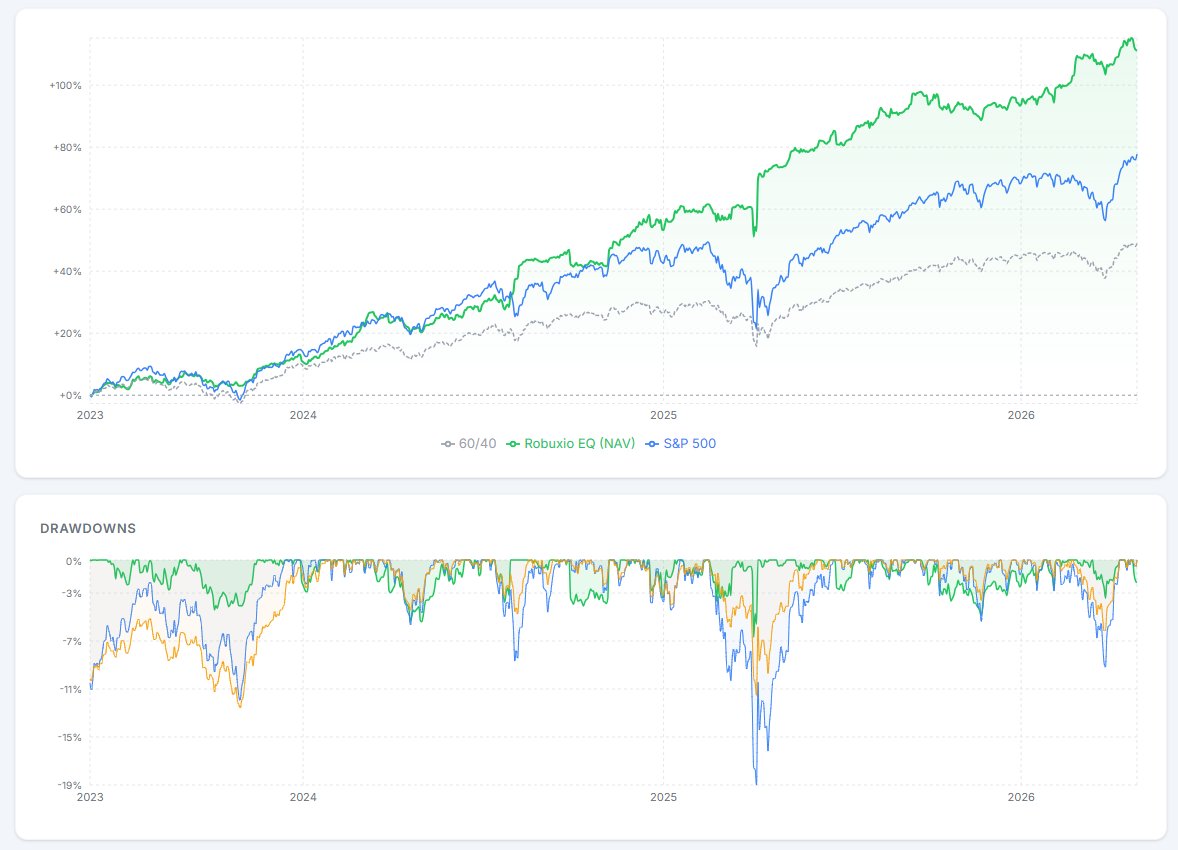
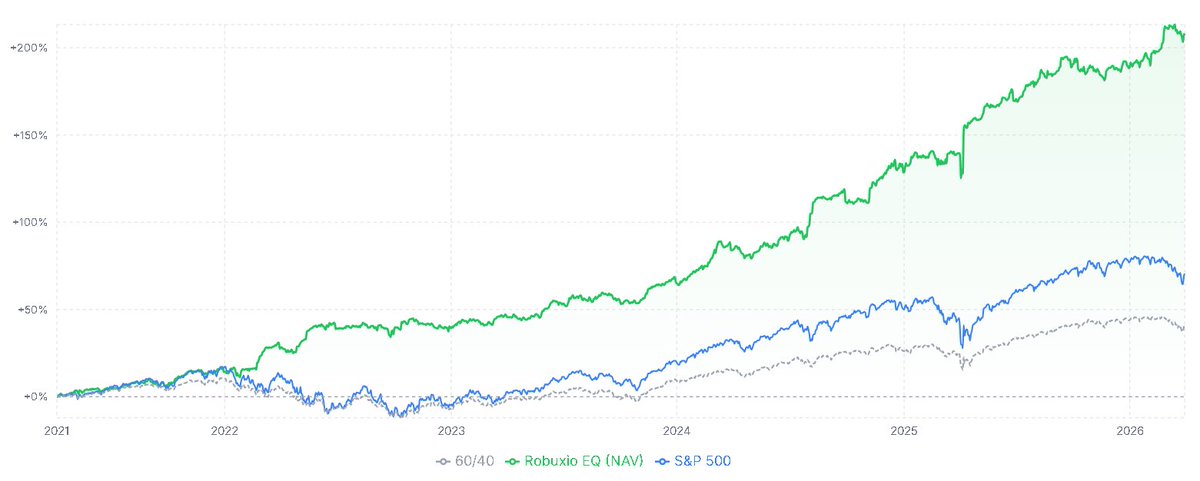
1/ The logic behind Robuxio was always broader than a single asset class: to deliver robust algorithmic exposure across markets.
Launching in May: Robuxio Systematic Equities..