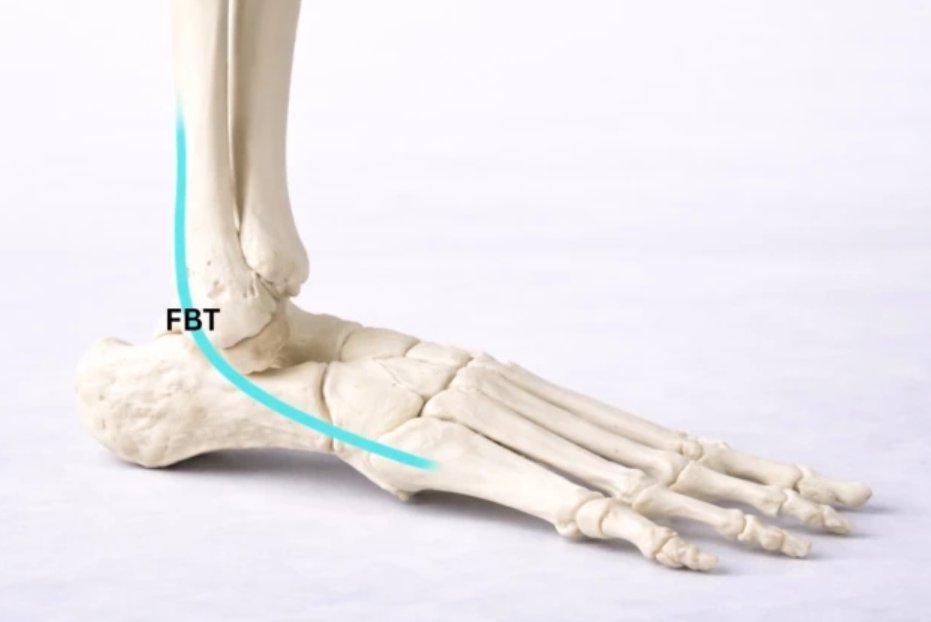
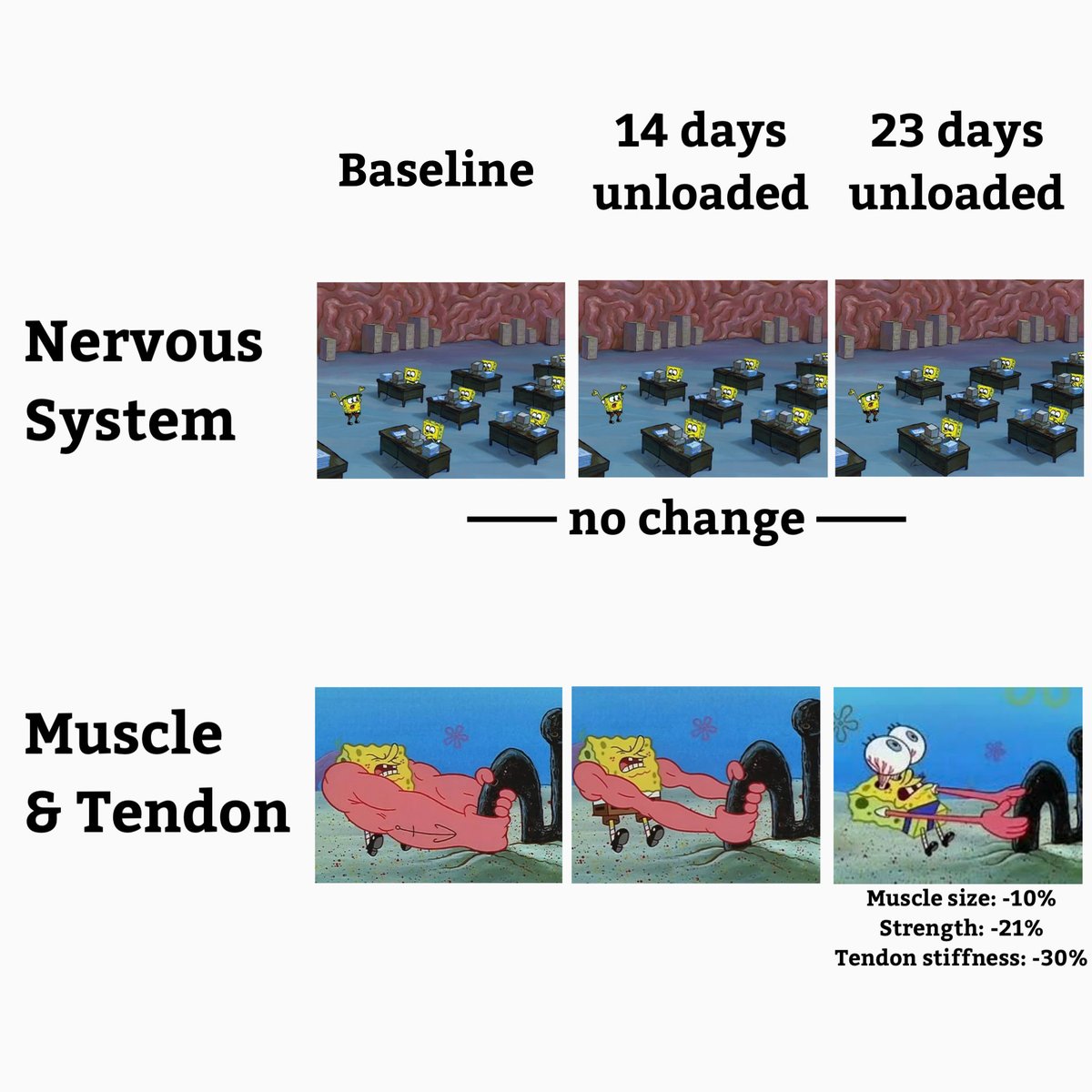
The Musculoskeletal System is an adaptive system. Mechanical forces define the demand, mechanotransduction defines the biological response, nutrition provides the substrate & recovery permits the remodeling. Capacity emerges from the continuous interaction of these four elements.
Acute molecular and chronic adaptations to lengthened partial versus full range of motion resistance training. Awesome & hyper relevant dissertation work by @DanielPlotkin_ from @AuburnKINES with collab from @ @EXSS_UMHB. https://t.co/AZnBal6gIS
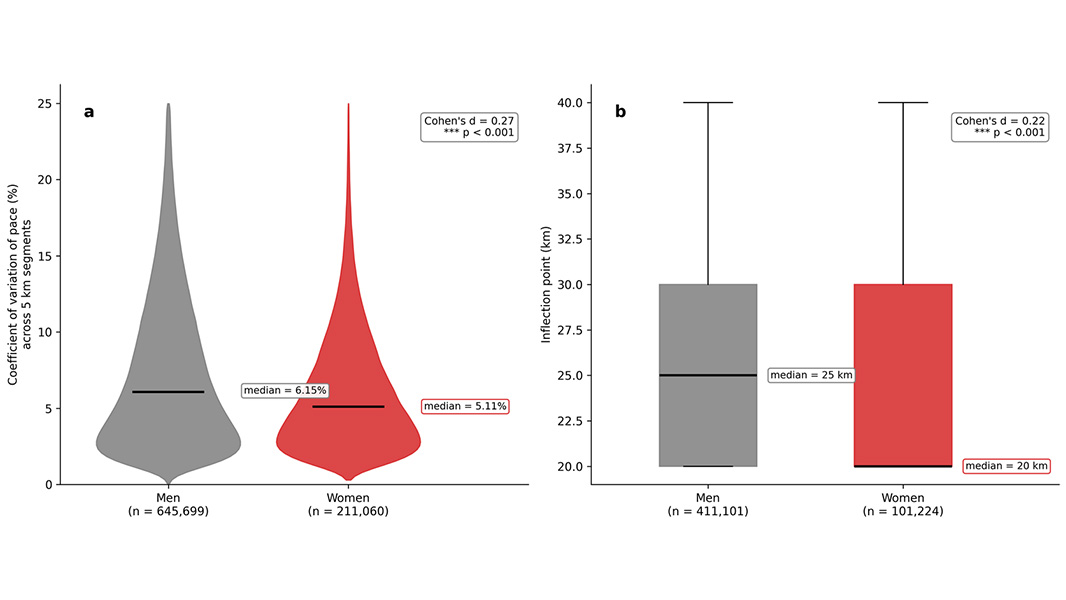
Male runners may be twice as likely as female runners to suddenly slowdown — known as “hitting the wall” — during a marathon, according to a study published in Scientific Reports. https://t.co/eh5wvYccAh
New study shows that partial range of motion in the leg extension at long muscle lengths elicits greater hypertrophy compared to training at short muscle lengths. Moreover, gains for the long length condition were generally comparable to training through a full ROM. These findings are consistent with the growing body of evidence suggesting that the lengthened portion of a repetition provides the strongest stimulus for muscle hypertrophy.
Nice work from @MuscleMechsLab 💪
https://t.co/p9GkMjTMpH
Patellar tendon looks to strain more than the Achilles tendon.
I heavily altered the graph for better understanding. They had 172 participants for the Achilles and 215 for the patellar. The patellar had a lot of young kids whereas the Achilles was all older people... you could make a case that the young patellar kids skewed the graph towards more strain because kids have more compliant tendons. But I think it balances out because kids also have weaker muscles, so the whole muscle-tendon unit is lacking.
If we accept 4.5-6.5% is a good strain zone for tendon training, then patellar tendon would need less intensity and Achilles tendon would need more intensity and this fits with what I think.
Tom Brady says his doctor told him to cut the tendons in both legs. He refused, fixed it in 3 days with no surgery, and played till 45
“After the season, I tell the doctor, My groin’s just really sore all the time. Every time I move, I can feel it just grab”
“And the team doctor says, This is what we’re going to do. We’re going to do an adductor release, we’re going in there and cut the adductor tendon in your groin. We’re also going to cut the other side, so it never becomes a problem”
“And I was like, Okay, that sounds not like what I want to do”
“I called Alex when I left the office. I said, Alex, the doctor told me to do this adductor release. What do you think? He said, Absolutely not. Fly out to LA with me for 3 days and I’ll fix it”
“So I fly out there and worked the adductors, lengthened and softened both muscles, my hips, all my glutes, basically relieved the tension on the tendon. And 3 days later, no more pain”
“The doctor said there was a 99% chance he’d have to cut my adductor tendon at some point. And to this day, nothing”
Morphological Analysis of the Latissimus Dorsi Tendon Insertion: Implications for Optimizing Tendon Transfer Surgeries in Rotator Cuff Repair
FREE Podcast: https://t.co/Y4fiQTRlpj
FREE Article: https://t.co/bCy8cxfaAI
Muscle aging may be about quality, not just size.
New research suggests shifts in water inside vs. outside muscle cells may help explain changes in strength and mobility. Read more in @PhysRep:
https://t.co/h9ojsRTNDs #ArticlesInPress#AgingResearch#MuscleAging
📷: @istock
Obesity doesn't just affect the waistline—it reshapes the brain. Emerging evidence suggests chronic metabolic overload disrupts neurovascular coupling, blood–brain barrier integrity, cerebrospinal fluid dynamics, and myelination, creating conditions that may accelerate neurodegeneration. As obesity and neurological disorders rise in parallel, understanding these interconnected pathways could reveal new strategies to protect brain health across the lifespan. #Neuroscience #Obesity #BrainHealth
https://t.co/jb4TtNV1xu