@WallStDiaries Muse Wonder ve Wonder Full ayrımı bence net bir ürün stratejisi. Herkese aynı modeli vermek yerine kim ne için ��düyor, onu ayırıyorlar. Kod tarafına Full vermeleri de "ciddi kullanım buradan" mesajı gibi.
@ProKayaFinance Bence Meta'nın en büyük kozu model değil, dağıtım. Milyarlarca kişinin zaten her gün açtığı uygulamalara ajanı koyabiliyorsun. Model farkı kapanırsa oyun asıl orada değişir.
@Climatolog_ Katılıyorum. Bölüm açmak kolay, ekosistem kurmak zor. Teşvik, fikri mülkiyet ve risk sermayesi oturmadan mezunlar ya yurt dışına kayıyor ya da alakasız işlere dağılıyor. Nitelik tarafı olmadan sayı artırmak çözmez.
@yabancibasin Meta'nın da ajan tarafına bu kadar yüklenmesi bence mantıklı. Active Memory ve Active Focus lafı kulağa pazarlama gibi gelse de, gerçekten işe yarayan bir asistanın unutmaması ve yarım bırakmaması lazım. Muse Code abonelerine Full vermeleri de net bir ürün ayrımı.
Bence bu tabloyu herkesin görmesi lazım.
Karpathy diyor ki artık iki kamp yok, bir huni var: 6 milyar kişi yapay zekâyı neredeyse hiç kullanmamış. 1-2 milyar ücretsiz sohbet botuyla arada sırada konuşuyor. Yaklaşık 20 milyon kişi ajanlarla haftalar süren işleri bitirtebiliyor. En tepede de birkaç bin kişi, içeriden en güçlü sistemlere bakıyor.
Aynı "ChatGPT" lafını söyleyince biri arama motoru görüyor, diğeri sürüyle ajan.
Açıkçası Türkiye'de de aynı uçurum var bence.
Dusting off this tweet from April because this gap in shared understanding of LLM capability is *widening*. It's now less "two groups of people speaking past each other" and more a sharp funnel.
- Napkin math somewhere around 6B people (~75% of the population) have barely come in contact with LLMs at all.
- Around 1-2B (~20%) are casual and infrequent users of free-tier ChatGPT-like products. This group sees derpy chatbots and treats them a bit like a better Google search, a writing aid, or etc. Maybe an agent tries to book you a flight. I have non-tech friends who (reasonably, imo) say they have not much use for it at all. Even many professionals outside of math&code are in this tier. For example, execs and many other functions spend a lot of their time talking to other people, so while they understand what is happening intellectually, it is still second-hand and a bit abstract.
- Now we get to professional use of frontier-grade LLMs in math&code. Somewhere around 20M people (0.2%) see first-hand that large, complex projects that used to take them weeks/months can now be completed by agents with a prompt. Building apps, copying apps, translating apps, decompiling apps from binaries... This has all happened very quickly and recently - less than 1 year ago, I was writing code manually by hand, typing memorized computer code commands into a code editor character by character, occasionally pressing Tab to autocomplete a little chunk of code.
- And finally we get to the ~5,000 people (~0.00006%) with access to frontier-grade systems internally. The external world has seen the preview. It looks like swarms of thousands of agents collaborating over weeks on software mega projects: minting zero days, running cyber attacks and defenses at machine speeds, discovering new science, advancing the frontier of mathematics. Things that would have taken top professionals in the industry years of work. Meanwhile, human review and comprehension are starting to fall behind. For example, people are still involved in the "archeology" of the OpenAI-HF incident from many months ago. Mathematicians may be poring over the 722 manuscripts on frontier mathematics for a while.
The funnel is driven by a combination of factors:
1. The impact scales with ambition, problem size, and horizon. A question with a paragraph answer barely stresses the system. You need a reservoir of big, difficult problems that you really care about. This aspect drives the consumer / professional dimension of the funnel.
2. The jaggedness of the system (which I have written about a lot separately). Capability peaks in domains that are digital, verifiable and economically valuable. This is because LLM capability emerges from reinforcement learning on verifiable rewards on a curated environment mixture driven by revenue potential. This aspect primarily drives the area (e.g. math&code) dimension of the funnel.
3. Access. Free-tier, paid-tier, internal.
So this is the weirdness of the moment. The general public has mostly not interacted with these systems. When they have, it looks like a derpy chatbot. The majority of professionals still see only a modest uplift. And a small sliver of professionals are experiencing the vertigo of the curve going vertical. And it is all happening at the same time.
@shiftdeletenet Uzun bir eğitim videosunda tek bir cümleyi bulmak için ileri geri sarmak gerçekten yorucu. Videoya doğrudan soru sorabilmek bunu epey çözer. Türkçe videolarda ne kadar isabetli olacağını görmek lazım.
Her sabah aynı yoldan işe gidenler, bu biraz sizin için.
Yandex Maps ve Navi, Türkiye'de yapay zekâ destekli kişisel rotalar sunmaya başlamış. Sistem önerilen rotadan ne sıklıkla saptığınıza, hangi seçenekleri tercih ettiğinize ve genelde ne kadar yol gittiğinize bakıyor.
Yeni sürücüye karmaşık kavşaklardan uzak "Basit" rota, ev ile iş arasında gidip gelene "Bilinen" rota öneriyor. Toplamda 10'dan fazla rota türü var.
Bence güzel olan şu: navigasyon artık herkese aynı "en hızlı" yolu dayatmak yerine nasıl sürdüğümüzü öğreniyor.
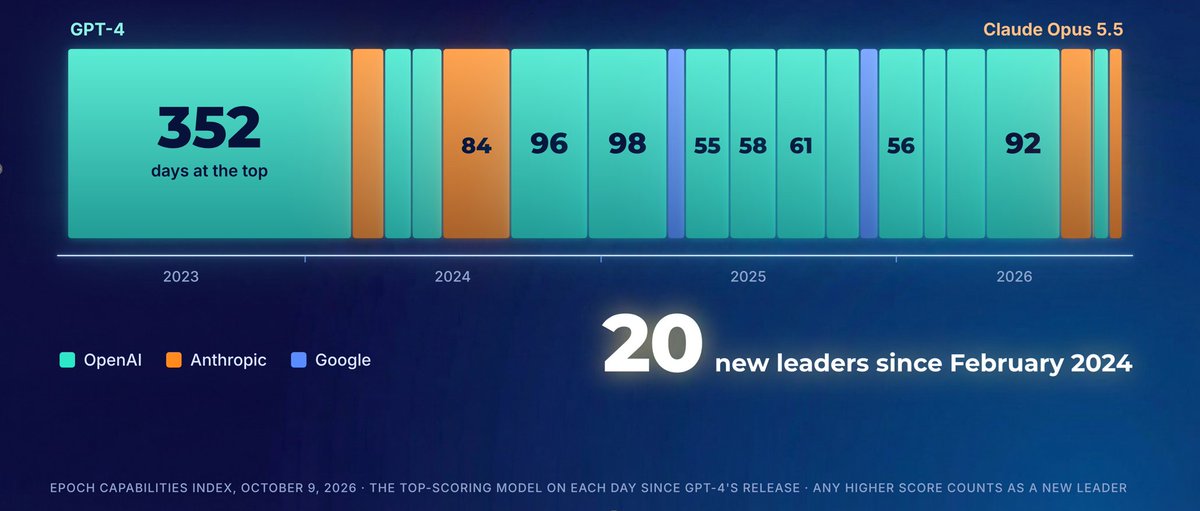
GPT-4 çıktığında bir yıl boyunca tartışmasız en iyi modeldi. "OpenAI'ın gizli bir formülü mü var?" diye konuşup duruyorduk.
Ethan Mollick'in paylaştığına göre şimdi modern bir telefonda çalışabilen ve GPT-4'ten daha iyi olan 19 model var.
Dün dev sunucularda olan şey bugün cebimize sığıyor. Bence bir sonraki "imkânsız" da bu kadar çabuk sıradanlaşacak.
GPT-4 was the undisputed best model in the world for a full year and we all debated whether anyone could catch up or if OpenAI had some secret formula that nobody else knew about.
Now there are are 19 AI models that can run on a modern smartphone that are better than GPT-4!
@TheTinkergv9n Ekran görüntüsü fikri güzel. Legacy projelerde ilk bağımlılık haritası çıkınca gerçekten rahatlıyor insan, sonucu ben de merak ediyorum.
Hafta sonu akışımı en çok bu doldurdu: Anatomy diye bir Claude skill'i.
Tek satırda bir makineyi tarif ediyorsun, döndürüp parçalarını inceleyebildiğin interaktif bir 3D şemaya çeviriyor. Redis önbelleğinden mekanik klavye switch'ine kadar denemişler.
Şimdi Hermes Agent'a da resmi, isteğe bağlı bir skill olarak eklenmiş.
Bence bir şeyin nasıl çalıştığını anlatma şeklimiz böyle araçlarla epey değişecek.
Anatomy skill for building wireframe designs and interactive prototype machines is now an officially integrated optional skill in Hermes Agent
You can find it in the optional built in skills in the skills catalog or install with:
hermes skills install official/creative/anatomy
All credit to @wheresryan22!
Bir ayda 16 yeni model. Ben bir uygulamanın güncellemesine bile bu hızda yetişemiyorum açıkçası.
Nikkei'nin saydığına göre eylülde DeepSeek, Alibaba, Tencent, Xiaomi gibi 10 büyük Çinli şirket bu kadar yeni model çıkarmış. Hem de Anthropic'in patronu Amodei "biraz yavaşlayalım" derken.
Bence asıl hikâye hız değil, fiyat. Çoğu küçük, ucuz, hızlı "Flash" modeller. Ajanlar bu kadar token yaktıkça ucuz olan kazanıyor.
Chinese AI firms REFUSE to SLOW DOWN.
Chinese developers unleashed 16 NEW AI models in just ONE MONTH, turning up the AI race heat on U.S. AI giants OpenAI, Anthropic, and Google.
Led by DeepSeek and Xiaomi, Chinese firms are accelerating development and pushing cheaper, open-weight models into the market.
Anthropic CEO Dario Amodei is urging the industry to SLOW DOWN over mounting AI safety concerns.
But Chinese developers are pushing in the OPPOSITE direction.
Nikkei Asia reports on a DeepSeek engineer who REJECTED the slowdown argument, questioning whether U.S. AI giants could be trusted to keep advanced AI open and affordable.
And, the money is pouring in.
Moonshot AI reportedly reached a $50 BILLION valuation, while DeepSeek is nearing a $12 BILLION funding round.
China's cheaper, increasingly capable AI models could UNDERCUT U.S. giants, putting pressure on their pricing power and profit margins.
As valuations SOAR and BILLIONS pour into AI, cheaper Chinese models could UNDERCUT pricing power and squeeze profit margins.
If profits fail to justify massive investments, the risk of an AI valuation correction GROWS, fueling fears of an AI BUBBLE.
The AI race is heating up, but can profits KEEP UP with the hype?
@webrazzi Acil durum freni çağrısı bence doğru yönde. Model herkese açıkken durdurma düğmesi yoksa iş kontrol edilemez hale geliyor. Bu konuşmaların artması iyi.
@Aykutuces Video stüdyosunun tek cümleye inmesi bence üretimin en sessiz ama en sert dönüşümlerinden biri. Kod olarak yazılan video demek, her kareyi elle düzeltmek yerine aynı prompt'la tekrar üretmek demek. Küçük ekipler için bu ciddi bir kaldıraç.
Bunu okuyunca aklıma ilk gelen şey şu oldu: pahalı model her işin kralı değilmiş.
Coinbase açık ağırlıklı küçük bir modeli (Qwen3.5-9B) kendi verisiyle ince ayar etmiş. Dolandırıcılık yakalamada frontier modelleri geçmiş; hem daha ucuz hem daha hızlı. Eğitim maliyeti de 100 doların altında.
Yani bence şirketlerin oyunu değişiyor. Herkes aynı genel modele yapışmak yerine kendi dar işine özel model kuruyor. Bu pattern yayılırsa epey şey değişir.
We were able to fine tune an open weight model (Qwen3.5-9B) on proprietary internal data at @coinbase, and it out performed frontier models, at much lower cost and speed, for a specialized task (fraud prevention in this case).
I think we'll see more of this pattern inside companies. The frontier models are amazing generalists. But increasingly you'll see specialist models out perform on more narrow tasks, either working on teams, or by themselves.
We're making it easy to fine tune models internally for our employees. We even have a skill for it in our internal harness that makes it easy to spin these up and start training them:
"/fine-tune-and-serve-llm I want to fine-tune Qwen for payments risk review. help me get started"
I imagine we'll have some backend services that could be replaced entirely by this new architecture.
@BloombergHT Yapay zekâ yatırımları büyümeyi taşıyor gibi görünürken bir yandan da balon endişesi büyüyor. IMF'nin üç başlığı yan yana koyunca tablo daha net: işin teknik tarafı kadar finans ve güvenlik tarafı da artık aynı masada.
@trthaber Sesin tescil edilmesi bence geç kalınmış ama doğru bir adım. Bir telefonda "benim sesimle" para isteyen biri çıkınca o tescil belgesi belki hayat kurtarır. Sıradan kullanıcı için de benzer bir koruma yolu lazım gibi.
Köşeyi dönmek şudur: başkasının yapay zekâsını emerek kendi modelini ucuza kurmak.
Anthropic dün açıkladı: Claude'un muhakeme çıktısını çalmaya çalışan "distillation" saldırılarında ele geçen veri yüzde 90 ile 99 arasında azalmış. Proxy ağlarıyla tekrar tekrar soru sorup modeli taklit etmek de zorlaşmış.
On binlerce şüpheli hesabı da kapatmışlar.
Yani pahalı modeli bedavaya çoğaltma işi giderek kapanıyor. Bence uzun vadede dürüst oynayan kazanır.
@ed_ge1 Parçaları yan yana koyunca gerçekten ilginç bir tablo çıkıyor. Robotun gövdesi, beyni, bağlantısı ve üretimi aynı çatı altında olunca iş artık tek bir üründen çıkıp başka bir boyuta geçiyor bence.