Just finished Tommy Wood (@DrRagnar)’s The Stimulated Mind and it is easily one of the best brain health books I have read in years, the best since Stephan J. Guyenet (@sguyenet)’s now-classic The Hungry Brain.
What makes it stand out is that Wood does not give you another generic checklist. He builds a systems model for brain health around stimulus, supply, and support. He shows how exercise, nutrition, sleep, social connection, and cognitive challenge interact rather than operate in isolation.
As a longevity physician, I especially appreciated his concept of "headroom". Building enough cognitive reserve and resilience means your brain can better absorb the hits of stress, illness, sleep loss, and aging.
It is well-cited, rigorous, practical, and unusually thoughtful about uncertainty. Highly recommended for clinicians, researchers, and anyone who wants a sharper, more resilient brain over the long run.
https://t.co/k7WcDQsfer
Dr. Tommy Wood's new book “The Stimulated Mind” is out today, and it gives people a practical toolkit to improve their cognitive function on a day-to-day basis while decreasing their long-term risk of dementia.
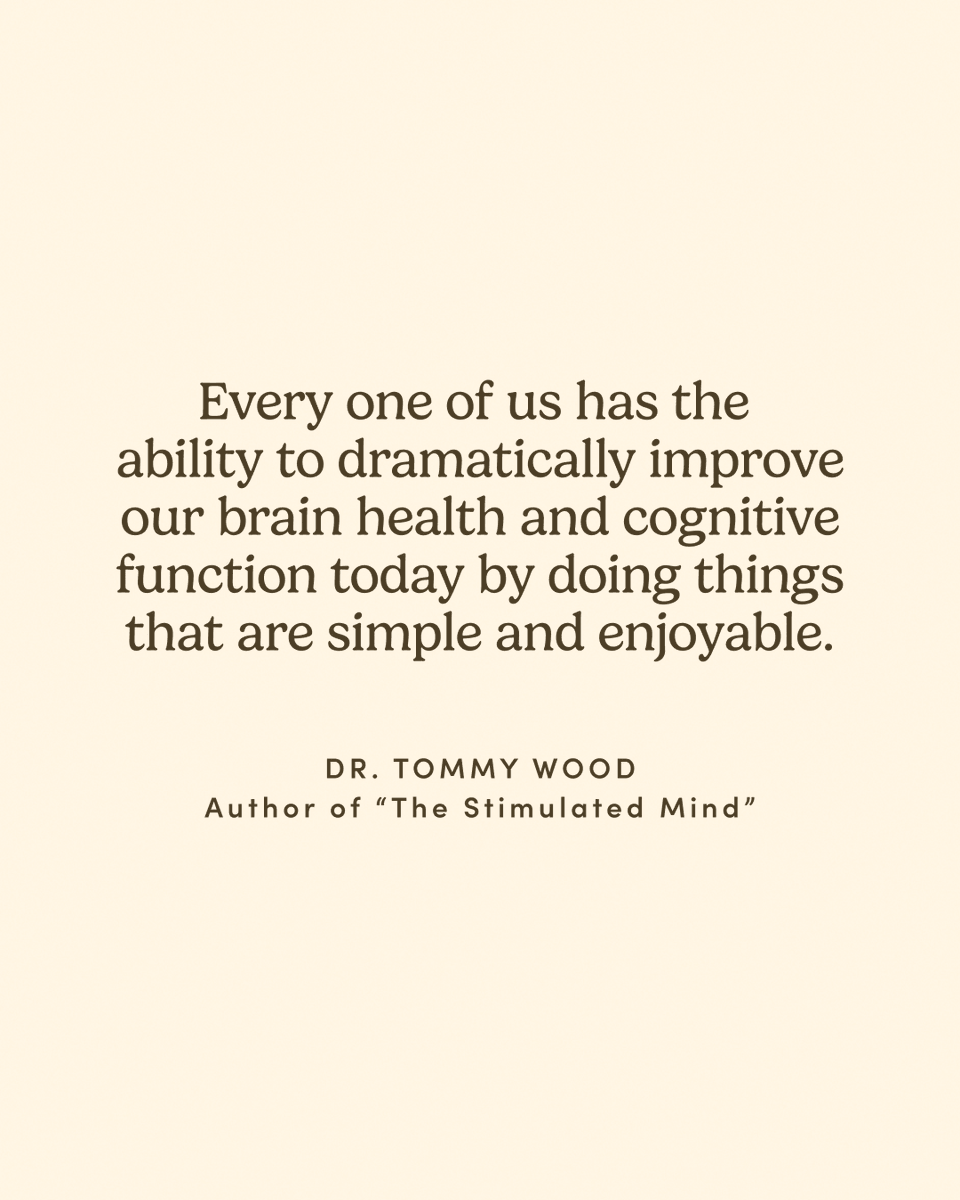
“Every one of us has the ability to dramatically improve our brain health and cognitive function today by doing things that are simple and enjoyable,” he writes. “And most importantly, it’s never too late to start.”
And the book provides plenty of Microsteps to guide us. Brain health is at the heart of the zeitgeist. And with small changes in our daily behaviors, we all have the power to make it our own personal moonshot.
You can find out more about @DrRagnar's book here: https://t.co/Hn2UIW5Us4
NEW podcast episode is up!
Dr. Tommy Wood — How to Future-Proof Your Brain from Dementia
Dr. Tommy Wood (@DrRagnar) is an associate professor of pediatrics and neuroscience at the University of Washington, where his research focuses on brain health across the lifespan. This includes therapies for brain injury in newborns, prevention and treatment of adult brain trauma, and the factors that contribute to long-term cognitive function and cognitive decline. Tommy received an undergraduate degree in biochemistry from the University of Cambridge, a medical degree from the University of Oxford, and a PhD in Physiology and Neuroscience from the University of Oslo.
Alongside his academic work, Tommy is head scientist for Motorsport at Hintsa Performance, overseeing health and performance programs for multiple Formula 1 drivers. He also helped to found the British Society of Lifestyle Medicine, is head of research for the dementia prevention charity Food for the Brain, and serves as chief science officer for brain health coaching company BetterBrain. He has also trained and competed in multiple sports, coming in the top 20 in the world’s first ever fully off-road ironman triathlon, and 2nd at Washington’s Strongest Man in 2024.
Tommy is co-host of the Better Brain Fitness podcast and author of the forthcoming book The Stimulated Mind.
Please enjoy!
@MetabolicDuo Several things are interesting, including that people are still doing studies in a single sex of mouse. As the LC and HC control animals lost a similar amount from day 0 with liraglutide, I don't think you can say the weight-reducing effects only appear on a high carb diet...
@MetabolicDuo But the data (and abstract) clearly show/state that liraglutide results in weight loss in the LC group. The difference is the involvement in FGF21.
Thrilled to be co-chairing this conference with my colleagues Sunny Juul and @DrRagnar! We have a fantastic line-up of speakers and are excited to kick-off the conference tomorrow: https://t.co/sGxxf556JW
Thank you to our sponsors @NeuroKarger@BWFUND@yourcpf and @NINDSfunding!
SOCIAL CONNECTION!
During this week’s podcast, @DrRagnar describes the crucial role human connection plays in the health of our brain and the powerful idea that your brain needs a reason to be alive.
Listen to the compilation episode here: https://t.co/9a73nmIpyr
Our newest paper is out showing the use of a ferret whole hemisphere brain slice model to capture regional responses to injury and treatment seen in vivo! https://t.co/ttWSdUNE8E
Always fun to collab with @NeoNeuroLab and @DrRagnar
@BioTM_Buzz @UWChemE
Lab director @DrRagnar is editing a special edition of @Life_MDPI - Diversifying and Strengthening Translational Animal Models of Newborn Brain Injuries. If that's your kind of thing, let us know! https://t.co/hQ3rwe5w9w
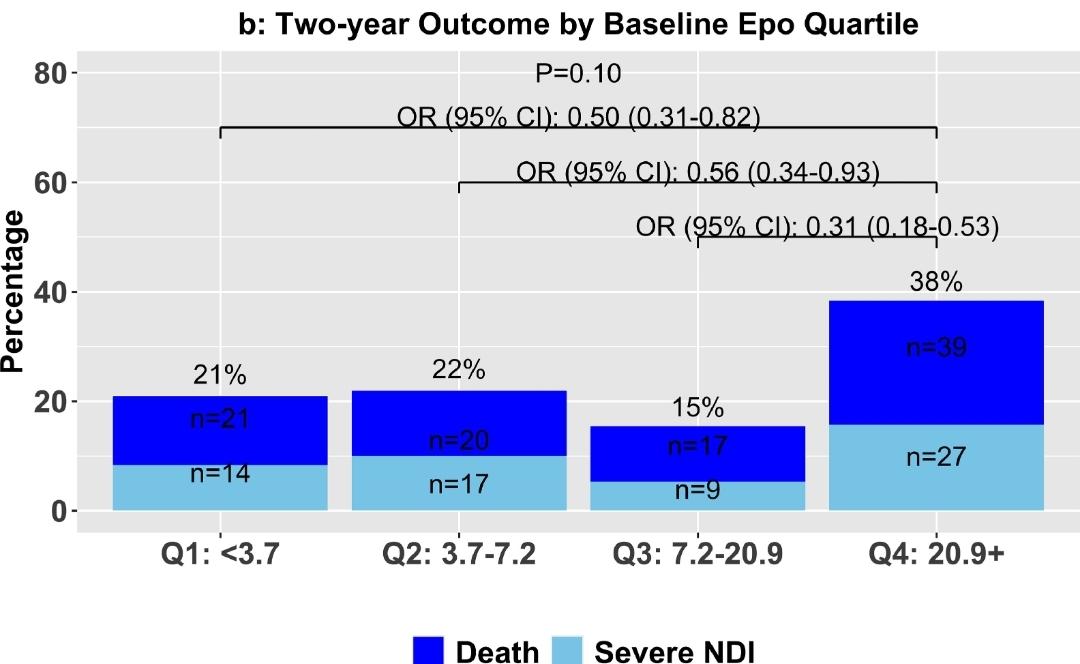
The hunt for neuro-predictive biomarkers continues, but Epo and Tau are giving us clues: Early Biomarkers of Hypoxia and Inflammation and Two-Year Neurodevelopmental Outcomes in the PENUT Trial. Congratulations @DrRagnar, @Neo_DrLaw 🧠 https://t.co/Ex6XX883RX
New paper from the lab! This model took 6+ years to develop and we hope it will be an important addition to preclinical developmental brain injury research. Super excited to see it in print! https://t.co/35hLjHOphd
🚨🚨🚨 The #LMHRstudy has launched 🚨🚨🚨
We are now recruiting for those who've seen their #LDL#cholesterol increase on a #lowcarb/#keto diet alongside high #HDL and low #triglycerides
Our official link for eligibility criteria & study details
👇👇👇
https://t.co/aCuuzm9kUT
Excited for this paper, showing systemic delivery of large proteins in polymer nanoparticles can result in neuroprotection in the newborn injured brain! Always fun to publish with @andrea_j0seph@AHAitsChrisNyam@DrRagnar@JimPfaendtner! Congrats team! https://t.co/JafvZBuQOI
This report from the PENUT trial showed that opioids and/or benzodiazepines used in extremely preterm infants are associated with adverse effects on 2-year neurodevelopmental outcomes. @DrRagnar @Neo_DrLaw @brain_uw https://t.co/wIAFknzOTm